Lumbar Mobility Drills With Quadruped Alternating Arm/Leg Lifts
You improve lumbar mobility and control with quadruped alternating arm/leg lifts by engaging deep core stabilizers while moving dynamically on all fours. Keep your spine neutral, shoulders stacked over wrists, and lift opposite limbs slowly to avoid compensation. This drill enhances proprioception and supports fitness recovery by reinforcing proper movement patterns. Using knee pads or posture-correcting shirts can boost comfort and form. You’ll find refined technique reveals greater stability gains.
Notable Insights
- Perform quadruped alternating arm/leg lifts to reinforce neutral spine positioning and enhance lumbar stability during dynamic movement.
- Engage the core throughout the exercise to activate deep stabilizers like the transverse abdominis and support lumbar mobility.
- Coordinate limb movements with controlled, slow tempo to improve neuromuscular control and reduce compensatory spinal motion.
- Incorporate brief pauses at full extension to challenge lumbar proprioception and maintain balanced muscle firing patterns.
- Use regression (single-limb lifts) or progression (resistance bands) to tailor lumbar mobility demands to individual capacity.
What Are Quadruped Alternating Arm/Leg Lifts?
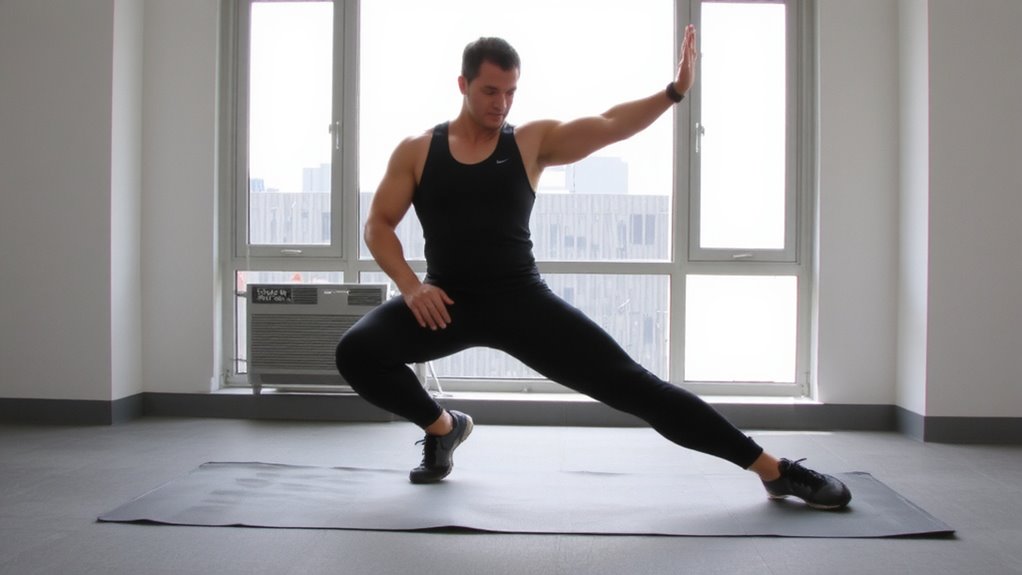
Stability starts with coordination, and few movements highlight that better than quadruped alternating arm/leg lifts. You’re on all fours, lifting opposite arm and leg while keeping your spine neutral-simple in theory, but it demands real neuromuscular control. The benefits go beyond core activation; they sharpen proprioception and balance, key for functional fitness and injury prevention. This drill challenges your coordination under load, forcing your nervous system to sync multiple muscle groups. It’s low-impact, making it ideal during fitness recovery phases, especially when paired with supportive gear like knee pads or moisture-wicking training mats. Unlike heavy lifts, this movement exposes asymmetries early-say, your right leg wobbles when your left arm extends-giving you feedback to correct imbalances. Consistent use builds not just strength, but body awareness, which translates to safer lifting, better posture, and improved movement efficiency in daily life.
How to Do Quadruped Arm/Leg Lifts With Proper Form
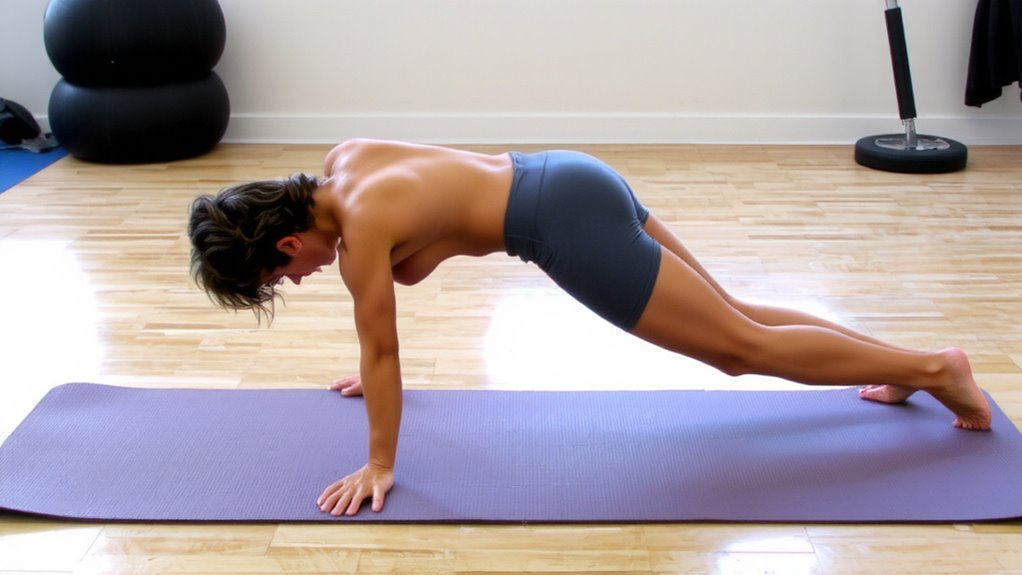
Control is the quiet foundation of effective movement, and nowhere is that more evident than in the quadruped arm/leg lift. You maintain a neutral spine while lifting opposite limbs, focusing on stability, breathing techniques, and controlled movement tempo. Engage your core throughout and avoid arching or twisting your lower back.
| Phase | Key Action | Focus Tip |
|---|---|---|
| Setup | Hands under shoulders, knees under hips | Keep neck neutral |
| Lift | Extend right arm and left leg | Move slowly and evenly |
| Hold | Brief pause at full extension | Sustain core engagement |
| Return | Lower limbs with control | Match descent tempo |
| Repeat | Alternate sides | Sync with steady breath |
Use a mat for joint comfort, and maintain rhythmic breathing-inhale before moving, exhale during exertion. Effective movement tempo enhances neuromuscular coordination, making each repetition purposeful and safe.
Common Mistakes to Avoid in Arm/Leg Lifts
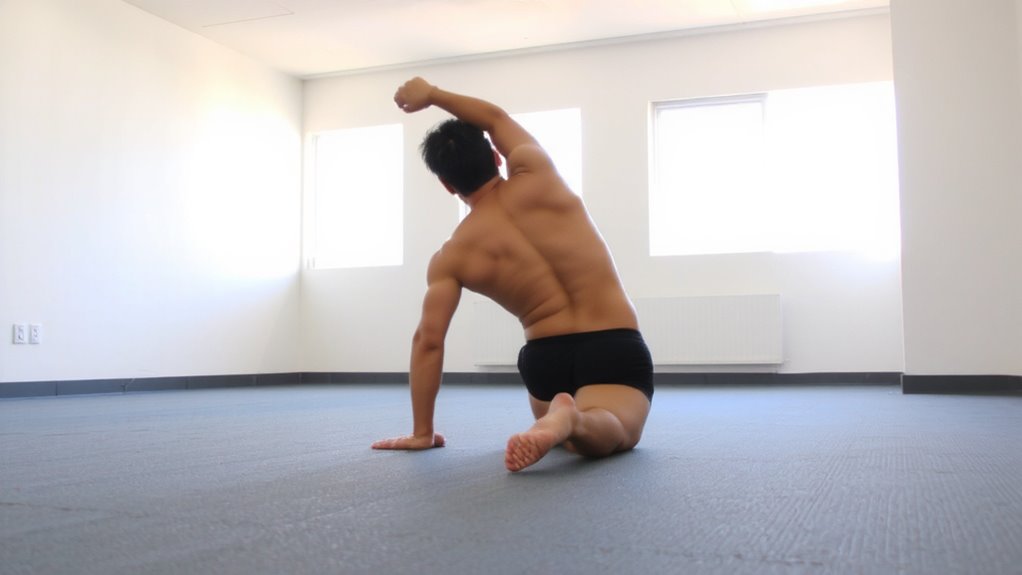
While aiming to strengthen your core and improve coordination, you might unknowingly compromise form during arm/leg lifts, leading to diminished results or strain. One common error is arching back, which shifts stress to your lower spine and reduces core engagement. You should keep your spine neutral by gently bracing your abdominals, as if preparing for a light punch. Another issue is losing balance, often caused by moving too quickly or lifting limbs too high. Instead, focus on slow, controlled movements-this isn’t about how high you go, but how well you stabilize. Avoid shrugging shoulders or hiking hips, both of which disrupt alignment. Practicing near a mirror or recording yourself helps catch these mistakes. Consistent precision beats repetitions with poor form every time. Over time, mindful execution builds real functional strength without unnecessary joint load.
Why This Exercise Boosts Core and Back Stability
You’ve likely noticed how small shifts in form during arm/leg lifts can throw off your entire movement pattern, leading to strain or reduced effectiveness. That’s because this exercise demands precise neural coordination-your brain must simultaneously engage opposing limbs while stabilizing your spine. As you lift one arm and the opposite leg, your core muscles fire in sync to prevent rotation, reinforcing joint integrity in the lumbar and hip regions. This controlled activation strengthens deep stabilizers like the transverse abdominis and multifidus, which are essential for long-term back health. Unlike passive stability tools, this movement trains dynamic balance, mimicking real-world loads. Consistent practice improves proprioception and muscle timing, reducing injury risk. While fitness gear like stability balls or belts might offer temporary support, they can’t replicate the neuromuscular benefits of mastering bodyweight control. The drill’s effectiveness lies in its simplicity and functional demand-no equipment needed, just mindful execution to build lasting core resilience.
Easier and Harder Variations for Every Level
If you’re just starting out or dealing with tight hips and a stiff lower back, regressing the exercise by lifting only one limb at a time can make a big difference in maintaining proper spine alignment. These easier variations help build awareness and control without overloading your core or compromising form. As you gain strength and stability, you can gradually introduce harder progressions-like alternating arm and leg lifts with a longer tempo or adding resistance bands. These advanced tweaks increase neuromuscular demand and improve coordination. For best results, pair your practice with supportive fitness gear, such as knee pads for comfort and posture-correcting shirts that provide subtle feedback. While not essential, quality gear enhances consistency and reduces irritation over time. Whether you’re scaling down or spicing it up, both easier variations and harder progressions play key roles in functional development and long-term lumbar resilience.
On a final note
You’ll find quadruped alternating arm/leg lifts highly effective for building core stability and lumbar control. When performed with proper form, this exercise strengthens the glutes, abs, and lower back while promoting functional movement. It’s adaptable-easier versions suit beginners, while advanced lifters can add resistance. Consistent practice improves posture and reduces injury risk, especially when paired with quality recovery gear like foam rollers or compression tools that support muscle maintenance and joint health.