Managing Cumulative Load in CrossFit Athletes to Prevent Rhabdomyolysis
You’re building strength, but without managing cumulative load, you’re also raising your rhabdo risk. Back-to-back intense workouts without recovery overwhelm muscle repair, especially when hydration, sleep, and fuel fall short. Smart programming uses periodization and fatigue tracking to balance stress and adaptation. Recovery isn’t passive-it’s strategic, built on nutrition, rest, and listening to your body’s signals. Coaches who monitor workload and encourage honesty help prevent overexertion. There’s more to optimizing this balance safely.
Notable Insights
- Monitor cumulative training load to prevent exceeding muscle recovery capacity and reduce rhabdomyolysis risk.
- Implement phased periodization with gradual progression to manage physiological stress effectively.
- Prioritize 7–9 hours of sleep nightly to support metabolic recovery and muscle repair.
- Ensure adequate hydration and post-workout nutrition to enhance myoglobin clearance and glycogen replenishment.
- Educate athletes and coaches on early warning signs like severe stiffness and dark urine for timely intervention.
What Rhabdomyolysis Is and Why CrossFitters Are at Risk

Rhabdomyolysis-commonly called “rhabdo”-is a serious medical condition where skeletal muscle breaks down rapidly, releasing harmful proteins like myoglobin into the bloodstream. You’re at higher risk as a CrossFitter due to intense, repetitive workouts that push muscles beyond recovery capacity. Poor hydration levels impair your body’s ability to flush out these proteins, increasing complications. Environmental stress-like hot gyms or outdoor WODs in heat-exacerbates fluid loss and strains thermoregulation. When you combine sweat-drenched sessions with inadequate recovery, the physiological load becomes dangerous. Fitness gear that traps heat or limits breathability adds to this stress. While compressive wear and heavy gear might seem performance-enhancing, they can hinder cooling and moisture management. Smart recovery isn’t just rest-it’s proactive hydration, climate-aware training, and gear that supports, not obstructs, your body’s needs. Awareness and practical choices keep you safe.
How Cumulative Load Triggers Muscle Breakdown in Intense Training
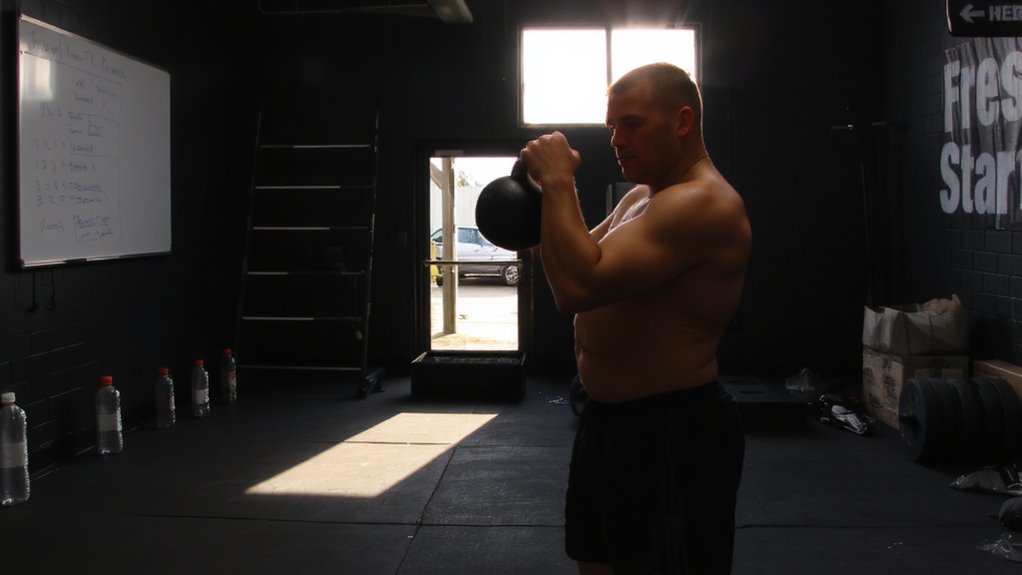
While you might feel capable of pushing through back-to-back heavy sessions, doing so without adequate recovery steadily increases cumulative load-the total physiological stress your body accumulates from repeated intense training. Over time, this load overwhelms your muscles’ ability to repair, leading to excessive muscle fatigue and prolonged metabolic stress. You’re not just straining fibers; you’re disrupting cellular homeostasis, making muscle breakdown more likely. When glycogen stores deplete and lactate clearance slows, the internal environment turns hostile to muscle integrity. Even high-quality fitness gear-like compression wear or advanced recovery tools-can’t fully offset these effects without proper rest. Recovery isn’t passive; it’s when adaptation happens. Ignoring cumulative load means cheating that process, increasing your risk of severe outcomes. Smart training means recognizing that performance gains aren’t forged in fatigue alone, but in the balance between stress and recovery. Incorporating targeted sports recovery equipment can help mitigate muscle damage and support faster return to homeostasis.
Early Warning Signs of Rhabdo Every Athlete Must Know
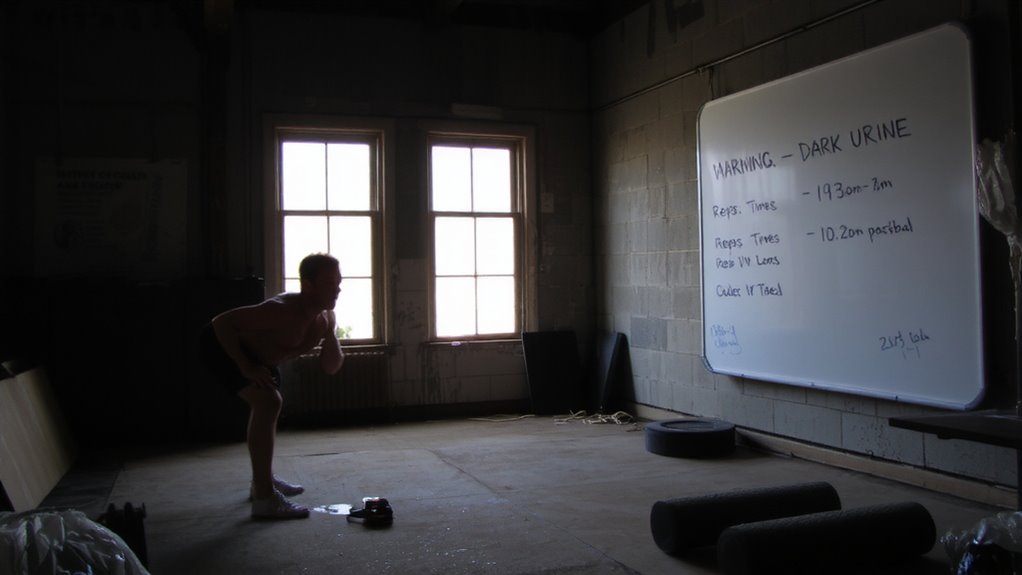
How do you know when soreness crosses the line from normal post-workout discomfort to something more dangerous? You might dismiss muscle stiffness as typical after a tough WOD, but when it’s severe and limits movement, it’s a red flag. If your muscles feel tight, tender, or swollen beyond normal fatigue, especially if they’re hard to the touch, don’t ignore it. Couple that with dark urine-think cola-colored-and you’re looking at a potential sign of rhabdomyolysis. That discoloration isn’t just dehydration; it’s myoglobin flooding your kidneys. This isn’t something rest alone fixes. Early detection matters, because delayed response increases risk of kidney damage. You’re pushing your body hard, but smart athletes know the difference between grit and danger. Recognizing these symptoms-persistent muscle stiffness and dark urine-early could save your health. Pay attention. Your body’s sending a warning.
How Smart Programming Prevents Overtraining and Rhabdo
You can’t out-recover terrible programming, no matter how many foam rollers or recovery boots you own. Smart programming uses periodization strategies and workload monitoring to manage cumulative load before it pushes you into overtraining or rhabdo. Coaches who track intensity, volume, and fatigue create safer, more effective training blocks. Without this, even seasoned athletes risk breakdown.
Here’s how smart design differs from haphazard plans:
| Approach | High-Risk Programming | Smart Programming |
|---|---|---|
| Periodization | None or rigid | Strategic, phased |
| Workload Monitoring | Ignored | Daily tracking |
| Progression | Rapid, inconsistent | Gradual, planned |
Consistency beats hero workouts. When your programming respects recovery *before* fatigue accumulates, you stay strong without flirting with disaster. That’s not just smart-it’s non-negotiable.
Rest, Fuel, and Recovery: Your Body’s Rhabdo Defense System
Even if you’ve nailed your training program, skimping on rest, fuel, and recovery still leaves you vulnerable-because your body’s ability to repair muscle tissue and clear metabolic waste depends on what you do *after* the workout ends. You need quality sleep, ideally 7–9 hours, to support hormone regulation and tissue repair. Without it, muscle fatigue compounds, raising your rhabdo risk. Proper nutrition-especially post-workout carbs and protein-fuels glycogen replenishment and muscle synthesis. Equally, hydration levels must stay high; even mild dehydration slows metabolic clearance and stresses muscles. Compression gear may help reduce soreness and improve circulation, but it can’t replace foundational habits. Foam rolling and mobility work support recovery, yet their benefits are limited if used in place of rest. Incorporating top muscle recovery devices can further enhance repair by targeting inflammation and improving blood flow. Ultimately, recovery isn’t passive-it’s a strategic commitment. Skimp on it, and all your hard training could backfire.
Body Signals and Tools That Detect Rhabdo Early
What if the first signs of rhabdo aren’t written in bloodwork-but in the subtle cues your body sends during and after a tough WOD? You might dismiss early muscle stiffness or dark urine, but these are red flags tied to hydration levels and electrolyte balance. Ignoring them increases rhabdo risk, especially with cumulative load. Tracking tools like urine color charts and heart rate variability (HRV) monitors help spot imbalances before they escalate.
| Signal | What It Suggests |
|---|---|
| Dark urine | Poor hydration levels |
| Persistent soreness | Muscle breakdown |
| Cramping | Electrolyte imbalance |
| Elevated fatigue | Recovery deficit |
Wearable tech that monitors biometrics provides real-time insight, but nothing replaces listening to your body. Maintaining proper hydration levels and correcting electrolyte balance early can halt progression. These tools aren’t foolproof, but used wisely, they offer a critical early warning system when recovery lags behind demand. Using best recovery bands can enhance muscle recovery and reduce soreness between intense training sessions.
How Coaches and Athletes Can Stop Rhabdo Together
While individual awareness plays an essential role in injury prevention, stopping rhabdo before it starts demands a shared responsibility between coaches and athletes-one that hinges on communication, education, and consistent monitoring. You both must prioritize hydration strategies before, during, and after workouts-dehydration intensifies muscle breakdown, increasing rhabdo risk. Coaches should recognize your fatigue cues and adjust load accordingly, while you must honestly report how you’re feeling, not just push through pain. Mental resilience isn’t about enduring at all costs; it’s about knowing when to scale back. Tracking recovery with tools like HRV monitors or daily check-ins helps manage cumulative fatigue. Together, you create a culture where performance doesn’t sacrifice safety. Proper fitness gear, like breathable fabrics and supportive footwear, also aids recovery by reducing unnecessary strain. When education, equipment, and open dialogue align, prevention becomes part of the training itself.
On a final note
You can’t out-train poor recovery-smart programming and rest aren’t optional, they’re essential. Cumulative load, unchecked, leads to rhabdomyolysis, especially in high-intensity environments like CrossFit. Monitoring body signals, staying hydrated, and using recovery gear like percussion tools or compression units help mitigate risk. These tools don’t replace rest but support physiological repair. Ultimately, prevention hinges on balancing effort with recovery, turning awareness into action before damage occurs.