Lumbar Mobility Drills With Quadruped Rock-Backs for Spinal Decompression
You need lumbar mobility drills like quadruped rock-backs to reverse spinal compression and restore natural movement. This exercise gently decompresses vertebrae, improves disc hydration, and enhances joint health with minimal risk. Performed correctly-on hands and knees, shifting back slowly while keeping a neutral spine-it boosts spinal flexibility and reduces stiffness. Avoid rounding or rushing the motion. Pair it with other articulation drills to gain even greater benefits. You’ll soon discover smarter ways to integrate it into your routine.
Notable Insights
- Quadruped rock-backs enhance lumbar mobility by gently decompressing the spine through controlled backward rocking motions.
- Maintaining a neutral spine during rock-backs ensures targeted lumbar movement without excessive joint compression.
- Proper breathing-exhaling on the backswing-increases effectiveness by promoting muscle relaxation and spinal alignment.
- Avoid common errors like excessive rounding or hiking hips to focus mobility benefits on the lumbar region.
- Pair rock-backs with cat-cow or pelvic tilts to improve overall spinal articulation and enhance decompression results.
Why Your Lower Back Needs Mobility
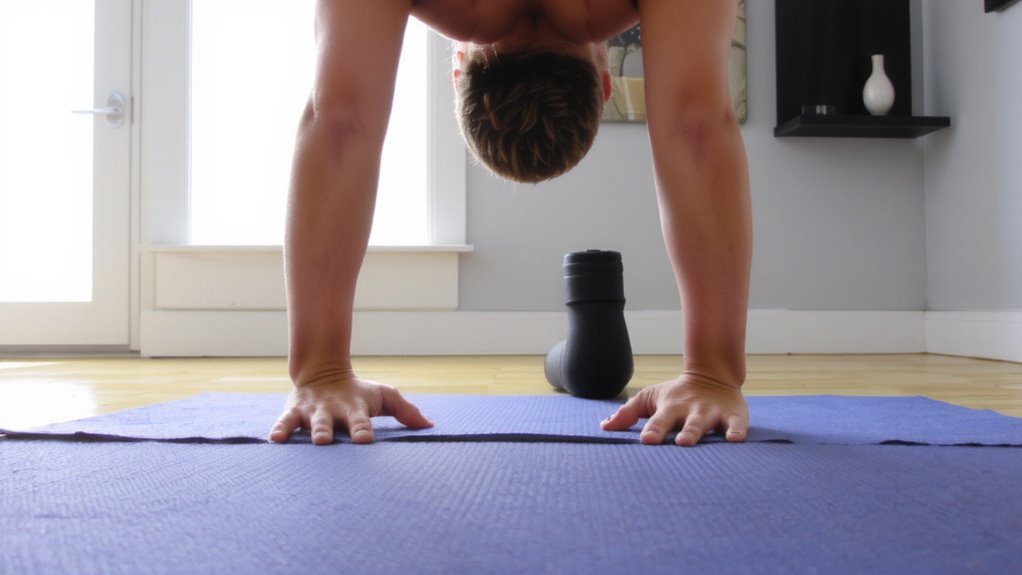
Your lower back plays a key role in nearly every movement you do, from bending over to lift something to rotating during a golf swing. Without proper mobility, you’re sacrificing both spinal flexibility and joint health, increasing your risk of strain or long-term discomfort. Limited motion in the lumbar region forces other areas-like your hips or thoracic spine-to compensate, which can throw off your entire movement pattern. Mobility isn’t just about avoiding pain; it’s about enhancing performance and ensuring balanced musculoskeletal function. Think of your spine as a series of connected joints that thrive on controlled movement. Regular mobility work supports nutrient flow to discs and maintains synovial fluid levels in joints, both critical for lasting joint health. Tools like foam rollers or mobility bands can assist, but nothing replaces consistent, mindful motion. When done right, improving lumbar mobility boosts recovery, supports posture, and keeps your training sustainable.
How Rock-Backs Give Your Spine Space

Movement quality starts with space, and the quadruped rock-back builds it segment by segment. As you gently shift your hips toward your heels, each vertebra in your lower back experiences a subtle distraction-creating room where compression once lived. This small but effective motion encourages spinal alignment by promoting balanced loading across the lumbar segments. You’re not just stretching; you’re coaxing the spine into a more neutral, functional position. That space also supports nerve relief, reducing irritation from tight, stiff joints pressing on sensitive tissues. Over time, consistent rocking improves segmental glide, helping discs rehydrate and muscles reset. It’s a simple drill, but the effects are profound-especially if you sit all day or battle chronic tightness. The rock-back doesn’t need fancy gear; just your body and control. Yet its impact on recovery rivals high-end fitness tools, offering measurable decompression and resilience with minimal risk. For those seeking additional support, clinically designed spinal decompression devices can enhance these natural mobility benefits.
Perfect Your Rock-Back Form

How often do you perform a movement without really feeling where it begins or ends? With rock-backs, mindfulness is key. Focus on proper alignment and controlled breathing to maximize spinal decompression and mobility. Start on all fours, wrists under shoulders, knees under hips. Shift your weight back slowly, preserving a neutral spine. A great way to enhance your routine is by incorporating back stretching equipment for added support and deeper mobility between sessions.
| Phase | Action | Breath |
|---|---|---|
| Start | Hands under shoulders | Inhale |
| Shift | Gently sit hips toward heels | Exhale |
| End Range | Maintain lumbar curve | Hold breath |
| Return | Engage core, roll forward | Inhale |
Move with intention-each repetition should reinforce proper alignment. Controlled breathing sustains rhythm and oxygenates muscles, aiding recovery. Quality matters more than quantity. Do these drills daily to maintain spinal health and support long-term fitness recovery.
Skip These Common Rock-Back Mistakes
While aiming to improve lumbar mobility, you might unintentionally compromise form and reduce the drill’s effectiveness if common errors go unchecked. Rounding your back excessively disrupts spinal alignment, turning a decompressive movement into one that encourages joint compression. You should maintain a neutral spine throughout, letting your hips shift back without collapsing at the lower back. Another mistake is moving too quickly-rocking back too soon or too hard can jolt the sacroiliac joint and diminish control. Keep your movements slow and intentional, engaging your core to support segmental stability. Let your breath guide the motion: exhale as you glide back, inhale as you return. Avoid hiking your hips too high, which shifts emphasis from the lumbar spine to the hips and lower extremities. Proper form guarantees you reap the mobility and decompression benefits without straining supportive structures.
Use Rock-Backs: Warm-Up or Recovery?
You’ve likely already spotted how small errors in form-like flaring ribs or rushing the tempo-can turn a helpful drill into a missed opportunity. When it comes to rock-backs, timing and integration frequency shape their real value. Used pre-workout, they prime spinal mobility with gentle decompression, making them a smart warm-up choice-especially before loaded spinal movements. The benefits timing leans early: doing them when the spine is cool helps awaken segmental movement without fatigue. For recovery, their low-load rhythm aids parasympathetic engagement, encouraging fluid redistribution in discs. Integration frequency matters more here-daily use post-training can reduce stiffness and support long-term resilience. While not intense, their effectiveness hinges on consistency and intent. Whether warming up or cooling down, rock-backs work best when matched to your goals and recovery needs, not just tacked on.
Add Intensity: Rock-Back Progressions
Why settle for basic mobility when you can refine and challenge your movement with purpose? Rock-back progressions introduce advanced variations that elevate spinal control and segmental awareness. Instead of passive rocking, you’re now adding dynamic resistance-shifting further back or using a band around your thighs to increase load. These tweaks demand greater core engagement, turning a simple decompression drill into a neuromuscular challenge. You’ll notice improved proprioception and thoracolumbar coordination, especially when tempo is controlled. Some advanced variations include single-leg rock-backs or extended-range holds, both of which test stability under mild spinal flexion. While not replacements for strength training, they complement recovery by enhancing movement quality. Used correctly, these progressions bridge mobility and control, helping you build resilience without sacrificing joint safety. The result? A smarter, more responsive spine.
Combine It: Rock-Backs With Other Spinal Moves
Movement flow is the secret sauce when you’re building adaptable spinal health, and pairing quadruped rock-backs with complementary spinal drills creates a synergy that boosts both mobility and motor control. You can amplify spinal articulation by blending rock-backs with cat-cow pulses, thoracic extensions, or half-kneeling twists. This type of dynamic stretching primes your spine for better alignment and safer loading during workouts. For best results, sequence movements from slow to more dynamic, letting each drill inform the next.
| Drill Combination | Benefit |
|---|---|
| Rock-back + Cat-Cow | Enhances segmental control |
| Rock-back + Thoracic Reach | Improves mid-back mobility |
| Rock-back + Child’s Pose | Promotes spinal decompression |
| Rock-back + Side Stretch | Increases lateral flexibility |
| Rock-back + Pelvic Tilts | Refines lumbopelvic rhythm |
These combos support recovery while reinforcing efficient movement patterns.
On a final note
You’ve seen how lumbar mobility supports spinal health, and rock-backs offer a simple yet effective way to create space in your lower back. When done right, they enhance recovery and prep your spine for movement. Coupled with proper gear-like supportive mats that cushion joints-this drill becomes even more sustainable. While not a fix-all, its low risk and high functional return make it a smart addition to warm-ups or cooldowns, especially when integrated thoughtfully into broader mobility routines.