Sleep Optimization for Athletes With Disabilities and Para-Athletes
You need sleep that adapts to your pain patterns, mobility needs, and training demands. Standard recovery gear won’t fix sleep disrupted by muscle spasms or nerve sensitivity. Optimize your bedroom layout for safe transfers and easy access to equipment. Align your sleep schedule with your body’s rhythms and use adaptive tracking tools that understand atypical movement. Poor sleep slows tissue repair and weakens performance-your recovery depends on smarter rest. Discover how personalized adjustments can transform your results.
Notable Insights
- Align sleep schedules with natural energy lows and maintain consistent wake times to enhance sleep onset and recovery.
- Optimize bedroom layout with adequate transfer space, proper bed height, and accessible equipment to support independence and safety.
- Use adaptive sleep tracking tools that account for atypical movement and provide accurate, personalized sleep data.
- Manage chronic pain’s impact on sleep by addressing muscle spasms and nerve hyperactivity through targeted interventions and routines.
- Prioritize restorative sleep to support nervous system regulation, tissue repair, and overall performance in high-demand training environments.
How Pain Disrupts Sleep for Para-Athletes
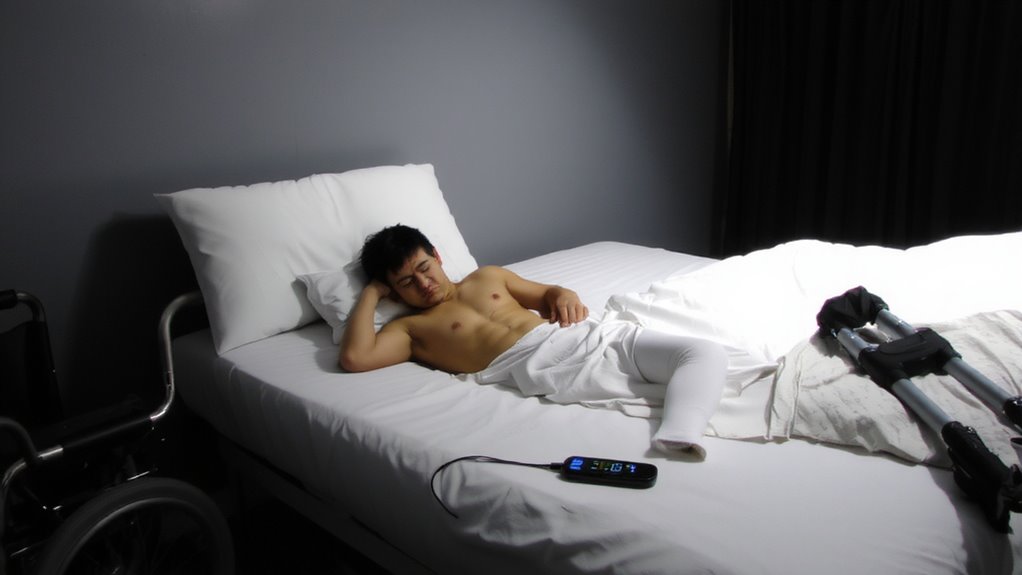
Why does pain so often rob para-athletes of restful sleep, despite their rigorous training and recovery protocols? You’re likely no stranger to chronic pain, which lingers long after workouts end, interfering with your body’s ability to relax and repair. Muscle spasms-sudden, involuntary contractions-frequently strike at night, disrupting sleep cycles and reducing sleep quality. These issues aren’t just uncomfortable; they undermine recovery by limiting deep, restorative rest. Even advanced recovery tools-like compression gear or cryotherapy-can fall short if pain isn’t actively managed. Chronic pain alters nervous system responses, making you more sensitive to discomfort when lying still. Muscle spasms compound this, often triggered by fatigue or nerve hyperactivity. While fitness gear supports physical recovery, it doesn’t fully address neurological pain pathways. You need a more integrated approach-one pairing technology, medication, and sleep hygiene to effectively quiet the body at night. Non-surgical spinal decompression through at-home devices, including those offering lumbar traction therapy, can help alleviate nerve pressure and reduce nighttime pain episodes.
Make Your Bedroom Work for Your Mobility Needs
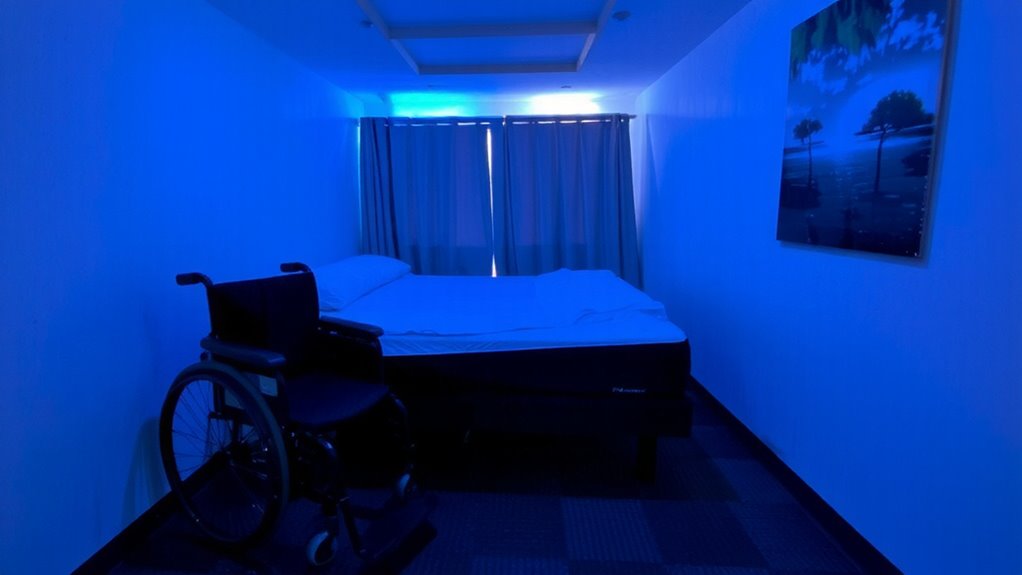
How easily can you move from your bed to your wheelchair-or to a walker or crutches-without straining your shoulders or losing balance? Your bedroom layout plays an essential role in safe, independent transfers. Ideally, you need at least 30 inches of clear floor space on the side you use to transfer, allowing room for maneuvering. Positioning your bed at the same height as your wheelchair seat reduces strain and improves control. Consider adjustable beds or risers to match heights precisely. Equipment access is just as important-keep canes, braces, or CPAP machines within easy reach via wall mounts or rolling carts. Avoid clutter and use non-slip flooring to prevent accidents. A well-organized space supports efficient routines and reduces fatigue. Thoughtful design isn’t just convenient-it’s a key part of recovery and daily fitness management.
Design a Sleep Schedule That Works With Your Condition
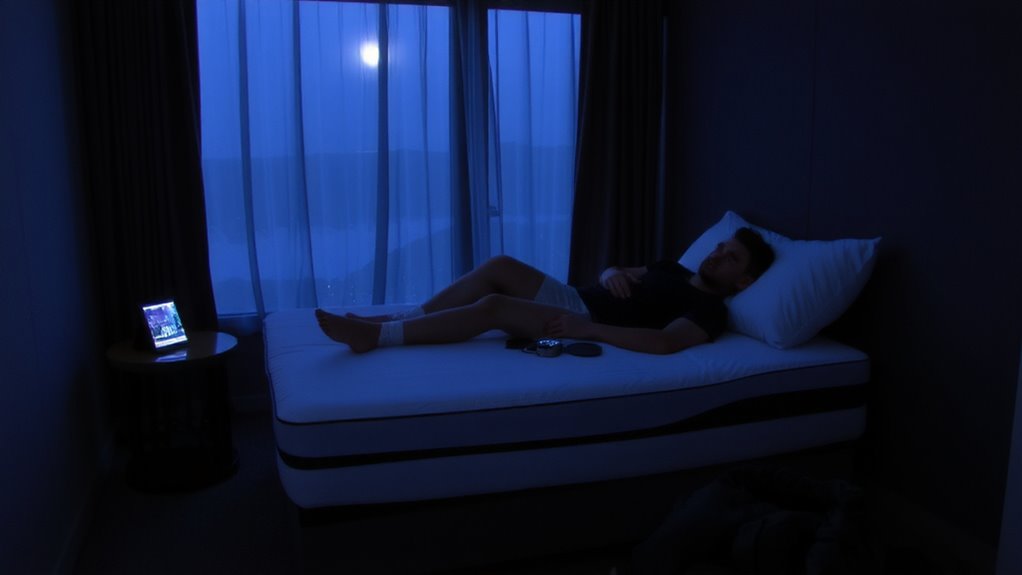
Though your recovery and performance depend heavily on consistent, high-quality sleep, designing a schedule that aligns with your specific condition requires more than just aiming for eight hours. Proper condition alignment means adjusting sleep times around energy fluctuations, pain cycles, and medical routines. Pairing this with solid sleep hygiene-like limiting screen time and maintaining a cool, quiet room-boosts rest quality markedly. Everyone’s rhythm differs, especially among para-athletes, so a personalized approach matters.
| Factor | Recommended Timing |
|---|---|
| Bedtime | Aligned with energy lows |
| Wake-up Time | Consistent, even on rest days |
| Wind-down Routine | 30–60 minutes before bed |
Sticking to this framework improves adaptation, supports fitness recovery, and enhances daily performance in both training and life.
Track Sleep Patterns With Tools That Work for Disabilities
Where do you start when your sleep patterns don’t fit the standard tracker’s mold? You begin with tools built for real-world variability-especially smart sensors that monitor movement, heart rate, and breathing without requiring you to stay perfectly still. Many standard wearables misread sleep stages for para-athletes due to atypical movement or muscle tone, but newer systems use adaptive tracking to adjust metrics based on individual physiology. These platforms learn your rhythms over time, offering more accurate sleep onset and wake detection. Non-wearable options, like under-mattress smart sensors, avoid skin irritation and work well if limb differences or prosthetics interfere with wrist devices. Though not all brands support adaptive tracking yet, choosing ones that do-like certain FDA-cleared models-can drastically improve data reliability. It’s not just about collecting numbers; it’s about getting useful feedback that aligns with your body’s actual recovery needs.
Why Para-Athletes Can’t Afford Poor Sleep
You’re already tracking your sleep with tools that adapt to your unique physiology, but knowing the data means little without understanding why it matters so deeply. Poor sleep quality directly undermines your recovery speed, which is already under greater strain due to the physical demands of training with a disability. When your body isn’t rested, inflammation increases, tissue repair slows, and nervous system regulation falters-critical issues when adaptive equipment or prosthetics place extra stress on muscles and joints. High-performance gear only works as well as your body’s ability to keep up, and without solid rest, even the most advanced tech can’t compensate. Prioritizing sleep quality isn’t optional; it’s a non-negotiable part of training. Consistent, restorative sleep enhances cognitive function, emotional resilience, and physical regeneration. For para-athletes, who often train with compounded intensity, sleep is the ultimate recovery tool-silent, free, and profoundly effective when respected.
On a final note
You need quality sleep to recover, and for para-athletes, that means adapting your environment and routine to your needs. Equipment like adjustable beds or pressure-relief mattresses improves comfort and support. Tracking tools that accommodate disabilities help identify patterns and issues. Poor sleep slows healing and reduces performance. Optimizing rest isn’t optional-it’s a core part of training, as essential as nutrition or conditioning, ensuring your body repairs and adapts effectively.