Hip Mobility Drills With Standing Hip Circles for Dynamic Warm-Up
You’ll boost hip mobility effectively by pairing standing hip circles with dynamic drills like leg swings and glute bridges. These activate stabilizers, improve joint lubrication, and prime movement patterns. Keep your core engaged and avoid leaning to guarantee proper form. Doing them pre-workout enhances performance, while daily practice builds long-term resilience. Add resistance bands for deeper mobility-there’s more to optimizing your routine than just movement quality.
Notable Insights
- Standing hip circles activate the hip joint dynamically, enhancing mobility and preparing the body for movement.
- Perform large, controlled circles while engaging the core to maintain spinal stability and isolate hip motion.
- Combine hip circles with leg swings and glute bridges to boost neuromuscular activation and joint range.
- Avoid leaning or using small circles to prevent compensatory movements and maximize capsule engagement.
- Use hip circles pre-workout to prime hips for squats or running and improve overall warm-up effectiveness.
Why Hip Mobility Matters for Your Warm-Up
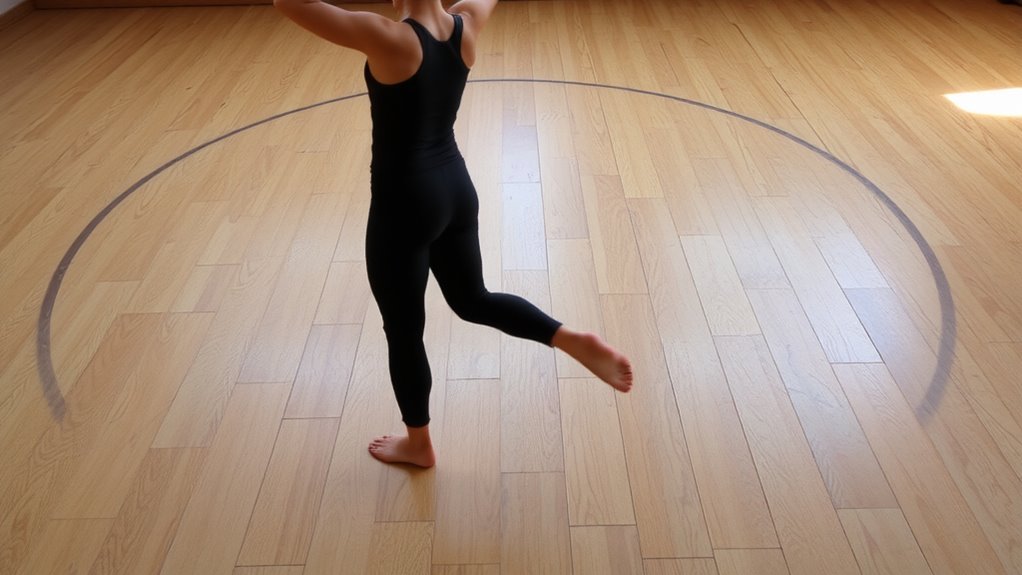
You’ve probably felt it before-the stiffness in your hips after sitting all day or the slight hitch in your stride when you start moving. That’s your body signaling reduced hip mobility, something you can’t afford to ignore during warm-ups. Prioritizing hip movement boosts joint health by stimulating synovial fluid production, which lubricates the joint and supports cartilage nutrition. It also primes your neuromuscular system, improving muscle activation patterns. Without it, you’re setting yourself up for imbalances that compromise form and efficiency. Mobility work markedly contributes to injury prevention by increasing range of motion and reducing compensatory movements. Tight hips force other joints-like your lower back or knees-to absorb excess stress, raising injury risk. Gear like foam rollers or mobility bands can help, but consistent dynamic drills are far more effective long-term. You don’t need fancy tools-just time and attention.
Proper Form for Standing Hip Circles
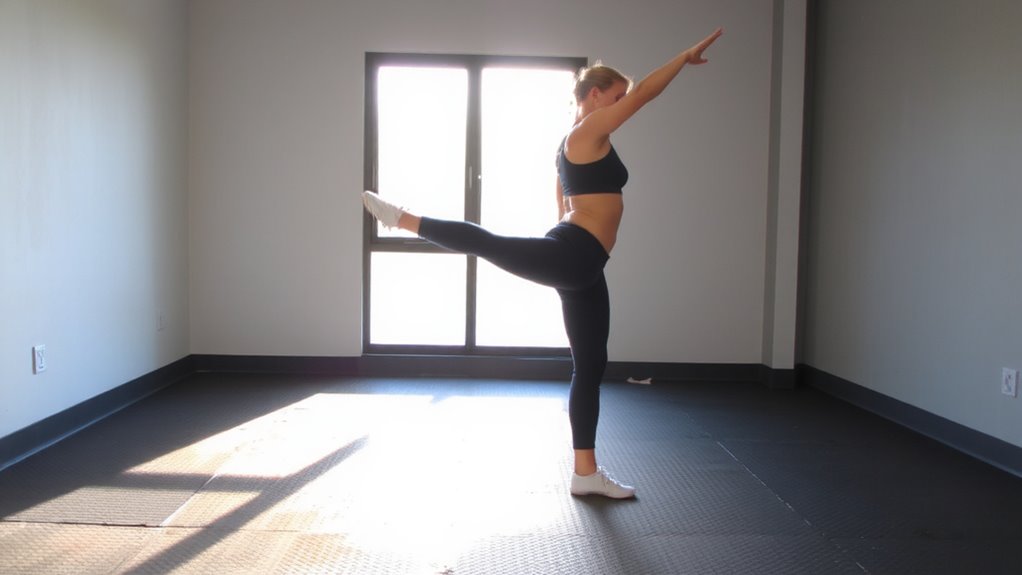
A well-executed standing hip circle isn’t just a fluid motion-it’s a foundational movement that enhances joint articulation and neuromuscular control. You should stand tall with feet hip-width apart, engaging your core to support spinal stability. Initiate the movement from your hips, not your spine, tracing large, controlled motion circles in the air. Keep your upper body steady-this minimizes compensation and guarantees proper joint alignment through each repetition. Your knees should stay slightly bent but not collapsed inward, maintaining neutral pelvis positioning throughout. Perform the circles slowly at first, focusing on quality over quantity. This emphasis on controlled motion builds dynamic mobility while priming your nervous system for more intense activity. Proper joint alignment reduces shear forces in the acetabular joint, lowering injury risk. Over time, this drill improves movement efficiency, making it a smart addition to any warm-up focused on precision and preparedness.
Common Standing Hip Circle Mistakes
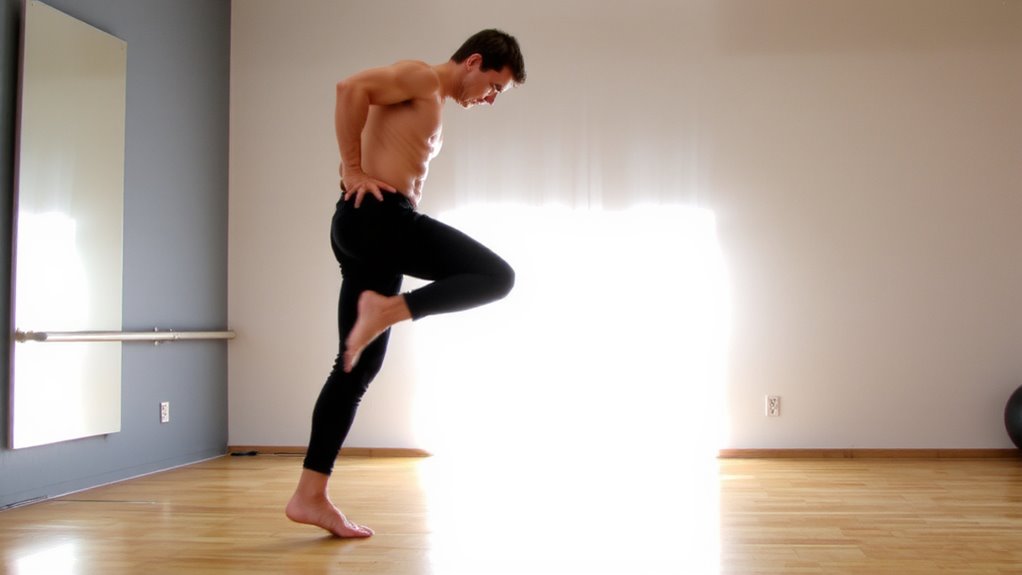
Most people make at least one critical error when performing standing hip circles, and these missteps can undermine mobility gains while increasing joint stress. You often see overactive glutes taking over, which shifts focus from the hips to the posterior chain, reducing the drill’s effectiveness. When your glutes fire too aggressively, hip articulation suffers, and you’re not truly improving joint mobility. Another common fault is a limited range-you’re likely circling too small, restricting the capsule’s stretch and failing to engage deeper hip rotators. This usually stems from stiffness or poor motor control, but pushing through it without correction only reinforces dysfunctional movement. You should aim for controlled, full arcs, keeping the motion smooth and centered in the hip socket. Avoid leaning or hinging excessively at the torso, as this compromises alignment. Correct these faults to maximize joint nutrition and prepare effectively for dynamic activity.
Best Mobility Drills to Combine With Hip Circles
Pairing hip circles with complementary mobility drills enhances joint articulation and builds a more resilient, functional range of motion. You’ll get the most out of hip activation when you integrate drills like leg swings and glute bridges-both prime the posterior chain and promote balanced muscle engagement. Add in standing knee-to-chest lifts to further mobilize the hip flexors and support smoother joint rotation. These movements, when sequenced before dynamic activity, improve neuromuscular control and reduce compensatory patterns. For peak performance, pair foam rolling with hip-focused mobility tools like resistance bands or hip hooks-they increase tissue pliability and deepen stretches without compromising form. Well-designed fitness gear supports consistency, but technique matters more than equipment. Done right, these drills amplify the benefits of hip circles, preparing your body efficiently for movement demands while minimizing strain. Keep progressions fluid and repetitions controlled to maximize carryover.
When to Use Hip Circles: Pre-Workout vs. Daily Movement
When should you actually be doing hip circles-right before your workout, or as part of your daily movement routine? Both timing approaches support hip health, but with different goals. Pre-workout, hip circles prime your joints and activate key stabilizers, boosting blood flow and enhancing joint stability just when your body needs it most. They’re ideal as a dynamic warm-up, preparing your hips for squats, runs, or lifts. Done daily, even for just five minutes, they improve mobility over time, correct movement imbalances, and support long-term joint integrity. You don’t need special fitness gear-just space and consistency. While pre-workout use maximizes performance, daily movement builds resilience. For most, combining both offers the best balance: immediate readiness and sustained hip health. Think of them as maintenance and prep, two sides of the same mobility coin.
Try These Hip Circle Challenges
How much control do you really have over your hip mobility? Test it with these hip circle challenges designed to boost hip strength and joint stability. Start by standing on one leg and draw slow, controlled circles with the other hip-10 forward, 10 backward. Feel wobbly? That’s your joint stability signaling a gap. Add resistance by placing a loop band above your knees; this increases demand on glutes and deepen neuromuscular engagement. For advanced control, close your eyes during reps-removing visual cues sharpens proprioception. These drills don’t just warm up tissue; they build functional strength. Consistent practice improves alignment and reduces strain during squats or lunges. Don’t rush-precision beats speed. Over time, you’ll notice better balance, smoother movement patterns, and fewer aches. It’s not just mobility work-it’s movement mastery, backed by smart mechanics and measurable control.
On a final note
You’ll find standing hip circles effective for priming mobility before workouts, especially when combined with complementary drills like leg swings or glute activations. They enhance joint lubrication and muscle activation, but form matters-avoid leaning or rushing. Paired with quality recovery gear like compression sleeves or foam rollers, these circles support long-term hip health. Used consistently, they’re a practical addition to both pre-exercise routines and daily movement hygiene, offering measurable gains in dynamic flexibility and joint awareness without gimmicks or excess.