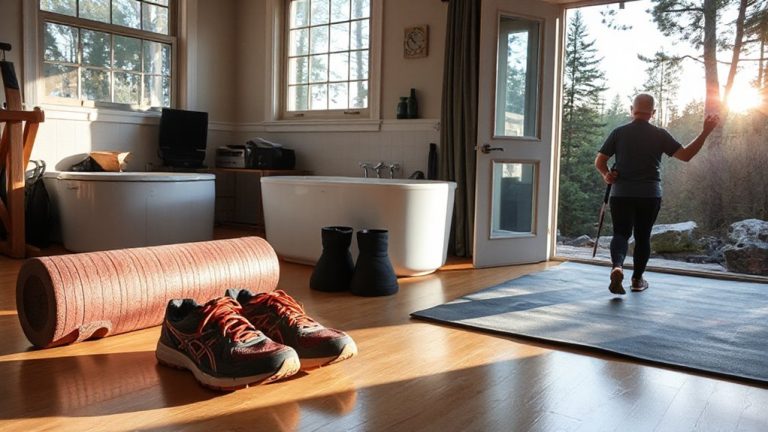
Pool-Based Jogging With Buoyancy Belts to Offload Joints During Early Running Phase
You can maintain your running fitness with pool-based jogging using buoyancy belts, which markedly reduce joint load during early rehab. The water’s buoyancy supports your weight, while hydrostatic pressure helps control swelling and boosts circulation. Resistance builds strength safely, and a properly fitted belt keeps your hips level, letting you mimic land running without impact. It’s smart training for recovery-adjust intensity gradually and master form to prepare for the next phase.
Notable Insights
- Buoyancy belts reduce joint impact by supporting body weight during pool jogging.
- Hydrostatic pressure in water helps decrease swelling and improve circulation.
- Fluid resistance enhances muscle engagement without added joint stress.
- Proper form includes level hips, core engagement, and natural running motion.
- Progress gradually from 10–15 minute sessions before returning to land running.
Why Water Running Relieves Joint Pain
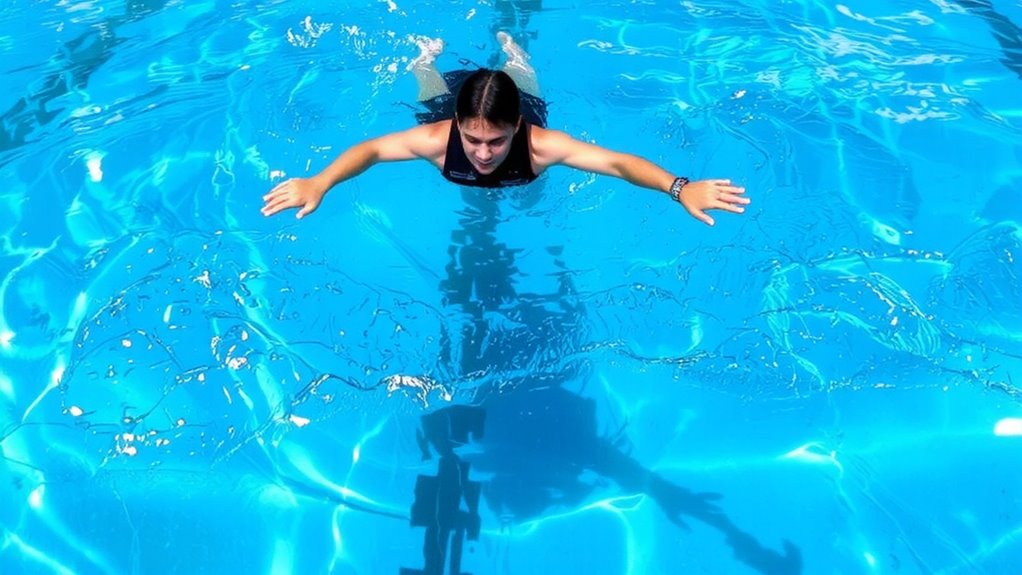
While the impact of traditional running can aggravate sore joints, water running offers a low-impact alternative that greatly reduces stress on your knees, hips, and ankles. You still get a solid cardio workout, but the water’s buoyancy supports your body weight, lessening joint load. Hydrostatic pressure helps decrease swelling and improves circulation, which speeds up recovery. Plus, fluid resistance challenges your muscles more than air, so you build strength without pounding. That means you maintain fitness while protecting injured or healing joints. Experts agree it’s especially effective during early rehab, where maintaining movement without impact is key. Fitness pros often recommend water running for overuse injuries or post-surgery routines, as it balances safety and intensity. Gear like snug aquatic shoes or secure arm bands enhances your form. Though not a full replacement for land running, it’s a smart cross-training tool. Overall, the combo of hydrostatic pressure and fluid resistance makes pool jogging a practical, joint-friendly option.
How Buoyancy Belts Protect Your Body
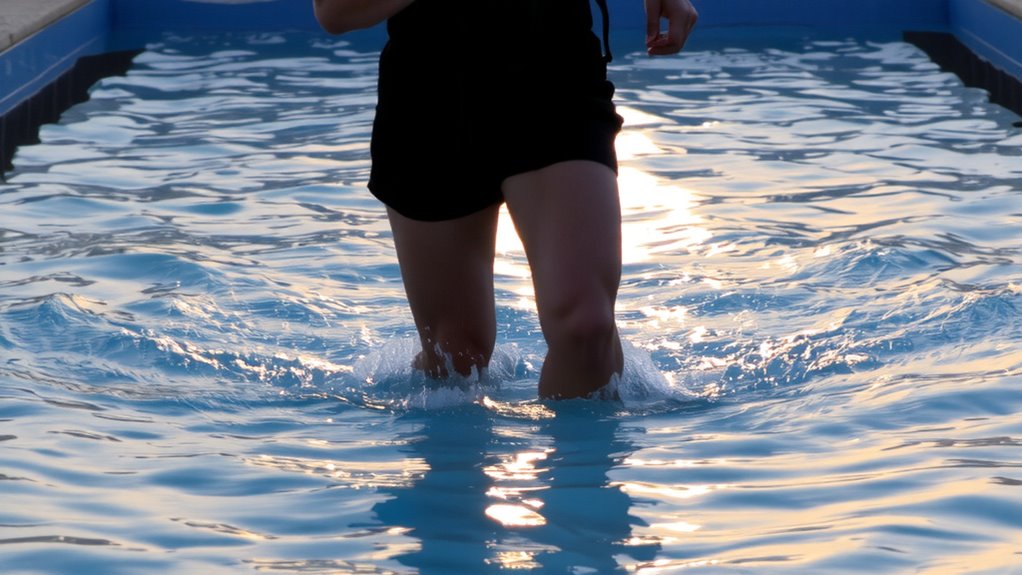
You stay upright and aligned in the water thanks to buoyancy belts, which anchor your flotation at the core and prevent your legs from sinking. This stabilization delivers effective joint support by reducing compressive forces, especially in the hips, knees, and ankles, making it ideal during early-stage running rehab. The belt’s design lets you maintain a natural running motion without compensatory movements that could strain recovering tissues. At the same time, buoyancy challenges your core and limbs, promoting balanced muscle activation even in a low-impact environment. Unlike free-floating methods, these belts offer consistent, adjustable lift-usually via removable foam panels-so you can tailor the load to your recovery needs. High-quality models use durable, quick-drying materials that resist chlorine and saltwater damage. While most perform well, fit varies across brands, so choose one that secures tightly without restricting breath or movement.
How to Start Pool-Based Jogging Safely
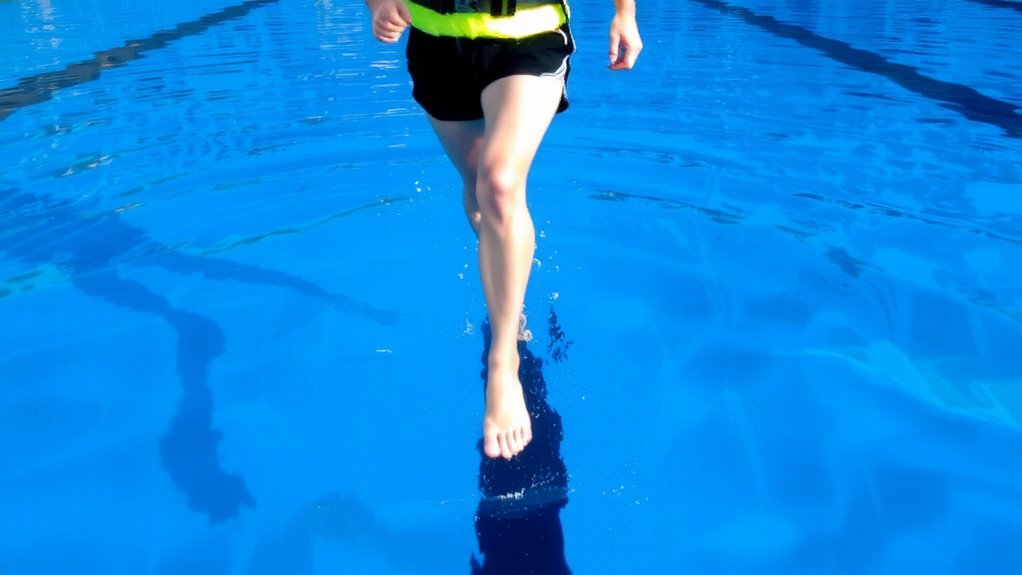
How do you begin pool-based jogging without risking strain or undermining recovery? Start by ensuring you’re using a quality buoyancy belt adjusted to keep your hips level and head above water-this supports proper posture and reduces spinal compression. Keep your core engaged, shoulders relaxed, and mimic a natural running motion without overstriding. Proper posture prevents compensatory gait patterns that could delay rehabilitation. Begin with short intervals-10 to 15 minutes-at a comfortable pace, then slowly increase duration and intensity over weeks. This gradual progression helps your body adapt without joint overload. Monitor how you feel post-session; soreness is normal, but sharp pain isn’t. Stay consistent with form checks and equipment fit. A well-structured start enhances neuromuscular re-education and protects connective tissues, making pool-based jogging a sustainable bridge back to land running.
Build Fitness Without Impact: Train Smarter in Water
Pool-based jogging isn’t just about easing back into movement after injury-it’s a smart way to build cardiovascular fitness and muscular endurance without the joint stress of pavement pounding. You get effective cardiovascular conditioning because the water supports your body while forcing your heart and lungs to work harder. Water resistance boosts muscle engagement, especially in the legs and core, helping maintain strength during recovery. Unlike land running, you’re not sacrificing intensity-just impact. Buoyancy belts keep you upright, mimicking running form while reducing joint load by up to 90%. This modality isn’t a step down; it’s strategic training. The combination of resistance and support means you can sustain longer sessions, improving aerobic capacity safely. For fitness recovery, water training offers measurable benefits without compromising joint health. You’re not just staying active-you’re training smarter.
When and How to Return to Land Running
While water training sustains cardiovascular conditioning and muscular endurance with minimal joint strain, shifting back to land running demands careful timing and structured progression to avoid setbacks. You should only begin the dry land shift when you’ve achieved consistent pain-free movement in water and cleared any residual inflammation. Start with short, slow runs two to three times weekly, gradually increasing volume by no more than 10% per week. Focus on a smooth running form adjustment-shorten your stride, maintain an upright posture, and avoid overstriding to reduce joint loading. Incorporate strength drills and dynamic warm-ups to prepare tissues for impact. Monitor soreness closely; lingering discomfort signals you’re progressing too fast. Well-cushioned training shoes help manage stress during reintegration, but avoid over-reliance on gear. Trust the process: a disciplined, patient return guarantees lasting recovery and sustainable running longevity.
On a final note
You’re reducing joint stress markedly with pool-based jogging, and buoyancy belts help maintain proper form while offloading up to 50–90% of your body weight. This low-impact training builds cardiovascular endurance safely, making it ideal during injury recovery. Though water resistance limits peak speed, consistency here supports a smoother shift back to land running. Used wisely, this method enhances recovery without sacrificing fitness-smart integration of gear and technique maximizes long-term joint health and performance outcomes.