How to Build Eccentric Strength in the Quadriceps for Skiers
You need eccentric quad strength to handle skiing’s demands, like controlling turns and absorbing rough terrain. Focus on slow, controlled movements-think 3–4 second descents in split squats or step-downs-to build resilience. Incorporate depth jumps and Nordic curls to train deceleration and joint stability. Use foam rollers and compression gear to support recovery and maintain muscle function. Train twice weekly with proper progression to boost performance, and discover how small tweaks can make a big difference.
Notable Insights
- Perform slow, controlled split squats with a 3–4 second lowering phase to increase eccentric time under tension.
- Use Bulgarian split squats to build quad strength and balance while emphasizing eccentric loading.
- Incorporate depth jumps to train rapid deceleration and enhance eccentric power in dynamic conditions.
- Train with Nordic hamstring curls and slow step-downs to improve joint stability and eccentric control.
- Schedule two weekly eccentric sessions with proper recovery to progressively build ski-specific quad resilience.
Why Eccentric Quad Strength Powers Better Skiing
While you might focus on building raw power in your quads, it’s the eccentric strength-the controlled lengthening of the muscle under load-that truly determines how well you handle the demands of downhill skiing. You rely on this phase every time you absorb terrain changes, decelerate, or hold a carved turn. Without sufficient eccentric strength, your muscle control falters, increasing strain on your knees and reducing precision. This is where joint stability becomes critical-eccentric loading trains your quads to act as dynamic shock absorbers, dampening forces that would otherwise stress ligaments. Think of it as built-in suspension: stronger deceleration means smoother, safer turns. Fitness gear like eccentric-focused leg press machines or flywheel trainers can help develop this, but consistency and proper form matter more. You won’t just ski harder-you’ll ski smarter, with greater resilience and control through variable snow conditions. Incorporating a leg press machine into your training can specifically target eccentric loading with adjustable resistance and safe range of motion.
When Your Quads Work Harder on the Slopes
Your quads aren’t just working to propel you forward-they’re constantly braking, stabilizing, and adjusting with every shift in pitch and turn. This intense eccentric loading, especially on steeper terrain, increases the risk of quad fatigue and muscle soreness. Unlike concentric work, eccentric contractions generate more force with less immediate burn, fooling your perception while micro-damage accumulates.
| Condition | Cause | Recovery Impact |
|---|---|---|
| Quad Fatigue | Prolonged eccentric load | Reduced edge control |
| Muscle Soreness | Micro-tears in fibers | Delayed onset (24–72 hrs) |
| Stiffness | Inflammation response | Shortened ROM, slower turns |
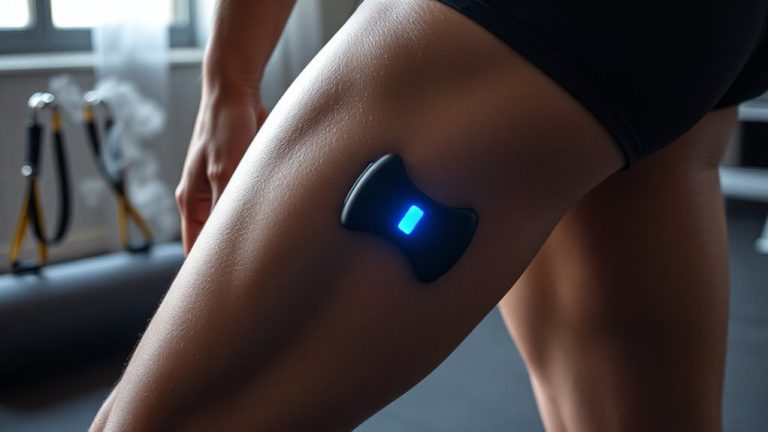
High-quality recovery gear-like compression sleeves and percussive therapy devices-help mitigate these effects by enhancing blood flow and clearing metabolic waste. Consistent post-ski routines don’t just ease discomfort-they prime your quads for the next day’s load, keeping you on the mountain longer. Using a best muscle stimulator can further accelerate recovery by promoting muscle activation and reducing soreness through targeted electrical stimulation.
Best Eccentric Quad Exercises for Ski Performance
Since eccentric strength is essential for managing downhill forces on the slopes, targeting your quads with focused exercises can make a noticeable difference in both endurance and control. Slow, controlled split squats build serious eccentric resilience-lower yourself over three to four seconds to maximize time under tension. Bulgarian split squats work the same magic while challenging balance. Add depth jumps to incorporate Plyometric jumps; decelerate hard on landing to train your quads to absorb impact like they do when carving turns. Finish with wall sits: these isometric holds reinforce quad stability under fatigue, mimicking the static tension you face on long runs. Together, these moves prepare your legs not just for power, but for sustained, controlled performance. You’ll notice less burn halfway down the mountain and more precision in icy conditions. Proper form beats speed here-focus on control, not reps. Your skis will respond better when your quads lead the way.
Progress Your Quad Strength Safely and Smartly
As you build eccentric strength in your quads, progressing safely means balancing increased load with disciplined recovery and smart gear choices. Proper quad activation isn’t just about effort-it’s about consistency and timing. Overtraining risks fatigue and weakens injury prevention, especially before ski season. Recovery tools like foam rollers and percussion massagers help maintain muscle elasticity and reduce soreness, letting you train smarter. Compression gear can also support blood flow, enhancing recovery between sessions. Choosing the right foam roller density can significantly impact the effectiveness of myofascial release and muscle recovery.
| Gear Type | Benefit for Skiers |
|---|---|
| Foam Roller | Improves quad activation via myofascial release |
| Knee Sleeves | Aids joint stability and injury prevention |
| Compression Tights | Enhances circulation and recovery speed |
Choose quality, breathable materials and replace worn gear regularly. Smart progression isn’t just lifting heavier-it’s recovering better and training with purpose.
Add Eccentric Quad Training to Your Ski Prep
While many skiers focus on building overall leg power, neglecting eccentric quad training leaves a critical gap in ski-specific preparation. You’re not just developing strength-you’re training your quads to handle muscle lengthening under load, which happens constantly as you absorb terrain and control speed on the descent. Eccentric moves like slow step-downs or Nordic hamstring curls force your quadriceps to resist gravity, boosting joint stability and reducing strain on the knees. This type of training improves neuromuscular control, making your movements more precise and less fatiguing over long runs. Unlike standard strength work, eccentric loading builds resilience where skiers need it most: during deceleration and balance adjustments. Adding just two sessions weekly yields noticeable improvements in control and endurance. Done right, it complements your on-snow performance by reinforcing the link between strength and dynamic stability, ensuring your legs aren’t just powerful-but durably responsive when it counts.
Avoid These Eccentric Quad Mistakes
Though you might be keen to build resilient quads for skiing, rushing into eccentric training with poor technique can do more harm than good. Improper form-like letting your knees cave or not controlling the descent during lunges-places excess stress on joints and negates muscle benefits. You’re not just weakening gains; you’re inviting injury. And don’t overlook overtraining risks: too much volume or frequency without recovery leads to fatigue, soreness, and even tendon strain. Eccentric moves demand more from muscle fibers, so your body needs time to adapt. Pair smart programming with recovery gear like compression sleeves or foam rollers to support tissue repair. Skiers should aim for quality reps, not quantity. Monitor your response: lingering pain means you’ve pushed too hard. Smart training isn’t just about effort-it’s about timing, technique, and listening to your body.
On a final note
You’ll build stronger, more resilient quads by prioritizing eccentric training, which enhances control and reduces fatigue on long descents. This method improves muscle elasticity and joint stability, essential for varied terrain. Paired with proper recovery tools-like foam rollers and compression gear-you’ll maintain mobility and reduce soreness. Smart progression and technique trump sheer volume, so focus on form and consistency to get the most from your ski prep.