Aqua Zumba Routines Engineered for Seniors Seeking Joyful Joint Preservation
You’ll find Aqua Zumba routines for seniors gently protect aging joints by reducing impact through water’s buoyancy, supporting up to 90% of your body weight. This means less stress on knees and hips without sacrificing strength or cardio benefits. The natural resistance builds muscle safely, while moves like controlled arm sweeps and water-supported balance drills enhance coordination. Classes often include supportive gear and adaptive choreography that prioritize joint preservation. You’re likely to discover how these thoughtful designs make fitness recovery both effective and sustainable.
Notable Insights
- Aqua Zumba reduces joint stress by supporting up to 90% of body weight through water buoyancy.
- Low-impact moves like knee lifts and side steps protect knees and hips while boosting mobility.
- Water resistance strengthens muscles without weights, enhancing joint stability and recovery.
- Senior-friendly routines use familiar music and balanced choreography to improve coordination and joy.
- Classes often include safety gear and shallow-water setups led by certified adaptive fitness instructors.
How Aqua Zumba Protects Aging Joints
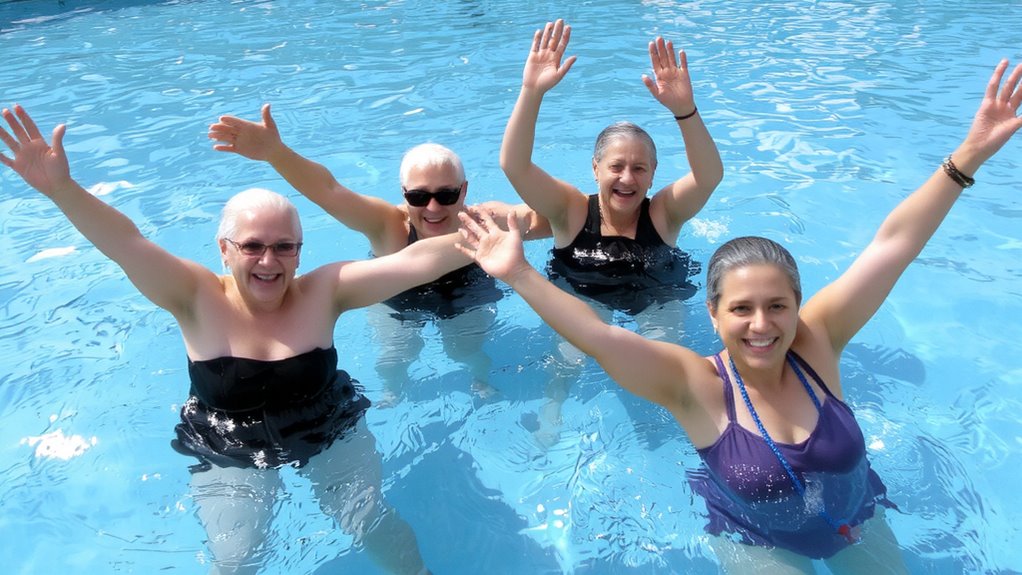
The low-impact nature of Aqua Zumba makes it an ideal workout for protecting aging joints, especially when compared to high-impact land-based exercises. You experience buoyancy benefits that reduce joint compression, allowing freer movement with less pain. Water supports up to 90% of your body weight, minimizing stress on cartilage and connective tissues. At the same time, resistance training occurs with every motion-water’s natural drag strengthens muscles without weights. This combination enhances joint stability and promotes fitness recovery more effectively than many dry-land routines. Unlike traditional gear like knee braces or compression sleeves, Aqua Zumba relies on environmental mechanics rather than external aids, reducing dependency on fitness gear. You maintain range of motion while building endurance, critical for long-term joint preservation. It’s not just safe-it’s smart. The water’s feedback encourages proper alignment and controlled exertion, making it a practical, sustainable choice for seniors prioritizing functional fitness and joint longevity.
How Water Workouts Shield Knees and Hips
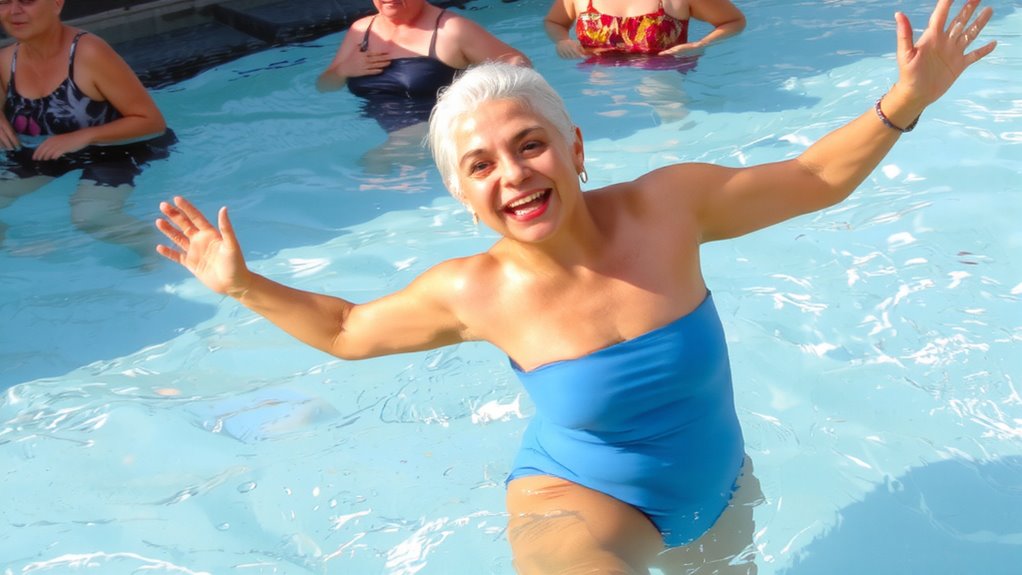
While gravity pulls hard on land-based movements, water workouts considerably reduce compressive forces on your knees and hips, making them a smarter recovery-focused choice for aging adults. The buoyancy benefits of being submerged support up to 90% of your body weight, drastically lowering joint impact during movement. This means every step, kick, or twist in the water stresses your hips and knees far less than on dry land. At the same time, water resistance provides consistent, low-impact strength training, helping maintain muscle without straining vulnerable joints. Unlike high-force gym equipment, aquatic exercise avoids jarring motions while still improving mobility and stability. You get the dual advantage of gentle support and effective engagement-ideal for long-term joint preservation. Fitness recovery isn’t just about rest; it’s about choosing smarter modalities. Water workouts offer both protection and performance, making them a practical, sustainable option for aging adults prioritizing joint health without sacrificing activity.
Features of a Senior-Friendly Aqua Zumba Class
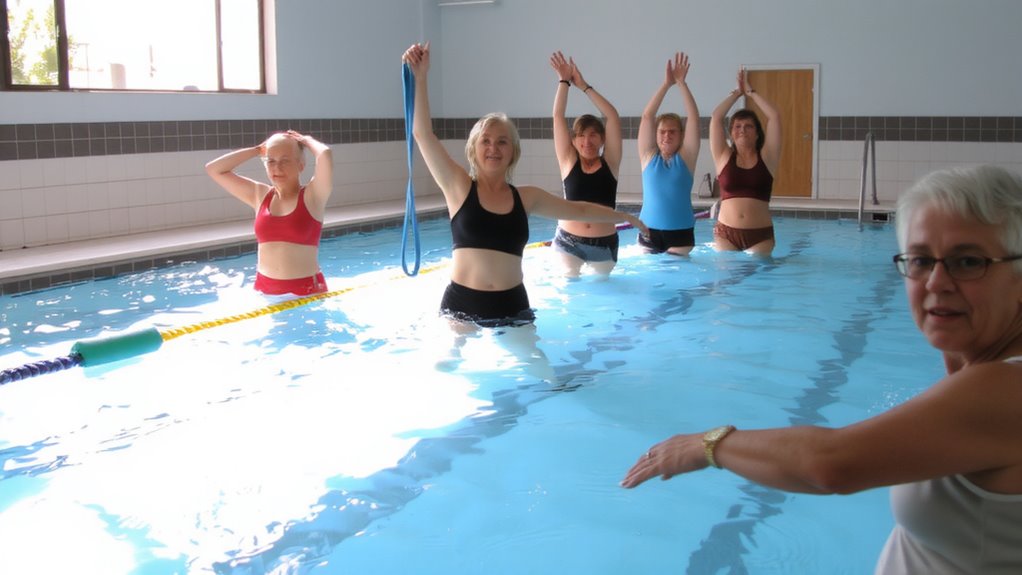
You’re already aware water eases stress on joints, making movement safer and more comfortable as you age, but now picture turning that supportive environment into something lively and fun-enter Aqua Zumba tailored for seniors. A senior-friendly class features carefully curated music selection, blending familiar rhythms with moderate tempos to sustain engagement without overexertion. Instructors emphasize class etiquette, promoting inclusivity and mindful participation-arriving on time, respecting personal space, and following instructor cues guarantees a smooth experience. Sessions typically begin with water-based warm-ups, progress through choreographed sequences, and end with gentle cooldowns. The buoyancy reduces impact, while resistance enhances muscle engagement. Supportive gear like water shoes or flotation belts may be offered, depending on mobility needs. These classes balance structure with adaptability, making fitness recovery enjoyable and sustainable, especially when design, rhythm, and respect shape the aquatic environment.
5 Low-Impact Aqua Zumba Moves for Older Adults
Though water provides natural resistance and support, selecting the right low-impact Aqua Zumba moves guarantees you maximize fitness recovery without straining aging joints. You’ll benefit from controlled arm sweeps, gentle knee lifts, and side steps, all performed in chest-high water to reduce joint load. These moves enhance cardiovascular endurance while supporting mobility, making them ideal for sustained practice. Incorporating balance training through single-leg stands or slow heel-to-toe walking in water improves stability and reduces fall risk. Rhythm practice-matching movements to musical beats-sharpens coordination and cognitive engagement, which is especially valuable as you age. Unlike high-impact routines, these aquatic variations minimize wear on cartilage and allow safer repetition. Performance observation shows participants gain muscle activation without the shock of land-based exercise. This combination of resistance and controlled motion supports long-term joint health, recovery, and functional independence-all within a fitness modality that’s both accessible and effective.
How to Find an Aqua Zumba Class Near You for Seniors
Where can you uncover a senior-friendly Aqua Zumba class that fits both your fitness recovery goals and schedule? Start by checking community centers, YMCAs, or local pools that specialize in therapeutic programming. Class availability often peaks in mornings or early afternoons, making weekday consistency easier. Many facilities now list schedules online, so you can compare session frequency and session length before committing. Look for classes led by certified local instructors trained in adaptive aquatic techniques-they’ll tailor moves to support joint mobility and cardiovascular health without strain. These professionals understand how water resistance complements fitness recovery, offering modifications that align with common mobility limits. Don’t assume cost reflects quality; some low-cost municipal programs employ highly experienced trainers. Confirm the class emphasizes safety and inclusivity, using buoyancy belts and shallow-water setups to enhance balance and reduce impact. With the right fit, you’ll get measurable functional gains while enjoying every splash.
On a final note
You’re getting low-impact cardiovascular benefits while minimizing joint stress, making Aqua Zumba ideal for long-term joint preservation. The water’s natural resistance enhances muscular endurance without straining knees or hips. Combine this with supportive footwear and moisture-wicking attire, and your recovery time shortens considerably. These routines, when paired with proper fitness gear, offer measurable improvements in balance, flexibility, and coordination-essential components for maintaining independence as you age.