Low-Torque Tai Chi Push Hands Drills for Rehabilitating Rotator Cuff Microtears
You can safely rehab a rotator cuff microtear with low-torque Tai Chi push hands drills that emphasize slow, mindful motion and minimal joint stress. These drills enhance proprioception, scapular stability, and synovial fluid circulation without aggressive resistance or equipment. By maintaining pain-free ranges and relaxed muscle engagement, you reduce re-injury risk while retraining neuromuscular control. Paired with breath-coordinated movement, they offer a sustainable path to shoulder recovery-especially when progression is gradual and attentive. There’s more to uncover about refining this approach at every stage of healing.
Notable Insights
- Use slow, circular motions in Tai Chi push hands to minimize joint stress during rotator cuff microtear recovery.
- Maintain pain-free range of motion and relaxed muscle activation to avoid re-injury and support healing.
- Focus on bilateral, weight-shifting movements to enhance scapular stability and neuromuscular re-education.
- Incorporate wall circles and shoulder pendulums as safe solo drills to improve joint awareness and circulation.
- Progress gradually with partner drills only after two weeks of stable pain-free movement and controlled breathing.
Why Tai Chi Helps Rotator Cuff Microtear Recovery
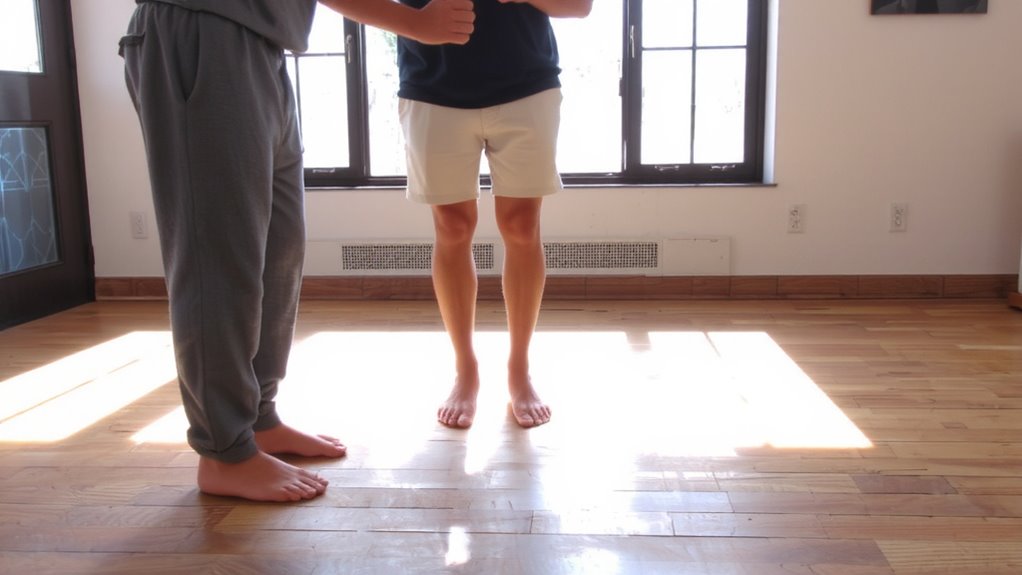
While you’re recovering from a rotator cuff microtear, aggressive strength training or high-load rehab exercises might do more harm than good, but tai chi push hands drills offer a low-torque, controlled alternative that supports healing without straining compromised tissues. These slow, mindful movements enhance joint lubrication by stimulating synovial fluid circulation, improving range of motion without shear stress. You’ll notice improved scapular stability and smoother glenohumeral coordination over time. Plus, the emphasis on Qi cultivation helps modulate your nervous system, promoting recovery through focused breath and intention. Unlike high-impact gear like resistance bands or weights-often too aggressive early on-tai chi requires no equipment, reducing dependency on fitness tools that may compromise form. It’s not a quick fix, but a sustainable method backed by biomechanical efficiency. You’re training neuromuscular control while protecting healing structures-key for long-term shoulder resilience-making tai chi a practical, accessible component of smart recovery.
Keep It Safe: 4 Rules for Shoulder-Safe Push Hands
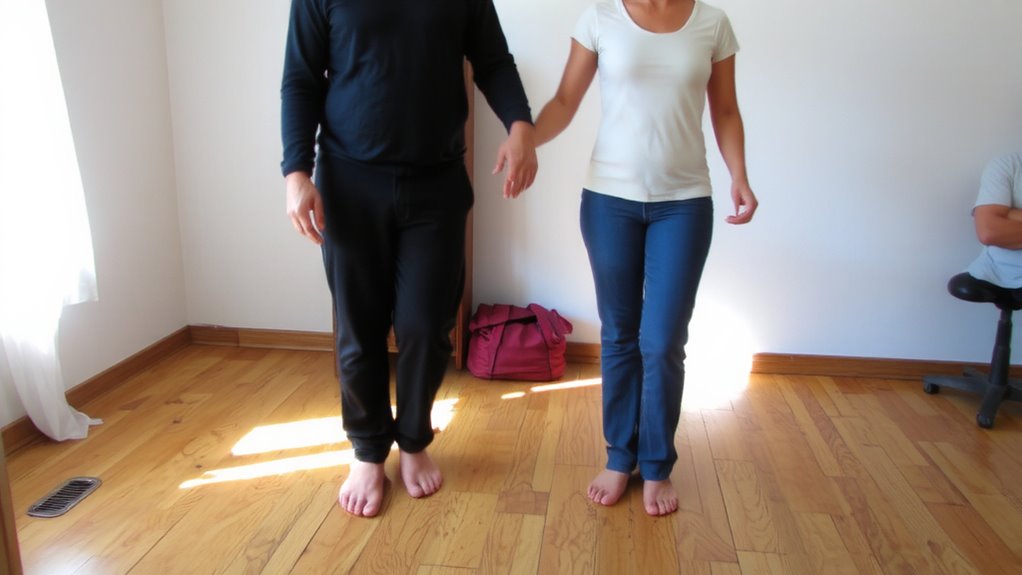
Because tai chi push hands can support rotator cuff recovery when practiced correctly, sticking to safety-focused guidelines is essential-especially when returning from injury. First, maintain proper joint alignment: keep your shoulders relaxed and wrists stacked under elbows to reduce shear forces. Second, emphasize controlled muscle activation-use just enough tension to guide movement, not lock joints. Third, limit range of motion early on; avoid pushing beyond pain-free zones to prevent microtear aggravation. Fourth, stay grounded through the feet; stability starts below, reducing shoulder compensation. These rules minimize torque while reinforcing neuromuscular re-education. Unlike aggressive rehab tools, push hands trains proprioception subtly, making mindful technique more valuable than intensity. When applied consistently, this low-load practice supports tissue healing without sacrificing functional movement patterns-ideal for structured recovery where precision matters more than power.
Start With These Solo Push Hands Rehab Drills
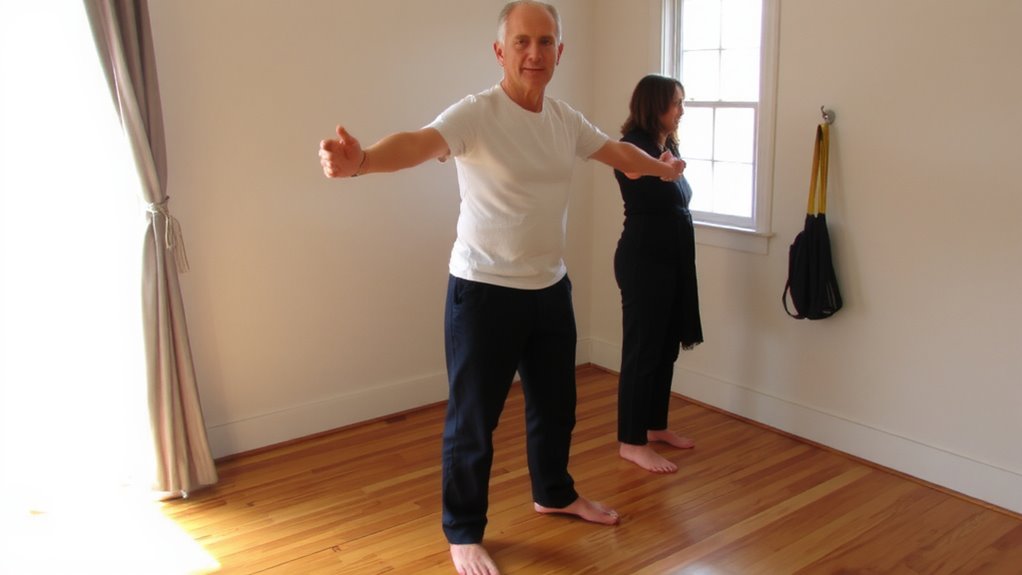
When rehabbing a rotator cuff, starting with solo push hands drills gives you precise control over movement quality while reinforcing the safety principles previously discussed. Begin with wall circles: stand facing a wall, place fingertips lightly on the surface, and trace small, controlled circles. This low-torque motion builds joint awareness without strain. Perform 1–2 minutes per side, focusing on smooth, even arcs-avoid hunching or forcing range. Next, incorporate shoulder pendulums: lean forward slightly, let the affected arm hang, and gently swing it in slow arcs. These eccentric movements encourage blood flow and reduce stiffness while protecting healing tissues. Both drills emphasize neuromuscular re-education, essential for regaining functional stability. Used together, wall circles and shoulder pendulums offer a measurable, low-risk progression path. They require no fitness gear, minimizing variables that could compromise form. Over weeks, you’ll likely notice improved mobility and diminished discomfort, signaling readiness for the next phase.
Try Gentle Partnered Push Hands Drills
A gentle shift to partnered push hands drills can significantly enhance your rotator cuff recovery by introducing controlled external resistance in a safe, responsive way. You’ll start to feel how subtle energy transfer between you and your partner influences shoulder mechanics without strain. These drills emphasize slow, deliberate motions that foster partner synchronization, allowing both of you to match rhythm and pressure precisely. This mutual awareness reduces joint load while training neuromuscular coordination-key for rebuilding shoulder integrity. Unlike aggressive rehab methods, these low-torque interactions avoid sudden peaks in force, making them ideal during tissue healing. You’ll notice improved joint tracking and smoother movement arcs over time. Partnered work also exposes imbalances early, letting you adjust before compensatory patterns set in. The success hinges on consistent, mindful practice rather than equipment-though supportive, non-restrictive clothing helps maintain proper alignment. With focus, this stage builds trust in movement, preparing you for more dynamic stability challenges ahead.
How Breath Retrains Shoulder Stability
You’ve likely noticed how synchronized breathing emerges naturally during partnered push hands, subtly influencing balance and movement efficiency. That’s no accident-diaphragmatic engagement creates intra-abdominal pressure, enhancing spinal stability and reducing shoulder strain during rotational movements. When you coordinate breath with motion, you’re not just calming the nervous system; you’re reinforcing pelvic anchoring, which grounds force transmission and prevents destabilizing shoulder hikes. This respiratory control allows micro-corrective muscle activation around the scapula, essential for rotator cuff recovery. Unlike passive rehab gear, breath acts as active biofeedback, training neuromuscular timing without external load. You’ll find that consistent diaphragmatic engagement improves thoracic mobility, indirectly supporting shoulder stability. Over time, this mindful breathing becomes automatic, integrating pelvic anchoring into functional movement patterns. It’s a low-tech, high-efficacy strategy-more reliable than supportive braces, which often encourage dependency. Proper breath mechanics don’t just aid recovery-they retrain movement integrity from the inside out.
When (and How) to Increase Push Hands Intensity
Why would you rush progression when your rotator cuff is still relearning its role? Increasing push hands intensity too soon risks re-injury, especially with microtears still mending. Instead, rely on consistent progress tracking-note improvements in range, endurance, and pain levels over time. Only when these metrics show stability over two weeks should you consider advancing. Then, apply gradual loading: increase resistance or duration by no more than 10% weekly. This mirrors principles in fitness recovery gear that emphasize controlled stress for tissue adaptation. Push hands isn’t about force; it’s about neuromuscular re-education. Maintain low-torque movements, focusing on timing and alignment. If discomfort spikes, scale back immediately-regression isn’t failure, it’s refinement. Use feedback from your body like data from precision rehab tools: objective and guiding. Patience with intensity guarantees long-term shoulder resilience, not just short-term gains.
Gentle Push Hands for Early-Stage Shoulder Healing
Progressing too quickly after initial shoulder stabilization only undermines healing, so it’s smarter to focus on movement quality when tissues are still fragile. In early-stage recovery, gentle push hands drills build joint awareness without straining healing microtears. You’re not generating force-instead, you’re tuning into subtle shifts in shoulder alignment and weight transfer. Keep movements small, slow, and controlled, using minimal resistance to cue proprioception. This phase isn’t about strength or endurance; it’s about re-educating your neuromuscular system. Proper alignment reduces shear forces across the rotator cuff, allowing tendons to adapt safely. Tools like biofeedback mats or posture mirrors can reinforce correct positioning, but aren’t essential. Over-reliance on gear distracts from internal focus. The real recovery gains come from consistent, mindful practice-prioritizing precision over intensity guarantees sustainable progress without setbacks.
On a final note
You’re rebuilding shoulder integrity with smart, low-torque movement-Tai Chi push hands offers measurable rehab benefits by blending controlled resistance with breath-coordinated stability. These drills enhance proprioception and scapular control without overloading healing tissue. When paired with proper form and gradual progression, they outperform passive recovery. Used correctly, this mindful practice becomes a functional, sustainable step toward shoulder resilience-no gimmicks, just precision-based rehabilitation rooted in biomechanical awareness and consistent, gentle loading.