Planning Deload Weeks Every Fourth Week to Prevent Cumulative Mental Drain in Strength-Based Athletes
You should plan deload weeks every fourth week to prevent mental burnout and nervous system fatigue. Cutting volume by 40–60% and lowering intensity to 50–60% of your max helps recovery while keeping motor patterns sharp. Keep compound lifts but swap in simpler variations. Avoid complex gear-recovery tools aid muscles, not the mind. Track mood, sleep, and focus to spot mental fatigue early. A structured break keeps you strong longer, and there’s more to learn about tailoring it to your body’s signals.
Notable Insights
- Schedule deload weeks every fourth week to align with natural adaptation cycles and prevent mental fatigue buildup.
- Reduce training volume by 40–60% and intensity to 50–60% of 1RM to ease CNS strain without losing motor patterns.
- Maintain compound movements with simpler variations to preserve technique and mind-body connection during mental recovery.
- Monitor mental fatigue through mood tracking, sleep quality, and HRV to validate scheduled deload timing.
- Replace high-pressure sessions with mobility work, foam rolling, or mindfulness to support cognitive and emotional reset.
Why Strength Athletes Burn Out Without Mental Recovery
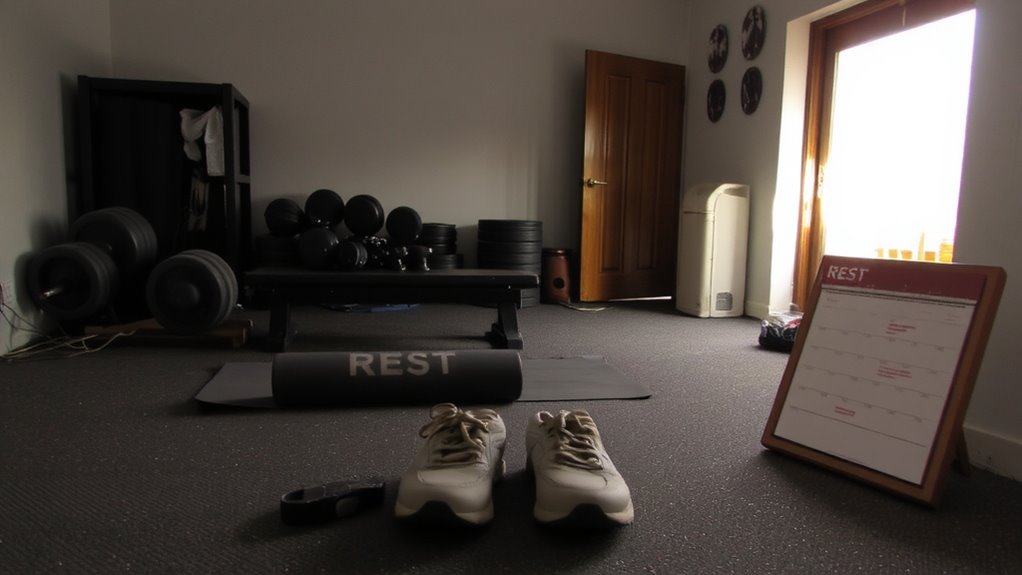
A deload week isn’t just about easing up on the weights-it’s a necessary reset for your nervous system, and skipping it can quietly erode your progress. You push hard each training cycle, and without mental recovery, that relentless effort leads to mental exhaustion and emotional depletion. Strength athletes often overlook the cognitive toll of heavy lifting, focusing only on muscle and performance. But your CNS fatigues just like your biceps-maybe more insidiously. Over time, chronic stress from intense training accumulates, impairing focus, motivation, and even sleep quality. This isn’t just burnout; it’s systemic wear. Recovery gear like massage guns or compression boots helps physically, but they can’t fix what a deload week does: reset your mind-body connection. Ignoring mental recovery sabotages adaptation. You’re not weak for resting-you’re smarter. That week of lighter loads isn’t lost time; it’s strategic maintenance, ensuring your long-term performance stays strong and sustainable.
Is a Weekly Deload Right for You?
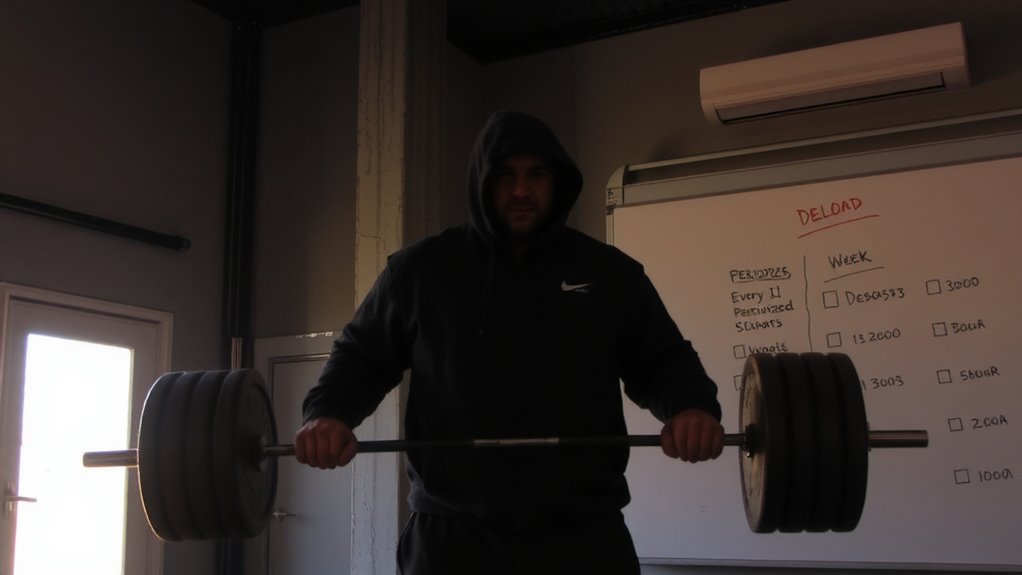
You’re likely no stranger to fatigue, especially if your training revolves around heavy lifts and high intensity. A weekly deload might sound tempting, but it’s not a one-size-fits-all solution. Your training history plays a key role-beginners often don’t need frequent deloads, while advanced athletes with years of heavy loading may benefit more. Individual preferences also matter; some thrive on constant momentum, others stall without regular recovery breaks. Weekly deloads can disrupt progressive overload if not timed right, potentially slowing strength gains. For most, a deload every fourth week strikes a better balance, aligning with typical adaptation cycles. It’s not about avoiding work-it’s about optimizing performance. Listen to your body, but ground decisions in experience and structure, not just how you feel today. Recovery isn’t passive-it’s strategic.
What to Cut (and Keep) in Your Deload Week

While slashing your workload during a deload week, it’s essential to maintain movement quality and neuromuscular engagement-so don’t ditch your routine entirely. Focus on volume reduction by cutting sets and reps by 40–60%, allowing recovery without losing motor pattern efficiency. Keep compound movements but apply exercise substitution-swap back squats for goblet squats or bench press for push-ups-to reduce systemic stress while preserving skill. Intensity can dip to 50–60% of your one-rep max, ensuring joints and connective tissues stay conditioned without excessive strain. Avoid introducing new, complex gear like unstable training tools; stick with familiar equipment to maintain form integrity. Foam rolling and basic mobility aids can support recovery, but don’t over-rely on passive devices. The goal is active restoration: smart programming beats gadget dependence. A well-structured deload keeps you sharp without overreaching-research shows consistency in training beats sporadic intensity.
3 Strength-Specific Deload Templates
Cutting volume and modifying exercises sets the stage for smarter recovery, but how you structure that reduced workload matters just as much. In strength-specific deload templates, your program design should prioritize movement quality over load. Reduce intensity by 40–50% and cut volume by at least 30% to support recovery tracking without losing neuromuscular engagement. Choose one of two approaches: a fixed template or a responsive model based on fatigue markers.
| Week | Training Stress |
|---|---|
| Normal | 100% intensity, 6–10 sets/muscle |
| Deload | 50% intensity, 3–4 sets/muscle |
This structured reduction maintains technique consistency while giving your system a break. Using this approach within a four-week cycle enhances long-term adaptation. Proper recovery tracking-through sleep logs, mood, and performance-makes deloads more than just downtime; they become strategic tools embedded in smart program design.
How to Adjust Your Deload for Mental Fatigue
Why do some athletes return from a deload feeling just as drained as when they started? Because physical rest alone doesn’t address mental fatigue. You need to actively monitor mental cues-things like irritability, lack of focus, or dreading training-and adjust your deload accordingly. Emotional tracking helps you recognize patterns in mood and motivation, allowing for smarter recovery choices. Instead of just reducing weight, consider swapping sessions with low-pressure movement or mindfulness. This isn’t about slacking-it’s strategic recalibration. Wearables that track heart rate variability or sleep quality can support this, but they’re most effective when paired with your subjective feedback. Ignoring emotional data risks incomplete recovery, even with perfect physical programming. A true deload balances both body and mind, so you come back sharper, not just stronger. Adjusting for mental fatigue isn’t optional-it’s essential for sustainable gains.
On a final note
You’re likely pushing hard each week, but without planned deloads, mental and physical fatigue stack up. Every fourth week, cutting volume by 40–60% while maintaining movement patterns helps sustain strength gains and focus. Smart recovery isn’t laziness-it’s strategy. Quality foam rollers, weighted vests, and joint sleeves support consistency, but only if you let your nervous system recharge. Deloading isn’t a gear check; it’s a performance tune-up.