Jump Rope Progressions From Two-Foot to Alternating Singles for Ankle Stability
You build ankle stability by starting with soft two-foot jumps, keeping your feet flat and landings quiet on the balls of your feet. Focus on rhythm, not speed-controlled bounces sharpen proprioception and reduce joint stress. Once you’ve mastered form, march in place to sync your arms and legs, then progress to alternating foot strikes with minimal lift. This gradual shift trains tendon resilience and coordination. Staying precise now prevents injuries later-there’s more to gain by moving forward the right way.
Notable Insights
- Start with two-foot jumps, maintaining soft landings on the balls of the feet to build ankle stability and proper alignment.
- Engage the core and keep a slight knee bend to enhance joint control and reduce impact forces during jumps.
- Refine bounce height to 1–2 inches to improve proprioception and promote efficient tendon loading in the ankles.
- Transition to marching in place to develop rhythm, coordination, and consistent foot strike patterns with minimal impact.
- Progress to alternating foot strikes with low, controlled jumps to enhance dynamic ankle control and prepare for single-leg coordination.
Why Ankle Stability Makes You a Better Jumper
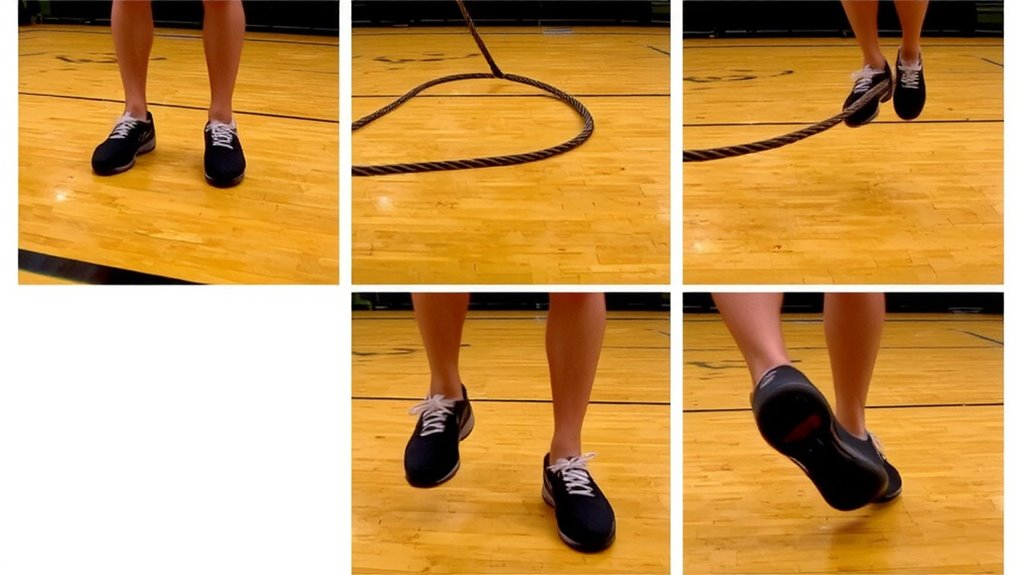
Ankle stability isn’t just about avoiding sprains-it’s a game-changer for your jumping efficiency and overall performance. When your ankles are stable, you generate force more effectively, reducing energy leaks that slow you down. Proprioception training sharpens your body’s awareness of joint position, helping you adjust mid-movement with precision. This heightened sensitivity improves balance and coordination, especially during rapid, repetitive jumps. Proper joint alignment guarantees forces distribute evenly across your foot and ankle, minimizing strain on ligaments and tendons. Over time, poor alignment leads to overuse injuries and reduced power output. Stability isn’t just strength-it’s control. Jump ropes with ergonomic handles and consistent swing dynamics support this training by encouraging rhythm and timing. Paired with minimalist footwear or bare feet on forgiving surfaces, you amplify sensory feedback. Recovery benefits too-fewer micro-injuries mean less downtime. Invest in stability, and your jumps become safer, sharper, and more sustainable.
Master the Two-Foot Jump With Perfect Form
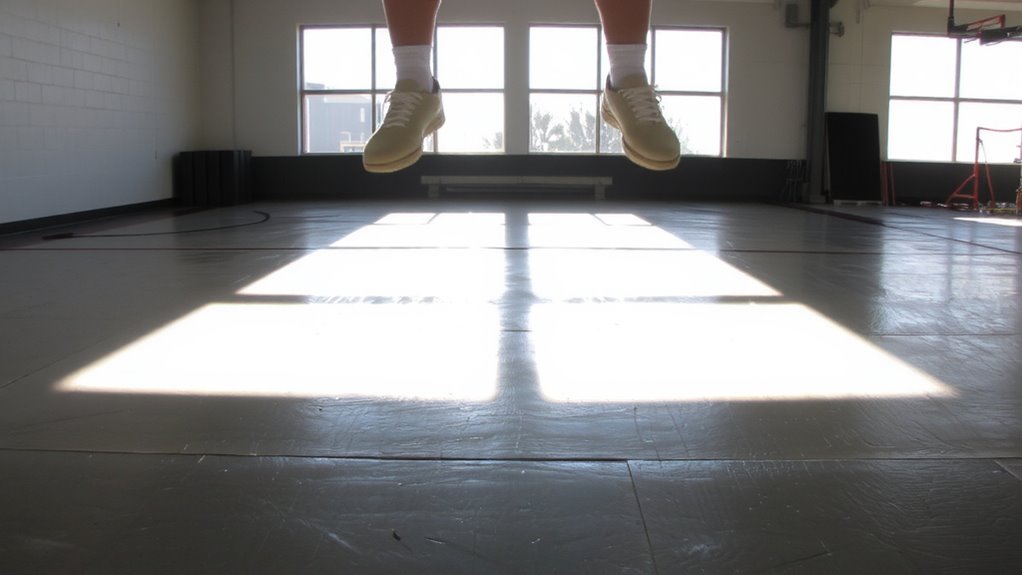
Start with the foundation-your feet-and build from there. Keep your feet flat, shoulder-width apart, and knees slightly bent to maintain proper alignment from ankle to hip. This position protects your joints and boosts stability. Land softly on the balls of your feet, not your heels, to minimize impact. Engage your core and keep your posture upright-no slouching or overreaching. Your arms stay close to your sides, turning the rope with wrists, not elbows. Focus on a consistent tempo; each jump should match the last in height and timing. This rhythm sharpens coordination and builds endurance safely. Perfecting the two-foot jump isn’t flashy, but it’s essential. It teaches control, reinforces joint stability, and sets the stage for advanced patterns. Use a quality jump rope with adjustable length and smooth rotation to support consistent practice. Master this first step, and you’ll build a stronger, more resilient foundation for everything that follows.
Control Your Bounce for Sharper Ankle Feedback
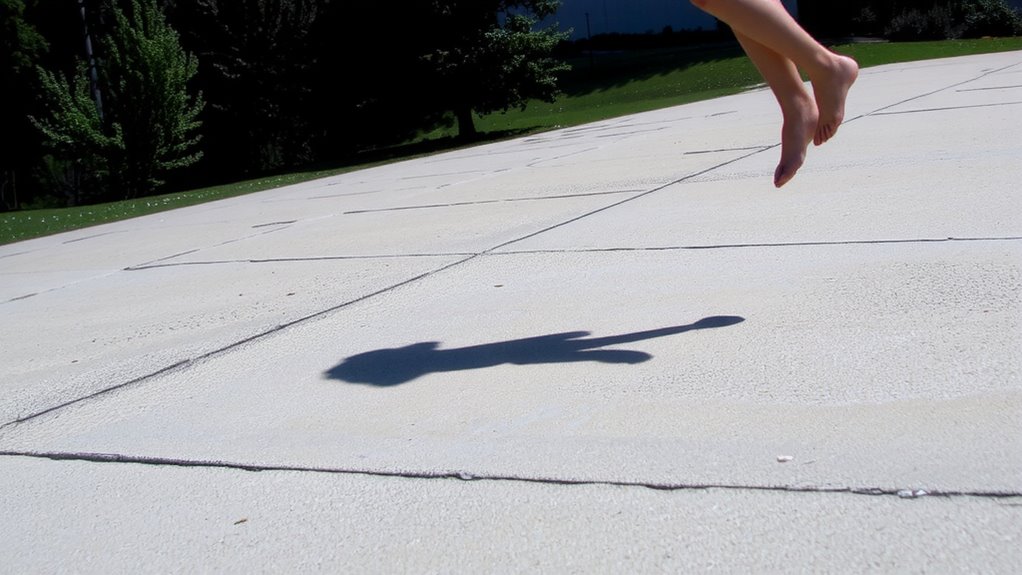
While most beginners focus on speed or endurance, refining the quality of your bounce is what truly sharpens ankle stability and neuromuscular feedback. You’re not just jumping-you’re tuning how your foot strikes and rebounds. A controlled, low bounce keeps your ankle alignment neutral, minimizing wobble and joint strain. Let the balls of your feet handle takeoff and landing, staying springy but grounded. This precise contact heightens ground feedback, so your body learns to adjust instantly to surface changes. Avoid deep, floppy jumps; they blur sensory input and risk overuse. Instead, aim for 1–2 inches of lift-just enough to clear the rope. This micro-bounce reinforces proprioception and tendon resilience. You’ll notice sharper coordination and reduced fatigue over time. Investing attention here builds a durable foundation, making shifts to advanced patterns smoother and safer. Your ankles aren’t just surviving the workout-they’re adapting with precision.
March in Place to Build Jump Rope Rhythm
How do you turn a disjointed hop into a fluid, rhythmic bounce? You start by marching in place-yes, just marching. This builds timing and coordination critical for jump rope. Focus on a consistent arm swing, letting your wrists drive small, controlled rotations as if mimicking the rope’s path. Pair each arm movement with a deliberate knee lift, high enough to clear imaginary rope but not so high it disrupts your rhythm. Keep your posture upright and land softly on the balls of your feet. This trains your nervous system to link upper and lower body timing, sharpening ankle stability through repetition. The simplicity of marching masks its value: it integrates arm swing precision with controlled knee lift, forming the foundation of efficient jumping. It’s not flashy, but it’s functional, low-impact, and essential for developing the neuromuscular coordination needed before advancing.
Switch to Alternating Foot Strikes Smoothly
Once you’ve mastered the timing of marching in place, shifting to alternating foot strikes becomes the next logical step in refining your jump rope rhythm and boosting ankle stability. You’ll start to engage your ankle mobility more dynamically, allowing each ankle to move through its full range with control. This motion strengthens proprioception and prepares your lower legs for more complex movements. Focus on smooth shifts-each foot should lightly tap off the ground in quick succession, promoting consistent foot coordination. Keep your jumps low and rhythmic, minimizing impact while maximizing precision. The rope’s consistent arc should feel natural, uninterrupted by uneven foot strikes. As you practice, you’ll notice improved balance and responsiveness in your lower limbs, signs your joints are adapting well. This phase isn’t about speed or endurance yet; it’s about quality movement patterns that support long-term joint health and performance efficiency. Proper footwear with flexible support helps, but rely primarily on technique.
Speed Up Without Sacrificing Ankle Control
Since you’ve built a solid foundation with smooth, alternating foot strikes, it’s time to gradually increase your jump rope pace while keeping ankle control front and center. As speed rises, maintaining proper ankle alignment becomes critical-your foot should land midsole with the ankle stacked over the heel, minimizing lateral wobble. You’ll notice that poor alignment amplifies ground reaction forces, increasing joint strain and fatigue. Focus on quick, quiet rebounds: soft landings mean you’re absorbing force efficiently, not letting it travel up your legs. A lightweight, appropriately sized rope helps sustain rhythm without encouraging rushed, sloppy form. Don’t chase revolutions per minute yet; instead, prioritize control through each cycle. Monitor how your ankles feel post-session-lingering instability suggests you’ve pushed too fast. Speed gains are only beneficial if built on precision, not compromised mechanics.
Jump Longer With Control and Precision
Why do some jump rope sessions leave you feeling sharp and coordinated, while others drain your calves and wobble your ankles? The difference often lies in your jump mechanics and how consistently you maintain proper ankle alignment. When jumping longer with control and precision, you’re not just adding time-you’re refining technique. Efficient jump mechanics reduce impact stress, keeping your landings soft and rhythmic. You stay on the balls of your feet, knees slightly bent, and ankles stacked over toes. This alignment prevents wobbling and builds endurance without compromising form. As fatigue sets in, focus sharpens; subtle shifts in posture or timing can make or break your stability. Tools like weighted ropes or low-rebound surfaces may help reinforce control, but nothing replaces mindful repetition. With disciplined practice, longer jumps become both sustainable and precise-turning stamina into skill while protecting your joints.
On a final note
You’ve built ankle stability through two-foot jumps, controlled bounce, and marching-foundations for smooth, alternating foot strikes. This progression sharpens coordination and joint feedback, letting you increase speed while maintaining precision. Proper form reduces impact stress, enhancing both performance and recovery. Good jump rope technique, paired with supportive footwear and well-cushioned surfaces, optimizes joint health. You’re not just jumping longer-you’re moving smarter, with control that protects and improves endurance over time.