Postural Reset Rows: Short Sets Aimed at Counteracting Desk-Related Kyphosis
You sit all day, and your spine pays the price-slumping into that forward-hunched kyphosis shape. Postural reset rows fight back with short, focused sets that retrain your shoulder blades to retract properly. Use light resistance, keep your core tight, and squeeze between the blades. Doing them at your desk, midday or post-lunch, counters spinal compression and muscle imbalance. Get the form right, and you’ll build lasting postural awareness-there’s a smarter way to recover, and it starts here.
Notable Insights
- Postural reset rows counteract kyphosis by reinforcing proper shoulder and spine alignment during prolonged desk work.
- Short sets of 8–12 reps performed multiple times daily enhance neuromuscular control and postural awareness.
- The exercise emphasizes scapular retraction, targeting weakened upper back muscles from sustained sitting.
- Performing rows with light resistance prevents strain while promoting sustained, controlled muscle engagement.
- Avoiding common mistakes like shrugging or jerking ensures optimal activation of postural stabilizing muscles.
How Sitting All Day Wrecks Your Posture (And What to Do)
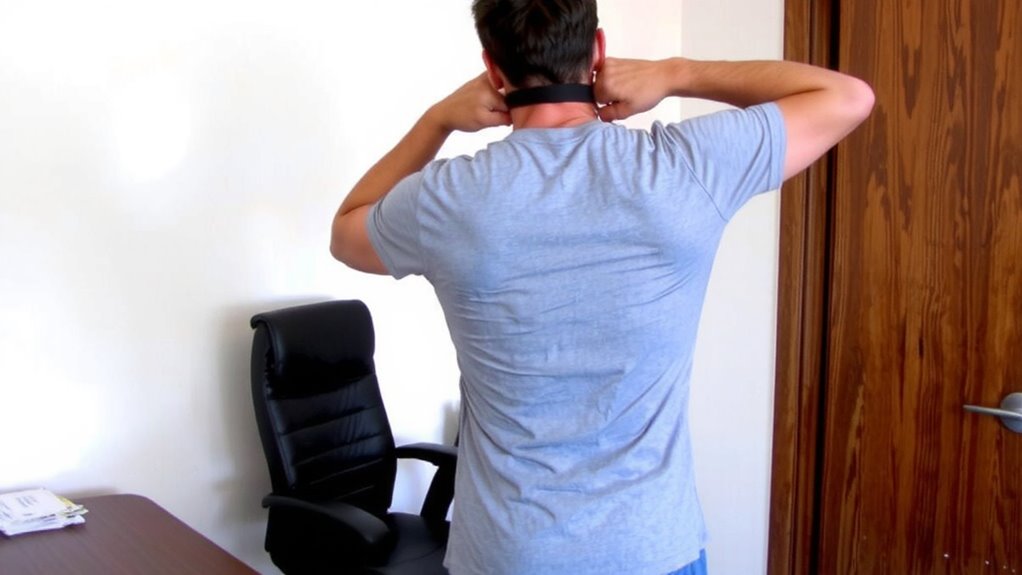
While you’re focused on getting work done, slumping at your desk hour after hour gradually pulls your spine out of alignment, reinforcing the forward-rounded posture common in kyphosis. This sustained position increases spinal compression, especially in the thoracic vertebrae, reducing disc space and limiting mobility over time. You’re not just sitting-you’re training your body to hunch, creating a muscle imbalance where chest muscles tighten and upper back muscles weaken. This imbalance further destabilizes posture, making corrective movement harder. Standard office chairs often worsen this by lacking lumbar support, failing to maintain the spine’s natural curve. Without intervention, these postural faults become structural. Fortunately, fitness recovery isn’t passive-targeted gear like posture trainers and ergonomic cushions can help, but they’re supports, not solutions. Lasting change demands active correction, not just better sitting. Upgrading to ergonomic seating such as the best chairs for bulging discs can significantly reduce spinal stress and support proper alignment.
Step-by-Step: How to Do Postural Reset Rows
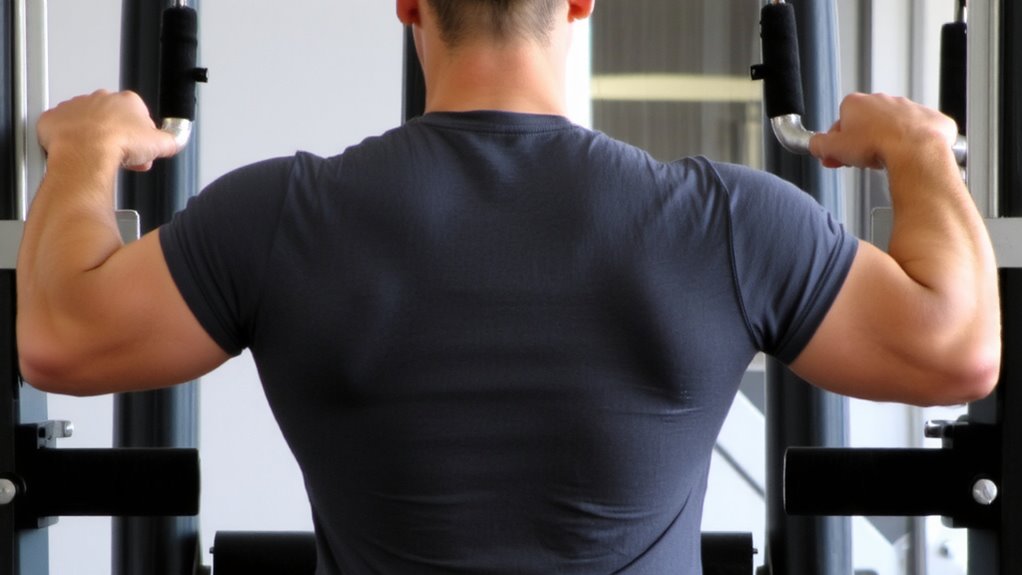
How do you begin reversing the postural damage accumulated from hours of deskwork? Start with Postural Reset Rows-brief, focused sets that retrain upper back muscles. Stand tall, core braced, holding light resistance bands or dumbbells at thigh level. Initiate each rep by retracting your shoulder blades, emphasizing shoulder alignment throughout. As you row upward, maintain steady grip tension-don’t clamp too hard, which can overactivate forearms and distract from scapular engagement. Keep elbows close, driving them back as if squeezing a pencil between your shoulder blades. Perform 10–12 controlled reps, focusing on form over speed. This movement directly counters kyphotic rounding by reinforcing proper neuromuscular patterns. Unlike bulky gym equipment, resistance bands offer portable, low-impact utility, making them ideal for office-friendly recovery. When executed consistently, these rows improve postural endurance and joint positioning, supporting long-term spinal health.
Best Times to Do Postural Reset Rows at Work

You’ve learned how to perform Postural Reset Rows with proper form-now it’s about fitting them into your workday effectively. The best moments to do these are during midday breaks, when desk fatigue starts pulling your shoulders forward. Performing them after lunch counteracts prolonged sitting and supports spinal realignment. They also work well between meetings or calls, acting as a quick recovery tool to reset posture and reduce muscular tension. Since they require minimal space and no equipment, you can integrate them seamlessly, even in busy environments. Consistency matters more than duration-brief, focused sessions multiple times a day enhance neuromuscular awareness. Unlike intensive recovery protocols, these rows offer functional benefits without disrupting workflow. When paired with ergonomic adjustments, they complement long-term postural health. Timing them strategically boosts circulation and mental clarity, making them more than just physical maintenance-they’re a productivity enhancer with measurable biomechanical advantages. Incorporating best office exercise equipment can further support posture and movement throughout the workday.
How Many Reps and Sets for Better Posture
Since your posture depends on consistent neuromuscular reinforcement, the number of reps and sets you perform matters more than how hard you push in each session. For ideal ergonomic alignment and muscular balance, aim for frequent, controlled efforts rather than max intensity. Short, regular sets condition postural muscles without fatigue, supporting long-term spine positioning.
| Frequency | Sets | Reps |
|---|---|---|
| Daily | 2–3 | 10–12 |
| Every other day | 3 | 12 |
| Work breaks | 1 | 8–10 |
These ranges maintain activation without overtraining, especially when seated for hours. Lower reps with focus on form enhance scapular retraction and thoracic awareness. You’ll see better results with consistency, as postural reset rows rely on repetition to retrain movement patterns. Over time, this builds sustainable strength that supports upright alignment and minimizes kyphotic drift. Incorporating back stretching equipment can further enhance spinal flexibility and complement the effects of postural reset rows.
Postural Reset Rows: 5 Form Mistakes to Avoid
Maintaining consistency with your postural reset rows sets the stage for realignment, but even disciplined practice can backfire if form takes a backseat. First, avoid shrugging your shoulders-keep them down to maximize scapular retraction. Second, don’t yank the band or cable; use controlled tension to engage the mid-back. Third, skipping thoracic mobility warm-ups limits effectiveness; your upper spine needs movement to support proper mechanics. Fourth, leaning too far back turns the exercise into a cheat-induced hinge, reducing muscular precision. In the end, failing to squeeze at peak contraction means missing the scapular retraction boost essential for posture. Each mistake undermines the reset’s purpose: recalibrating posture lost to desk work. Correct execution enhances thoracic mobility and strengthens postural muscles efficiently. Small tweaks yield significant long-term gains, especially when paired with recovery-focused gear like foam rollers or posture-cueing resistance bands. Precision trumps reps.
On a final note
You’ll find postural reset rows effective for fighting desk-related kyphosis when done consistently. These short, focused sets improve scapular retraction and activate weakened upper back muscles. Paired with ergonomic adjustments, they offer measurable postural benefits over time. While not a standalone fix, they’re a practical, equipment-light strategy. Used correctly, they complement recovery and support long-term spinal alignment, especially with mindful form and frequency.