Running Gait Retraining With High-Speed Video Analysis and Auditory Feedback
You’re likely overstriding or running asymmetrically without even knowing it. Gait retraining uses high-speed video to capture subtle flaws in foot strike and joint alignment, while auditory cues like metronome beeps help correct cadence and symmetry in real time. Combined, these tools reduce injury risk and improve efficiency, especially for runner’s knee or shin splints. It’s most effective with a specialist who blends science-backed analysis with wearable feedback-keep going to see how it all fits together.
Notable Insights
- Gait retraining uses high-speed video to detect subtle biomechanical flaws like overstriding and asymmetry.
- Auditory feedback from metronomes or wearables helps runners adjust cadence and foot strike in real time.
- High-speed video analysis allows frame-by-frame review of joint alignment and stride symmetry.
- Combining video and sound feedback improves muscle memory and running efficiency faster than visual cues alone.
- Specialized clinics use these tools alongside injury history to create personalized, data-driven retraining programs.
What Is Gait Retraining for Runners?
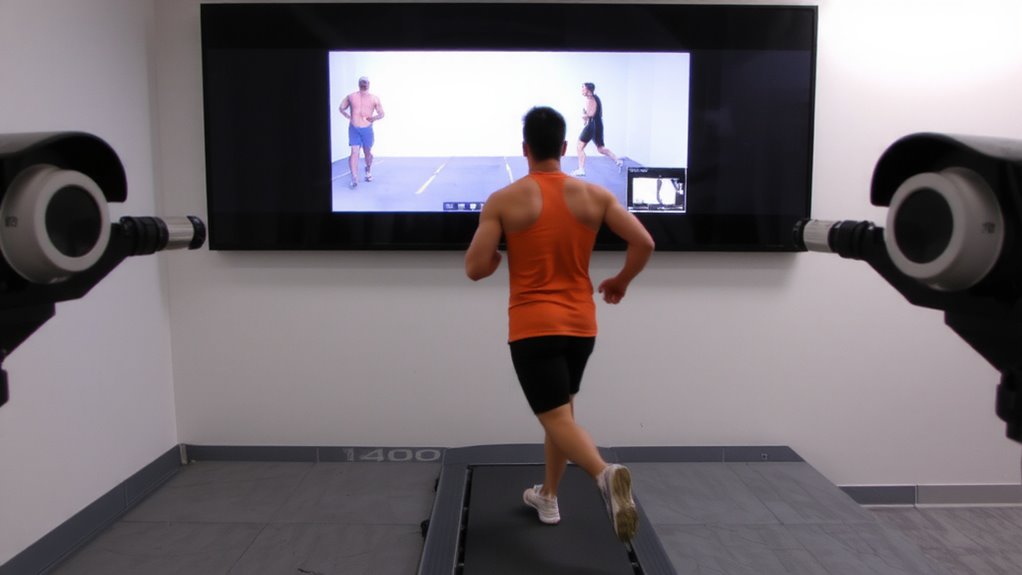
Gait retraining for runners isn’t just about fixing how your feet hit the ground-it’s a targeted approach to reshaping movement patterns that can reduce injury risk and boost efficiency. You’re learning to control your body in motion, focusing on specifics like foot placement and stride symmetry to create smoother, more balanced runs. Poor foot placement-such as overstriding-can jar your joints with each mile, while asymmetrical strides may lead to uneven wear and fatigue. Through high-speed video analysis, you see exactly how you move, and with auditory feedback, you adjust in real time. It’s not magic-it’s repetition and awareness. Studies support its effectiveness, especially when paired with wearable tech that tracks progress. You’ll need commitment, but the right recovery gear-supportive footwear, compression tools-helps maintain improvements. This isn’t a quick fix; it’s smart, data-backed training that treats your body like the high-performance system it is.
Which Running Injuries Get Better With Gait Retraining?
You’re already aware that tweaking your stride isn’t just about looking smoother on a treadmill-it directly impacts how your body handles the stress of running mile after mile. Gait retraining effectively reduces many common overuse injuries, especially those stemming from persistent biomechanical imbalances. If you’re battling runner’s knee, shin splints, or Achilles tendinopathy, altering your cadence or foot strike can markedly ease tissue load. Research shows that runners who adjust their form see faster recovery and lower recurrence rates. These improvements aren’t just anecdotal-controlled studies support reduced joint torque and muscle strain with proper modifications. While not a cure-all, gait retraining works best when paired with strength work and recovery-focused gear like compression sleeves or smart insoles. It’s most effective for injuries rooted in movement patterns, not acute trauma. You’ll likely see real benefits if your pain flares gradually with mileage, a classic sign of overuse injuries linked to flawed mechanics. Upgrading your footwear with supportive best insoles for hiking boots can further enhance alignment and reduce strain during gait retraining.
How High-Speed Video Reveals Form Flaws
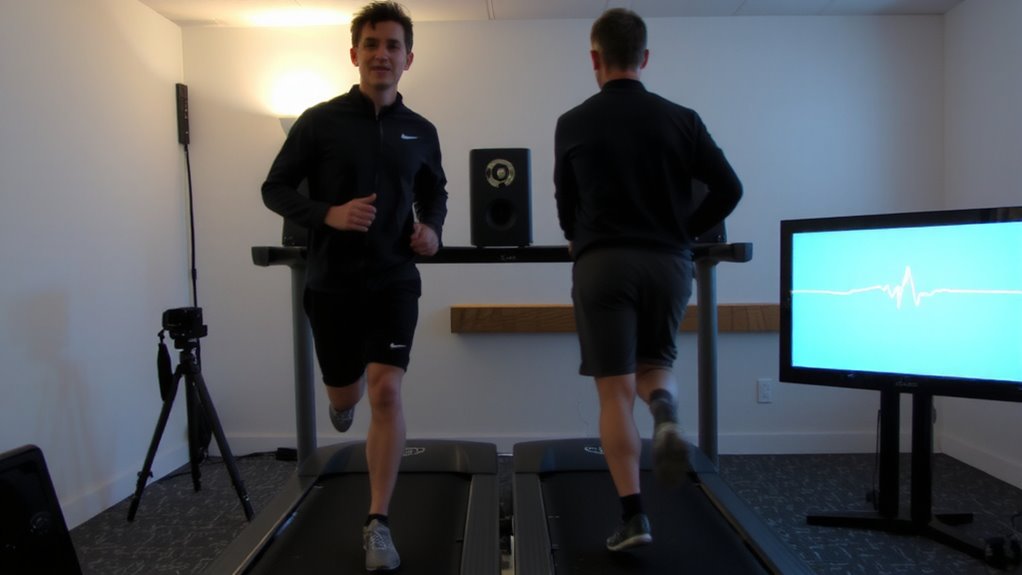
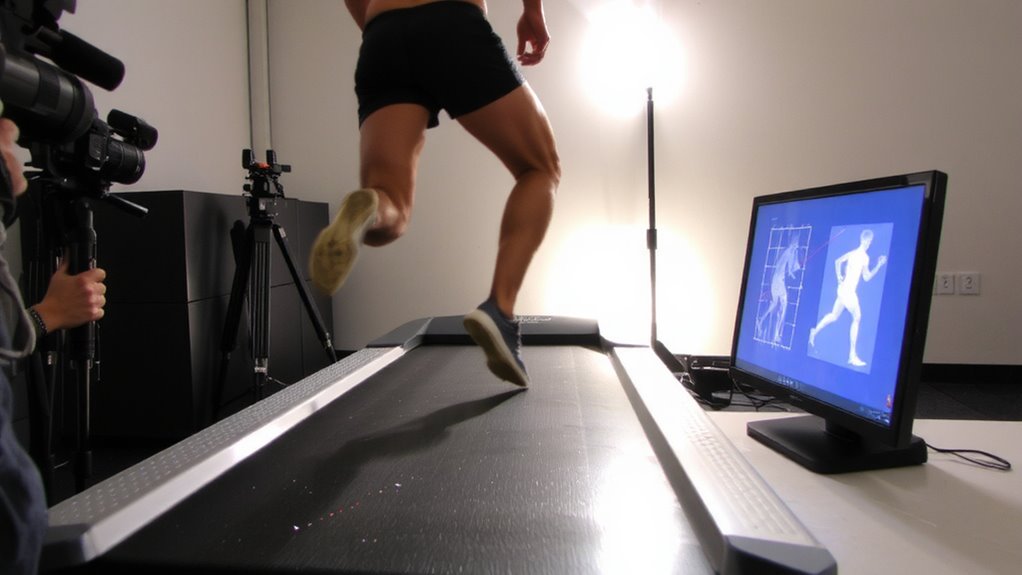
How much can you really see in real time? Without high-speed video, you’d miss most of what’s actually happening in your stride. When slowed down, tiny flaws become obvious-like how your foot strike lands too far ahead of your body or differs between left and right. This affects impact forces and can lead to injury over time. The camera captures your full cycle in detail, letting experts analyze stride symmetry frame by frame. Are your hips level? Is one leg overstriding? Video exposes imbalances invisible to the naked eye. Unlike basic apps or mirrors, high-speed systems track joint angles, timing, and coordination with precision. It’s not just about looking “smooth”-it’s about biomechanical efficiency. Once you see your actual form, you understand what needs adjusting. That clarity is powerful. Proper gait analysis gear turns guesswork into data, giving you a clear path to smarter, safer running-no hype, just feedback.
How Beeps and Tones Fix Your Stride in Real Time
Once you’ve identified flaws with high-speed video, the next step is making real changes-right as you run. That’s where real time feedback through auditory cues comes in. Devices like metronomes or wearable sensors emit beeps and tones that sync with your stride, guiding cadence, foot strike, and symmetry. You don’t just see the problem-you hear the fix. This immediate input helps rewire muscle memory more effectively than video alone. Studies show runners adjust faster with auditory cues because the brain processes sound quickly, allowing split-second corrections. The beeps act like a rhythm coach, keeping you aligned without breaking flow. While some gear is bulky or finicky, simpler tools-like pocket-sized metronomes or Bluetooth earbuds paired with apps-deliver reliable performance. For gait retraining, auditory feedback isn’t just helpful; it’s essential. When timed right, those tones turn theory into action, helping you build a safer, smoother stride-one beep at a time.
What to Expect in Your First Gait Retraining Session
What does your first gait retraining session actually feel like? You’ll start with light warm up routines-dynamic stretches and short jogging-to activate muscles and promote natural movement. Then, your coach will conduct an injury history review, asking about past strains, surgeries, or recurring pain to identify risk factors. This background helps shape personalized corrections. You’ll run on a treadmill while being recorded with high-speed video, though you won’t plunge into playback yet. The focus stays on comfort and awareness, not immediate changes. Coaches use your medical context and observed mechanics to plan future drills. Don’t expect a fix in one go; early sessions build foundation. The combination of warm up routines and honest injury disclosure guarantees retraining targets your needs safely. It’s systematic, not rushed-precision matters more than speed.
How Video and Sound Work Together to Fix Your Form
Why do elite running coaches insist on pairing video with audio feedback during gait analysis? Because visual cues alone aren’t enough. When you see your stride in high-speed replay, you notice asymmetries and missteps, but without immediate correction, change is slow. That’s where sound steps in. Auditory cues, like rhythmic beeps or verbal prompts, give you real time coaching, guiding foot strike or cadence as you run. This dual feedback loop-seeing the flaw and hearing the fix-trains your brain faster. You’re not just watching your form; you’re adjusting it on the fly. The synergy between video and audio enhances motor learning, making new patterns stick. Studies show runners improve efficiency and reduce injury risk when both senses are engaged. It’s not just about looking better-it’s about moving smarter, with precision that passive observation can’t deliver. This is the edge of modern gait retraining.
How to Find a Gait Retraining Specialist Near You
Where can you find a gait retraining specialist who actually delivers results? Start by checking reputable local clinics that focus on sports medicine or physical therapy-many now offer high-speed video analysis and real-time auditory feedback, key tools for effective retraining. Look for clinicians with certifications in biomechanics or experience working with runners. Don’t overlook running stores either; high-end ones often partner with specialists or host gait analysis events using pressure plates and slow-motion playback. These collaborations offer accessible entry points, though they may lack the depth of clinical assessment. While retail setups are convenient, clinics typically provide more personalized, science-backed plans. Choose based on your needs: minor tweaks might be fine at a running store, but persistent issues demand the precision of a trained professional. Always verify credentials and ask about the technology they use-quality varies widely.
On a final note
You’re getting real-time feedback that reshapes how you run, combining high-speed video’s precision with auditory cues’ immediacy. This tech-driven approach corrects form efficiently, reducing injury risk and improving performance. While not a standalone fix, it’s a powerful tool when paired with strength and mobility work. The gear-cameras, sensors, apps-is accessible and reliable, especially under professional guidance. For runners seeking lasting improvements, gait retraining offers measurable results worth the investment.