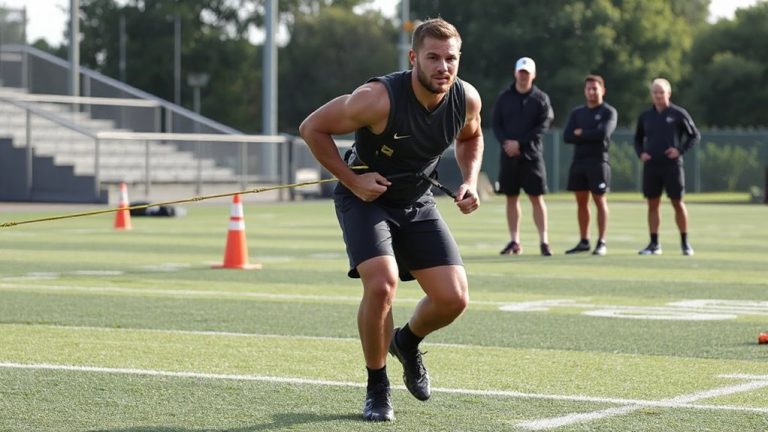
Mental Rehearsal of Perfect Form to Reinforce Neuromuscular Pathways Off-Season
You activate the same neural pathways during mental rehearsal as you do in physical practice, making it a powerful off-season tool. By vividly visualizing perfect form, you strengthen brain-muscle connections, maintain motor precision, and reinforce muscle memory without equipment or movement. Pair visualization with breath control and sensory detail - sight, sound, feel - for best results. Skipping this disciplined mental practice means missing out on neuromuscular retention; staying consistent keeps your nervous system primed and ready for what comes next.
Notable Insights
- Mental rehearsal activates the same neural pathways as physical practice, maintaining neuromuscular precision during off-season.
- Visualizing perfect form with vivid detail strengthens brain-muscle connections and enhances motor accuracy.
- Daily structured sessions-morning, post-work, and evening-optimize mental rehearsal consistency and effectiveness.
- Pairing visualization with breath control deepens focus and reinforces technique retention.
- Avoid vague imagery; include precise sensory cues to maximize neuromuscular pathway reinforcement.
Why Mental Rehearsal Works Like Real Practice

While you might think only physical repetition builds skill, mental rehearsal activates the same neural pathways used during actual performance, making it nearly as effective as real practice. You’re not just imagining-you’re engaging in real neural activation, strengthening the brain-muscle connection critical for precision and timing. This cognitive engagement mirrors the focus required during intense training, priming your nervous system without physical strain. Studies show athletes using visualization improve nearly as much as those practicing physically, especially in fine motor control and form retention. Unlike equipment-dependent workouts, mental rehearsal demands no gear, yet boosts neuromuscular efficiency. It’s recovery-friendly, reducing wear on joints and muscles while maintaining performance gains. For off-season fitness, it bridges the gap between idleness and action. When paired with light mobility or breathwork, the effects deepen. You’re not cheating the process-you’re optimizing it intelligently, using your mind as a training tool just as valid as weights or resistance bands.
Build Your Daily Mental Rehearsal Routine
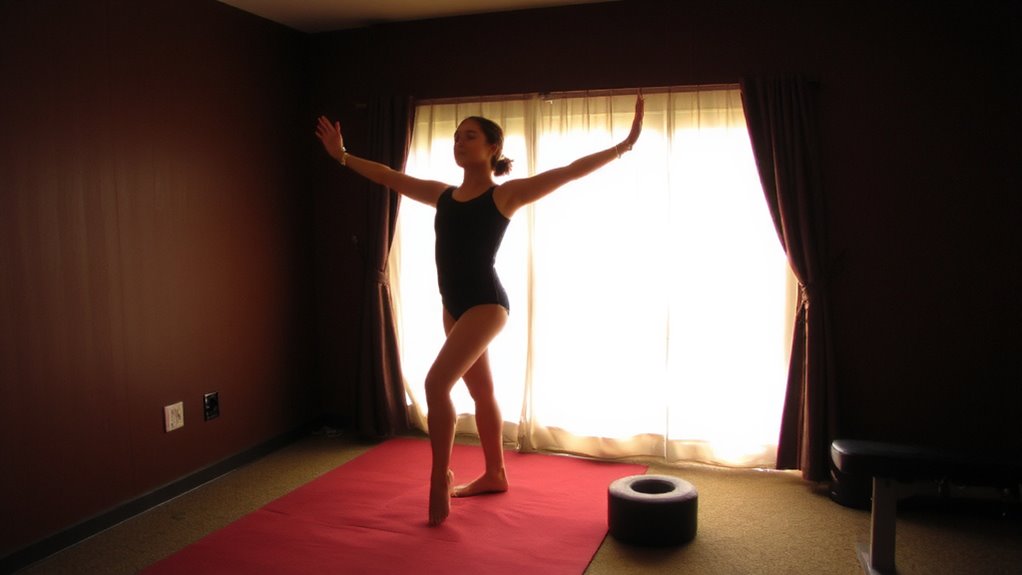
How do you keep your technique sharp when time or injury limits physical training? You build a daily mental rehearsal routine using visualization techniques and focus training. Just five to ten minutes a day can reinforce your neuromuscular pathways. Start by choosing a quiet space, free from distractions, and mentally walk through each movement with perfect form.
| Time of Day | Focus Area |
|---|---|
| Morning | Warm-up and form prep |
| Post-Work | Technique refinement |
| Evening | Injury recovery reinforcement |
| Pre-Session | Skill activation |
Consistency matters-pair mental rehearsal with breath control for deeper focus. High-performing athletes use this downtime to sustain edge and precision. With deliberate focus training, you condition your mind like a muscle. Visualization techniques aren’t a substitute for action, but they maintain readiness, especially when gear or recovery schedules limit physical output.
How Mental Rehearsal Builds Muscle Memory
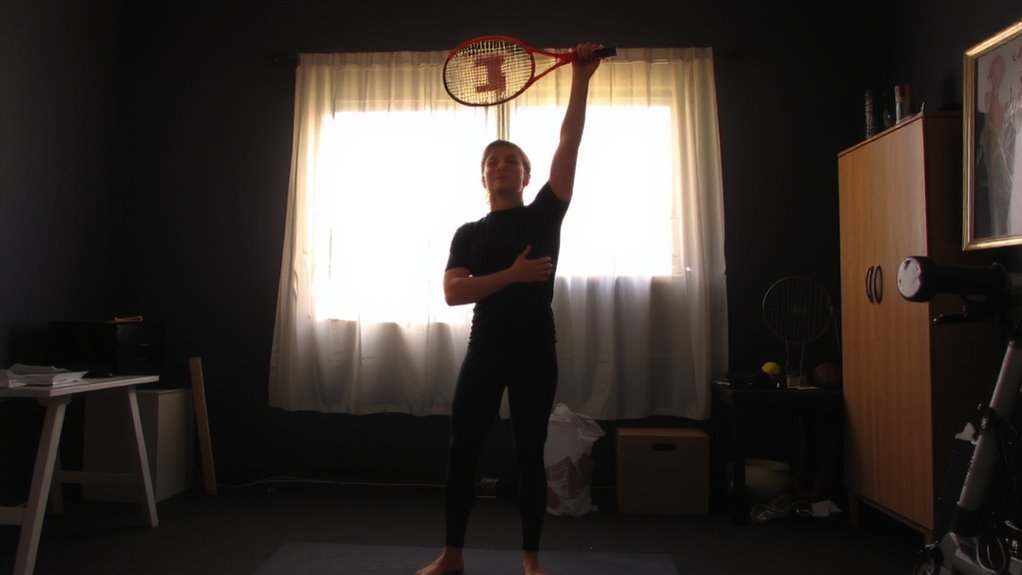
Since your brain can’t always tell the difference between vividly visualized movement and actual physical execution, mental rehearsal strengthens muscle memory by activating the same neural networks used during real performance. You’re not just daydreaming-this is focused neural activation that mimics real-time muscle engagement. Each time you mentally run through a movement with precision, you reinforce motor patterns through cognitive repetition. That means your nervous system gets better at firing the right muscles in the correct sequence, even without physical practice. Think of it like silently rehearsing a speech-it still primes your brain for delivery. Over time, this buildup of mental reps makes your physical execution smoother and more accurate. It’s particularly useful during off-season or recovery, when physical load must be reduced. High-level athletes use it to maintain sharpness, and fitness gear like neuromuscular stimulators can complement this process, but the core improvement comes from disciplined, consistent visualization.
Fix These Common Mental Rehearsal Mistakes
Why do so many people struggle to see results from mental rehearsal despite putting in the effort? You’re likely missing key elements like visualization clarity and focus consistency. If your mental images are vague or fragmented, your brain can’t accurately map the movement, weakening neuromuscular reinforcement. You need sharp, detailed visuals-seeing, feeling, and even hearing the perfect execution. Likewise, sporadic practice breaks focus consistency, diluting gains. Just like physical training, mental rehearsal demands regular, structured sessions. Skipping days or rushing through diminishes its impact. High performers don’t just visualize-they refine, repeating precise sequences with full attention. Treat each session like a drill: quality over quantity. Without consistent focus, even strong intentions fail. Strengthen your practice by eliminating distractions, using cues, and rehearsing in real-time. Master these, and your off-season prep will translate to sharper, more powerful performances when it counts.
Use Mental Rehearsal in Any Sport
Athletic success isn’t just built in the gym or on the field-it’s shaped in the mind. You can use visualization techniques in any sport to sharpen focus and reduce performance anxiety. Whether you’re a sprinter picturing explosive starts or a gymnast rehearsing a floor routine, mental rehearsal strengthens neuromuscular pathways just like physical practice. These techniques work because your brain doesn’t distinguish sharply between pictured and real actions.
| Sport | Technique Focus | Mental Benefit |
|---|---|---|
| Basketball | Free-throw routine | Builds consistency under pressure |
| Swimming | Turn timing | Enhances rhythm and efficiency |
| Tennis | Serve placement | Sharpens precision and confidence |
| Soccer | Penalty kick execution | Reduces performance anxiety |
On a final note
You’re building real neural connections through mental rehearsal, not just imagining them. It strengthens neuromuscular pathways, especially when paired with consistent off-season routines. Used correctly, it sharpens technique and accelerates muscle memory without physical strain. Top athletes rely on it because it complements recovery and maintains skill. Avoid vague visualizations-focus on precise, slow-motion execution. With the right mindset, mental practice isn’t a substitute; it’s a proven upgrade to your training toolkit.