How Wearable Muscle Oscillation Sensors Detect Subtle Tremors Indicating Incomplete Recovery
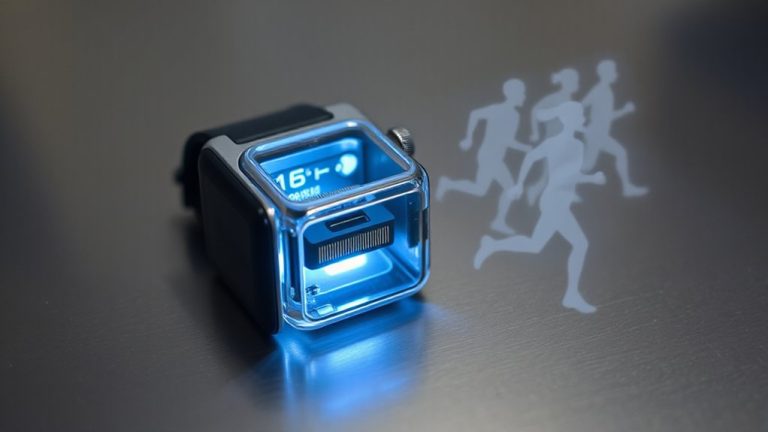
Your wearable uses muscle oscillation sensors with high-frequency accelerometers to detect tiny vibrations during movement, spotting subtle tremors that signal incomplete recovery. These micro-tremors-caused by neurological fatigue or metabolic imbalance-are filtered from noise using smart algorithms and calibrated baselines. Persistent oscillations reveal neuromuscular instability, helping assess true recovery. This precision tracking gives you clearer insight into your body’s readiness, so you can train smarter and reduce injury risk-what you discover next could change how you recover.
Notable Insights
- Wearable muscle oscillation sensors use high-frequency accelerometers to detect micro-tremors during muscle activity.
- Advanced filtering separates true muscle vibrations from motion artifacts and external noise.
- Subtle tremors are linked to neurological fatigue and metabolic imbalances like low glycogen or lactate buildup.
- Persistent tremors indicate incomplete neuromuscular recovery and increased injury risk.
- Real-time data on tremor frequency and amplitude helps guide recovery and prevent overtraining.
What Are Muscle Oscillation Sensors and How Do They Work?
How do you measure muscle fatigue before it leads to injury? You use muscle oscillation sensors-wearable devices that detect tiny vibrations in your muscles during activity. These sensors track movement patterns with high precision, but they’re not perfect. Signal noise can distort readings, especially during intense exercise when external motion interferes. Plus, sensor drift may slowly skew data over time, requiring frequent calibration. Still, their ability to capture real-time muscle behavior makes them valuable for recovery monitoring. Designed with accelerometers and gyroscopes, they attach directly to the skin or integrate into clothing. You’ll get feedback on muscle workload, letting you adjust training before strain turns into injury. While signal noise and sensor drift pose challenges, ongoing calibration and improved filtering algorithms help maintain reliability. For fitness enthusiasts serious about recovery, these tools offer more insight than heart rate alone-blending biomechanics with practical performance tracking.
Why Subtle Tremors Signal Incomplete Recovery
You’ve seen how muscle oscillation sensors pick up vibrations to track workload in real time, but there’s another layer to recovery that’s often overlooked-subtle tremors that linger after exercise. These micro-tremors aren’t just random muscle twitches; they’re signs your body hasn’t fully recovered. When neurological fatigue sets in, your nervous system struggles to maintain precise motor control, leading to shaky, unsteady contractions. At the same time, a metabolic imbalance-like low glycogen or accumulated lactate-can impair muscle stability. Together, these factors disrupt smooth muscle function, and the tremors become measurable indicators of incomplete recovery. Ignoring them means risking overtraining and injury. Wearables that detect these signals offer more than convenience-they provide objective insight into recovery quality, helping you train smarter. It’s not just about how hard you work, but how well you recover.
How Wearables Detect Hidden Muscle Oscillations
Where do you draw the line between readiness and risk? Your wearable knows-buried in micro-vibrations most miss. Tiny accelerometers and gyroscopes latch onto hidden muscle oscillations, picking up tremors too subtle for the eye. But here’s the catch: motion artifacts from everyday movement can muddy the data, mistaking a step for a spasm. That’s where smart filtering and consistent sensor calibration come in. Without proper calibration, signals drift, reducing accuracy. Top-tier wearables auto-adjust using baseline muscle activity, ensuring readings stay reliable. You’re not just wearing a gadget-you’re trusting it to spot instability before it becomes injury. These sensors don’t shout; they whisper warnings in data. When tuned right, they transform passive monitoring into active protection, catching disruptions early, quietly. It’s not magic-it’s precision engineering working beneath your skin.
What Real-Time Data Reveals About Healing
Why do some athletes bounce back faster than others? Real-time data from wearable muscle oscillation sensors reveals hidden patterns in your recovery. These sensors detect subtle tremors tied to biomechanical fatigue and neural adaptation, offering objective markers of healing. You’re not just healing when pain fades-you’re recovering when your muscle oscillations normalize. Persistent irregularities suggest incomplete repair, even if you feel fine.
| Metric | Insight |
|---|---|
| Oscillation frequency | Indicates neural adaptation progress |
| Amplitude spikes | Reveal residual biomechanical fatigue |
| Symmetry balance | Shows side-to-side recovery gaps |
| Tremor persistence | Flags incomplete neuromuscular recalibration |
This data moves rehab beyond guesswork. You see how your body truly responds, not just how it feels. It’s not about pushing harder-it’s about knowing when to rest, when to advance, and how your neuromuscular system is retraining.
How Live Feedback Personalizes Rehab Plans
How do you know when your rehab plan is truly working? With live biomechanical feedback from wearable muscle oscillation sensors, you don’t have to guess. These devices detect subtle tremors and muscle imbalances in real time, giving you immediate insights into movement quality. That means your routines adjust on the fly-no waiting for weekly check-ins. When the sensor picks up strain or asymmetry, your app guides you to correct it, turning each session into adaptive training. Over time, this responsiveness helps refine intensity, duration, and form based on your body’s actual performance, not just predetermined schedules. It’s not just monitoring; it’s coaching. Patients report faster progress because the feedback loop closes quickly, reducing overexertion risks. For rehab to stick, it must evolve with you-and with biomechanical feedback driving adaptive training, your plan finally can.
Next-Gen Sensors for Smarter Recovery Tracking
What if your recovery gear could detect muscle fatigue before you even feel it? Next-gen wearable sensors now capture subtle muscle oscillations to track recovery with precision. These devices monitor biomechanical symmetry, spotting imbalances between limbs that might delay healing. You’ll get real-time alerts when neuromuscular efficiency drops, indicating your muscles aren’t firing effectively. That’s essential during rehab, where overexertion can set you back. Unlike basic trackers, these sensors use high-frequency accelerometers and machine learning to differentiate normal movement from micro-tremors signaling incomplete recovery. They’re lightweight, skin-adherent, and sync seamlessly with recovery apps. Athletes and patients alike benefit from data-driven adjustments to training loads and rest periods. While accuracy depends on proper placement and calibration, consistent use improves insight. These sensors aren’t just reactive-they help you prevent setbacks, making recovery smarter, not just faster.
On a final note
You’re now seeing how muscle oscillation sensors transform recovery insights. These wearables detect subtle tremors other tools miss, revealing incomplete healing even when you feel fine. Real-time data sharpens rehab precision, while live feedback adjusts routines dynamically. Though not flawless, their accuracy and practical integration into fitness gear make them promising. As next-gen models improve sensitivity and ease of use, you’ll likely rely on them to prevent setbacks and optimize recovery with measurable confidence.