Developing Position-Specific Agility Progressions for American Football Players Post-MCL Sprain
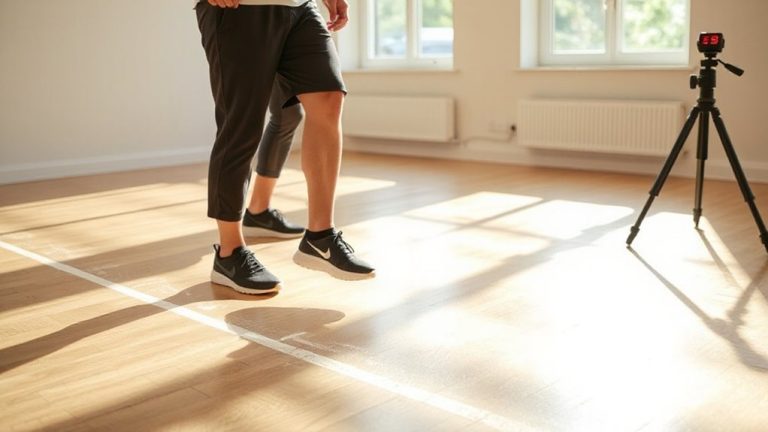
You’re ready to cut when objective tests show stability, not just when pain fades. Start position-specific drills early, once swelling’s controlled, to rebuild proper movement patterns. Progress from planned steps to reactive drills that challenge decision-making under load. Use game-speed simulations with monitored volume to protect the joint. Confirm readiness with hop symmetry, video analysis, and ligament testing-because field performance demands control, not just mobility. There’s a smarter way to get back in formation.
Notable Insights
- Begin position-specific drills early once pain and swelling are controlled to accelerate neuromuscular re-education.
- Use single-leg hop tests to assess limb symmetry and ensure at least 90% performance compared to the uninjured side.
- Progress from planned footwork to reactive drills that simulate real-game cognitive and movement demands.
- Incorporate game-speed simulations with controlled load, replicating down-and-distance scenarios for position accuracy.
- Confirm return to play using objective measures like valgus stress testing, video analysis, and dynamic movement control.
Know When the Knee Is Ready to Cut
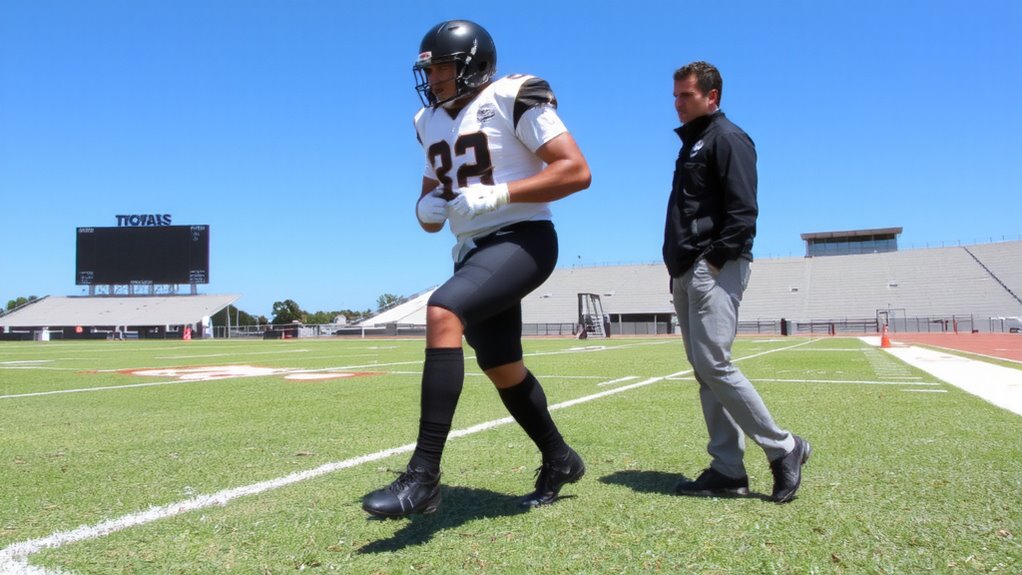
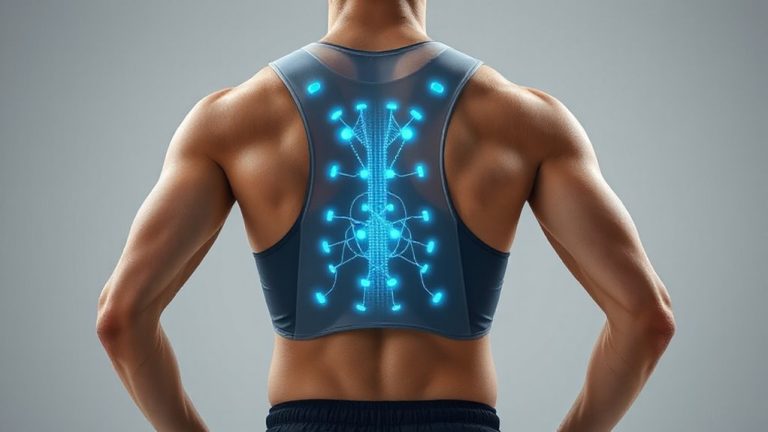
While swelling and pain may fade within weeks after an MCL sprain, that doesn’t necessarily mean your knee can handle sharp directional changes. You need more than symptom relief-you need solid knee stability and movement symmetry before cutting safely. Relying only on time or pain levels risks re-injury. Instead, objective assessments like single-leg hop tests and motion analysis help determine readiness. These evaluate how evenly your injured leg performs compared to the healthy side. Poor symmetry often indicates lingering weakness or altered neuromuscular control. Stability isn’t just about ligament strength; it’s also dynamic control during quick shifts. Fitness recovery tools like proprioceptive boards or wearable sensors can track progress, offering data-backed insights over guesswork. Without verified symmetry and stability, returning to cutting movements is risky-no matter how fit you feel. Your body might seem ready, but mechanics tell the real story.
Train Position-Specific Movements Early
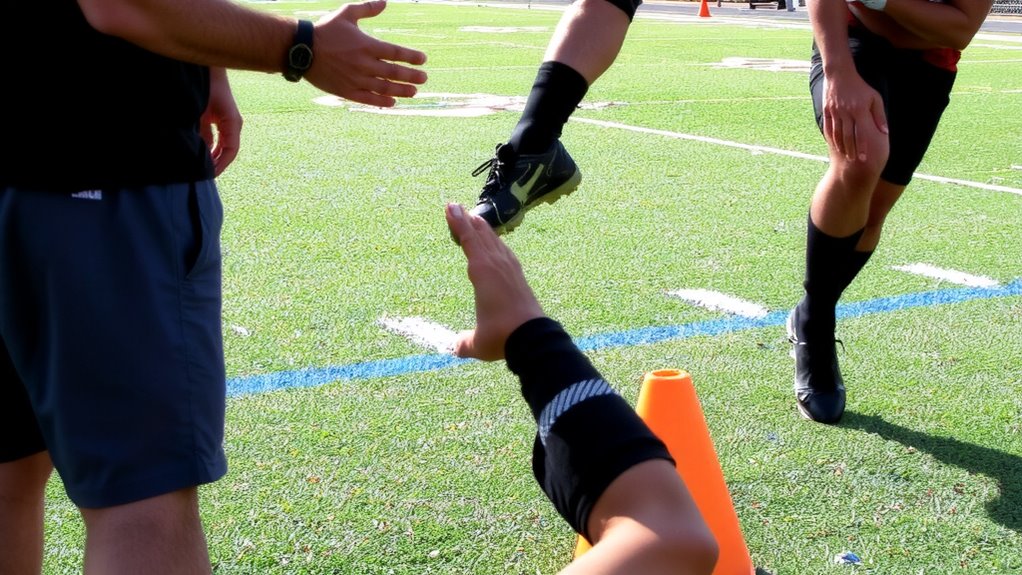
Start integrating position-specific drills as soon as pain and swelling are under control-waiting too long can delay neuromuscular re-education and sport-specific conditioning. You need to rebuild confidence and precision, and that starts with mimicking real-game actions. Focus on proper foot placement during controlled cuts and shifts; it’s essential for reducing re-injury risk. Your start stance should replicate your on-field position, whether you’re a linebacker firing off the line or a receiver in a three-point stance. Practicing these early guarantees your movement patterns stay sharp without overloading the healing tissue. Use low-impact surfaces and supportive recovery gear like compression sleeves to maintain joint awareness. It’s not just about strength-timing, coordination, and spatial awareness matter. Position-specific work early in rehab bridges the gap between basic mobility and full return-to-play demands, making your comeback smarter and safer.
Progress From Planned to Reactive Changes
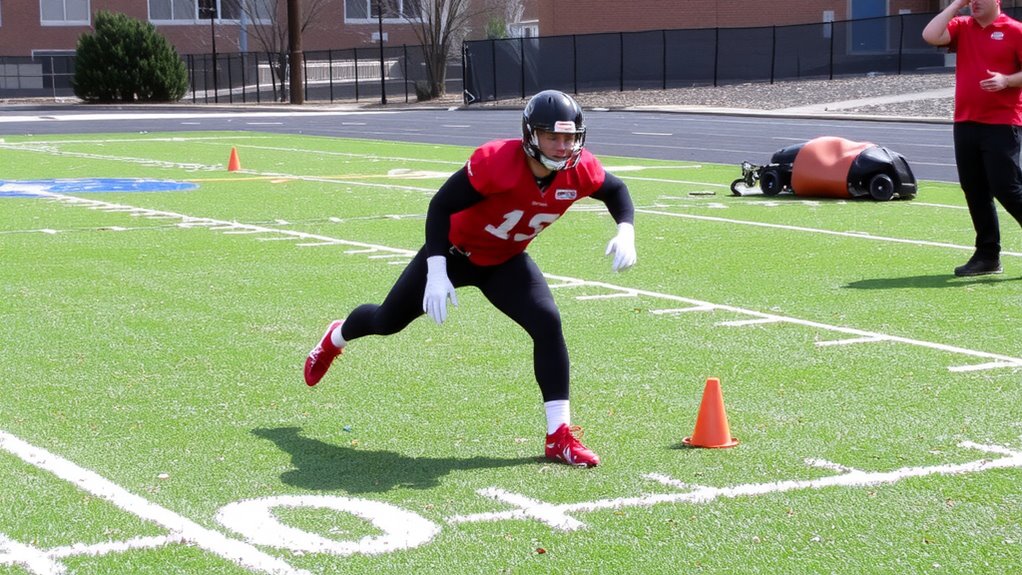
How do you know when you’re ready to handle the chaos of the game after an MCL sprain? It’s when your movement shifts from pre-planned steps to real-time reactions. You’ll start with structured agility drills, but progressing means introducing unpredictability through reaction drills. These train your body to respond under cognitive loading-processing cues while moving safely. That mental load mimics game conditions, testing both joint control and decision-making.
| Stage | Focus |
|---|---|
| 1 | Predictable, planned footwork |
| 2 | Light cognitive loading, simple cues |
| 3 | Full reaction drills, sport-specific chaos |
Moving through these phases guarantees your MCL adapts not just to motion, but to the split-second demands of football. You’re not ready just because movement feels stable-you’re ready when your reactions are quick, accurate, and pain-free under load.
Simulate Game Speed Without Excess Load
You’ve built reactivity through unpredictable drills, training your brain and body to respond under pressure-now it’s time to match that responsiveness to the actual speed of play without overloading healing tissue. Use game simulation scenarios that mimic real down-and-distance situations, but control variables like speed, direction, and contact intensity. This keeps movement authentic while supporting strict load management. You don’t need full-speed tackling or cutting yet-embedding timing cues from coaches or teammates can elevate decision-making under fatigue without spiking joint stress. Position-specific patterns, like a linebacker’s drop-and-flank or a receiver’s slant-and-jet release, should be rehearsed at game speed but with reduced volume. Monitor step counts, session RPE, and knee discomfort to adjust daily. The goal isn’t just speed-it’s sustainable performance. You’re teaching your body to move fast under control, ensuring neuromuscular efficiency doesn’t come at the cost of tissue tolerance. Smart progressions now prevent setbacks later.
Clear Return to Play Using Objective Signs
While subjective readiness matters, returning to play after an MCL sprain shouldn’t rely on how you feel alone-objective signs are essential for a safe and sustainable return back to the field. You need measurable evidence of knee stability, like minimal to no ligamentous laxity during valgus stress testing, and consistent neuromuscular control during dynamic movements. Single-leg hop tests should show symmetry-ideally within 90% of your uninjured side-to confirm functional recovery. Video analysis of cutting or pivoting tasks can reveal lingering deficits in joint control, even if you feel ready. Coaches and therapists must assess your movement quality under football-specific demands, not just in controlled settings. Without these objective benchmarks, you risk re-injury or compensatory patterns. Trusting data over instinct guarantees your knee can handle the sudden shifts and contact common in game situations. Real readiness means proven stability and control-not just motivation.
On a final note
You’ve reached a critical stage when your knee handles cutting without hesitation. Early focus on position-specific drills rebuilds confidence and function. Shifting from planned to reactive movements guarantees real-game readiness. Simulating full-speed plays without overloading the joint fine-tunes neuromuscular control. Clear return-to-play decisions rely on objective strength, stability, and movement quality-never just time elapsed. Proper recovery demands smart progressions, not shortcuts.