Inversion Therapy Alternatives Using Gravity Boots Safely for Lumbar Recovery
You can use gravity boots for safe lumbar recovery by performing partial hangs instead of full inversion, reducing spinal compression with controlled, low-angle hangs of 15–30 degrees. This method gently decompresses discs while minimizing blood pressure spikes or dizziness. Pair it with core stabilization exercises and padded, therapeutic-grade boots for ideal support. Avoid overextending duration-stick to 1–2 minute sessions. There’s more to optimizing this routine effectively.
Notable Insights
- Use partial inversion angles (15–30 degrees) with gravity boots to safely decompress lumbar discs without full upside-down positioning.
- Secure gravity boots to a stable overhead bar and maintain controlled posture to avoid spinal strain during use.
- Limit sessions to 1–2 minutes to prevent blood pressure spikes and dizziness while still gaining decompression benefits.
- Combine gravity boot use with pelvic tilts and bird-dogs to strengthen core support and enhance lumbar recovery.
- Opt for therapeutic-grade boots with padded liners and adjustable supports for comfort, safety, and proper spinal alignment.
What Are Gravity Boots for Back Pain?
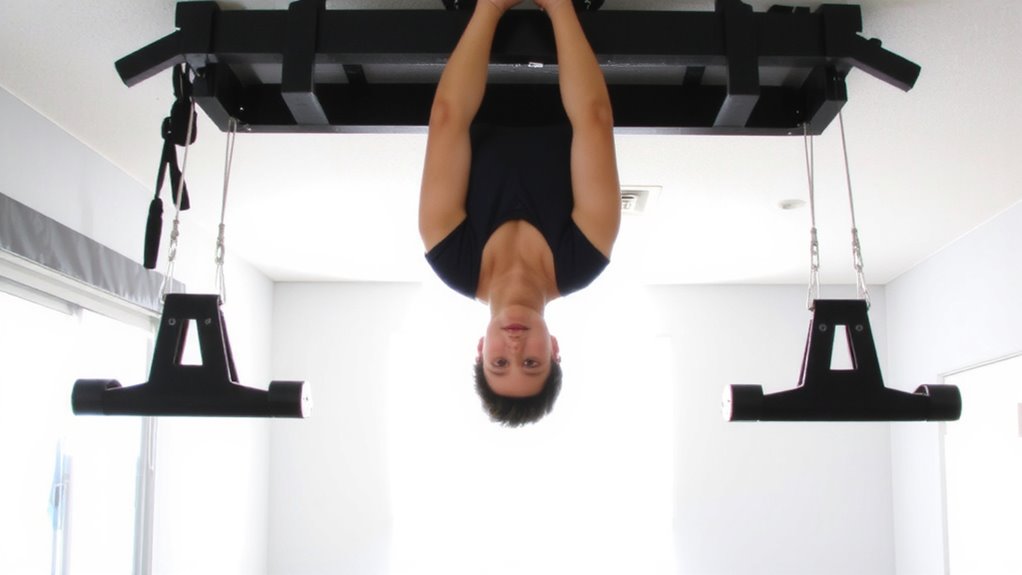
You’ve probably seen gravity boots dangling from a pull-up bar or inversion table and wondered if they’re worth the investment-especially if you’re dealing with back pain. These boots secure your ankles so you can invert safely, using gravity to decompress your spine. They’re designed to improve spinal alignment by reversing the compression your vertebrae endure daily. Users often report noticeable muscle relaxation, especially in the lower back and hamstrings, after just a few sessions. While not a cure-all, gravity boots can be a practical tool in fitness recovery, particularly when traditional stretching falls short. They demand proper setup and body awareness but offer targeted relief when used consistently. Compared to full inversion tables, they’re space-efficient and cost-effective. However, results vary-some find profound relief, others minimal change. Their real value lies in consistent, mindful use as part of a broader recovery strategy focused on posture and mobility. Top models offer varying levels of adjustability and comfort, making best inversion tables a helpful reference when choosing compatible equipment.
Use Gravity Boots Safely for Spinal Decompression
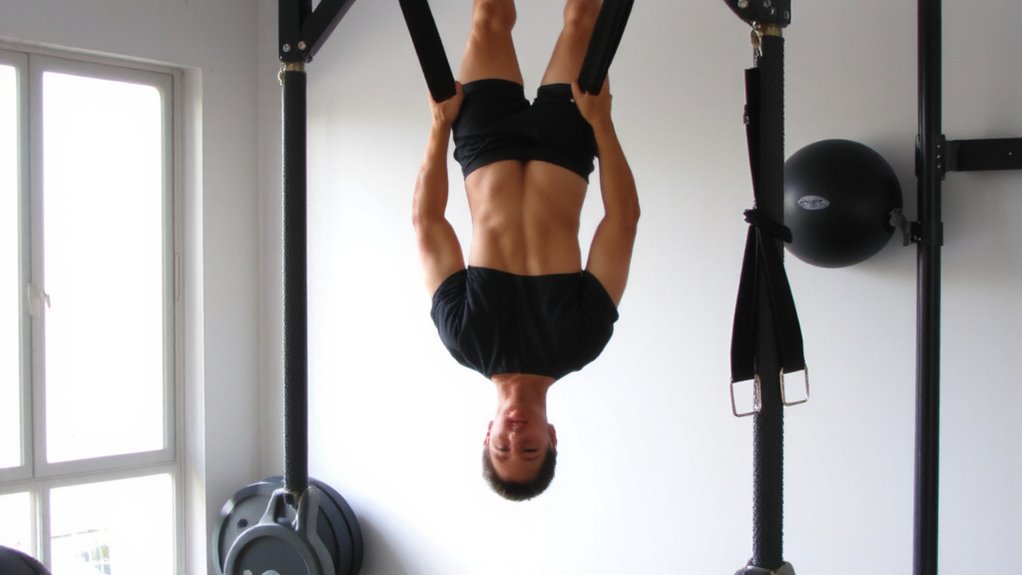
When using gravity boots for spinal decompression, proper setup and body awareness are essential to maximize benefits and reduce risk. You’ll want to make certain the boots are securely attached to a stable bar, and your body remains controlled throughout the inversion. Starting at a mild angle helps your spine adjust, promoting gradual spinal alignment without sudden strain. As you invert, the pull of gravity lengthens the spine, creating space between vertebrae and supporting natural muscle relaxation. This decompression can relieve nerve pressure and reduce chronic tension, especially in the lumbar region. However, staying too long or going too fast may cause dizziness or increased blood pressure. For best results, limit sessions to 1–2 minutes and maintain steady breathing. With consistent, careful use, gravity boots offer a practical way to enhance recovery, improve posture, and support long-term spinal health. A well-designed inversion setup, such as those found in top-rated inversion chairs, can provide additional stability and comfort for users exploring gravitational decompression methods.
Choose the Right Gravity Boots for Lumbar Support
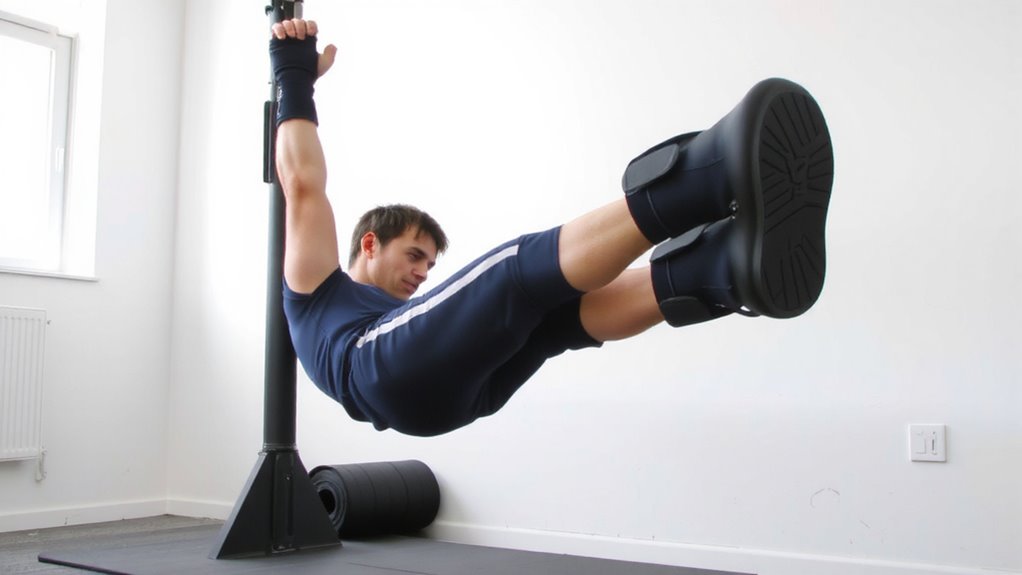
The right gravity boots can make a significant difference in how effectively you achieve lumbar support during inversion therapy, since not all models provide the same level of stability, comfort, or adjustability. You’ll want a pair that balances boot durability with material comfort, especially around the ankle and calf where pressure is highest. Look for reinforced stitching and high-tensile straps-these features extend boot durability under repeated stress. Neoprene or padded liners improve material comfort, reducing abrasion during longer sessions. Adjustable calf supports let you fine-tune fit, which is essential for maintaining spinal alignment. Cheaper models may skimp on padding or use flimsy buckles, compromising both safety and effectiveness. Invest in boots designed specifically for therapeutic use, not just stunt performance. They cost more, but better construction supports consistent recovery. Proper fit and resilient materials mean you can focus on relief, not discomfort.
Follow This Step-by-Step Routine for Back Relief
How do you actually get relief once you’ve got the right gravity boots? Start by securing them firmly at a low incline-15 to 30 degrees-to begin gentle back stretching without straining your joints. Hang for 1–2 minutes, breathing deeply to encourage spinal decompression. Slowly increase duration to 5 minutes as your body adapts. Perform this routine daily, preferably in the morning or after long sitting periods. Follow each session with controlled movements like pelvic tilts and bird-dogs to support core stabilization. These exercises enhance the boots’ benefits by training deep stabilizing muscles that protect your lumbar spine. Consistency matters more than intensity-overuse can lead to ligament laxity or discomfort. Combined, targeted back stretching and progressive core stabilization create a balanced recovery strategy. Proper use amplifies results, turning your gravity boots into a practical tool for long-term lumbar health.
Try These Non-Inversion Alternatives for Spinal Health
Why limit spinal decompression to inversion when other effective, low-risk options exist? You can achieve spinal alignment and muscle relaxation through targeted alternatives that don’t require full body inversion. Gravity boots, when used in partial hangs or neutral positions, help decompress lumbar discs gently while maintaining control. Combine them with foam rolling or supported pelvic tilts to enhance flexibility and reduce tension. Devices like back stretchers or posture pumps offer sustained relief by promoting natural curvature without strain. These tools deliver measurable improvements in posture and comfort, especially when paired with core stabilization exercises. Unlike aggressive inversion, these methods prioritize incremental progress and joint safety. You’ll find they support daily recovery without spiking blood pressure or overloading the cervical spine. With consistent use, non-inversion techniques provide reliable spinal health benefits, making them smart additions to any fitness recovery routine. For added support, consider incorporating a best neck and back stretcher into your regimen for targeted spinal alignment.
Avoid These Common Gravity Boot Mistakes
You’re already using gravity boots for controlled spinal decompression without full inversion, but even smart routines can go off track with poor form or unrealistic expectations. Avoiding common errors guarantees long-term lumbar benefits and joint safety. Improper alignment increases stress on the spine instead of relieving it, especially if hips tilt or shoulders hunch during use. Always engage your core and maintain a neutral spine. Excessive duration-beyond 1–2 minutes per session-can cause blood pressure shifts or muscle fatigue, undermining recovery. Start with short, frequent sessions and build gradually. Below are key mistakes and fixes:
| Mistake | Risk | Solution |
|---|---|---|
| Improper alignment | Spinal strain | Adjust ankle cuffs, keep body straight |
| Excessive duration | Dizziness, fatigue | Limit sessions to 90 seconds |
| Skipping warm-ups | Muscle tension | Do light stretching before use |
Consistency with correct form delivers real results.
On a final note
You’ve seen how gravity boots can aid spinal decompression, but safety and proper use are key. While they offer targeted lumbar relief through inversion, alternatives like decompression tables or axial stretching devices deliver similar benefits with less risk. Choose gear that matches your mobility and recovery goals. Used correctly, these tools support long-term spinal health-yet overreliance or poor form undermines progress. Balance innovation with caution for effective, sustainable back recovery.