Integrating Eccentric Trunk Flexion Exercises to Protect Lumbar Spine in Rowers
You’re constantly compressing your spine with every rowing stroke, but adding eccentric trunk flexion exercises helps protect your lower back by strengthening core muscles as they lengthen under load. Exercises like slow sit-ups and Nordic curls build resilience against shear forces, improving spinal stability. When done 2–3 times weekly with proper form, they correct imbalances and reduce injury risk-there’s more to optimizing your routine than strength alone.
Notable Insights
- Eccentric trunk flexion exercises reduce spinal compression by enhancing core control during the rowing stroke’s return phase.
- Nordic curls and slow-motion sit-ups strengthen abdominals during lengthening, improving resilience against lumbar shear forces.
- Perform eccentric exercises 2–3 times weekly post-rowing to avoid fatigue and support spinal stability adaptations.
- Emphasize 3–5 second controlled lowering phases to maximize time under tension and engage deep core stabilizers.
- Maintain neutral spine alignment and bilateral movement to prevent imbalances and minimize lumbar joint strain.
Why Rowers Get Back Pain (And How Eccentric Work Helps)

Why does back pain seem so common among rowers, no matter their skill level? You’re constantly bending forward and generating force through your torso, which creates repeated spinal compression. Over time, this stress adds up, especially when your technique isn’t perfect or you train too much without enough recovery. Most rowers also develop a muscle imbalance-strong quads and hip flexors paired with underused glutes and weak deep core stabilizers-pulling your pelvis out of alignment and increasing strain on your lower back. That imbalance makes it harder to maintain proper posture during long sessions. Eccentric trunk exercises help by teaching your core to control movement, particularly during the return phase of a stroke. You’re not just building strength-you’re retraining timing and balance. It’s a smart, preventive investment, much like using quality fitness recovery gear after tough workouts to sustain performance and joint health.
How Eccentric Core Loading Shields Your Spine

While your spine takes a beating from the repetitive flexion and compression of each rowing stroke, eccentric core loading acts like a built-in shock absorber, reducing dangerous shear forces during the return phase. You’re not just building muscle-you’re training it to control movement under load, which boosts spinal stability over time. That slow, controlled lengthening of the abs and obliques increases core resilience, helping your trunk handle the grind of high-volume training without breaking down. Unlike traditional core work, eccentric loading targets the muscles when they’re most vulnerable, making them stronger during deceleration. This means less strain on your lumbar discs and joints, especially as fatigue sets in late in a race. You’ll notice better posture, reduced stiffness, and fewer aches. Think of it as preventive maintenance-your body handles daily stress better, so long-term damage is less likely.
3 Eccentric Exercises Every Rower Should Do
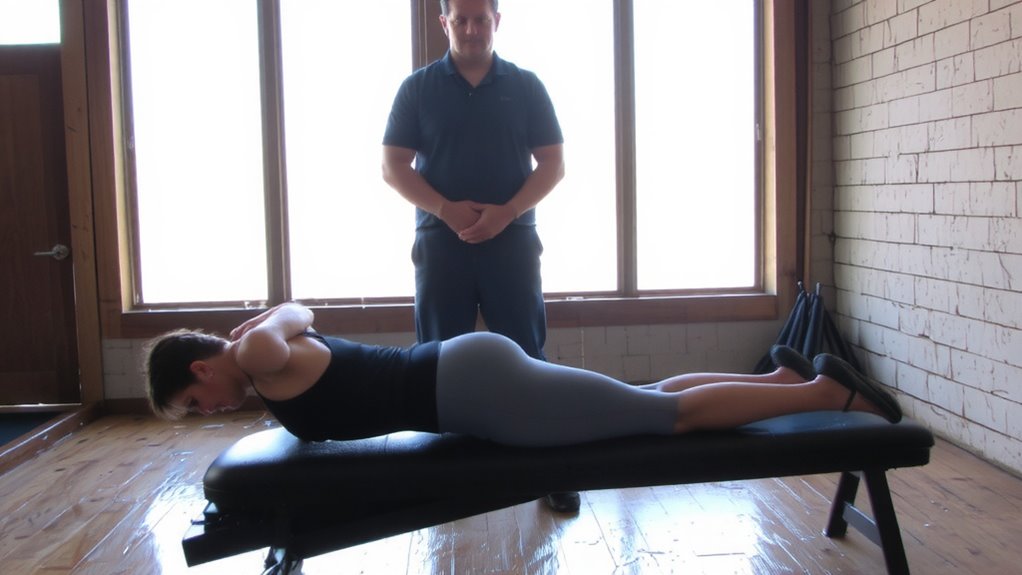
What if the key to a bulletproof rowing core wasn’t in how fast you crunch, but in how slowly you resist? Eccentric trunk flexion moves like slow-motion sit-ups and controlled back extensions build real resilience. You’re not just moving-you’re teaching your muscles to lengthen under tension, boosting trunk stability and muscular endurance critical for long strokes. Try the Nordic curl: lower yourself with arms fixed, fighting gravity the whole way. Or do a dead bug with a 5-second eccentric phase-each rep strengthens your spine’s ability to handle load. These exercises don’t rely on flashy gear; a mat and resistance band suffice. Rowers who commit see less fatigue and sharper control. It’s not about volume-it’s about time under tension. If you want durability, train the lengthening phase like your season depends on it-because it does.
Fit Eccentric Training Into Your Rowing Routine
Since your rowing performance hinges on sustainable strength, not just raw power, fitting eccentric trunk training into your routine makes strategic sense. You should prioritize training timing by integrating these exercises 2–3 times weekly on strength or recovery days, avoiding pre-rowing sessions to prevent neuromuscular fatigue. Post-practice or off-peak lifting slots optimize muscle adaptation without compromising stroke technique. For exercise selection, focus on movements like slow-eccentric crunches and lying leg lowers-controlled, spine-loaded drills that build resilience. Pair them with core bracing cues to reinforce lumbar stability. Don’t overload volume; 2–3 sets of 8–10 reps suffice. This targeted approach enhances tissue tolerance, aligning with long-term spinal health. While fitness recovery gear like foam rollers may aid suppleness, they don’t replace proper loading. Eccentric training fills a gap standard routines miss, making it a non-negotiable for injury-resistant rowers.
Fix These Common Eccentric Form Mistakes
A key reason many rowers fail to gain full benefit from eccentric trunk training lies in overlooked form errors that undermine both effectiveness and safety. You might lean too far forward or round your back, disrupting spinal alignment and increasing lumbar stress. This isn’t just inefficient-it’s risky. Proper alignment keeps tension on the target muscles, not the vertebrae. Another common mistake is favoring one side during controlled lowering phases, which compromises muscle symmetry and can lead to imbalances over time. You might not notice it, but uneven time under tension builds subtle disparities in strength and endurance. Focus on slow, uniform descents-think 3 to 5 seconds-while engaging both sides equally. Use a mirror or coach feedback to catch drift. Consistent form guarantees that eccentric loading strengthens stabilizers, enhances control, and ultimately shields your lower back through every stroke.
On a final note
You’re reducing injury risk by integrating eccentric trunk flexion, since controlled lengthening strengthens core musculature more effectively than concentric work alone. This focused loading improves spinal stability, vital during repetitive rowing strokes. Pair these exercises with recovery gear like foam rollers or compression wear to maintain tissue quality. Used consistently, this approach enhances resilience, but proper form is essential-poor execution undermines benefits and may increase strain. It’s not just about strength; it’s smart, targeted adaptation.