Medicine Ball Rotational Throws From Quarter-Turn to Train Explosiveness Post-Core Rehab
You can safely build explosive core strength after injury with quarter-turn medicine ball rotational throws. Start only when pain-free, with solid core control on planks and bird-dogs. Use your hips and torso, not just arms, and keep the rotation controlled-around 45 to 90 degrees. A stable base and proper sequencing prevent re-injury. Light balls first, then progress in weight and range as form stays crisp. This move reactivates obliques, transverse abdominis, and erector spinae like sport-specific movements do-bridging rehab to real performance. Mastering it sets the stage for even more dynamic, powerful variations down the line.
Notable Insights
- Start quarter-turn medicine ball throws only after achieving pain-free rotation and core stability post-injury.
- Use a shoulder-width stance with slight knee bend to ensure a stable base for safe power generation.
- Initiate rotation from the hips and core, not the arms, to maximize explosive force transfer.
- Begin with light medicine balls and partial turns, progressing gradually as control and strength improve.
- Perform throws with controlled release to maintain safety and enhance neuromuscular coordination for sport-specific power.
How to Do Medicine Ball Rotational Throws (Quarter-Turn)
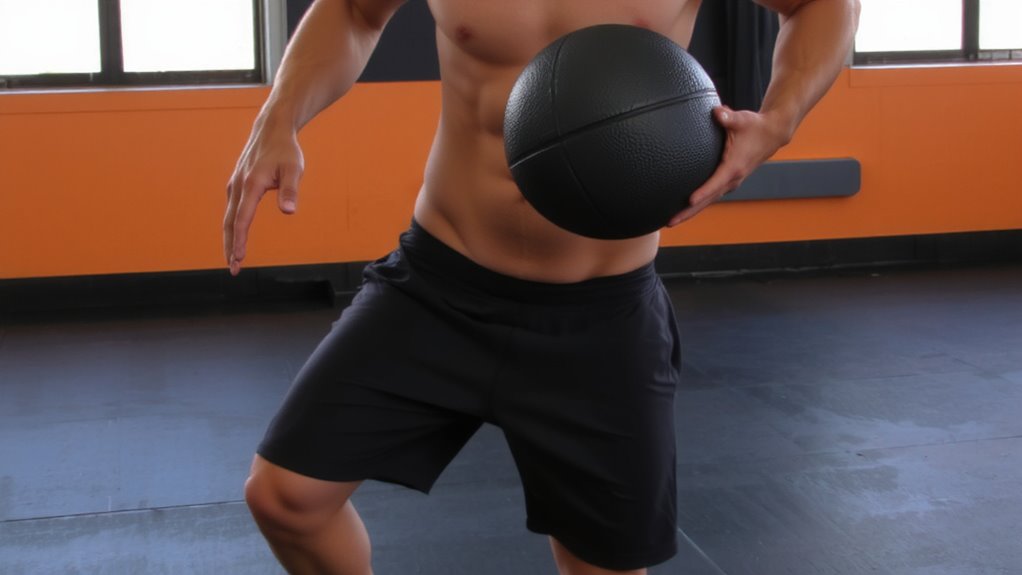
A quarter-turn medicine ball throw builds rotational power and mimics athletic movement patterns seen in sports like baseball, tennis, and golf. You start with a proper stance-feet shoulder-width apart, knees slightly bent, and hips coiled to one side. Grip the ball with both hands and rotate your torso against resistance, then explode forward, transferring force through your core and into the throw. A controlled release guarantees safety and maximizes power output. Use a weighted ball that matches your strength level-typically 4 to 10 pounds for rehabilitation and performance. Quality medicine balls designed for impact withstand repeated slams and throws. You’ll notice better coordination and core engagement over time. Proper stance reduces low back strain, while a controlled release sharpens neuromuscular timing. This movement bridges rehab and return-to-sport readiness, making it a smart choice in fitness recovery programs.
When to Start Rotational Throws After Core Injury
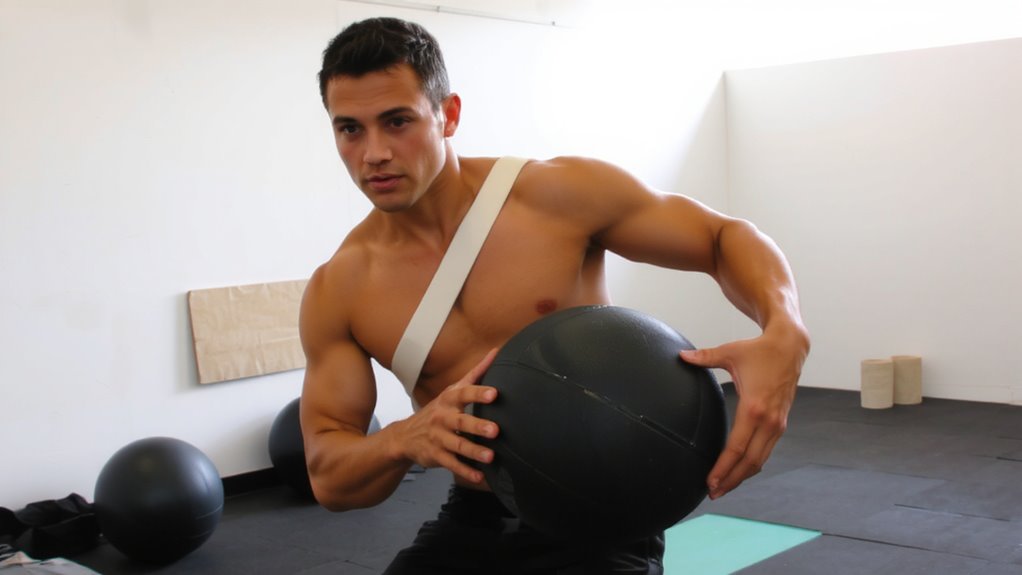
You shouldn’t jump into medicine ball rotational throws too soon after a core injury-timing matters for safe, effective recovery. Rushing back increases re-injury risk and undermines rehab progress. Timing considerations must prioritize tissue healing, neuromuscular control, and strength restoration. You’re likely ready only after achieving pain-free movement through full range, especially during twisting and loaded motions. Injury readiness isn’t just about time passed-it’s functional. Can you brace your core during dynamic tasks? Do basic planks and bird-dogs feel stable? Have you progressed through controlled rotational drills without compensation? Most athletes need 6–12 weeks post-injury, depending on severity. Clearance from a physical therapist or sports med professional is essential before introducing explosive throws. Start with lighter med balls and partial turns, monitoring for discomfort. Premature reintroduction defeats the purpose-the goal is power *without* risk.
Fix These Common Form Mistakes
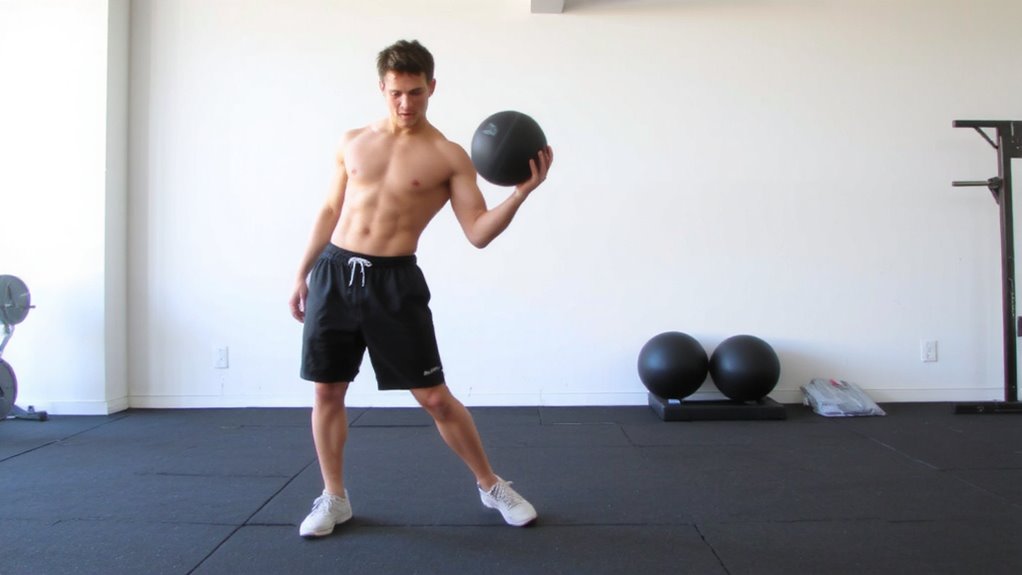
One of the most frequent issues seen in medicine ball rotational throws is excessive reliance on the arms to generate force, when the power should actually come from the hips and torso rotating in sequence. You’re likely sabotaging force transfer if you’re initiating the movement with your shoulders instead of your core. Proper rotational alignment starts with a stable base-feet shoulder-width apart, knees slightly bent-so the kinetic chain isn’t broken. Avoid over-rotating at the spine; stay within a controlled quarter- to half-turn to protect post-rehab tissues. Many people also let the ball drift too far from the body, disrupting timing and reducing efficiency. Keep the medicine ball close through the throw to maintain tension and maximize power output. Use a weighted ball that allows control without compromising speed. Poor form limits gains and increases injury risk-focus on quality reps, not just reps.
Progressing Rotational Throws Safely
Mastering the mechanics of rotational throws sets the stage for safe advancement, especially when training for fitness recovery or building functional strength. Once you’ve corrected form errors, focus shifts to explosive progression-gradually increasing intensity while preserving technique. Start with lighter medicine balls and limited range, then incrementally add weight and rotation depth only when control remains consistent. This approach prevents re-injury and supports joint stability. Dynamic control is key: every throw should be sharp yet disciplined, driven by the core rather than momentum alone. Monitor repetition quality-if form wavers, scale back. Use balls with textured grips and ideal bounce resistance to enhance feedback and safety. Training surfaces matter too; opt for non-slip flooring to reduce risk. Progressing isn’t about speed-it’s about building precision under load. When executed wisely, rotational throws become a reliable tool for regaining athleticism without compromising joint or core integrity.
How Rotational Throws Restore Core Power
A medicine ball’s weighted resistance, when paired with dynamic rotational movement, creates a powerful stimulus for rebuilding core strength after injury or inactivity. You engage rotational dynamics that mimic real-life or sport-specific motions, training your torso to generate and control force across planes. This isn’t just about muscle-you’re restoring neuromuscular activation, helping your brain reestablish fast, efficient communication with core stabilizers. The explosive throw from a quarter-turn forces your obliques, transverse abdominis, and erector spinae to work in sync, promoting coordination and power. Over time, this movement retrains your core to handle load and speed safely. Unlike static exercises, medicine ball throws rebuild functional capacity, preparing you for dynamic demands. The ball’s weight-typically 4 to 10 pounds-provides progressive resistance without joint stress. When integrated post-rehab, it bridges the gap between basic recovery and high-level performance, making it a practical, effective tool in your fitness recovery toolkit.
On a final note
You’ve likely found medicine ball rotational throws from a quarter-turn effective for rebuilding explosive core strength post-rehab. When performed with proper form and timed after adequate healing, they bridge the gap between recovery and performance. Common mistakes, like over-rotating or bracing poorly, reduce effectiveness and risk re-injury. Progressing gradually-adding weight, speed, or resistance-ensures sustainable gains. These throws work because they mimic real-world rotational power demands.