How Wearable Sleep Pressure Sensors Detect Restless Leg Patterns That Disrupt Recovery
Your wearable uses pressure and motion sensors to detect subtle leg movements during sleep, identifying patterns typical of restless leg syndrome. By analyzing frequency, intensity, and timing of these micro-activities, it distinguishes RLS from regular movement. This data helps assess sleep disruption and recovery impact, offering insights into rest quality. Accurate tracking allows you to adjust habits or treatment, supporting better recovery-there’s more to how this data transforms your rest and performance.
Notable Insights
- Wearable sleep pressure sensors detect restless leg movements using accelerometers to identify repetitive leg motion patterns during rest.
- Gyroscopes in wearables confirm characteristic limb rotations linked to restless leg syndrome onset and duration.
- Real-time algorithms apply movement thresholds to distinguish RLS-related motions from normal nighttime activity.
- Continuous monitoring of heart rate variability and movement helps pinpoint sleep stage disruptions caused by RLS episodes.
- Long-term data on RLS frequency and intensity supports personalized treatment adjustments to improve recovery and sleep quality.
How Restless Leg Syndrome Sabotages Recovery
While you’re trying to recover from intense workouts, restless leg syndrome (RLS) might be quietly undermining your progress. You’re likely familiar with muscle fatigue after heavy training, but when RLS kicks in at night, it amplifies discomfort and delays repair. The constant urge to move your legs stems from underlying nerve irritation, disrupting the deep sleep phases essential for recovery. This involuntary movement isn’t just annoying-it interferes with physiological restoration, reducing growth hormone release and slowing muscle repair. Over time, poor sleep quality compounds fatigue, leaving you sluggish and less adaptive to training loads. Fitness recovery isn’t just about nutrition or rest days; it hinges on uninterrupted rest. Without addressing RLS, even the most advanced fitness gear or optimized routines fall short. Recognizing nerve irritation and its impact on sleep allows for better intervention, ensuring recovery isn’t sabotaged by overlooked neurological factors.
What Wearables Measure During Sleep
Since you’re tracking recovery, it’s worth knowing exactly what wearable sleep sensors pick up when you’re lying still at night. They monitor your heart rate throughout the night, capturing fluctuations that signal stress, arousal, or deep rest. This data helps assess how well your body recovers during sleep. Wearables also identify sleep stages-light, deep, and REM-by analyzing movement, breathing patterns, and heart rate variability. Accuracy in distinguishing these stages has improved, though it’s still not quite clinical-grade. Still, for nightly trends and recovery insights, the consistency is valuable. You’ll see how lifestyle choices affect your sleep architecture over time. While no sensor is perfect, modern wearables offer a practical, continuous view of key recovery markers. They’re not just counting hours in bed-they’re gauging sleep quality by linking heart rate trends to sleep stages, giving you actionable feedback on your rest and readiness.
Spotting Restless Leg Movements in Real Time
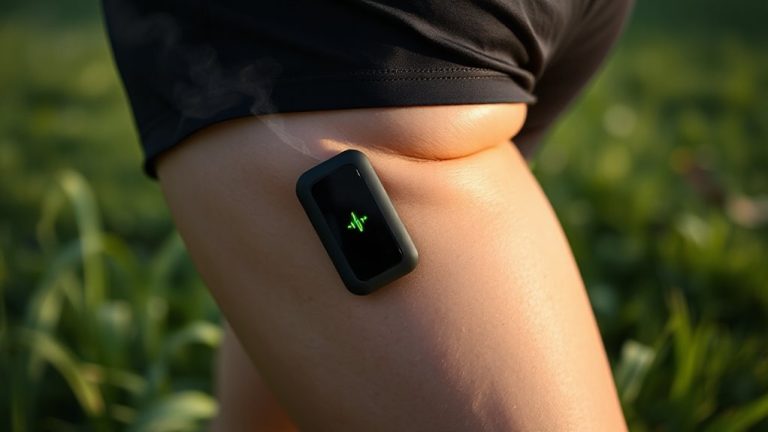
When you’re trying to pinpoint restless leg movements during sleep, wearable sensors leverage accelerometers and gyroscopes to detect subtle limb activity in real time, distinguishing between normal shifting and the rhythmic, repetitive motions typical of restless legs syndrome (RLS). These devices apply movement thresholds to filter out irrelevant motions, guaranteeing only clinically relevant episodes trigger real time alerts. Advanced algorithms analyze frequency, duration, and intensity, reducing false positives. You benefit from immediate feedback, enabling timely interventions without disrupting sleep architecture.
| Feature | Benefit | Use Case |
|---|---|---|
| Accelerometer | Tracks micro-movements | Detects early RLS onset |
| Gyroscope | Measures limb rotation | Confirms repetitive motion |
| Real Time Alerts | Notifies users instantly | Prevents prolonged disruption |
| Custom Thresholds | Adjusts sensitivity | Reduces false alarms |
| Onboard Processing | Enables quick analysis | Guarantees prompt response |
Real time alerts and precise movement thresholds make wearables reliable tools for spotting RLS during recovery phases.
Using Data to Improve Treatment
Because wearable sensors capture detailed movement patterns over time, you’re able to track how often restless leg episodes occur, how long they last, and how they respond to different treatments. This continuous data stream improves treatment personalization, letting clinicians adjust medications or lifestyle recommendations based on real-world performance. Data accuracy is critical-poor readings lead to misguided decisions-so regular sensor calibration guarantees the device maintains precision night after night. Without proper calibration, you risk false positives or missed episodes, undermining trust in the device. These wearables don’t just record; they enable dynamic treatment adjustments backed by consistent metrics. You’ll notice patterns you couldn’t before, like triggers tied to inactivity or caffeine, and validate whether interventions actually reduce limb movements. Over time, this feedback loop turns raw motion data into actionable insights, making therapy not just reactive, but proactive.
Better Sleep for Faster Healing
You’re already using wearable sleep sensors to fine-tune treatment by tracking restless leg episodes with precision, but their real value shines when you consider how quality sleep accelerates physical recovery. Improving sleep quality isn’t just about comfort-it’s a critical component of the healing process. These sensors help identify disruptions, allowing for timely interventions that support deeper, more restorative rest. When your body enters sustained sleep without frequent micro-awakenings, tissue repair, immune function, and muscle recovery all improve markedly.
| Sleep Stage | Impact on Healing | Sensor Detection Accuracy |
|---|---|---|
| Light Sleep | Moderate repair | High |
| Deep Sleep | Major recovery | Very High |
| REM | Neural restoration | High |
| Wake/Restless | Delays healing | Precise |
Better sleep quality means a faster, more efficient healing process-wearables make that achievable.
On a final note
You’re seeing real benefits when wearables track sleep pressure and movement patterns accurately. These sensors detect subtle leg motions tied to restless leg syndrome, giving you data-driven insights that improve recovery timing and treatment response. While not medical devices, they offer practical, continuous monitoring. For fitness recovery, this means smarter training adjustments, better sleep quality, and faster healing-especially when you pair the device’s feedback with professional guidance and consistent use.