Testing Paced Respiration Devices That Sync Inhalation With Cadence During Recovery Jogs for Coherent Heart Rhythm
You can boost recovery by syncing your breath to your stride during jogs, and devices like Aumeo 2, Lumo Belt, and RunNest Syncband make it easier with real-time audio or haptic cues. These tools promote coherent heart rhythm by aligning inhalation and exhalation with cadence, supporting autonomic balance and reducing post-run stress. While Aumeo 2 leads in HRV accuracy, all three help internalize efficient breathing-just verify proper calibration and avoid overdependence on feedback. There’s more to discover about which one fits your rhythm best.
Notable Insights
- Syncing breath with stride during recovery jogs promotes coherent heart rhythm and faster autonomic recovery.
- Devices like Aumeo 2, Lumo Belt, and RunNest Syncband use sensors to guide breath-cadence synchronization in real time.
- Paced respiration gadgets deliver audio or haptic cues aligned with footfall patterns such as 2:2 or 3:3 inhalation-exhalation ratios.
- Accurate calibration is critical-performance depends on proper setup and user adaptation to rhythm cues.
- These tools benefit recovery-focused runners but may lead to dependency if intrinsic breathing awareness is neglected.
Can Syncing Your Breath to Your Stride Help You Recover Faster?
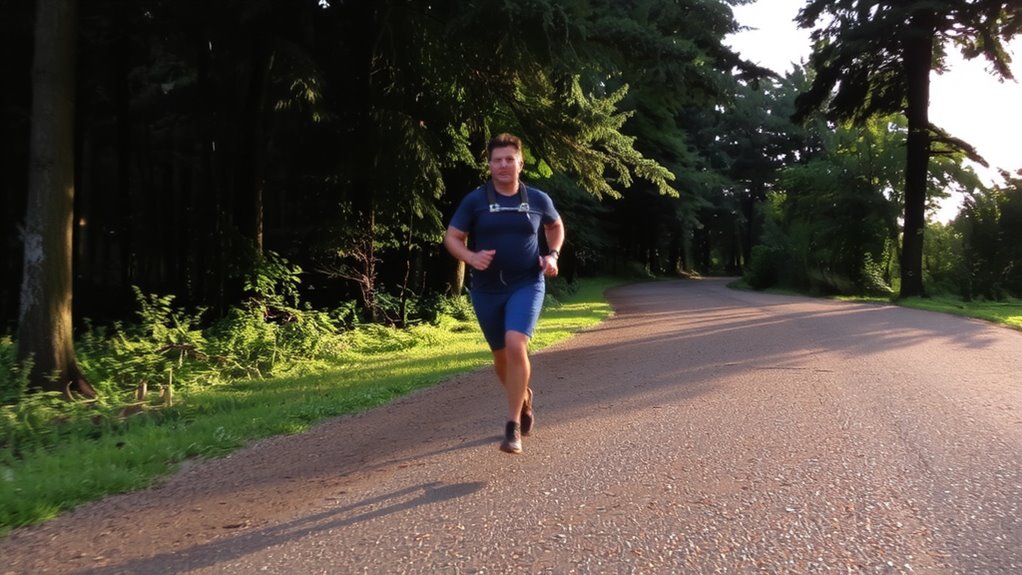
How often do you consider the rhythm of your breath during a run? When you sync your breath to your stride, especially during recovery jogs, you’re not just moving-you’re refining breath control and building mental focus. This coordination encourages coherent heart rhythm, which may support faster recovery by stabilizing your autonomic nervous system. Studies suggest that consistent inhalation-exhalation patterns aligned with footfalls can reduce physiological stress, helping your body shift smoothly from exertion to rest. While not a standalone solution, this technique enhances recovery when combined with proper cooldowns and hydration. In practice, runners report feeling more centered and less fatigued post-run. Though breath-stride syncing doesn’t require gear, the principle fuels interest in paced respiration tools. It’s an accessible, no-cost method that leverages natural physiology-making it a credible, low-risk addition to recovery routines for endurance athletes seeking efficiency and balance.
How Breath-Pacing Gadgets Sync With Your Run Cadence

While you’re already syncing your breath to your stride without thinking during an easy jog, breath-pacing gadgets take that natural rhythm and make it intentional through real-time feedback. These devices use motion or footpod sensors to detect your cadence and then guide your inhalations and exhalations to match, reinforcing breath rhythm that aligns with your steps. You’ll often hear rhythmic tones or feel subtle vibrations that prompt you to inhale on certain strides and exhale on others-most commonly in 2:2 or 3:3 patterns. This deliberate coordination promotes stride harmony, reducing internal discord and potentially easing perceived effort. While not all runners adapt instantly, many report smoother, more efficient recovery jogs when the cues become second nature. The tech doesn’t overhaul your running form, but it amplifies body awareness, helping you maintain aerobic efficiency. Proper setup and consistent use are key-these tools work best when integrated gradually into regular training routines.
Top 3 Devices That Master Breath and Stride Syncing

Though you might not think syncing your breath to your stride makes that much difference, the right device can subtly sharpen your running efficiency by turning an automatic habit into a trained skill. The Aumeo 2 uses adaptive breath timing algorithms to match your inhalation and exhalation to your stride alignment, offering real-time audio cues that adjust to pace shifts. The Lumo Belt excels in form feedback, combining breath timing with pelvic tilt sensing to promote ideal stride alignment during recovery jogs. Meanwhile, the RunNest Syncband delivers haptic pulses synced to cadence, making breath timing intuitive without earbuds. Each device emphasizes rhythm over resistance, helping you internalize coordination. They’re lightweight, charge quickly, and sync to apps for progress tracking. Though not flawless, their precision in linking breath timing and stride alignment makes them stand out for recovery-focused runners seeking subtle, science-backed edge.
Tested: Accuracy, Comfort, and HRV of Leading Models
You’ve seen how breath and stride syncing can refine your recovery runs with devices like the Aumeo 2, Lumo Belt, and RunNest Syncband-now it’s time to examine how well they perform when put to the test. You’ll notice the Aumeo 2 delivers precise breath rhythm guidance using real-time cadence tracking, though it demands careful device calibration to match your natural stride. The Lumo Belt feels comfortable over long jogs and accurately captures respiration patterns, but its audio prompts can lag slightly. RunNest Syncband stands out with strong HRV feedback, helping you sustain coherence, yet its earpiece design may irritate some. All three respond well to breath rhythm adjustments, but reliable performance hinges on correct device calibration. Comfort varies-Aumeo 2 is lightweight, Lumo integrates seamlessly with apparel, and RunNest’s band stays put. For accuracy and HRV tracking, Aumeo 2 leads, provided you calibrate it right.
Who Should (and Shouldn’t) Use a Paced Respiration Device
What if your recovery could be more than just rest-what if it were trainable? Paced respiration devices offer breath coaching that syncs inhalation with your stride, helping you hit coherent heart rhythms. They’re ideal if you’re rehabbing from stress, optimizing endurance, or new to mindful recovery. But tread carefully-overuse risks device dependency, especially if you skip developing intrinsic awareness.
| Should Use | Shouldn’t Use |
|---|---|
| Runners seeking HRV gains | Those ignoring natural breath cues |
| Stressed individuals needing breath coaching | Users chasing quick fixes |
| Recovery-focused athletes | People with respiratory conditions (without medical guidance) |
| Mindful trainers open to feedback | Anyone avoiding self-regulated breathing |
These tools enhance rhythm, but aren’t substitutes for self-awareness. Use them to learn, not lean. Breath coaching works best when it teaches independence-not when it creates device dependency.
On a final note
You’ll find these breath-pacing devices work best when synced to a steady cadence, boosting heart rate variability and promoting recovery. Models with accelerometer-based stride detection deliver accurate breath-to-step alignment, while chest straps offer better HRV feedback than optical sensors. Though effective for structured cooldowns, they’re less practical during rugged terrain or variable pacing. Comfort matters-lightweight, wireless designs win. Overall, they’re a smart tool for data-driven runners seeking physiological edge, but not essential for everyone.