Mastering the Rowing Machine: Proper Form for Injury-Free Workouts
You’re setting yourself up for injury if your foot straps are too loose or tight-secure them across the balls of your feet for stability and nerve relief. Keep your spine neutral: avoid rounding or overarching by thinking “chest tall, ribs down.” Power comes from legs first, then core, then arms, in a smooth sequence. Pair a 2:1 rhythm with nasal inhalation and pursed-lip exhalation to boost endurance-there’s more to master for lasting performance gains.
Notable Insights
- Secure foot straps across the balls of your feet to ensure stability and allow natural heel movement during the stroke.
- Maintain a neutral spine by engaging your core and using the cue “chest tall, ribs down” to protect your lower back.
- Initiate the drive with leg push, then engage the core and pull with arms to optimize power sequencing and efficiency.
- Hold the handle with a relaxed grip, firm enough to control but not tense, to prevent forearm and shoulder strain.
- Follow a 2:1 rhythm-two seconds recovery, one second drive-to enhance timing, endurance, and stroke consistency.
Set Up Your Rower for Proper Form
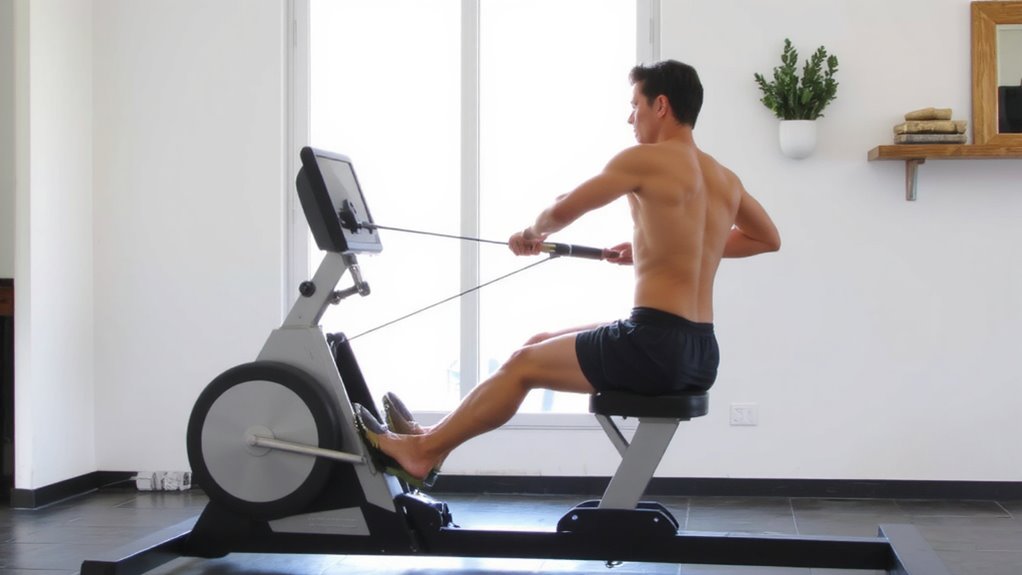
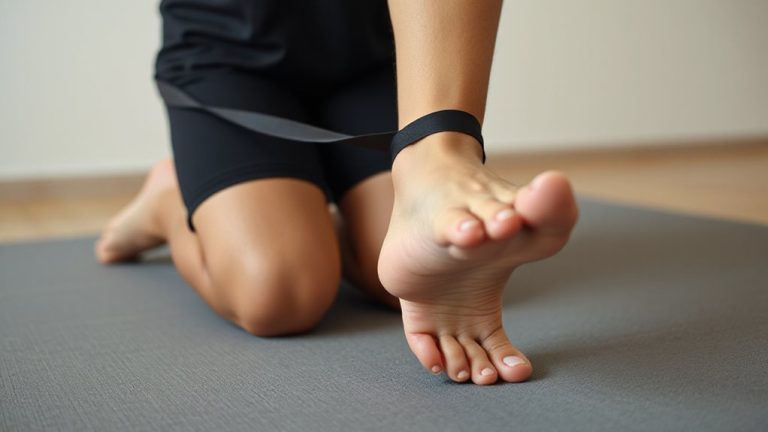
Before you start rowing, getting the machine set up correctly matters just as much as the workout itself. Proper foot positioning guarantees stability and power transfer-strap them securely across the balls of your feet, not the toes, so your heels can rise and lower smoothly. The adjustability of footrests on most modern machines allows customization, but misalignment can strain calves or knees over time. Seat height also plays a subtle yet critical role; too high and your legs won’t fully extend, too low and your hips scrape the machine. Most rowers have a fixed seat height, but the slight float in the rail system helps maintain consistent movement. Pairing correct foot positioning with ideal seat height improves biomechanics, reducing joint stress. It’s not just about comfort-accuracy in setup affects performance efficiency and injury prevention. These details reflect smart design in fitness gear meant to support long-term recovery and sustainable training. For those with limited space, choosing compact rowing machines can make proper setup and consistent training more accessible at home.
Break Down the 4 Phases of the Rowing Stroke
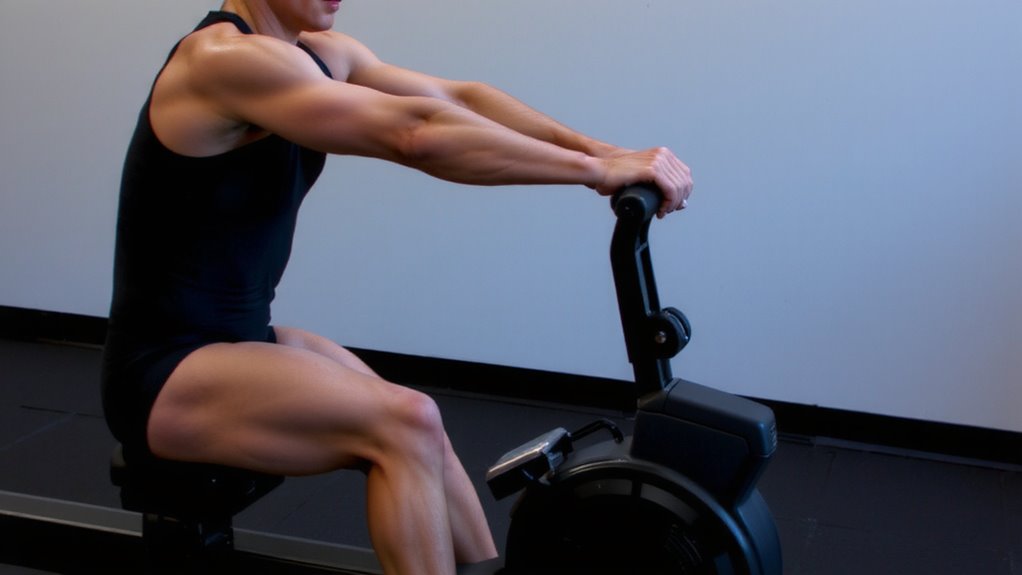
Though each stroke may feel like one continuous motion, you’ll get the most out of your workout-and protect your body over time-by understanding the four distinct phases: catch, drive, finish, and recovery. Mastering the stroke sequence guarantees efficiency and reduces strain. You begin at the catch with a compressed body position, arms extended, and knees bent. The drive phase starts by pushing through your legs, then engaging your core and back before pulling arms toward your chest. This coordinated effort maximizes power and mimics real rowing dynamics. At the finish, you lean slightly back with elbows tucked. Then, recovery begins-returning smoothly to the catch. Maintaining rhythm throughout prevents rushed or jerky movements, supporting endurance and long-term joint health. High-quality rowers make this sequence feel fluid, enhancing performance and recovery. A well-designed machine supports proper biomechanics, and choosing from the top indoor rowing machines can significantly improve stroke consistency and comfort.
Prevent Injury by Fixing Common Form Mistakes
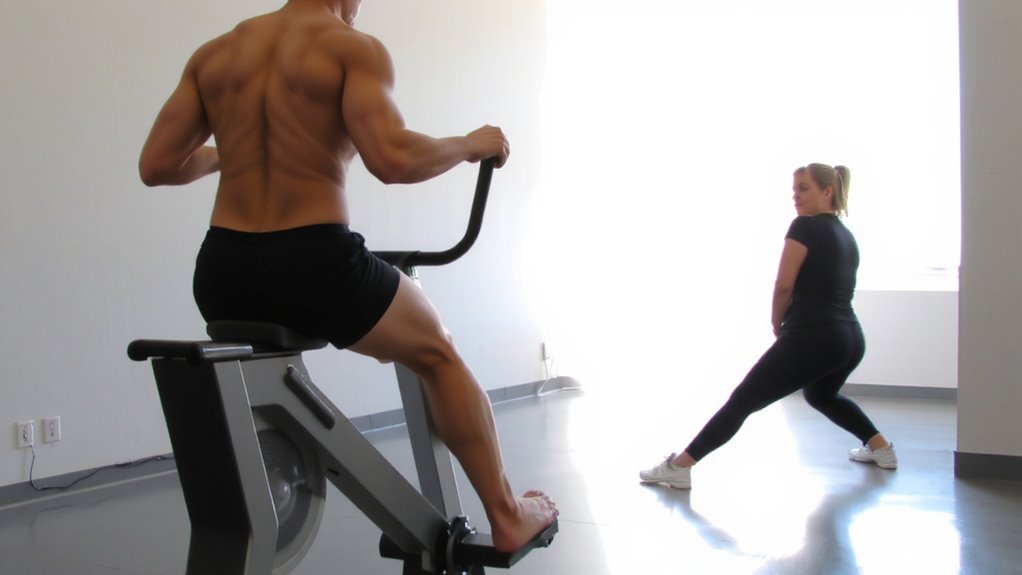
With proper form, you’re not just building strength and endurance-you’re safeguarding your joints and tendons from avoidable strain. One of the most overlooked mistakes is improper foot strap tension; too loose, and your feet shift, reducing power and stability; too tight, and you risk nerve compression. Adjust them so your heels can slightly lift while keeping the balls of your feet anchored. Equally important is handle grip pressure-many pull with white-knuckle force, which taxes the forearms and shoulders. Hold the handle like you’re squeezing a tube of toothpaste without bursting it: firm enough to control, relaxed enough to prevent fatigue. Poor grip also disrupts stroke rhythm, leading to jerky movements that compromise efficiency. When combined, balanced foot strap tension and ideal handle grip pressure enhance stroke fluidity and minimize overuse injuries. These small corrections aren’t just about comfort-they directly influence performance and long-term joint health.
Sit Tall: Protect Your Lower Back While Rowing
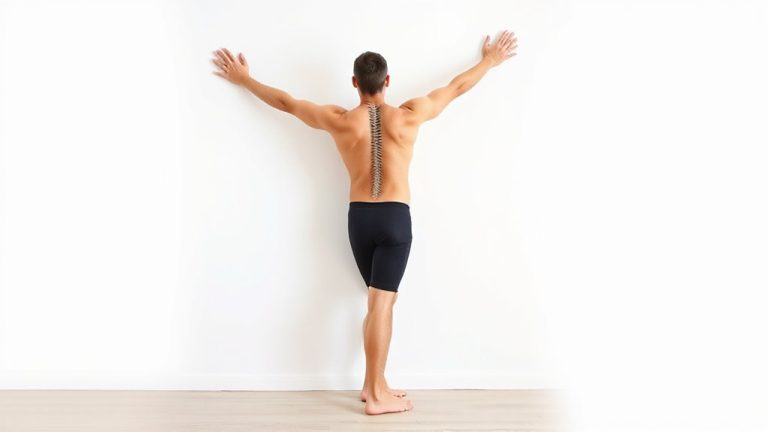
You’re putting your lower back at risk every time you round your spine at the catch, letting your pelvis tilt backward like a slumped seated posture on a couch. Maintaining proper spinal alignment is essential to prevent strain and build efficient, sustainable power. Use posture cues like “chest tall” and “ribs down” to stay neutral through the entire stroke. Avoid overarching or hunching-both compromise your spine’s natural curve and increase disc pressure. Choosing the right indoor rower can significantly support proper form and reduce injury risk.
Sync Your Legs, Core, and Arms for Power
When you row, power doesn’t come from just one part of your body-it’s the result of a precise sequence where your legs, core, and arms work in coordinated timing to drive the stroke efficiently. You initiate the movement with a strong leg drive, pushing through your heels to generate maximum force. As your legs extend, your core engages to transfer that power smoothly into the handle, avoiding strain. Only then does the arm pull begin, drawing the handle to your lower ribs with controlled strength. Rushing the sequence-using arms too early or leaning back-wastes energy and reduces efficiency. Mastering this sync boosts performance and minimizes joint stress. High-quality rowers with adjustable resistance help you refine timing by offering consistent, smooth feedback. Proper technique paired with well-maintained equipment guarantees longevity and effectiveness in every stroke, making your training both powerful and sustainable over time.
Breathe Right for Endurance and Strength
How often do you consider your breath during a grueling rowing session? Most overlook breathing technique, yet it’s essential for endurance and strength. Proper breathing boosts oxygen efficiency, letting muscles perform longer with less fatigue. Inhale deeply through your nose during the recovery phase, filling your diaphragm, not just your chest. Exhale powerfully through pursed lips on the drive, especially as you engage your legs and core. This rhythm stabilizes your torso and supports forceful movements. A controlled breathing technique prevents side stitches and maintains steady oxygen flow, reducing early burnout. Unlike mouth-only breathing, nasal inhalation filters and warms air, improving respiratory response. Over time, consistent practice enhances lung capacity and stroke effectiveness. You’ll notice better stamina and sharper focus, especially during high-intensity intervals. Don’t underestimate something so automatic-your breath is a tool. Master it, and you’ll row harder, longer, and with greater resilience, all while protecting your body from unnecessary strain.
Find the Ideal Rowing Rhythm
Isn’t it strange how so many rowers overlook rhythm when it’s the very thing that transforms a chaotic sprint into a smooth, powerful glide? You’ll row more efficiently-and safely-once you master stroke timing and rhythm consistency. Think of each stroke as a cycle: the catch, drive, finish, and recovery. Rushing through phases breaks your flow and strains joints. Instead, aim for a steady 2:1 ratio-two seconds for recovery, one for the drive. This supports rhythm consistency and reduces fatigue. Proper stroke timing isn’t just about speed; it’s about syncing breath, movement, and muscle engagement. Over time, consistent rhythm improves endurance and technique, letting you maintain form even at higher intensities. Don’t just pull hard-pull smart. Your body recovers faster, and your workouts become more effective when precision beats sheer effort every time.
On a final note
You’ve mastered the rowing machine’s form, and now your workouts are safer, stronger, and more efficient. Proper setup, stroke mechanics, and rhythm reduce injury risk while boosting endurance and power. Good posture and breath control support long-term joint and muscle recovery. Quality fitness gear-like a well-maintained rower with smooth resistance-enhances performance and durability. Investing in technique and equipment pays off: each stroke becomes more effective, sustainable, and aligned with real fitness progress.