Cervical Mobility Drills With Chin Tucks in Standing
You’re doing standing chin tucks right when your chin moves back gently, creating a double chin without tilting your head or clenching your jaw. This small, controlled motion reactivates weak deep cervical flexors and corrects forward head posture. Pair it with scapular retraction for better alignment. Avoid straining or rushing-slow reps build real neuromuscular control. There’s more to discover about refining form and pairing it with complementary drills for lasting neck resilience.
Notable Insights
- Perform chin tucks in standing to improve cervical alignment and counteract forward head posture.
- Maintain a neutral spine and gently tuck the chin to engage deep cervical flexor muscles.
- Combine chin tucks with scapular retraction for enhanced postural benefits and muscle activation.
- Avoid common errors like jaw clenching, head tilting, or rapid movements to prevent strain.
- Integrate drills into daily routines, such as morning or evening standing stretches, for consistent practice.
What Are Chin Tucks and Why They Matter

Poor posture, especially from long hours at a desk or staring at screens, often leads to forward head position-a sneaky culprit behind neck stiffness and reduced cervical mobility. Chin tucks counteract this by gently realigning your head over your spine, actively improving neck alignment. You’re not just moving your head; you’re retraining muscles worn down by slouching. This drill boosts posture awareness, helping you catch slumped shoulders or jutted chins before they cause strain. It’s low-effort but high-impact-ideal after long sits or during recovery phases. Unlike bulky fitness gear that promises quick fixes, chin tucks require no equipment, just consistency. They integrate seamlessly into standing routines and pair well with mobility tools like foam rollers. While not flashy, their clinical effectiveness in restoring natural cervical curves is well-documented. For long-term neck health, few movements deliver such reliable results with minimal risk. You’ll feel the difference in daily comfort and control. Using proper support like a best cervical pillow can further enhance alignment during rest and complement the benefits of chin tucks.
Proper Form for Standing Chin Tucks
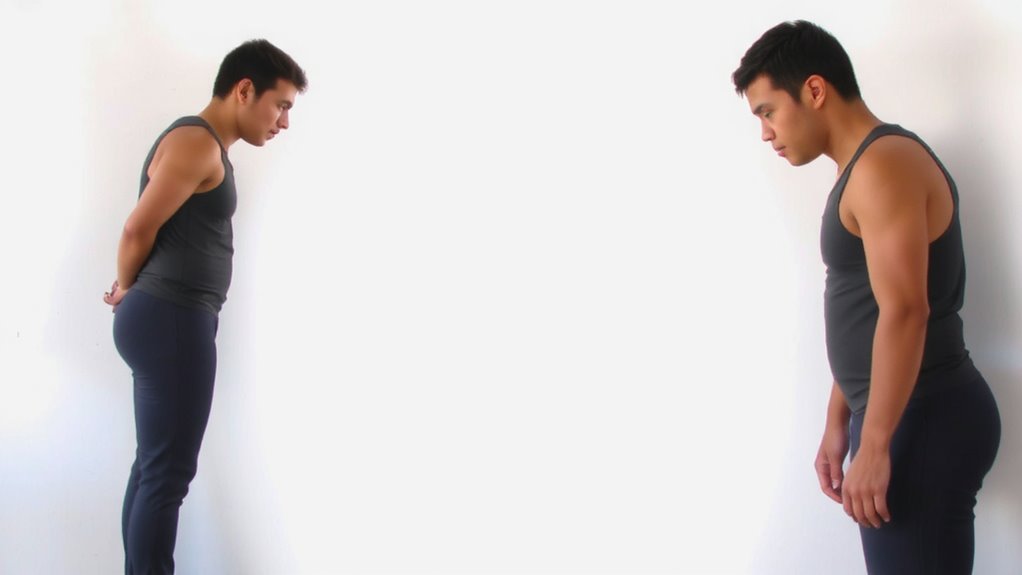
You’re already aware that chin tucks help fix the forward head posture so common with desk work, but doing them correctly while standing makes all the difference in targeting the right muscles and avoiding strain. Start by standing with feet shoulder-width apart, maintaining a neutral spine from pelvis to skull. Gently tuck your chin, as if making a double chin, without tilting your head up or down. This motion should be small and controlled, engaging deep cervical flexors. Pair each chin tuck with scapular retraction-pull your shoulder blades slightly back and down-to stabilize the upper back and support proper alignment. Keep your gaze forward and avoid lifting your chest excessively. Perform 10–15 reps slowly, focusing on muscle activation, not speed. Consistent practice with correct form improves neuromuscular control, enhances posture, and complements recovery tools like foam rollers or posture braces when used appropriately. For long-term support, consider using a pillow designed for straight neck support to maintain proper spinal alignment during sleep.
What Not to Do in Cervical Mobility Drills

| Mistake | Effect on Neck | Better Approach |
|---|---|---|
| Excessive force | Strain in suboccipital muscles | Gentle, gradual movement |
| Jaw clenching | TMJ pressure, head tension | Relax jaw, soft teeth contact |
| Rapid repetitions | Dizziness, poor control | Slow, mindful tempo |
Best Times to Do Chin Tucks Daily
When should you integrate chin tucks into your daily routine for ideal cervical benefits? Performing them as part of your morning routine helps reset neck posture after hours of sleep, especially if you wake stiff. It’s a subtle but effective way to engage deep cervical flexors early, promoting alignment before screen use begins. You’ll likely notice improved awareness of head positioning throughout the day. A bedtime practice also proves valuable-chin tucks then can relieve accumulated tension from prolonged sitting or poor ergonomics. Doing them standing guarantees you’re training in a functional posture, enhancing carryover to daily activities. While fitness recovery tools like foam rollers may complement care, consistency with timing matters more. Pairing chin tucks with your existing habits-like brushing your teeth in the morning or unwinding at night-makes adherence easier. Quality form beats frequency, so focus on controlled movement each time. For targeted relief, consider incorporating best back stretching equipment as part of a comprehensive approach to postural health.
Top Neck Exercises to Pair With Chin Tucks
While chin tucks lay the foundation for cervical stability, pairing them with complementary neck exercises enhances overall mobility and muscular balance, especially when aiming to counteract the effects of prolonged sitting or screen use. You’ll benefit from adding isometric neck presses-gently pressing your hand against your head in different directions-to build neck stabilization without strain. Segmental cervical retractions, performed slowly in standing, improve control and precision. Don’t skip upper trapezius stretches; they release tension that can hinder progress. Significantly, these moves support proper shoulder alignment, reducing forward head posture and scapular rounding. Resistance bands can aid in controlled lateral flexion drills, offering measurable tension for progressive loading. Together, these exercises guarantee balanced development, enhance joint awareness, and promote sustainable posture correction-key outcomes in any effective recovery or fitness maintenance plan.
Who Gains Most From Standing Chin Tucks
Who really benefits the most from incorporating standing chin tucks into their routine? You do-if you’re aiming to boost athletic performance and prioritize injury prevention. These drills target deep neck flexors, improving postural control and cervical alignment. Whether you’re an athlete, desk worker, or recovering from strain, chin tucks build resilience in neck musculature, reducing strain during dynamic movements.
| Group | Why It Helps | Key Benefit |
|---|---|---|
| Athletes | Enhances head control during motion | Better athletic performance |
| Desk Workers | Counters forward head posture | Reduced neck tension |
| Seniors | Improves balance and coordination | Lower fall risk |
| Rehab Patients | Restores neuromuscular function | Faster recovery |
| Fitness Enthusiasts | Supports spinal alignment | Greater injury prevention |
They require no gear, blend into daily routines, and lay the foundation for safer, more efficient movement.
Signs Chin Tucks Are Improving Your Neck Posture
You’ll start noticing real changes once your body adapts to consistent chin tuck practice, and the signs of improved neck posture become hard to miss. Your neck alignment gradually corrects, reducing that forward head position most of us develop from prolonged screen time. You’ll catch yourself standing taller without effort, a clear sign your posture awareness is improving. Daily activities feel smoother, with less strain radiating from the base of your skull. Others might even comment on your poised, confident stance. Minor tension headaches decrease as muscular imbalances begin to resolve. Over weeks, these subtle shifts reflect real neuromuscular retraining-your body is relearning ideal alignment. The chin tuck isn’t just a drill; it’s a functional reset that boosts posture awareness throughout the day. With consistency, it supports cervical mobility and long-term spinal health, making it a practical, effective addition to any routine focused on prevention and recovery.
On a final note
You’ll see real improvements in neck posture and mobility by adding standing chin tucks to your daily routine. They’re simple but effective, especially when paired with other targeted neck exercises. Used consistently, they support better spinal alignment and reduce tension from prolonged sitting. With proper form, these drills enhance recovery and complement fitness gear like posture correctors. It’s not flashy, but the results are measurable-less stiffness, improved posture, and greater comfort throughout the day.