Core Stability Circuit to Prevent Low Back Pain in Powerlifters
Your core stability-more than sheer strength-protects your spine during heavy lifts by coordinating muscle activation. Exercises like planks, dead bugs, and bird-dogs train deep stabilizers to maintain neutral alignment and boost intra-abdominal pressure, reducing shear forces on your lumbar spine. Do them 3 times weekly post-lift or on off-days, focusing on control over duration. Proper form and breathing are essential-mistakes increase injury risk. You’ll discover how to structure these drills effectively and avoid common pitfalls next.
Notable Insights
- Perform a 3-day weekly core stability circuit aligned with lifting days to enhance spinal protection.
- Execute forearm planks, side planks, dead bugs, bird-dogs, and hollow holds with proper form and control.
- Focus on activating deep stabilizers like transverse abdominis and multifidus before movement begins.
- Maintain neutral spinal alignment and intra-abdominal pressure during all lifts to reduce shear forces.
- Avoid pre-fatiguing core muscles by doing stability work post-lift or on off-days for optimal performance.
Why Core Stability Prevents Low Back Pain
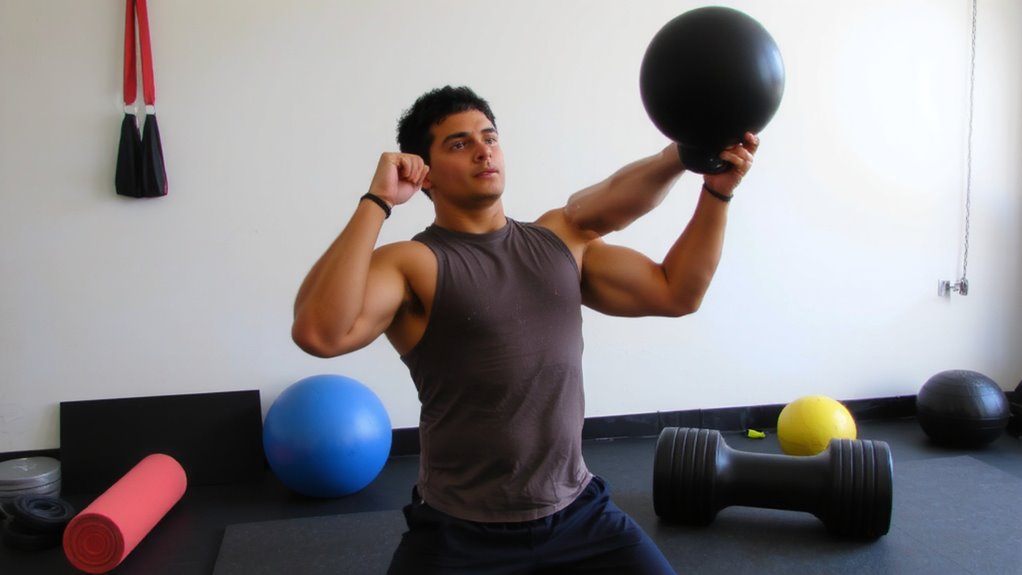
While you might think lifting heavy is all about brute strength, it’s your core stability that often determines whether you stay pain-free or end up with chronic low back issues. You rely on coordinated muscle contractions to transfer force safely during squats and deadlifts, and without solid core control, you risk muscle imbalance across the lumbar region. This imbalance pulls joints out of alignment, increasing shear forces on the spine. Proper core stability boosts neural activation in deep stabilizers like the transverse abdominis and multifidus, prepping them to respond before movement begins. Without this anticipatory response, even well-designed fitness recovery tools or supportive gear can’t compensate for poor neuromuscular control. It’s not just about strength-your body needs precise timing and integration across muscle groups. Build stability first, and you’ll protect your back more effectively than any recovery gadget ever could.
5 Stability Moves Every Powerlifter Must Do
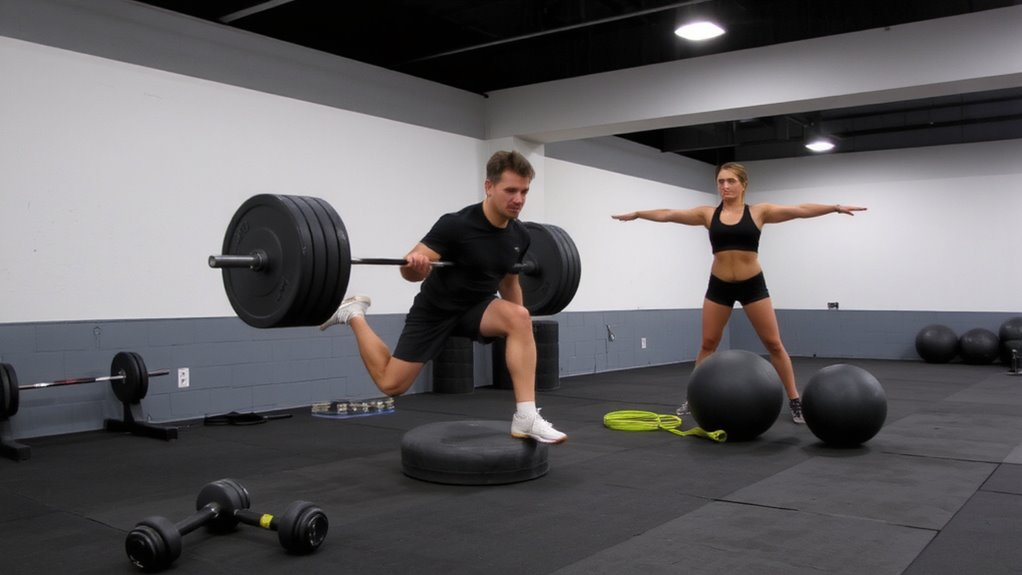
You’ve got the heavy lifts down, but without these stability moves, your foundation’s still playing catch-up. Incorporating plank variations and the dead bug progression builds the resilient core powerlifters need. These aren’t just filler-they’re functional essentials that train your body to maintain alignment under load. Below is a weekly stability circuit to integrate:
| Exercise | Sets | Reps/Duration |
|---|---|---|
| Forearm Plank | 3 | 30–45 sec |
| Side Plank (each side) | 3 | 20–30 sec |
| Dead Bug Progression | 3 | 10–12 per side |
| Bird-Dog | 3 | 8–10 per side |
| Hollow Hold | 3 | 20–30 sec |
Doing these 3–4 times weekly sharpens neuromuscular control. The dead bug progression teaches pelvic control while challenging anti-extension, and plank variations boost endurance across multiple planes. This isn’t about burn-it’s about building a stable, responsive core that supports your strength work structurally and sustainably.
How These Exercises Protect Your Spine
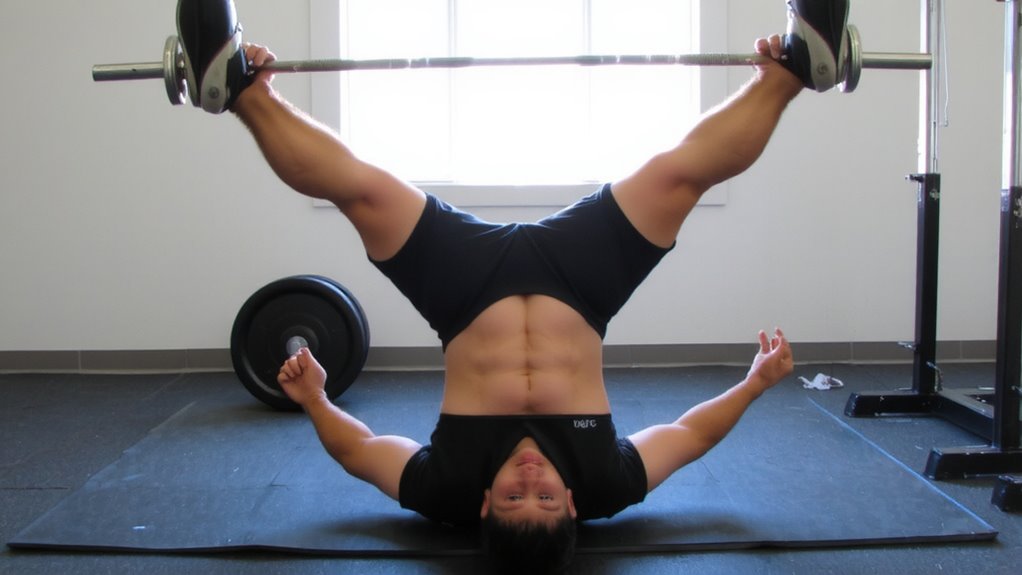
Your spine’s integrity under heavy loads hinges on a core trained for stability, not just strength. When you perform these exercises, you’re reinforcing spinal alignment by teaching your muscles to maintain a neutral position during movement. This reduces shear forces on your vertebrae, especially during squats and deadlifts. A stable core helps generate consistent intra abdominal pressure, which acts like a natural weight belt, bracing your lumbar spine from within. You’ll find this internal support far more effective than relying on external lifting gear alone. Over time, these movements condition your deep stabilizers-transverse abdominis, multifidus, pelvic floor-to activate reflexively under load. That neuromuscular efficiency protects discs and joints, decreasing injury risk. While recovery tools like foam rollers or braces have value, they can’t replace the proactive protection a well-trained core provides. Consistent stability work builds resilience where it matters most-deep inside your torso.
When And How To Train Them Weekly
Three dedicated core stability sessions per week strike a perfect balance for most powerlifters, fitting seamlessly into existing training cycles without impeding recovery. Your training frequency should align with major lifting days-Monday, Wednesday, Friday, for example-so core work reinforces spinal resilience when you need it most. Exercise timing matters: perform these stability drills either post-lift or on off-days to avoid pre-fatiguing stabilizers. That way, you maintain technique integrity during heavy compound lifts. Don’t tack them on randomly; consistency in scheduling boosts neuromuscular adaptation. Think of core stability as maintenance, not max effort-short sessions (10–15 minutes) with focused tension and control yield better carryover than prolonged, sloppy sets. Recovery isn’t just rest; it’s smart activation. Using simple gear like ab wheels or foam pads helps, but technique trumps tools. Stick to the rhythm: train often, precisely, and in sync with your powerlifting demands.
Fix These Form Mistakes To Avoid Injury
How often do minor form lapses turn into major setbacks? Too often. You might not notice it at first, but poor technique compounds under heavy loads. Rounding your back during deadlifts? That’s asking for trouble. You need proper breathing to brace your core-inhale before the lift, hold it through the rep, then exhale at the top. Without it, intra-abdominal pressure drops, and your spine takes unnecessary stress. Watch your joint alignment, too. Knees caving during squats or shoulders shrugging at lockout? Those misalignments shift force to vulnerable areas. Over time, they degrade tissue, invite strain, and derail progress. You’re not just lifting weights-you’re training movement patterns. Correct form isn’t optional; it’s the foundation. Fix these errors early, stay consistent with cues, and integrate core stability work. That’s how you protect your back, extend your career, and lift smarter. Consider using compression sleeves to support joint stability and enhance proprioception during lifts.
On a final note
You’ll prevent low back pain by building true core stability, not just strength. These moves reinforce spinal alignment under load, which powerlifters need. Consistent weekly practice, done right, supports heavy training. Avoid common form flaws like rib flaring or pelvic tilting-precision matters. Recovery improves when your core functions efficiently. Quality gear, like supportive belts, helps but won’t fix poor mechanics. Train smart, recover well, lift longer.