Thoracic Mobility Drills With Wall-Assisted Extensions to Improve Posture
You need thoracic mobility drills like wall-assisted extensions to fix poor posture, because tightness in your upper back forces your neck and shoulders to compensate. Stand with heels, hips, and head against a wall, slide your arms up in a “W” while keeping ribs down and back flat. Avoid shrugging or arching-control matters more than range. Do 10–12 slow reps daily, focusing on breath and form. Consistency builds real change, especially when you pair this drill with targeted progressions that challenge spinal articulation and muscle balance.
Notable Insights
- Poor posture often results from stiff thoracic spines, not just tight shoulders, making mobility work essential.
- Wall-assisted thoracic extensions improve mid-back mobility by promoting proper spinal articulation against a wall.
- Perform 10–12 slow reps daily, sliding arms into a “W” shape while initiating movement from the mid-back.
- Avoid rib flaring, shoulder shrugging, and lumbar overarching by engaging the core and maintaining neutral alignment.
- Pair wall extensions with diaphragmatic breathing and consistent daily practice for lasting postural improvements.
Why Poor Posture Needs Thoracic Mobility
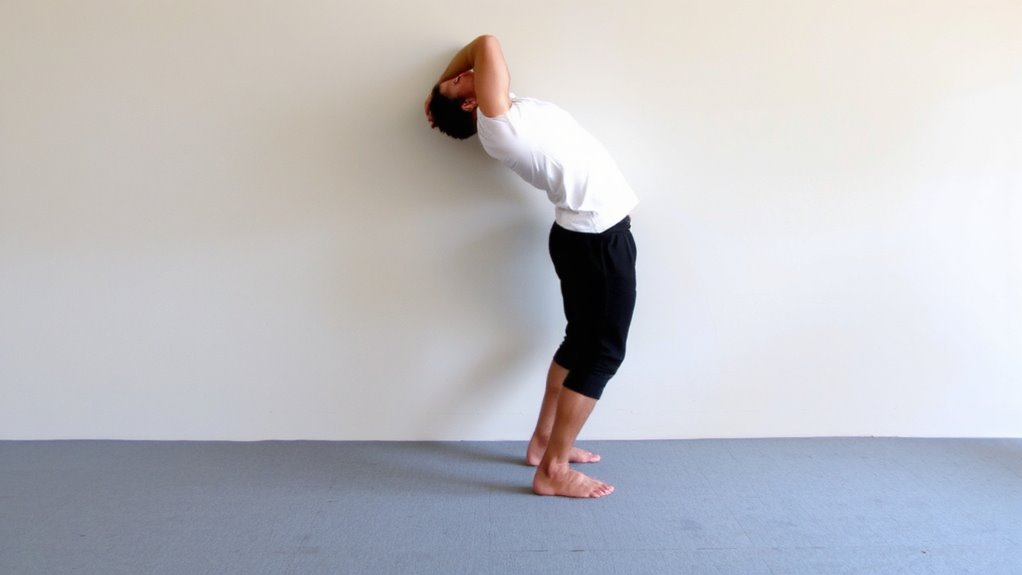
While you might think tight shoulders or a stiff neck are the main culprits behind slouching, it’s often a lack of thoracic mobility that’s really to blame. Spinal stiffness in your upper back restricts natural movement, forcing your neck and shoulders to compensate, which worsens posture over time. You’re likely dealing with muscle imbalances-tight chest muscles pulling you forward while weak upper back muscles fail to support proper alignment. Without addressing thoracic mobility, even targeted strength work falls short. Limited rotation and extension in this region disrupt functional movement patterns essential for daily tasks and exercise. Correcting this isn’t just about flexibility; it’s about restoring balance and control. Incorporating tools like foam rollers or mobility bands can help, but consistency and proper form matter most. You need deliberate practice to retrain your spine’s range of motion and reduce dependency on gear alone.
Perform Wall-Assisted Thoracic Extensions (Step by Step)
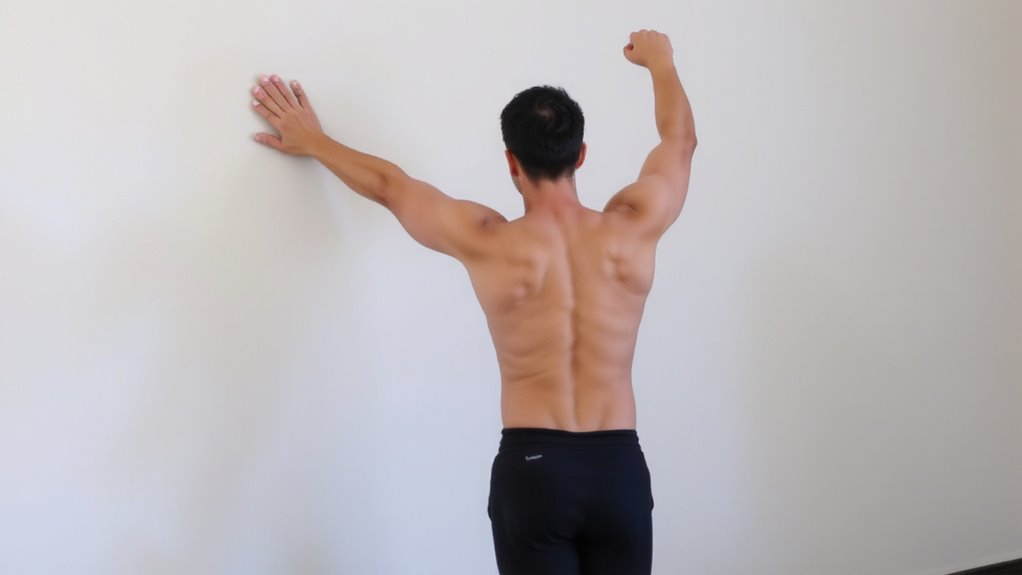
You can start reclaiming motion in your upper spine with a simple yet effective move: Wall-Assisted Thoracic Extensions. Stand with your back against the wall, feet slightly forward-this wall alignment guarantees proper positioning from heels to head. Gently tuck your chin, engage your core, and press your lower back flat. Slowly slide your arms up the wall, bending at the elbows to form a “W” shape. Focus on initiating movement from your mid-back, not your shoulders. This controlled motion enhances spinal articulation, restoring segmental mobility often lost from prolonged sitting. Keep ribs down and avoid arching your lower back. Perform 10–12 slow reps daily to build neuromuscular awareness. Over time, the drill conditions postural muscles without straining connective tissue. It’s a reliable, low-risk mobility boost, especially when paired with consistent daily use. Maintenance matters: soft tissue tools and foam rollers can complement long-term gains.
Fix These Common Form Mistakes
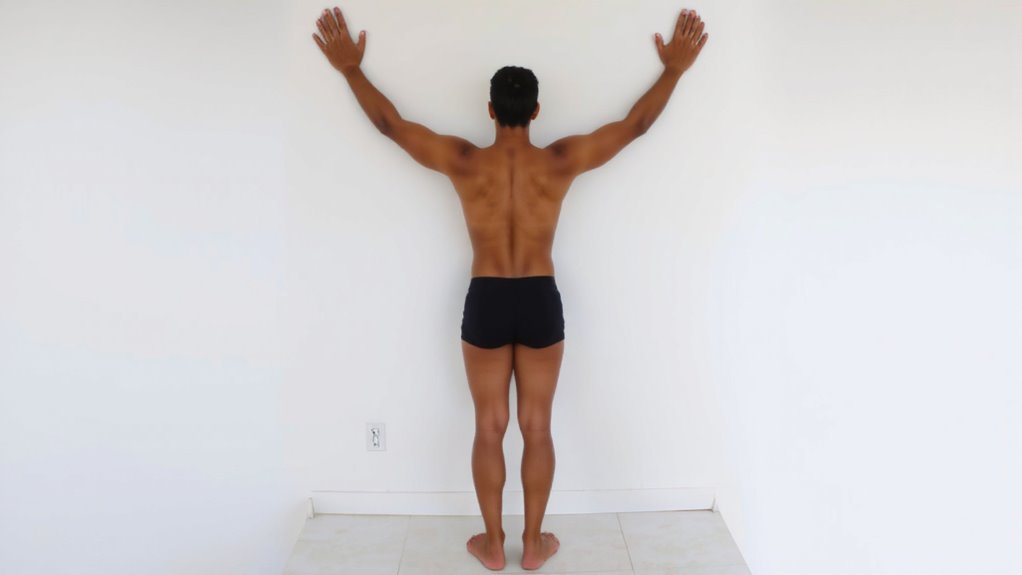
Though proper form is essential for maximizing the benefits of thoracic mobility work, subtle errors often undermine progress without you even realizing it. Common mistakes include flaring your ribs or shrugging your shoulders, which shift focus from the thoracic spine to other areas, worsening muscle imbalances. Poor Breathing techniques-like holding your breath-reduce oxygen flow and limit movement efficiency. Maintaining a neutral pelvis and initiating motion from the mid-back are key.
| Error | Correction |
|---|---|
| Rib flaring | Engage core, keep ribs down |
| Shallow breathing | Use diaphragmatic breaths |
| Overarching lumbar | Tuck pelvis slightly, engage glutes |
Correcting these issues guarantees targeted mobilization and supports long-term posture improvement. You’ll notice better control and reduced tension in the neck and lower back when alignment and Breathing techniques work together effectively.
Level Up: Progressions That Boost Mobility
Once you’ve mastered the foundational thoracic mobility drills and corrected common form errors, progressing to more more dynamic and integrated movements becomes essential for continued gains. Advanced techniques like banded thoracic rotations and foam roller sweeps challenge your range of motion while reinforcing proper segmental control. These progressions aren’t just about flexibility-they enhance coordination and neuromuscular efficiency, key for lasting posture improvement. Pairing them with deep tissue work, such as targeted massage on tight lats or pecs, can release chronic tension that limits mobility. Tools like mobility balls or vibrating rollers add specificity, breaking up adhesions more effectively than basic foam rollers. While some gear overpromises, devices with adjustable density and ergonomic shaping deliver real value. Used consistently, these advanced techniques and recovery tools amplify your gains, making them worthwhile additions to a thoughtful mobility practice. For deeper myofascial release, consider using a best vibrating foam rollers model designed for targeted recovery.
Build a 5-Minute Daily Mobility Habit
Consistency trumps complexity when it comes to lasting improvements in thoracic mobility, especially after incorporating advanced techniques like banded rotations or foam roller sweeps. You don’t need fancy fitness gear-just five focused minutes a day. Start with wall-assisted extensions, pairing each movement with slow breathing techniques to enhance neuromuscular control. Inhale deeply through your nose, expand your ribcage, and exhale fully as you extend. This rhythmic pattern supports spinal articulation and reduces stiffness. Daily consistency, even without resistance bands or rollers, yields measurable gains in posture and range of motion over time. Think of it as maintenance: like brushing your teeth, it’s most effective when non-negotiable. Perform these drills upon waking or post-sitting to reset alignment. Over weeks, you’ll notice less upper-back tension and improved shoulder mechanics. The simplicity guarantees adherence, and the results validate the routine-no elaborate equipment required, just deliberate practice backed by respiratory coordination and purposeful movement.
On a final note
You’ve now got a practical toolkit to improve thoracic mobility and posture. Wall-assisted extensions are effective, requiring minimal space and no gear, making them ideal for daily use. When performed consistently and with correct form, these drills enhance spinal flexibility and reduce stiffness. Recovery is faster when supported by targeted movement, and investing just five minutes daily yields measurable improvements. This approach combines efficiency with sustainability, proving that simple, well-executed routines often outperform complex regimens.