Lumbar Mobility Drills With Supine Spinal Twists for Disc Hydration
You’ll boost disc hydration and lumbar mobility by adding supine spinal twists to your daily routine-this gentle pump-action nourishes discs through imbibition. Lie on your back, knees bent, and slowly drop them side to side while keeping shoulders down. Do 2–3 sets daily, holding 30–45 seconds per side, and breathe steadily. Avoid forcing the twist or lifting shoulders. Pair with dynamic mobility drills for better spinal resilience, and you’ll uncover even greater benefits with consistent practice.
Notable Insights
- Supine twists enhance disc hydration by promoting fluid exchange through rhythmic compression and release of spinal segments.
- Perform the basic supine twist daily, holding each side for 30–45 seconds to support lumbar mobility and spinal nutrition.
- Keep shoulders grounded and knees stacked over hips to maintain alignment and maximize safe, effective twisting motion.
- Add dynamic variations like figure-four lifts or heel slides to increase segmental control and engage core stabilizers.
- Avoid forceful twisting and breath holding to prevent strain and ensure optimal imbibition for disc health.
Why Supine Twists Help Disc Hydration
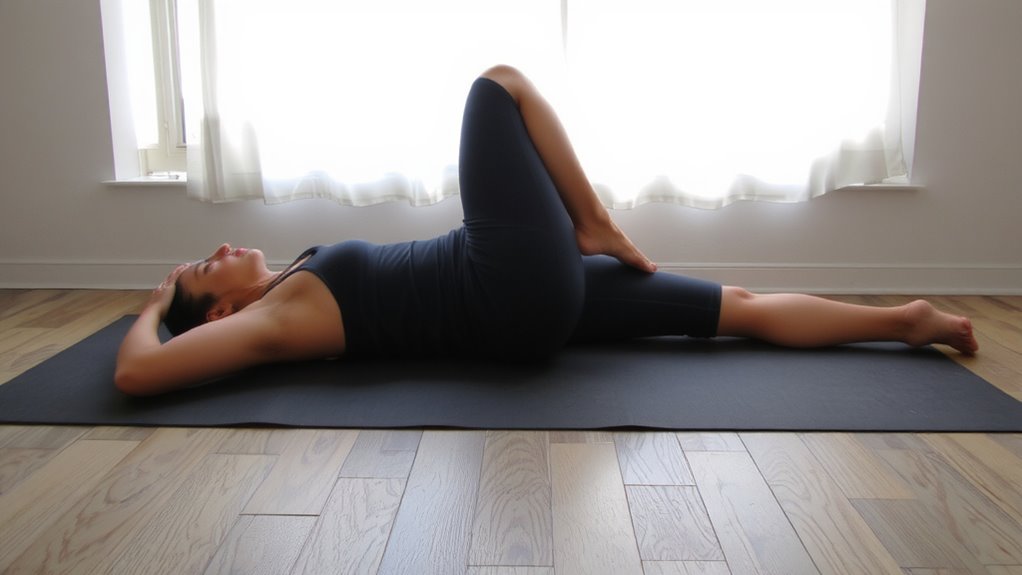
You’ve probably felt that stiff, sluggish sensation in your lower back after sitting too long-turns out, your spinal discs might be crying out for hydration. Unlike other tissues, discs rely on movement for disc nutrition through a process called imbibition, where fluid is drawn in under changing pressure. Supine twists gently compress and release spinal segments, encouraging this fluid exchange. This motion supports joint lubrication, reducing friction and promoting smoother movement over time. Without regular loading cycles, discs can lose hydration, becoming less resilient. While fitness recovery tools like foam rollers help, nothing replaces the mechanical stimulus of controlled motion. Supine twists are low-risk, require no gear, and deliver targeted benefits. They’re not flashy, but their effectiveness in maintaining disc health is well-supported. When performed consistently, they contribute meaningfully to long-term spinal resilience, making them a practical staple in any recovery-focused routine. Clinical studies suggest that non-surgical spinal decompression therapy can significantly improve disc hydration and reduce pain in individuals with degenerative disc disease.
How to Do the Basic Supine Twist
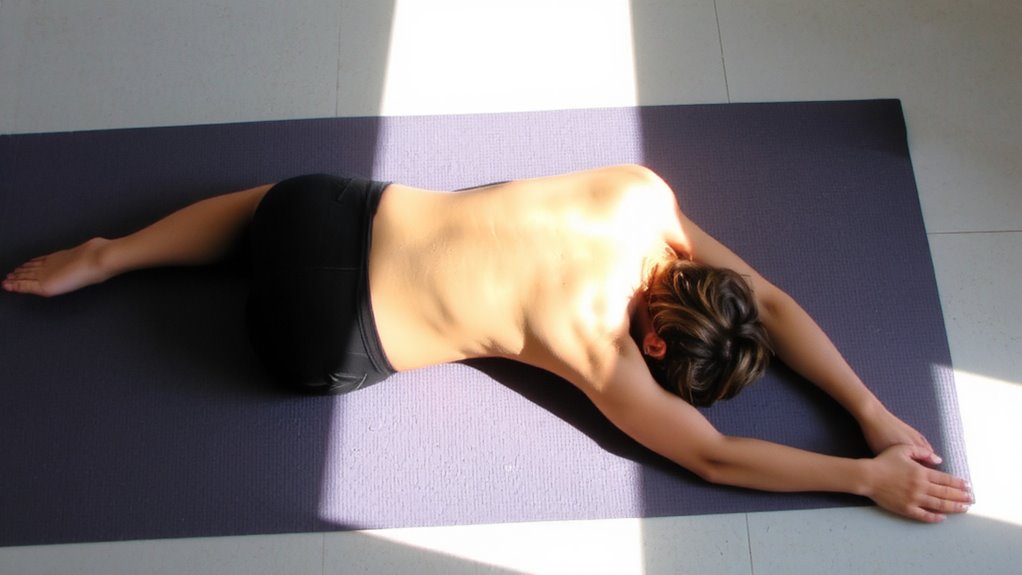
How do you begin releasing the stiffness in your lower back with precision and safety? Lie flat on your back, arms out in a T, and bend your knees to 90 degrees. Slowly drop both knees to one side, keeping your shoulders glued to the floor. Focus on controlled knee alignment-your knees should stack neatly over your hips without hiking toward your chest. Proper ankle positioning matters too: let your ankles relax, feet gliding naturally as gravity pulls them down. This guarantees minimal strain and ideal spinal rotation. Use a mat with sufficient cushioning to support your spine and joints throughout the movement. You’ll notice immediate feedback-tightness on one side usually indicates mobility imbalances. Maintain steady breathing to deepen the twist gently. This drill isn’t flashy, but its effectiveness in promoting disc hydration through segmental motion is well-supported. Precision trumps intensity here.
How Often to Perform the Twist
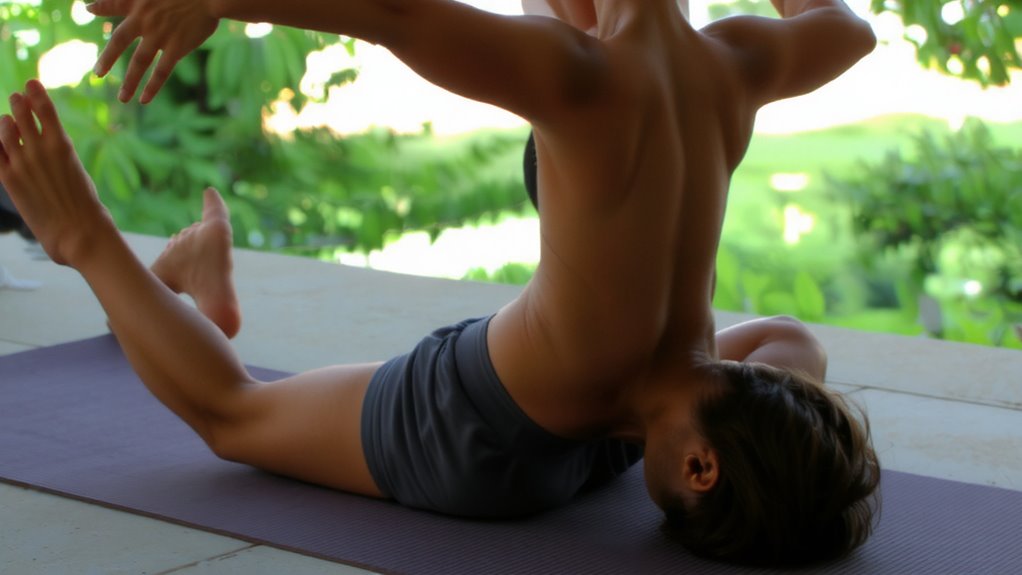
Consistency in performing the supine twist plays a significant role in optimizing lumbar mobility and supporting disc hydration, especially when recovery is the primary goal. Frequency recommendations typically suggest doing the twist daily, particularly if you’re sedentary or recovering from back discomfort. Most experts advise 2–3 sets per side, holding each for 30–45 seconds, which aligns with repetition guidelines aimed at promoting fluid exchange in the discs without overloading tissues. You’ll get the best results when you pair this routine with mindful breathing and proper pelvic alignment. While fitness gear like supportive mats can enhance comfort, it’s consistency-not equipment-that drives progress. Over time, this regular, gentle loading encourages spinal resilience. Stick to the recommended frequency and reps, and you’ll likely notice improved ease in movement and reduced stiffness, especially in the lower back.
Try These Advanced Spinal Twists
Why settle for basic when your spine craves deeper mobility? Try these advanced variations to amplify disc hydration and spinal articulation. Instead of holding static twists, you’ll use dynamic shifts-smooth, controlled movements that engage deeper core stabilizers while encouraging fluid movement through each vertebral segment. Start with supine spinal twists, then add a bent-knee lift into a figure-four position before rotating. This version increases rotational range without compressing the lumbar unnecessarily. Another effective progression involves a heel-slide shift: extend the bottom leg as you twist, creating a longer lever and more segmental control. These drills demand precision, not speed, so maintain a neutral pelvis throughout. When performed correctly, these advanced variations enhance neuromuscular coordination and improve intervertebral nutrient flow. Use them 2–3 times weekly, especially after prolonged sitting. Dynamic shifts turn simple twists into functional, recovery-focused movements that support long-term spinal health.
Avoid These Common Twist Mistakes
You’ve likely tried spinal twists to improve mobility and support disc health, especially after sitting for hours, but without proper technique, those same movements could do more harm than good. Poor spinal alignment or excessive muscle tension can reduce effectiveness and increase injury risk. To maximize benefits, avoid these common errors:
| Mistake | Why It Matters |
|---|---|
| Twisting too forcefully | Increases muscle tension, risks joint strain |
| Letting shoulders lift off the floor | Compromises spinal alignment, reduces control |
| Holding breath during motion | Limits oxygen flow, heightens tension |
| Ignoring pain signals | Can worsen disc compression or misalignment |
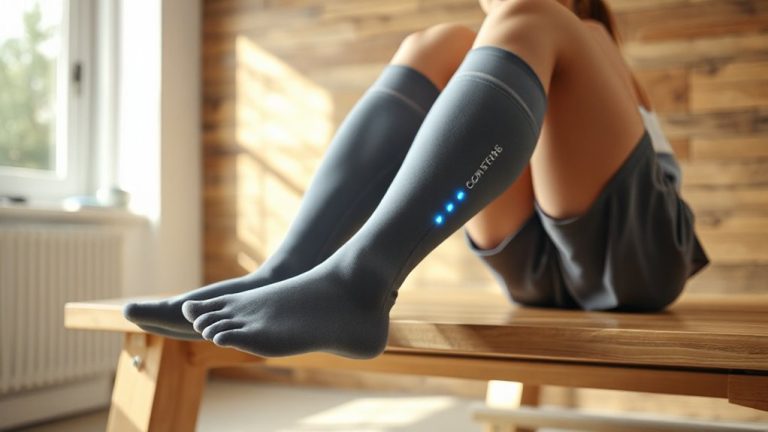
Maintaining controlled, symmetrical movement guarantees safer, more effective results. Focus on smooth shifts and steady awareness of your spine’s position. Proper form supports disc hydration without unnecessary stress. For added support during recovery, consider using compression sleeves to help manage muscle tension and promote circulation.
Combine Twists With These Mobility Drills
Pairing spinal twists with targeted lumbar mobility drills enhances disc hydration by promoting segmental motion and nutrient exchange within the intervertebral spaces. You’ll benefit most by combining these twists with pelvic tilts, which actively mobilize the lower spine and improve neuromuscular control. Start each movement cycle with diaphragmatic breathing to engage the deep core and stabilize the pelvis. This breath control reduces compensatory tension, letting the spine move more freely. Flow smoothly from supine spinal twists into gentle pelvic tilts, maintaining knee-to-chest positioning to modulate intensity. Perform 8–10 cycles per side, focusing on rhythm and control rather than range. These drills work best when done consistently, especially post-sitting or before bed, directly supporting disc health. Unlike passive recovery tools, this active approach doesn’t rely on expensive fitness gear. It’s effective, efficient, and grounded in biomechanical principles. For lasting spinal resilience, integrate these drills into your recovery routine-they outperform static stretching alone.
On a final note
You’ll find supine spinal twists effective for lumbar mobility and disc hydration when performed correctly. These drills encourage nutrient-rich fluid exchange in spinal discs, supporting long-term back health. Paired with quality recovery gear-like supportive mats or foam rollers-you enhance both performance and safety. Consistency matters more than intensity, so integrate them daily. Avoid over-rotation; focus on control. Done right, these exercises are a practical, low-risk tool for sustainable spinal wellness.