Adaptive Seated Rowing Modifications for Individuals With Lumbar Disc Issues
You should use a rower with adjustable lumbar support and set the seat so your hips sit slightly above your knees, maintaining a neutral spine. Sit tall, engage your core gently, and avoid rounding your lower back. Start with light resistance and a slow 2:2 tempo, focusing on form. Use an underhand grip to reduce spinal compression, and stop immediately if you feel nerve pain. Consistency with proper setup turns rowing into a recovery-friendly workout-there’s more to optimizing each stroke safely.
Notable Insights
- Use an ergometer with adjustable lumbar support to maintain neutral spine alignment during seated rowing.
- Begin with minimal resistance and focus on pain-free range of motion to protect lumbar discs.
- Employ a slow, controlled tempo (e.g., 2:2 seconds) to reduce spinal loading and enhance movement quality.
- Utilize an underhand grip to decrease lumbar compression and promote better postural alignment.
- Stop immediately if radicular pain, spasms, or sharp discomfort occurs during exercise.
How Adaptive Rows Help Lumbar Disc Pain
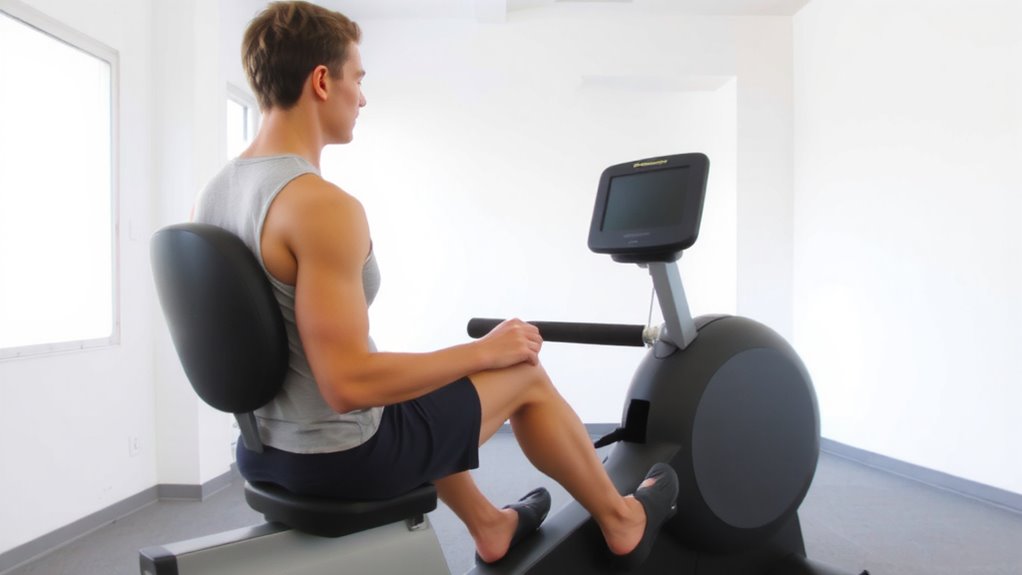
Why might a rowing motion actually help when you’re dealing with lumbar disc pain? Because adaptive rows promote controlled movement that supports healing. You’re not just pulling-you’re engaging in a therapeutic motion that builds muscular endurance safely. The seated design encourages proper ergonomic positioning, reducing strain while targeting the back, shoulders, and arms. Unlike high-impact exercises, this low-load activity minimizes spinal compression, making it ideal during fitness recovery. You maintain stability while activating core and posterior chain muscles, which helps balance strength without aggravating disc issues. Many adaptive machines offer adjustable resistance, letting you progress at your pace. Fitness gear built for rehabilitation often includes cushioned seating and smooth resistance bands or hydraulic systems, enhancing comfort and consistency. Used correctly, these tools don’t just maintain fitness-they support spinal resilience. It’s not a quick fix, but a methodical step toward long-term back health. For those on a budget, there are effective options like the best budget rowing machines that provide the necessary features for safe, adaptive training.
Set Your Seat to Support Lower Back Alignment
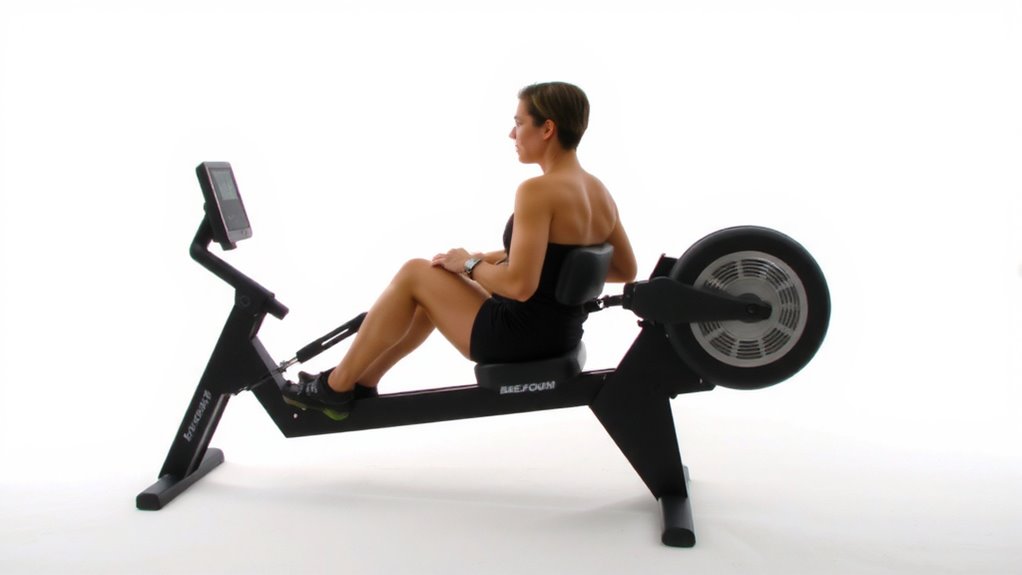
A well-adjusted seat isn’t just about comfort-it’s a critical factor in maintaining proper spinal alignment during adaptive rowing, especially if you’re managing lumbar disc issues. Proper seat positioning helps reduce shear forces on the lower back, minimizing strain with each stroke. You should adjust the seat height and depth so your hips align just slightly above your knees, promoting a neutral spine. Built-in lumbar back support is essential; it maintains the natural curve of your lower back and prevents slouching. Models with contoured or adjustable backrests offer superior support and adaptability. Inferior seats often lack adequate cushioning or contouring, which compromises spinal integrity over time. Always check that the seat glides smoothly without wobbling-instability can disrupt alignment. Consistent use of well-designed seat systems enhances both safety and performance, making them a worthwhile investment in long-term fitness recovery.
Sit Tall: Master Posture for Pain-Free Rowing
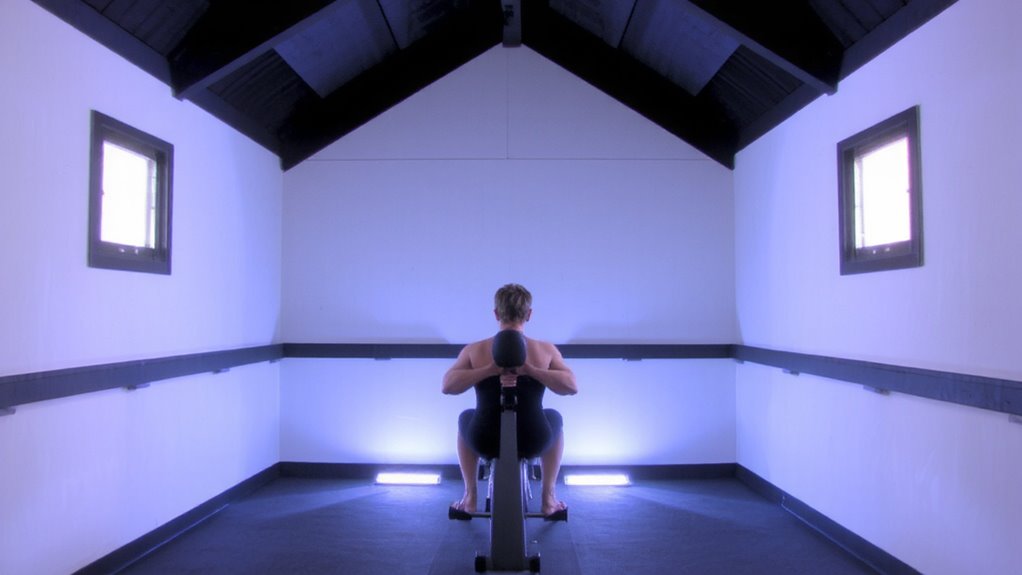
You’ve set your seat to support lower back alignment, but how you sit on it makes all the difference when rowing with lumbar disc concerns. Sitting tall isn’t just about comfort-it’s essential for maintaining spinal neutrality and minimizing disc pressure. Keep your chest lifted and shoulders relaxed, avoiding slouching or over-arching your lower back. Engage your core gently but consistently; think of bracing your abdomen like you’re preparing for a light punch. This core engagement stabilizes your spine and reduces shear forces on the lumbar discs. Proper posture aligns your vertebrae, allowing smooth, controlled movement without pinching nerves. Over time, poor positioning-even with ideal seat setup-can lead to flare-ups. Mastering upright, neutral alignment maximizes safety and muscular efficiency. It may feel subtle, but sitting tall with disciplined posture transforms rowing from risky to rehabilitative. Consistency here supports long-term back health and functional strength. Choosing the right indoor rowing machine can further support proper form and reduce strain on the lower back.
Start Light: Safely Adjust Rowing Resistance
Though proper posture sets the foundation, starting with minimal resistance guarantees your spine stays protected during early row游戏副本 sessions. You should begin with the lowest tension setting to let your muscles, not your discs, adapt to the motion. A proper warm up-like five minutes of gentle cycling or arm circles-prepares your back and shoulders, reducing strain risk. Pair each stroke with controlled breathing: inhale during recovery, exhale as you pull. This rhythm supports core stability and prevents jerky movements that spike spinal pressure. Equipment-wise, magnetic rowers offer smoother resistance changes than hydraulic models, giving you more precise control. Don’t rush progression; add tension only when movement feels fluid and pain-free. Starting light isn’t caution-it’s strategy. It builds resilience without compromising recovery, letting you row longer over time with lower injury risk. For space-conscious setups, consider best compact rowing machines that combine adjustability with a small footprint.
Change Your Grip to Reduce Spine Pressure
Maintaining proper resistance and form sets the stage, but your grip plays a surprisingly influential role in managing spinal load during seated rowing. Using an overhand grip can increase upper back rounding, potentially transferring more stress to your lumbar discs-especially if you lean too far forward. Switching to an underhand variation often encourages a more natural chest lift and slight retraction of the shoulder blades, promoting better spinal alignment. This subtle shift reduces compression forces on the lower back, making the movement safer for disc recovery. The underhand variation also tends to activate the biceps slightly more, which may help you maintain control without gripping too tightly-a common cause of unwanted torso tension. While both grips work, the underhand position generally offers superior spine-sparing benefits without sacrificing muscle engagement. Test both cautiously and choose based on comfort and form quality.
Slow Your Pull to Protect Your Discs
When performed with excessive speed, the seated row can amplify compressive forces on the lumbar discs, undermining the stability you’re trying to preserve. Slowing your pull introduces a controlled tempo that reduces spinal loading while enhancing muscle engagement throughout your back and shoulders. This deliberate pace guarantees your rhomboids, traps, and rotator cuff work efficiently without dumping strain into the lumbar region. Research supports a 2:2 or 3:3 second count for eccentric and concentric phases to maximize safety and effectiveness. Faster repetitions often trigger momentum reliance, decreasing muscular contribution and increasing injury risk. A slow, intentional movement also improves mind-muscle connection, helping you maintain proper posture. Quality over quantity matters-especially when training around disc issues. Using equipment with smooth resistance, like a well-maintained cable machine or resistance bands, supports consistent motion without jerking. Controlled tempo isn’t just technique-it’s protection.
Stop Immediately: Warning Signs During Rowing
What if that slight twinge in your lower back isn’t just fatigue but a warning? Don’t ignore it-sharp pain or sudden muscle spasms during rowing mean stop immediately. These signs suggest disc aggravation or soft tissue strain. Pushing through increases injury risk, especially with lumbar issues. Listen closely to your body’s feedback.
| Sensation | Meaning You Should |
|---|---|
| Sharp pain | Halt the workout |
| Muscle spasms | Rest and assess |
| Radiating discomfort | Avoid further strain |
| Stiffness with movement | Re-evaluate form |
Continuing under these conditions compromises recovery, regardless of fitness gear quality. High-end ergonomic seats won’t override poor biomechanics or overexertion. Immediate cessation allows damage control, promoting long-term progress. Evaluate your technique, setup, and fatigue level before resuming. Prioritize spine safety-no rep is worth lasting harm.
On a final note
You’ve seen how small changes in form and equipment make rowing safer for a sensitive lower back. Adaptive seated rows, with proper seat alignment, light resistance, and controlled pulls, support both fitness recovery and joint health. Using fitness gear wisely-like ergonomic grips and adjustable machines-reduces spine pressure. These modifications aren’t just helpful; they’re essential for long-term progress and spinal protection during rehab.