Upright Row Mobility Drill Without Weights Using Scarf or Strap and Nasal Breath
You perform the upright row mobility drill by holding a scarf or strap with both hands, palms down, then sweeping your arms up and back with thumbs leading. Keep your elbows high but below shoulder level and avoid shrugging. Nasal breathing boosts diaphragmatic engagement, reduces tension, and enhances scapular glide. This drill improves shoulder mobility and posture with minimal equipment, making it ideal for daily use-especially if you sit often or train overhead. There’s more to gain by refining each repetition.
Notable Insights
- Perform the upright row mobility drill using a scarf or strap with palms down and arms straight for smooth, controlled motion.
- Sweep arms upward and back with thumbs pointing up, keeping elbows high but lifting only to shoulder height.
- Engage nasal breathing throughout to enhance diaphragmatic control, reduce tension, and improve thoracic expansion.
- Avoid common errors like gripping too wide or narrow, shrugging shoulders, or favoring one arm during the movement.
- Use this drill daily for 8–10 reps, especially beneficial for desk workers and athletes for scapular mobility and joint health.
The Upright Row Mobility Drill Explained
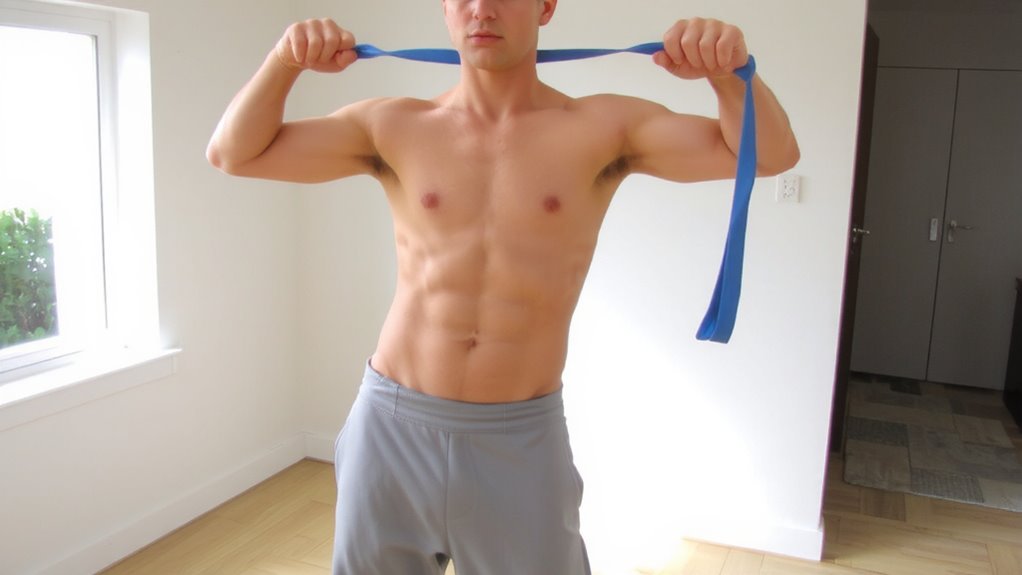
Mobility matters, especially when shoulder health is on the line-and that’s where the upright row mobility drill with a scarf or strap comes in. You’re targeting scapular glide and joint articulation without strain, making it a smart addition to recovery routines. The scarf or strap allows smooth, controlled motion, guiding your arms through a pain-free range. It’s not about loading up; it’s about precision and alignment. You’ll notice how it subtly improves shoulder mechanics, promoting natural movement patterns. This drill’s design prioritizes function over force, which is why it stands out among recovery tools. Lightweight, portable, and easy to maintain, the scarf is surprisingly effective-no special gear needed. It integrates well into daily mobility work, especially when you’re warming up or cooling down. When done consistently, you’ll likely see better control and reduced stiffness. For fitness recovery, it offers quiet, long-term gains. A high-quality stretching strap can enhance grip and durability during extended use.
How to Do the Upright Row Drill (No Weights Needed)
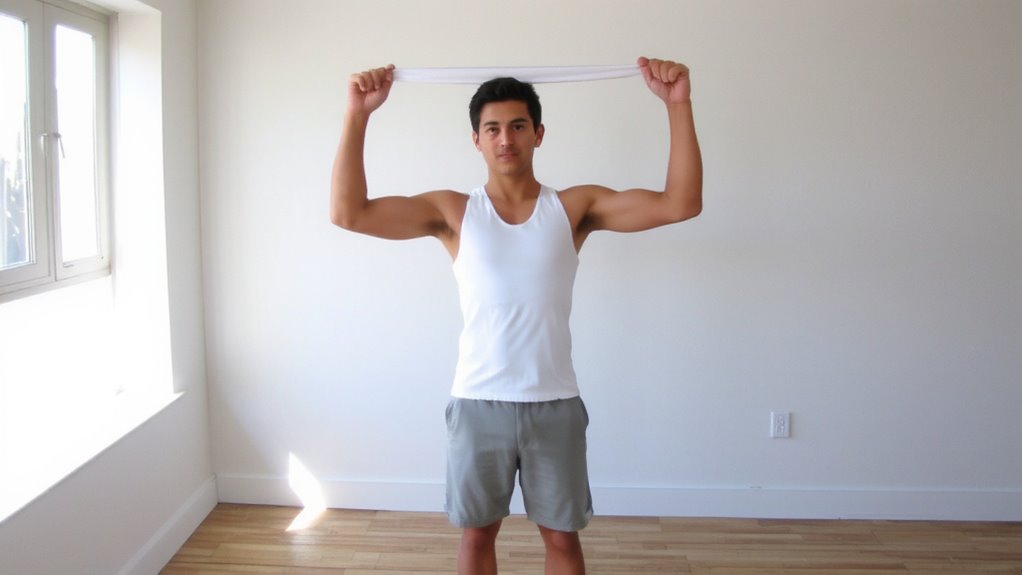
Consistency in shoulder care often hinges on simplicity, and that’s where this drill shines. Stand tall, feet shoulder-width apart, holding a scarf or strap with both hands, palms down, arms straight in front of you. Initiate the movement with a slow arm sweep upward and back, keeping your thumbs pointed toward the ceiling. Focus on smooth shoulder glide as you elevate your arms-elbows stay high, but don’t crank them. Lift only to shoulder height or slightly below to avoid impingement. Squeeze your shoulder blades at the top, then lower with control. This no-weights approach prioritizes joint alignment and muscle activation over load, making it ideal for daily recovery. The scarf’s light resistance enhances proprioception without strain. Unlike heavy gear, this method supports long-term mobility, especially when joint health matters more than brute strength. It’s practical, equipment-efficient, and gentle-perfect for post-workout reset or morning prep.
How Nasal Breathing Helps Your Shoulders Move Better
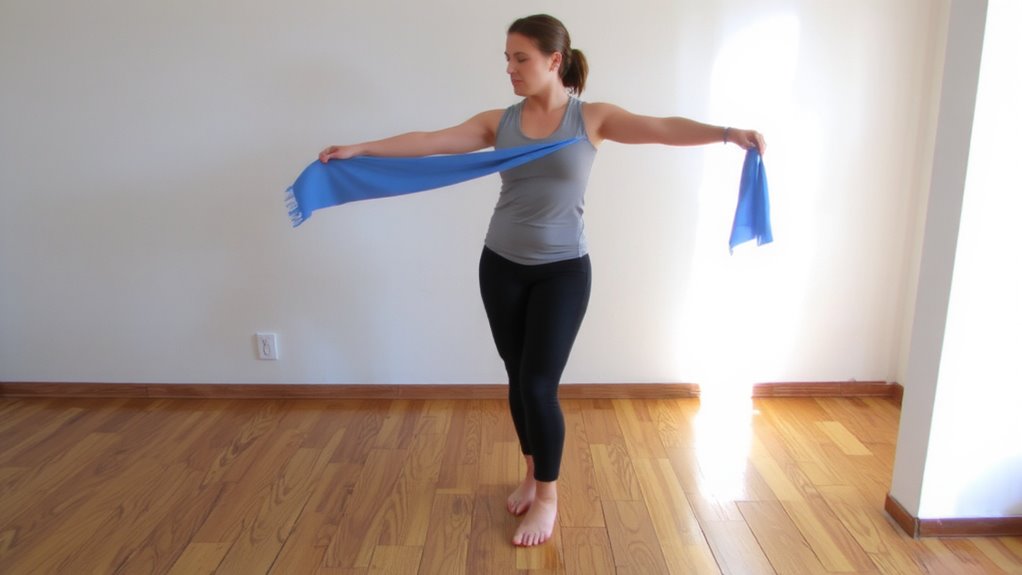
You’ve likely found that moving your arms through the upright row drill feels smoother when your rhythm stays steady and your muscles stay relaxed. That’s no accident-nasal breathing plays a key role. When you breathe through your nose, you encourage consistent diaphragmatic engagement, which stabilizes your core and reduces unnecessary tension in your neck and shoulders. This controlled breath also supports thoracic expansion, allowing your rib cage to move freely and creating more space for shoulder motion. You’ll notice your arms lift higher with less strain, and your scapulae glide more naturally along your back. Unlike mouth breathing, which can trigger tension and shallow chest breathing, nasal breathing keeps your nervous system calmer, improving movement efficiency. It’s not just about flexibility-it’s about how well your body coordinates breath and motion. Proper breathing isn’t an add-on; it’s foundational to mobility, especially in drills that mimic functional, full-range movements.
Mistakes to Avoid in the Upright Row Drill
A little slack in the wrong place can undo the benefits of even the most intentional movement practice, and the upright row drill is no exception. You might think simply holding a scarf or strap is foolproof, but improper grip is a common issue-hands too close or too far apart reduce shoulder activation and limit range. Keep your grip wide enough to allow smooth upward glide without pinching the upper traps. Uneven tension, often caused by favoring one arm, disrupts symmetry and undermines joint alignment. You’ll notice one side rising faster or feeling tighter; correct it by moving slowly and watching for balance. Avoid shrugging your shoulders toward your ears-maintain a long neck and engaged core. Nasal breathing supports control, but only if your form stays precise. Small errors accumulate, so check your setup each time. Proper execution guarantees real mobility gains instead of reinforcing dysfunction.
When to Do the Drill Daily
Ideally, you’d perform the upright row drill daily, especially if you’re addressing shoulder stiffness or recovering from prolonged inactivity. Doing it as part of your morning routine helps activate the shoulders and upper back early, setting a strong tone for movement efficiency throughout the day. The drill supports posture correction by re-educating scapular control and encouraging thoracic spine alignment-especially useful if you sit for long periods. You’ll notice better shoulder glide and reduced tension when performed consistently. For best results, aim for 8 to 10 slow, controlled reps with nasal breathing, focusing on smooth elevation and retraction. The scarf or strap adds feedback, ensuring arms stay at proper width and height. This lightweight tool is easy to maintain and store, making it practical for daily use. Over time, the drill enhances joint mobility without strain, fitting seamlessly into recovery-focused fitness regimens.
Why Desk Workers and Athletes Benefit
The upright row mobility drill with a scarf or strap proves especially effective for two groups often burdened by opposing physical demands: desk workers and athletes. You, as a desk worker, likely spend hours in static postures that degrade ergonomic alignment and promote shoulder tension. This drill counters that by restoring scapular mobility and reinforcing proper upper back mechanics. For athletes, especially those in overhead sports, the movement enhances joint stability and supports injury prevention through controlled range-of-motion practice. Both groups benefit from using a simple strap or scarf-accessible fitness recovery tools that require no weights, reducing joint load while promoting neuromuscular coordination. Nasal breathing during the drill further calms the nervous system, aiding recovery. Unlike complex gear, this method emphasizes mindful movement over resistance, making it sustainable daily. It’s not flashy, but its focus on form, breath, and function makes it a practical investment in long-term physical resilience.
On a final note
You’ll find this drill effective for shoulder mobility, especially when using a scarf or strap to maintain proper alignment. Nasal breathing enhances oxygen uptake and calms the nervous system, supporting smoother movement. It’s practical for desk workers and athletes alike, requiring minimal space and no equipment. Consistent daily use improves thoracic and scapular function. Just make certain you avoid shrugging or flaring elbows. This drill’s simplicity and functional design make it a reliable recovery tool.