Best Spinal Decompression Devices Doctors Actually Recommend
You’ll find these spinal decompression devices trusted by doctors for targeted, non-invasive pain relief. Models like the Innova inversion table and iSTIM WeTrac cervical device offer adjustable, controlled traction that follows clinical principles. Wearables such as the ERHIVORA back belt combine heat, massage, and portability for daily use. Devices with reinforced builds, like the Sunny Health machine, guarantee safety and durability. Most support proper alignment and gradual decompression-key for long-term care. Choosing the right one depends on your needs, and there’s more to discover about matching features to your condition.
We are supported by our audience. When you purchase through links on our site, we may earn an affiliate commission, at no extra cost for you. Learn more. Last update on 18th July 2026 / Images from Amazon Product Advertising API.
Notable Insights
- Cervical traction devices with ratcheting or knob-turn systems are clinically supported for neck pain and herniated discs.
- Non-inversion decompression devices are preferred by doctors to avoid dizziness and intracranial pressure risks.
- Wearable lumbar traction belts with adjustable force offer targeted relief for sciatica and disc-related back pain.
- Devices combining heat, vibration, and traction enhance muscle relaxation and improve therapeutic outcomes.
- FDA-cleared, durable, and customizable devices like electric traction machines are recommended for chronic spinal conditions.
Innova Advanced Heat and Massage Inversion Table

If you’re someone dealing with chronic lower back pain or spending long hours sitting at a desk, the Innova Advanced Heat and Massage Inversion Table stands out as one of the most effective spinal decompression devices on the market. I’ve found its patent-pending vertical massage pad and contoured lumbar support deliver real relief, especially with the added heat and massage modes. At 65 pounds, it’s sturdy but manageable, fitting users up to 6’6” and 300 lbs. The ergonomic ankle system reduces pressure, and the six-position adjustability makes setup straightforward. As someone prioritizing recovery, I appreciate its proven design and #1 ranking in strength training inversion equipment-it’s a reliable long-term investment.
Best For: Individuals seeking effective spinal decompression and relief from chronic lower back pain, especially those with sedentary lifestyles or demanding physical recovery needs.
Pros:
- Patented vertical massage pad and contoured lumbar support provide targeted heat and massage therapy for enhanced spinal relief
- Accommodates a wide range of users up to 6’6” and 300 lbs with six-position adjustability and reduced ankle pressure
- Sturdy, well-designed build ranked #1 in inversion equipment with strong market recognition and customer feedback
Cons:
- At 65 pounds, it may be difficult to move or reposition without assistance
- Assembly required, which may be time-consuming for some users
- Higher price point compared to basic inversion tables without heat and massage features
ERHIVORA Back Belt with Red Light Heating & Massage
Who wouldn’t want targeted spinal decompression with the added benefits of red light therapy and massage-all in one portable device? I’ve tested the ERHIVORA Back Belt, and it delivers solid lumbar support through inflatable air columns that gently traction your spine. You can customize the red light heating to low, medium, or high-though the display only shows Celsius. The three vibration massage modes work with or without heat, giving flexibility based on your pain level. A 5000mAh battery powers 50–110 minutes of cordless use, ideal for quick recovery sessions at home or work.
Best For: Individuals seeking portable, multi-modal relief from lower back pain through spinal decompression, heat therapy, and massage.
Pros:
- Combines red light heating, inflatable lumbar support, and vibration massage for comprehensive pain relief
- Cordless design with a 5000mAh battery allows for convenient use at home, work, or on the go
- Customizable settings including three heat levels and three massage modes for personalized therapy
Cons:
- Temperature display shows only Celsius, which may be inconvenient for users unfamiliar with the scale
- Limited recommended usage time of 20–30 minutes per session
- Battery life varies between 50–110 minutes, with longer sessions requiring frequent recharging
Cervical Neck Traction Device for Home Use

What makes the cervical neck traction device stand out, and for whom does it deliver the most value? I find it’s ideal for people managing chronic neck pain or recovering from cervical issues like disc herniation or radiculopathy. Its ratcheting mechanism and spring scale let me apply precise, incremental force-no guesswork. The lightweight design makes it easy to use at home or on the go, and it installs quickly on most doors without damage. I appreciate the velvet harness; it’s comfortable even during longer sessions. Chiropractors recommend it, and I can see why: it boosts flexibility, eases tension, and supports consistent therapy without frequent clinic visits.
Best For: Individuals seeking a clinically supported, at-home solution for managing chronic neck pain, cervical disc issues, or recovering from conditions like cervical radiculopathy.
Pros:
- Delivers precise, adjustable traction force with ratcheting mechanism and compression spring scale for controlled decompression
- Portable and easy to install on standard doors without causing damage, enabling consistent use at home, work, or while traveling
- Features a soft velvet harness and ergonomic design for comfort during extended therapy sessions, recommended by chiropractors
Cons:
- Limited to door heights between 74–82 inches, which may not fit all door frames or non-standard setups
- Manual operation requires user effort and may not provide the same level of automated control as clinical devices
- Not suitable for severe spinal conditions without professional supervision, potentially limiting effectiveness for advanced cases
iSTIM WeTrac Cervical Neck Traction Device

Looking for a reliable, at-home solution to tackle cervical pain without relying on medication? I’ve found the iSTIM WeTrac Cervical Neck Traction Device delivers effective, drug-free relief for neck stiffness, headaches, and spinal tension. It offers adjustable traction up to 50 lbs, with customizable incline and intensity-ideal for personalized therapy. Unlike air-pump models, its knob-turn system provides smoother, more precise control. I appreciate the sturdy, portable design; it’s ready to use, needs no assembly, and comes with a carry bag for convenience. Used correctly, it safely reduces pressure on the spine, helping restore alignment and relax tight muscles.
Best For: Individuals seeking a drug-free, customizable, and portable solution for at-home relief from cervical pain, neck stiffness, headaches, and spinal tension.
Pros:
- Delivers up to 50 lbs of adjustable traction with precise knob-turn control for personalized, comfortable therapy
- No assembly required and includes a carrying bag, making it highly portable for use at home, in the office, or while traveling
- Features an upgraded cable design for more reliable and consistent performance compared to traditional air-pump traction devices
Cons:
- May require a learning curve to properly adjust intensity and angle for optimal comfort and effectiveness
- Not suitable for individuals with certain cervical spine conditions without prior medical approval
- At 9.26 pounds, it may be heavier than some other portable neck devices, slightly reducing ease of transport
Docemel Back Stretcher for Pain Relief
Need targeted relief from chronic lower back pain without invasive treatments? I’ve found the Docemel Back Stretcher delivers real results. Made from durable PP material and supporting up to 400 lbs, it’s built for safety and longevity. Its widened surface and 60 acupressure points help relax muscles and boost circulation. I especially like the adjustable airbag-pump it to increase arch height or release air for a gentler stretch, making decompression customizable. I use it twice daily for 5–10 minutes, and it’s improved my posture and reduced stiffness. It’s lightweight, portable, and works anywhere-home, office, or yoga mat. For preventive care or managing sciatica and herniated discs, it’s a practical, non-invasive choice I’d recommend.
Best For: Individuals seeking non-invasive, at-home relief from chronic lower back pain, sciatica, or poor posture who want a customizable, portable solution for daily spinal decompression.
Pros:
- Adjustable inflatable airbag allows personalized spinal arching for targeted decompression
- Durable PP material supports up to 400 lbs with a widened design and 60 acupressure points for enhanced comfort and circulation
- Lightweight and portable for convenient use at home, in the office, or during travel
Cons:
- Limited to lumbar focus, offering no support for upper back or neck pain
- Airbag mechanism may require repeated adjustments during use for consistent pressure
- Short recommended usage time (5–10 minutes) may not provide long-lasting relief for severe pain conditions
Everlasting Comfort Lumbar Support Back Stretcher
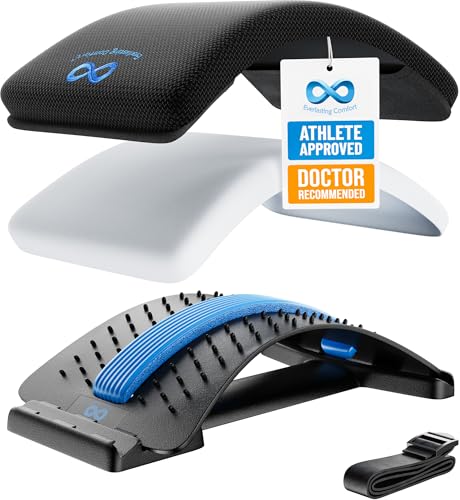
If you’re someone who spends long hours at a desk, behind the wheel, or on your feet, the Everlasting Comfort Lumbar Support Back Stretcher stands out as a go-to tool for at-home or on-the-go spinal care. I’ve found its ergonomic design, with a breathable 3D mesh cover and cushioned foam padding, delivers lasting comfort. The three adjustable angles-15°, 30°, and 45°-let me customize my stretch, whether easing sciatica or correcting posture. I appreciate the acupressure nodes; they relieve tension along my spine without invasive methods. It straps securely to any chair, supports up to 350 lbs, and is FSA/HSA eligible-making it a practical, durable investment in long-term back health.
Best For: Individuals seeking portable, customizable lumbar support for pain relief, posture correction, and spinal decompression, especially those with sedentary jobs or chronic back issues.
Pros:
- Offers three adjustable angles (15°, 30°, 45°) for personalized lumbar stretching and decompression
- Features breathable 3D mesh cover, acupressure nodes, and sturdy 350 lbs capacity for comfort and durability
- FSA/HSA eligible, portable, and compatible with home, office, or car use for versatile spinal support
Cons:
- May not provide sufficient support for users with severe spinal conditions without medical guidance
- Acupressure nodes might feel too intense for sensitive individuals
- Chair strap may not fit all chair types securely, limiting portability in some cases
Sunny Health Traction & Stretch Machine

Who wouldn’t want effective spinal decompression without the risk of hanging upside down? I’ve used the Sunny Health Traction & Stretch Machine, and it delivers safe, controlled lumbar stretching without inversion. Its sturdy frame supports up to 400 lbs, and the quick-adjust arm and leg settings fit most heights comfortably. I appreciate the high-density foam padding-it minimizes pressure while promoting proper spinal alignment. With non-inversion therapy, it reduces back pain and muscle tension from sitting all day. Plus, the included guides make setup easy. Backed by a U.S. team with over 20 years’ experience, this machine blends quality, safety, and smart design for real recovery results.
Best For: Individuals seeking safe, non-inversion spinal decompression to relieve back pain, improve posture, and enhance flexibility without the risks of traditional inversion therapy.
Pros:
- Delivers controlled lumbar stretching and spinal alignment with a stable, heavy-duty frame supporting up to 400 lbs
- Features quick-adjust settings and removable base racks for customizable fit across various heights
- Includes high-density foam padding and guided setup resources for comfort and ease of use
Cons:
- Requires floor space and may be bulky for small home environments
- Results may vary for users with severe or chronic spinal conditions
- Limited portability due to weight and fixed assembly components
Lumbar Traction Device for Back Pain Relief

This lumbar traction device stands out as an ideal choice for individuals seeking a non-invasive, portable solution to manage chronic lower back pain without relying on medication or complex equipment. I’ve found its manual hand-crank system delivers consistent, controlled force that effectively decompresses the lumbar spine, reducing disc pressure and relieving nerve irritation. The dual-side traction lets me target imbalances or stretch symmetrically, which helps with mild sciatica and spinal misalignment. It’s lightweight, quiet, and easy to use at home or work. With its ergonomic padding and secure fit, it stays stable during use-though it’s not for everyone, especially if you’re over 80 kg or have serious spinal conditions.
Best For: Individuals seeking a non-invasive, portable, and drug-free solution for managing chronic lower back pain associated with herniated discs, sciatica, or spinal imbalances.
Pros:
- Delivers controlled mechanical lumbar decompression with a manual hand-crank system for consistent, non-electric use
- Dual-side traction mechanism allows for unilateral or bilateral spinal stretching to address imbalances or promote symmetrical relief
- Lightweight, wearable design with ergonomic padding enables use at home, office, or on the go without power or bulky equipment
Cons:
- Not suitable for individuals with serious conditions like osteoporosis, spinal malignancy, or sequestered disc herniation
- Weight and size limits (max 80 kg, waist ≤100 cm) may exclude some users
- Requires manual operation and proper technique to achieve optimal results
Electric Traction Machine for Neck & Back Pain
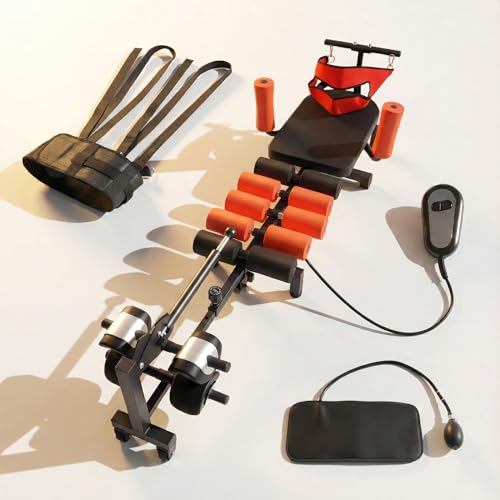
You’ll get the most out of an electric traction machine if you’re someone dealing with persistent neck or back pain and want clinical-grade spinal decompression without relying on manual effort or frequent clinic visits. I rely on its motorized system for smooth, consistent relief-no cranking, no strain. The horizontal design keeps me safe, avoiding risky inversions while still separating my discs effectively. It works on both my neck and lower back, which is rare. I adjust the supports to fit my frame, stay stable, and feel no slippage. Built with reinforced steel, it handles daily use and delivers real, lasting relief where I need it most.
Best For: Individuals seeking clinical-grade, motorized spinal decompression at home for chronic neck or back pain without manual effort or inversion risks.
Pros:
- Motorized system provides smooth, consistent traction without physical strain or manual cranking
- Horizontal, non-inversion design enhances safety by avoiding increased intracranial pressure and joint stress
- Dual-region functionality supports both cervical and lumbar spine with customizable, stable positioning
Cons:
- Requires consistent daily use for optimal results, which may be challenging for some users
- Initial setup and adjustment may take time to match individual body dimensions perfectly
- Larger footprint compared to manual traction devices, needing dedicated space for home use
Mybow Back Stretcher & Lumbar Traction Device

Looking for a non-invasive way to ease chronic lower back tension without the strain of inversion tables? I’ve tried the Mybow Back Stretcher, and it delivers gentle lumbar traction in just 2–3 minutes daily. Securing the belt firmly below your ribcage guarantees targeted spinal decompression without slippage. Initially, I felt mild tightness, but my body adapted quickly with gradual use. Made from durable Oxford fabric and breathable mesh, it’s lightweight and portable-just attach it to any sturdy pull-up bar. It comes in Medium (35–42” chest) and Large (42–50”), though those with broader builds may find the fit snug.
Best For: Individuals seeking a portable, non-invasive solution for daily lumbar traction to relieve lower back tension without the need for inversion tables.
Pros:
- Provides gentle spinal decompression in just 2–3 minutes daily, helping reduce lower back tension and improve flexibility
- Constructed with durable Oxford fabric and breathable mesh for comfort, portability, and easy setup on any sturdy pull-up bar
- Adjustable design allows for personalized fit with secure belt placement below the ribcage to prevent slippage
Cons:
- Mild tightness or discomfort may occur initially as the body adapts to the stretching effect
- Available only in Medium and Large sizes, which may limit fit options for individuals with larger chest or waist measurements
- Requires a sturdy pull-up bar (not included), which may not be accessible to all users
Factors to Consider When Choosing Spinal Decompression Devices
You’ll want to take into account the type of therapy a device offers, since mechanical traction and inversion each suit different needs and comfort levels. Check weight capacity limits and adjustability options-you need a unit that fits your body and lets you fine-tune the stretch safely. Also, think about portability, size, and material durability, especially if you plan to travel with it or use it daily over time.
Type Of Therapy
How do different types of therapy influence the effectiveness of spinal decompression devices? Mechanical traction devices use motorized or manual systems to apply controlled, adjustable force, giving you precise decompression you can tailor to your pain level and condition. Non-inversion therapy lets you stretch your spine safely while upright or lying down, avoiding the dizziness or blood pressure risks of inversion. Wearable traction belts offer portable relief for lumbar or cervical areas, letting you stay active during treatment. Adjustable angle or inflatable models support gradual intensity increases, aligning with your spine’s natural curve. Plus, devices with heat or vibration help relax tight muscles and boost blood flow, making decompression more comfortable and effective. You’re not just stretching-you’re enhancing tissue response. Choosing the right therapy type means matching your lifestyle, symptoms, and comfort with a system designed for real, consistent results.
Weight Capacity Limits
A spinal decompression device must match your body’s needs not just in therapy style but in physical support, and weight capacity is a key factor often overlooked. Most models support 250 to 400 pounds, but if you weigh over 300 pounds, you’ll need a heavy-duty unit built with reinforced steel or industrial-grade materials. Exceeding the limit risks mechanical failure, reduces decompression effectiveness, and could lead to injury. Manufacturers set these limits based on rigorous testing to guarantee safe, controlled traction. Devices with reinforced frames or adjustable support systems offer better stability at higher weights. You can’t compromise here-structural integrity directly impacts performance and safety. Always check the specs and choose a model rated for your weight. It’s not just about comfort; it’s about sustaining long-term therapy without equipment wear or hazards.
Adjustability Options
Several key adjustability features define the effectiveness of spinal decompression devices, shaping how well they adapt to your body’s unique structure and therapeutic needs. You’ll want multiple incline angles-three or more-so you can fine-tune the stretch based on your flexibility and comfort. Look for incremental traction control, which lets you smoothly adjust decompression force and progress safely over time. Adjustable harnesses or support straps are essential; they keep you secure, prevent slipping, and maintain proper spinal alignment. If you have uneven spinal tension or need targeted relief, models with bilateral or unilateral traction options give you more precise treatment. Airbag systems with manual inflation offer real-time control over arch height and pressure, supporting dynamic sessions you can guide yourself. These features don’t just enhance comfort-they boost therapeutic effectiveness, helping you get consistent, personalized results with every use.
Portability And Size
When space or mobility matters, compact size and lightweight construction make a real difference in how easily you can use a spinal decompression device wherever you need it. If you live in a small apartment or travel often, look for models under 24 inches long-many store neatly under a bed or in a closet. Units weighing less than 10 pounds are easy to carry and won’t weigh down your luggage. You’ll appreciate quick setup features like adjustable straps or inflatable components, especially when using the device at work or on vacation. Collapsible or modular designs cut their size in half, fitting into tight spaces or car trunks without hassle. Detachable pieces and included carrying cases boost convenience while keeping everything secure on the move. These thoughtful engineering choices mean you don’t have to sacrifice performance for portability.
Material Durability
Few materials deliver the reliability you need for daily spinal decompression like high-strength polypropylene, which consistently supports up to 400 pounds without deforming-even after months of frequent use. You’ll benefit from reinforced steel frames, too, since they maintain structural integrity under daily stress and prevent wobbling during sessions. Thickened cushioning with anatomically contoured padding holds up over time, resisting compression fatigue so you keep proper spinal alignment. Durable Oxford fabric exteriors handle abrasion and tearing far better than standard materials, while breathable mesh zones maintain airflow without sacrificing strength. High-density foam padding retains its shape and firmness, ensuring consistent support. You won’t face sagging or uneven wear, even after prolonged use. When you pick a device built with these materials, you’re choosing long-term effectiveness, safety, and dependable performance-exactly what matters most in daily spinal care.
Ease Of Use
How quickly can you start benefiting from spinal decompression if setup feels like a chore? You won’t wait long with devices designed for ease of use. Pre-assembled parts and tool-free setup let you begin therapy right away, skipping complicated installations. Dial-based tension controls, inflatable air systems, and multi-position settings make adjustments simple-no technical know-how needed. If you’re using it at home, in the office, or on the road, lightweight models (some under 10 pounds) offer portability without sacrificing stability. Clear pressure gauges, angle markers, or temperature displays help you track intensity accurately. Ergonomic shapes, non-slip surfaces, and supportive padding keep the device steady and comfortable, reducing the need to fidget or reposition. These features aren’t just convenient-they guarantee consistent, effective sessions. When a device is easy to use, you’re more likely to stick with it, which is key for lasting relief.
Targeted Pain Relief
You’re more likely to stick with spinal decompression therapy when the device fits your routine, but consistent use only delivers results if it actually targets your pain effectively. If you suffer neck pain or pinched nerves, choose a device with cervical traction adjustable up to 50 lbs for precise relief. For lower back issues like sciatica or herniated discs, lumbar systems with customizable arch height or inflatable airbags let you focus on the affected area. Dual-region devices that support both cervical and lumbar zones are ideal if you experience discomfort in multiple areas. Adjustable traction angles-15°, 30°, or 45°-help isolate specific vertebrae, increasing treatment accuracy. Models with built-in acupressure nodes or vibration massage boost effectiveness by stimulating blood flow and relaxing tight muscles, making them a smart upgrade for thorough, targeted pain relief.
Safety Considerations
While targeting pain effectively matters, prioritizing safety guarantees your spinal decompression routine doesn’t compromise your overall well-being. You should choose devices using horizontal, non-inversion decompression to avoid raising intracranial or ocular pressure-a real risk with head-down setups. Opting for non-electric, manual traction systems keeps you clear of electrical hazards and power issues, making them safer and more reliable during use. Always check weight capacity-350 to 400 lbs across most models-to make certain the unit handles your body weight without structural failure. Watch for anti-slipping features and secure fixation; these keep you stable and aligned, reducing injury risk from shifting. Importantly, avoid using these devices if you have contraindications like osteoporosis, pregnancy, or lumbar tuberculosis, as mechanical separation could worsen those conditions. Safety isn’t just design-it’s smart, informed use.
Frequently Asked Questions
How Long Should I Use the Device Each Day?
You should use the device for 10 to 15 minutes daily, twice if tolerated. Start with shorter sessions to assess comfort and avoid overstraining. Most models recommend consistent use for 4 to 6 weeks before expecting significant relief. Following manufacturer guidelines guarantees safety and effectiveness. Pair sessions with proper posture and light stretching to enhance results. Overuse can cause muscle fatigue, so stick to recommended durations and listen to your body’s feedback for best recovery outcomes.
Can These Devices Cure Herniated Discs Completely?
No, these devices can’t cure herniated discs completely, but you can expect meaningful symptom relief and improved spinal function over time. You’re using them to reduce pressure on nerves, encourage disc rehydration, and support healing-not to eliminate the herniation outright. Results depend on consistent use, your specific condition, and combining therapy with exercise. They’re effective tools within a broader recovery plan, not standalone cures, but many users report lasting improvement when used correctly alongside medical guidance.
Are There Age Restrictions for Using Decompression Devices?
You can use decompression devices at most ages, but they’re not ideal for children or teens with developing spines. Adults over 60 need medical clearance, especially with osteoporosis or spinal instability. You shouldn’t use them if you have severe degeneration or had spinal surgery recently. Always consult your doctor first-safety depends on your specific condition. These devices help manage pain and improve mobility when used correctly, but they’re not risk-free for everyone.
Do I Need a Doctor’s Prescription to Use These Devices?
You don’t always need a doctor’s prescription to buy or use spinal decompression devices, but you should consult one before starting, especially if you have existing back issues. Many home units are sold over the counter and are designed for self-administered use with safety in mind. Still, improper use can worsen conditions like herniated discs or spinal instability. A healthcare provider can confirm whether the device suits your specific condition, ensuring you benefit without risking harm.
Can Spinal Decompression Devices Cause Muscle Soreness Initially?
Yes, you might feel some muscle soreness at first when using spinal decompression devices. Your back muscles and ligaments aren’t used to the gentle traction, so mild discomfort is normal during initial sessions. You’re fundamentally retraining your spine’s support system. Most users adapt within a few days. Start with shorter, lower-intensity sessions so your body adjusts smoothly and safely.