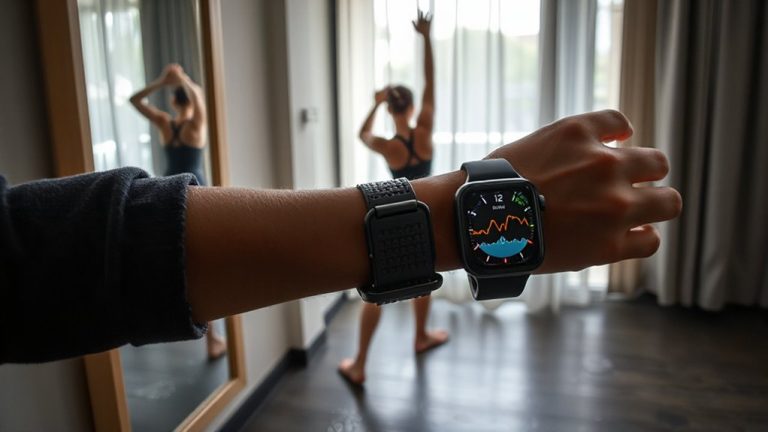
Progressive Loading Tables for Tracking Return-to-Exercise Milestones Via Water Jogging
You can track your return-to-exercise milestones with water jogging by using progressive loading tables that adjust duration, resistance, and effort weekly. These tables align with rehab phases, starting at 15 minutes and low intensity, then advancing based on RPE and heart rate. They help maintain fitness while minimizing re-injury risk through controlled, measurable progress-especially when using proper buoyancy gear. Your plan should respond to symptoms, not just time, ensuring safe adaptation. Smart progression means better outcomes, and the next steps reveal how to apply these tables phase by phase.
Notable Insights
- Progressive loading tables use duration, RPE, and heart rate to track water jogging intensity across rehab phases.
- Phase 1 starts with 15-minute sessions at RPE 3–4, focusing on pain-free movement.
- Weekly increases in duration (5–10 minutes) align with symptom response, not fixed timelines.
- Phase 2 introduces moderate resistance and reduced buoyancy to enhance neuromuscular demand.
- Phase 3 progresses to high-intensity intervals with controlled stroke rate and minimal flotation support.
Why Water Jogging Works in Injury Rehab
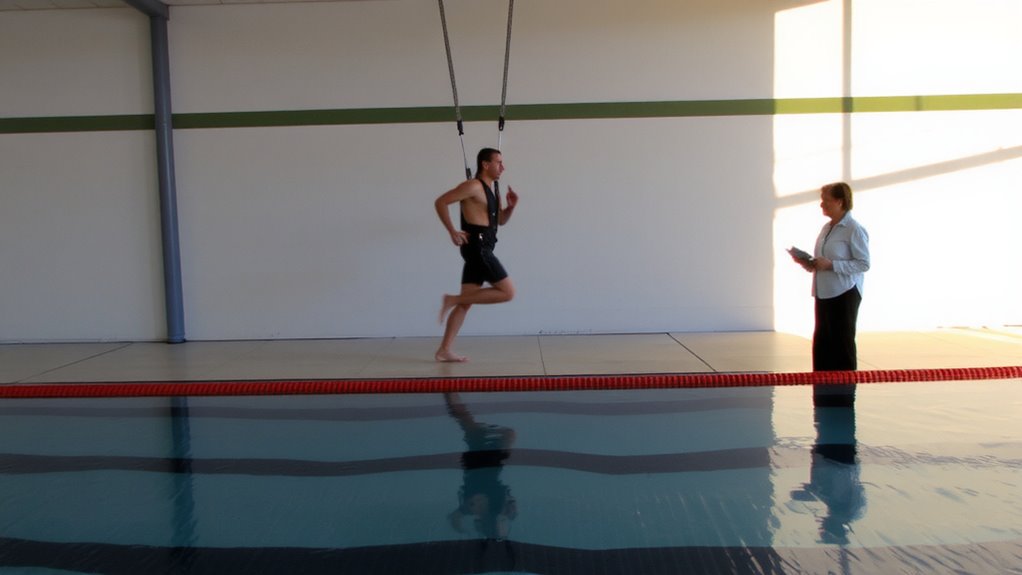
While your muscles need movement to recover, you don’t want to aggravate an injury with high-impact strain-this is where water jogging shines. The buoyancy support of water reduces impact forces by up to 90%, letting you simulate running motion without compressing joints. You maintain cardiovascular fitness and neuromuscular patterning, which is essential for rehab adherence. Hydrostatic pressure provides gentle compression around limbs, enhancing circulation and minimizing swelling-key for reducing recovery time. Unlike treadmills or bikes, water jogging avoids repetitive stress while preserving movement specificity. It’s not just convenience; the physics of water creates a therapeutic environment. You get resistance in all directions, improving muscular balance without weights or strain. Though pool access limits some, dedicated harness systems improve form and consistency. Water jogging isn’t a substitute for land running long-term, but in early recovery, its combination of buoyancy support and hydrostatic pressure makes it uniquely effective for safe, structured reconditioning.
How Progressive Loading Prevents Re-Injury
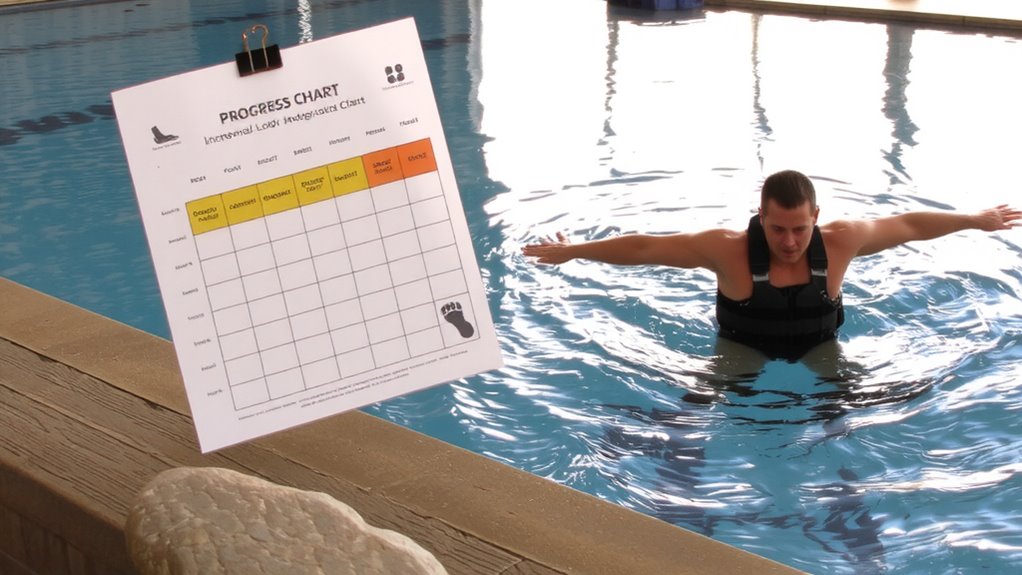
Since recovery depends on rebuilding strength without overloading healing tissues, progressive loading in water jogging offers a smart path back to full function. You gradually increase intensity and volume, allowing your body to adapt safely while reinforcing muscle memory through consistent, low-impact movement. This method strengthens supporting muscles around injured areas, enhancing joint stability without compressive stress. Because water supports up to 90% of your body weight, you maintain aerobic conditioning and neuromuscular coordination while minimizing risk. Over time, these incremental challenges help restore natural movement patterns, which improves balance and control on land. Progressive loading isn’t just about doing more-it’s about rebuilding resilience strategically. When applied correctly, it reduces the likelihood of re-injury by ensuring that tissues are reconditioned to tolerate load again. This makes it a crucial strategy in any structured return-to-exercise plan.
Heart Rate, RPE, and Duration: Key Water Jogging Metrics
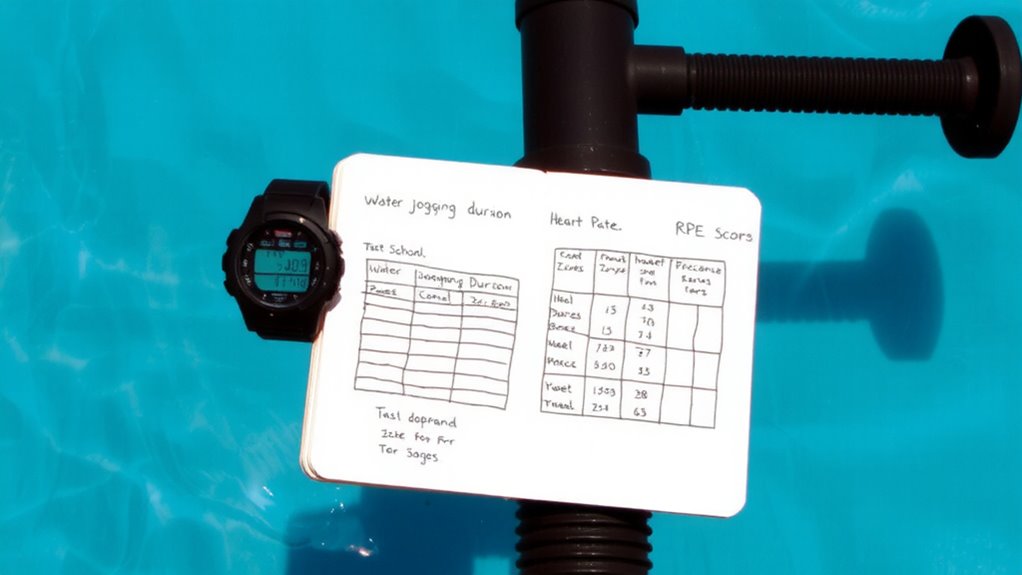
Because tracking effort accurately is essential to effective recovery, monitoring heart rate, RPE (rating of perceived exertion), and duration during water jogging helps you stay within safe, productive training zones. You’ll need a heart rate monitor waterproof to at least 3 meters, as consistent readings guide intensity adjustments. Pair this with RPE-aiming for 3–4 early on-so you don’t rely solely on technology. Duration starts short, around 15 minutes, then increases weekly, aligning with your rehab phase. Your stroke rate should remain controlled; too fast can spike effort unexpectedly. Buoyancy level, adjusted via a belt or vest, impacts resistance and joint load-too high reduces effectiveness, too low strains form. Proper buoyancy keeps your spine aligned and allows smooth motion, making metrics more reliable. Together, these measures give you objective and subjective feedback, ensuring you progress without overreaching. They’re practical, measurable, and essential to smart return-to-exercise programming.
From Pain-Free Steps to Game Day: The Rehab Phases
Though recovery starts the moment you stop moving, your return to full performance truly begins when structured rehab phases are matched to your body’s response-not just time off. Effective rehab balances pain management with gradual mobility restoration, ensuring tissue tolerance keeps pace with demand. Rushing forward risks setbacks, while progressing too slowly delays return-to-sport readiness. Below is a simplified phase guide that aligns loading with functional milestones:
| Phase | Focus |
|---|---|
| 1 | Pain management, early joint motion |
| 2 | Mobility restoration, neuromuscular re-education |
| 3 | Dynamic loading, sport-specific prep |
Each phase reflects clinical observations and biomechanical principles, demanding your attention to symptom response. Tools like buoyancy belts and deep-water treadmills support this journey, but their value lies in proper phase-matched use-not just availability. Success isn’t measured by gear, but by disciplined adherence to progression criteria.
Designing a Water Jogging Plan by Rehab Stage
If you’re using water jogging to bridge the gap between injury and performance, your approach should shift deliberately across rehab phases-each demanding distinct mechanics, gear choices, and loading strategies. In early rehab, rely on pool buoyancy to minimize load while maintaining joint alignment with a flotation belt and correct form. Focus on smooth, controlled movements to retrain neuromuscular patterns without compensation. As you progress, adjust gear-switching to waist cords or deep-water setups-to challenge stability while preserving spinal and lower-limb alignment. Mid-stage plans integrate interval patterns, using buoyancy to protect healing tissues yet increasing movement specificity. By advanced stages, near-land-like resistance is achieved through increased effort, still leveraging water’s supportive nature. Proper equipment enhances effectiveness, but success hinges on consistent technique. Poor joint alignment under high-repetition water jogging may delay progress, even without pain. Tailor each phase to functional milestones, using pool buoyancy smartly-not as a crutch, but as a progressive training tool.
Adjust Intensity and Duration Safely Without Impact
A single mistake in progression-pushing too hard, too soon-can setback your recovery by weeks, even in a low-impact environment like water jogging. You must balance effort and safety using buoyancy control and resistance variation to fine-tune workouts without strain. Adjusting your flotation belt or wrist/ankle cuffs lets you control effort while maintaining proper form. Similarly, altering arm motion or speed increases resistance without adding impact.
| Intensity Level | Technique Adjustment |
|---|---|
| Low | Minimal resistance, high buoyancy support |
| Moderate | Controlled buoyancy, moderate arm drive |
| High | Reduced buoyancy, added resistance variation |
These methods let you increase demand safely. Water’s natural properties support progressive loading, but discipline guarantees gains aren’t undone. Track changes in duration and perceived exertion closely-you’re building resilience, not endurance alone.
When to Progress or Pause in Your Rehab Plan
How do you know when it’s the right time to step up your water jogging routine-or when you should hold back? Pay close attention to both physical and psychological cues. If you’re recovering well, with no increase in pain or swelling, and your functional movements improve, progression is likely safe. However, don’t overlook mental fatigue-feeling drained or irritable can signal overreaching, even if your body seems okay. Emotional readiness matters just as much; if you’re anxious or hesitant about advancing, it may reflect subconscious doubt in your recovery. Pushing forward too soon risks setbacks, while pausing can build resilience. Use your progressive loading tables as a guide, but stay flexible. Consistency trumps intensity. Listen to your whole self-not just your muscles, but your mind, too. Adjustments aren’t failures-they’re smart, informed choices in long-term recovery.
On a final note
You’re using water jogging wisely-it reduces impact while maintaining cardiovascular fitness and muscle engagement. Progressive loading tables help you track milestones without rushing recovery. Monitoring heart rate, RPE, and duration keeps intensity in check. This methodical approach cuts re-injury risk and builds confidence. With the right gear-aquatic belt, proper shoes-you’ll maintain form and resistance. Stay consistent, adjust as needed, and trust the process: this isn’t just rehab, it’s smart, sustainable fitness recovery.