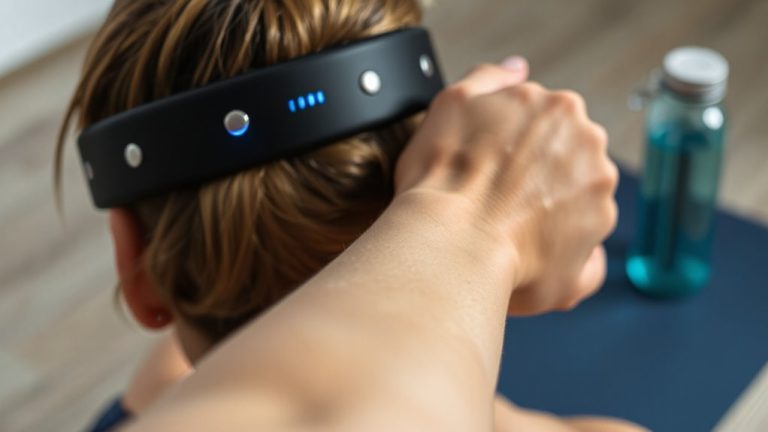
Using Wearable Recovery Alerts to Prevent Training During High-Inflammation States
Your wearable spots high-inflammation states by tracking drops in HRV, elevated resting heart rate, and disrupted sleep-key signs your body isn’t recovering. Devices like Oura, Whoop, and Garmin turn these metrics into recovery scores, alerting you when to scale back. Ignoring them raises injury risk; acting on them boosts long-term gains. You’re better off swapping heavy sessions for mobility or light cardio when alerts fire. Smart training means trusting your physiology over motivation-and there’s more to how this works just ahead.
Notable Insights
- Wearable devices detect high-inflammation states through sharply decreased HRV and elevated resting heart rate.
- Low HRV serves as an early warning sign of systemic inflammation before performance declines.
- Recovery scores from Oura, Whoop, or Garmin integrate autonomic and inflammatory markers to guide training decisions.
- Training during elevated inflammation increases injury risk and delays recovery, especially with high muscle fatigue.
- Adjust workouts based on recovery alerts by reducing intensity or opting for low-impact activities to support adaptation.
How Your Wearable Knows You’re Overtrained
While your wearable can’t diagnose overtraining on its own, it can detect key physiological shifts that suggest you’re pushing too hard. Elevated cortisol spikes, often tied to stress and excessive training loads, are flagged through subtle changes in your biometrics over time. These devices monitor patterns linked to nervous system fatigue, such as delayed recovery between sessions and irregular stress scores. When your autonomic balance tilts toward constant activation, your wearable interprets this as declining resilience. Though not medical-grade, consistent alerts about elevated stress markers should prompt caution. Relying solely on the device risks oversight, but used wisely, it adds valuable context. Data trends-especially around cortisol-related stress and nervous system fatigue-help you spot red flags before performance plummets. It’s not foolproof, but when combined with self-awareness, it sharpens recovery decisions. Ignoring these cues may lead to prolonged fatigue or injury, undermining your fitness goals.
HRV, Resting Heart Rate, and Sleep: The 3 Key Inflammation Signs
Your body’s quiet signals often speak loudest through three key metrics: heart rate variability (HRV), resting heart rate, and sleep quality-each acting as a physiological barometer for inflammation and recovery status. When inflammation markers rise, your immune response shifts, disrupting these signals before you feel symptoms. Low HRV suggests autonomic stress; elevated resting heart rate hints at systemic load; poor sleep reflects compromised recovery. Wearables detect these shifts in real time, offering early warnings.
| Metric | Normal State | High Inflammation |
|---|---|---|
| HRV | High | Sharply decreased |
| Resting HR | Stable | Elevated |
| Sleep | Deep, uninterrupted | Fragmented, light |
These changes aren’t just data-they’re signs your body is fighting something beneath the surface. Ignoring them risks overtraining and weakened immune response. Monitoring all three gives you a clearer, science-backed picture of internal stress than any single metric alone.
Oura vs. Whoop vs. Garmin: Best Recovery Alerts Compared
How do you choose the right tool when your body’s recovery hangs in the balance? Oura, Whoop, and Garmin each offer distinct approaches to recovery alerts. Oura excels in sleep tracking and provides clear recovery scores, thanks to strong sensor accuracy and detailed insights, though its battery life lasts only about a week. Whoop delivers continuous strain and recovery monitoring with impressive sensor accuracy, especially during workouts, and its battery life extends up to five days with the charging case. Garmin’s Edge and high-end Fenix models integrate recovery data seamlessly with training metrics, favoring athletes who want everything in one device; its sensor accuracy is reliable, and battery life can surpass two weeks in smartwatch mode. While all three perform well, Whoop stands out if you prioritize real-time recovery feedback, whereas Garmin suits those already invested in the ecosystem.
When to Listen to Your Watch Instead of Your Drive
Recovery alerts from your wearable aren’t just background metrics-they’re signals meant to guide your training decisions, sometimes pushing back against your ambition. When mental fatigue clouds your focus or emotional stress tightens your shoulders, your body isn’t primed for peak performance, no matter how motivated you feel. These wearables detect subtle shifts-elevated resting heart rate, lowered HRV, disrupted sleep-that often precede injury or burnout. Ignoring them risks turning a hard-earned routine into a setback. Sure, your drive might urge you forward, but your watch evaluates physiological reality, not intent. Models like Whoop and Oura excel at integrating mental fatigue and emotional stress into recovery scores, offering a holistic view. Trusting these alerts doesn’t mean surrendering discipline-it means applying it intelligently. Over time, athletes who heed their devices report steadier progress and fewer overtraining symptoms. Listening isn’t weakness; it’s strategic precision in action.
How to Adjust Your Workout Based on Recovery Alerts
While your wearable flags a low recovery score, it’s worth reconsidering that heavy lifting session you had planned. Elevated muscle fatigue means your body needs time to repair, and pushing through could increase injury risk. Instead, shift your workout timing to allow for better adaptation-maybe swap intensity for mobility work or low-impact cardio. Devices that track heart rate variability and resting heart rate help identify recovery states, but they’re most effective when you act on their feedback. Ignoring alerts may feel like dedication, but it often leads to overtraining. Adjusting based on data supports smarter progress. For instance, a delayed sprint session won’t hurt your goals-it may actually boost long-term gains by aligning training with physiological readiness. Recovery isn’t lost time; it’s part of the plan. Trusting your device’s guidance helps balance effort and restoration, optimizing performance while reducing systemic inflammation. Smart fitness isn’t just about output-it’s about informed input.
On a final note
Your wearable gives real-time insight into inflammation and recovery, using HRV, resting heart rate, and sleep quality to flag overtraining. Devices like Whoop and Oura offer detailed recovery scores, while Garmin blends fitness metrics seamlessly. Though useful, alerts shouldn’t override personal judgment. Use them as data-driven guides, adjusting intensity or rest accordingly. Ultimately, pairing tech feedback with self-awareness optimizes performance and long-term health.