Lumbar Mobility Drills With Child’s Pose With Side Reach for Spinal Unloading
You improve lumbar mobility and unload spinal pressure by combining controlled movement drills with Child’s Pose and side reach. This stretch decompresses discs, enhances intervertebral space, and resets paraspinal tension. Adding lateral flexion engages obliques and promotes segmental mobility while supporting neuromuscular reeducation. Proper form guarantees balanced pelvic alignment and maximizes tissue release. Use it daily to maintain spinal health, especially after sitting or lifting-there’s more to optimizing your recovery routine just ahead.
Notable Insights
- Lumbar mobility drills enhance spinal flexibility and reduce stiffness, supporting healthy movement patterns and decreasing injury risk.
- Child’s Pose decompresses the spine, promoting disc rehydration and reducing mechanical stress on the lower back.
- Adding a side reach to Child’s Pose introduces lateral flexion, increasing intervertebral space and releasing paraspinal tension.
- Proper form includes neutral hips, steady breathing, and aligned posture to maximize spinal unloading and prevent strain.
- Regular practice aids recovery, improves postural alignment, and maintains long-term spinal health, especially after sitting or training.
Why Lumbar Mobility Relieves Lower Back Pain
While your lower back might seem like a stable anchor during movement, it actually relies on controlled flexibility to prevent strain and discomfort. Limited lumbar mobility forces surrounding muscles to compensate, increasing tension and risk of injury. Proper movement in this region supports nerve mobility, allowing spinal nerves to glide freely during motion-restricted nerve pathways often contribute to radiating pain or numbness. Incorporating mobility drills enhances muscle relaxation, reducing hypertonicity in the erector spinae and quadratus lumborum. This isn’t just about stretching; it’s about retraining movement patterns. Tools like foam rollers or mobility bands can amplify results, but consistency matters more than gear. Over time, deliberate lumbar articulation improves load distribution, decreases compressive forces, and promotes recovery. When done correctly, these drills don’t just ease symptoms-they address root causes. You’re not merely maintaining your spine; you’re optimizing it.
How Child’s Pose Releases Spinal Compression
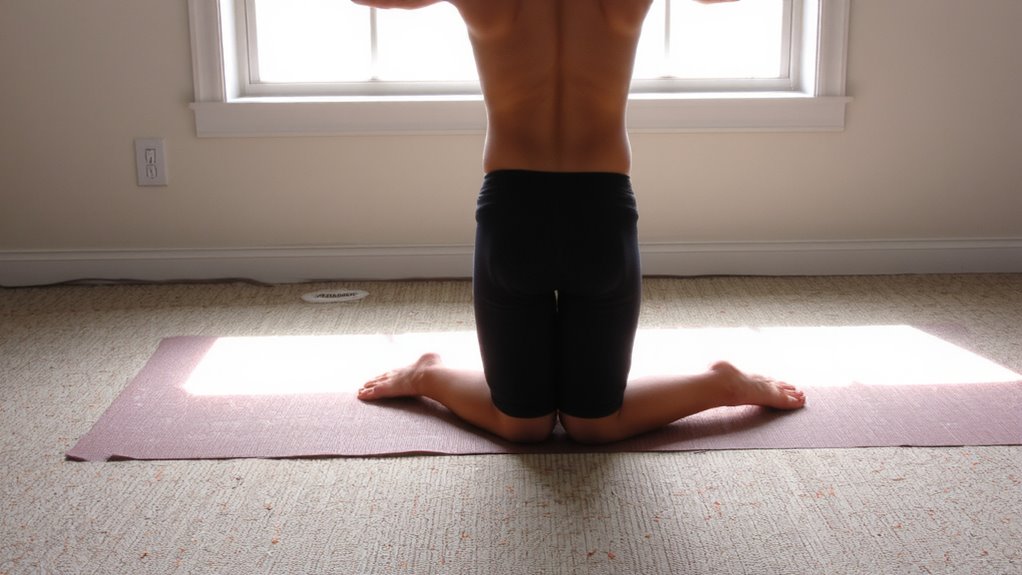
Child’s Pose isn’t just a restful break between intense stretches-it’s a functional reset for your compressed spine. When you sink into it, your spine naturally lengthens, creating space between vertebrae and promoting spinal decompression. This gentle traction reduces pressure on discs, which can alleviate dull aches caused by prolonged sitting or overuse. You’re not just stretching muscles-you’re encouraging fascial release along the back body, helping connective tissue glide more freely. The pose’s passive nature lets gravity do the work, making it efficient for recovery without needing extra gear. Unlike aggressive stretches that risk strain, this one supports safe, sustained relaxation. Over time, regular use improves tissue resilience and posture. It’s especially effective post-workout or during desk-heavy days when spinal compression builds silently. Though simple, its biomechanical benefits are well-documented. For lasting lumbar health, integrating Child’s Pose isn’t optional-it’s foundational. Using spinal decompression devices can further enhance disc rehydration and relieve chronic pressure when combined with mindful movement practices.
Add Side Reach for Better Lumbar Mobility
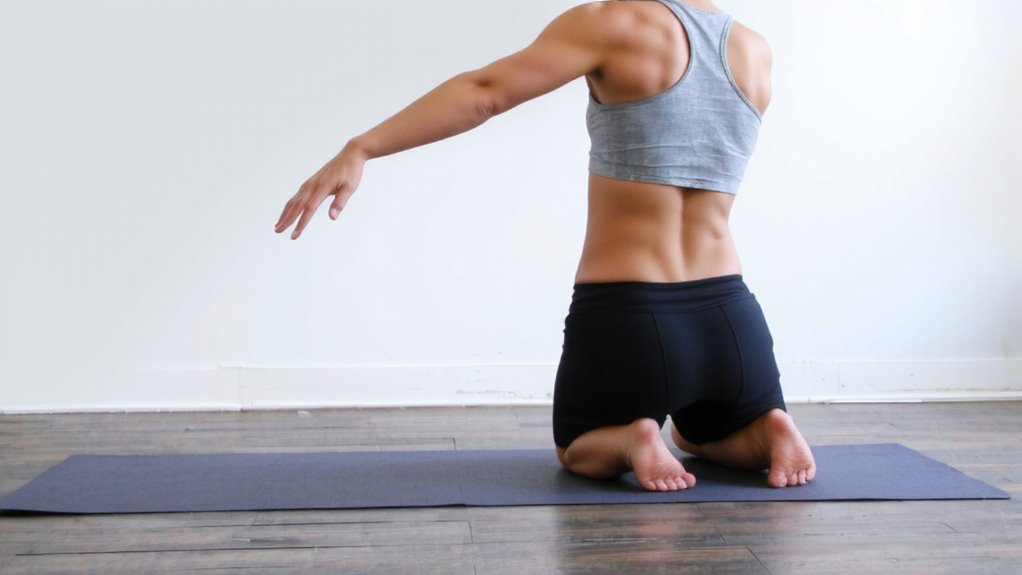
If you’ve already found relief in Child’s Pose, taking it a step further with a side reach can greatly enhance lumbar mobility by introducing a gentle lateral flexion to the spine. This subtle addition boosts lateral flexibility, encouraging each vertebra to shift slightly and release tension along the lower back. You’re not just stretching-you’re promoting spinal decompression by creating space between the discs, which can help counteract daily compression from sitting or heavy lifting. The side reach engages the obliques and intercostals, adding a myofascial component that supports balanced movement patterns. Unlike aggressive twists or bends, this variation maintains a passive hold, making it ideal for recovery days or as a prep drill before more intense work. It’s a low-risk, high-reward move that fits well into most routines, especially when used consistently. You’ll notice improved ease in bending and turning, a sign your lumbar health is moving in the right direction. For targeted relief, consider combining this stretch with a lumbar traction device to further support spinal unloading.
How to Do the Side-Reach Child’s Pose
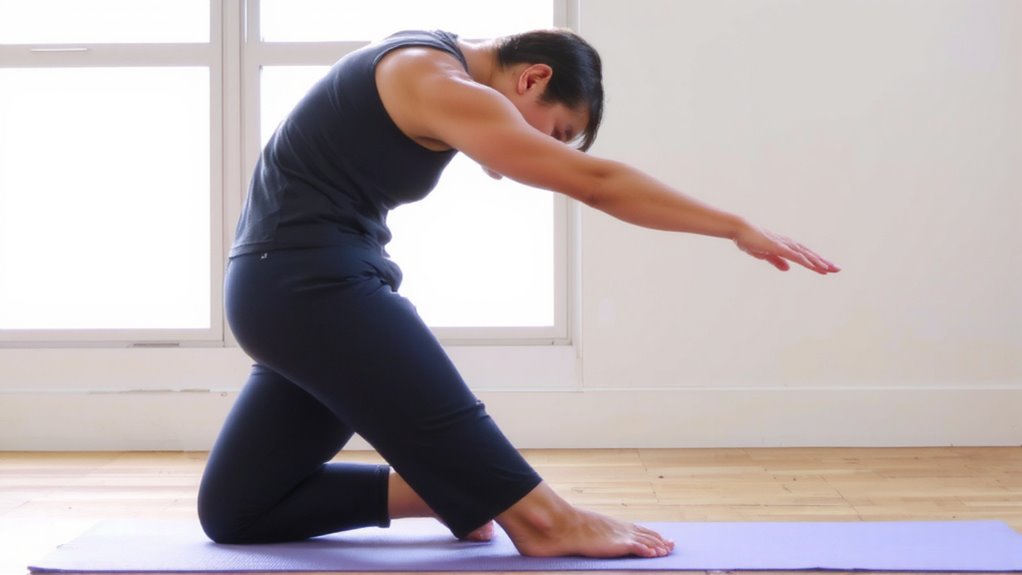
Why not start by positioning yourself correctly to get the most out of the Side-Reach Child’s Pose? Kneel on a mat, sit back on your heels, and stretch your arms forward, lowering your chest toward the ground. Then, shift your weight to one side, reaching that arm further while the other rests at your side-this side reach enhances lumbar mobility. Maintain steady breath control: inhale to lengthen your spine, exhale to deepen the stretch. Keep your hip alignment neutral; avoid hiking one hip higher than the other, as this reduces spinal symmetry and diminishes effectiveness. Positioning matters-if your hips feel strained, widen your knees slightly. This modification supports better pelvic release and improves recovery efficiency. The pose, when performed with mindful technique, encourages spinal decompression and muscular relaxation. Ideal for post-workout recovery, it complements fitness routines focused on mobility and joint health. For enhanced support during stretching, consider using best back stretching equipment to aid in achieving deeper spinal release.
Fix These 4 Side-Reach Form Mistakes
How often do mobility drills fall short because of subtle errors you’re not even aware of? The side-reach child’s pose seems simple, but common errors can undermine spinal unloading. First, collapsing your chest-keep it lifted to maintain proper alignment. Second, hiking your hip during the reach; your pelvis should stay grounded. Third, overreaching with the arm, which shifts weight unevenly and stresses the shoulder. Finally, holding your breath, which counteracts relaxation. Each mistake reduces the drill’s effectiveness and strains tissues unnecessarily. Proper alignment guarantees targeted lumbar release without compensation. You’re not just moving-you’re retraining movement patterns. Small adjustments make a noticeable difference in recovery and functional mobility. These corrections may feel restrictive at first, but they enhance neuromuscular control. Over time, mindful execution improves joint positioning, muscle balance, and post-workout recovery. Fixing these errors isn’t about perfection-it’s about smarter, sustainable movement that supports long-term spinal health.
When to Do This Drill for Best Results
You’ve just cleaned up your form, so now it’s time to evaluate timing-because even perfect execution won’t deliver ideal results if the drill lands at the wrong point in your routine. Knowing the best times to perform this mobility drill enhances spinal decompression and prepares your core for movement. Below are the ideal conditions for maximum benefit:
| When | Why Applicable |
|---|---|
| Morning routine | Reduces overnight spinal compression |
| Pre-workout | Warms up lumbar segments gently |
| Post-static sitting | Resets pelvic alignment |
| Before bed | Promotes parasympathetic engagement |
Performing the drill under these ideal conditions guarantees functional gains. You’re not just moving-you’re re-educating your spine. Consistency in timing, paired with clean form, turns this drill into a recovery cornerstone.
Combine With These 3 Lumbar Mobility Moves
Isn’t it worth considering how a few strategic additions can amplify the benefits of your current lumbar routine? Pairing Child’s Pose with Side Reach and pelvic tilting enhances spinal articulation by promoting segmental control through the lower back. Start with supine pelvic tilts-rocking gently to mobilize the sacrum and engage core stabilizers. Next, add cat-cow stretches to further refine spinal articulation, ensuring each vertebra moves mindfully. Finish with seated forward folds, maintaining a long spine to avoid compression. These three moves, when combined, support lasting lumbar health by improving neuromuscular coordination and disc hydration. Quality matters: perform each with control, preferably on a supportive mat that cushions joints without sacrificing stability. Consistent pairing of these drills enhances recovery, particularly when used post-training or during active rest days. You’ll notice improved range, reduced stiffness, and better posture over time.
On a final note
You’ll find this drill effective for spinal decompression and lumbar mobility, especially post-workout or after prolonged sitting. The side reach boosts oblique engagement, enhancing segmental motion. Paired with quality recovery gear-like a supportive mat with adequate cushioning-you maintain proper form and reduce joint strain. Consistent use improves flexibility and reduces stiffness, but only if executed correctly. It’s practical, low-risk, and fits seamlessly into most recovery routines, making it a reliable choice for long-term back health.