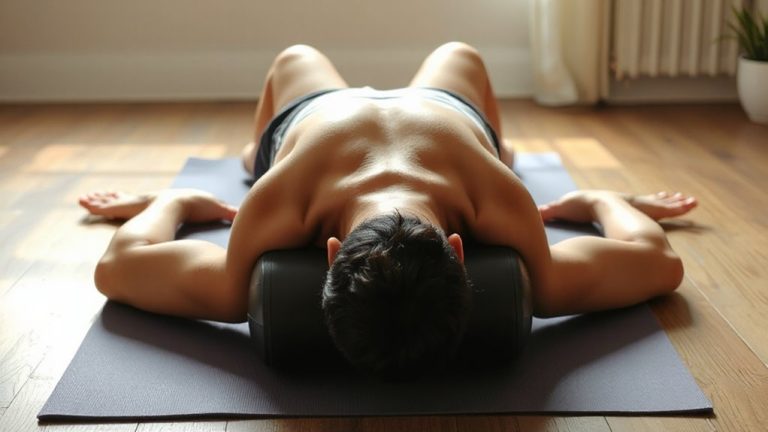
Why Late-Night Energy Drinks Destroy Sleep Recovery in Collegiate Athletes
You’re undermining your recovery when you drink energy drinks late-caffeine and stimulants like guarana delay sleep onset and suppress deep REM cycles critical for muscle repair. Even if you sleep eight hours, the quality drops, reducing restoration. Sugar crashes worsen fatigue, while elevated cortisol hinders adaptation. This disrupts circadian rhythm and impairs both physical resilience and mental focus. Nightly recovery isn’t just rest; it’s rebuilding. What you choose now shapes how fast you bounce back tomorrow.
Notable Insights
- Caffeine in energy drinks delays sleep onset and reduces deep sleep, impairing overnight muscle recovery.
- High sugar content causes energy crashes, disrupting sleep continuity and lowering sleep quality.
- Stimulants like taurine and guarana prolong alertness, interfering with natural melatonin release.
- Reduced REM sleep from energy drink consumption hampers cognitive restoration and mental recovery.
- Poor sleep increases injury risk and cognitive fatigue, undermining both athletic and academic performance.
Why Energy Drinks Ruin Athlete Sleep
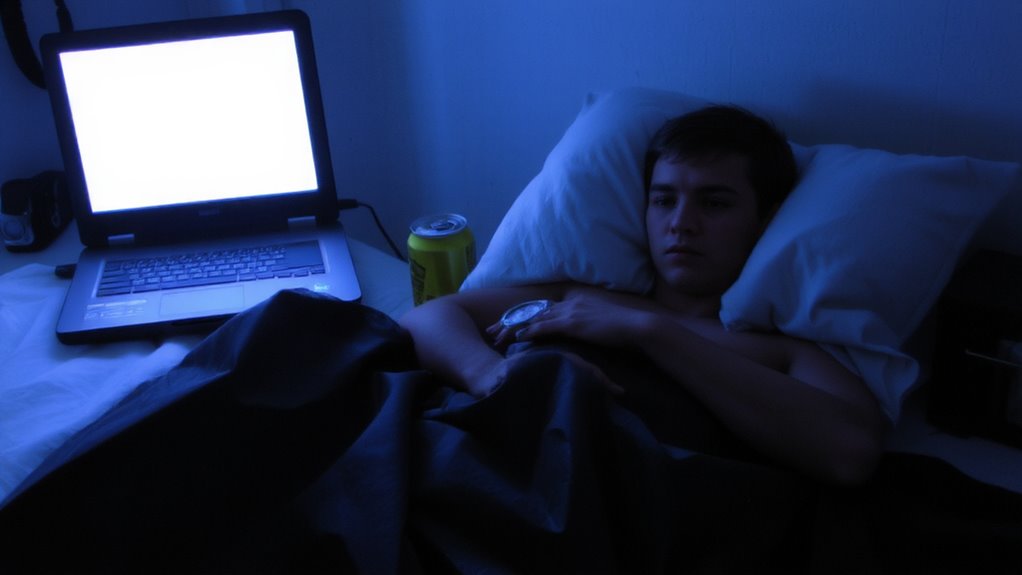
While you might reach for an energy drink to power through afternoon training, that same boost could end up disrupting your sleep-especially when caffeine and added stimulants like taurine or guarana interfere with your body’s natural wind-down process. Those caffeine spikes may sharpen focus temporarily, but they delay sleep onset and reduce deep sleep cycles, critical for recovery. Even if you fall asleep, the quality suffers, leaving you groggy despite hours in bed. Later, sugar crashes compound the problem, triggering fatigue and irritability that undermine next-day performance. You’re not just borrowing energy-you’re paying interest in lost rest. For athletes relying on consistency and peak output, this trade-off isn’t worth it. Recovery isn’t just about rest-it’s about restorative rest. Energy drinks, designed for quick hits rather than sustained performance, ultimately work against your body’s needs. Skip the shortcut; your sleep, and your results, depend on it.
How Caffeine and Sugar Break Down Recovery
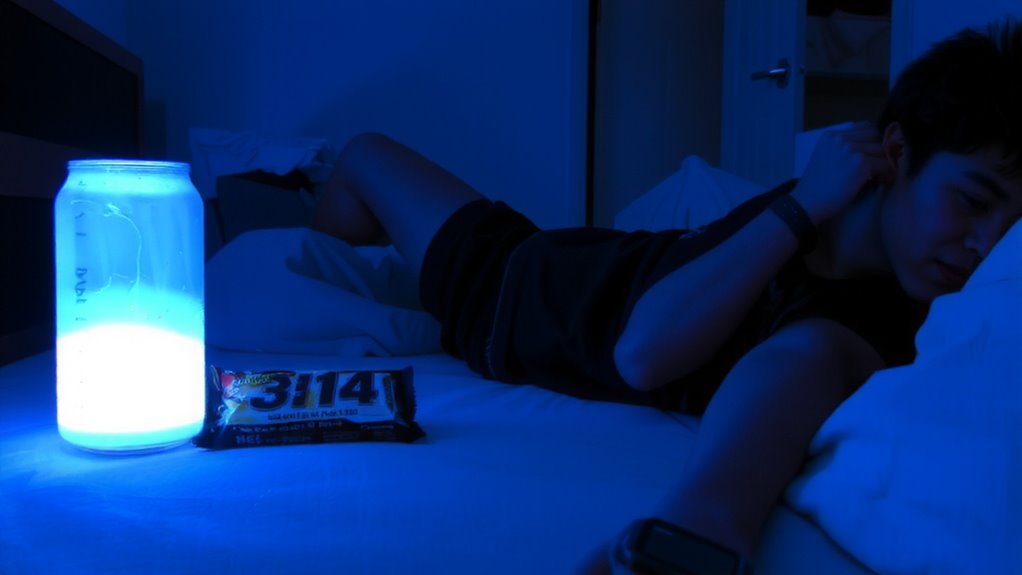
You feel it after a late-night game or intense training session-the temptation to crack open an energy drink to stay alert or power through post-practice tasks. But that quick boost comes at a cost. Caffeine’s long caffeine half life-up to 6 hours-delays deep sleep phases critical for muscle repair. Meanwhile, high sugar content triggers a sharp sugar crash, destabilizing insulin levels and increasing fatigue. Together, they disrupt hormonal balance and reduce recovery efficiency.
| Factor | Effect on Recovery | Time Impact |
|---|---|---|
| Caffeine | Delays sleep onset | Up to 6 hrs |
| High Sugar | Causes energy crash | 1–2 hrs post-consumption |
| Combined Load | Reduces REM sleep | Entire night |
| Late Intake | Lowers melatonin | 2+ hrs delay |
These components directly undercut overnight recovery-essential for athletic adaptation.
What Poor Sleep Does to Performance and Injuries
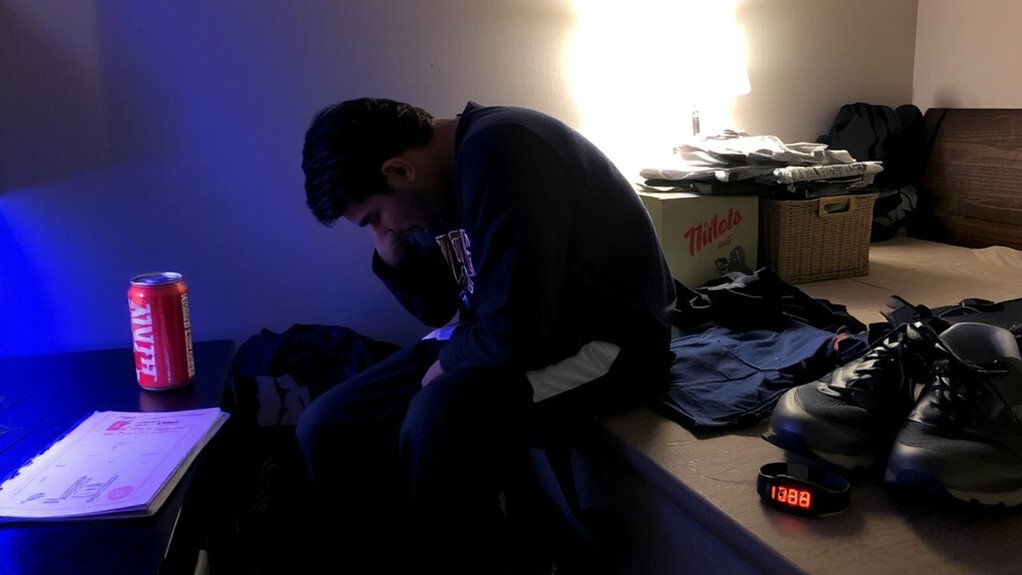
Sleep debt isn’t just fatigue-it’s a performance thief. You might push through morning workouts, but your body pays the price. Without full recovery, muscle fatigue builds faster, reducing strength and endurance during training. Your nervous system lags, and that delayed reaction time? It’s not just slower sprint starts-it increases injury risk during quick-direction sports. Studies show athletes sleeping under seven hours face nearly double the injury rate. Microtears in muscle don’t repair efficiently, and inflammation markers rise, undermining consistency. Even with top-tier fitness gear-compression sleeves, recovery boots-none compensate for lost sleep. These tools support circulation and reduce soreness, yes, but they can’t replace cellular repair that only deep sleep provides. If you’re relying on gear to make up for poor rest, you’re optimizing the wrong variable. Sleep is the foundation. Skip it, and performance crumbles.
Why Grades Drop When Athletes Lose Sleep
Grades slip not because athletes are less capable, but because their brains aren’t recovering the way their muscles are. When you’re running on minimal sleep, cognitive fatigue sets in, weakening memory consolidation and decision-making. This directly undermines academic focus, making lectures harder to follow and assignments take longer. Late-night energy drinks amplify this by disrupting deep sleep cycles, leaving your brain starved of restoration.
| Sleep (hrs) | Cognitive Fatigue Level | Academic Focus (rated 1–10) |
|---|---|---|
| 6+ | Low | 8 |
| 5 | Moderate | 5 |
| 4 | High | 3 |
| <4 | Severe | 2 |
You might push through practice with grit, but mental recovery isn’t optional. Without it, even simple tasks feel overwhelming. Sleep isn’t downtime-it’s when your brain organizes learning. Skip it, and you’re undercutting both fitness recovery and academic success.
Better Late-Night Swaps for Energy and Recovery
While chasing a late-night edge, reaching for an energy drink might seem like a quick fix, but smarter alternatives exist that support both energy and recovery without sabotaging sleep. Instead of stimulant-laden drinks, try herbal teas like chamomile or passionflower-they reduce cortisol and ease mental tension, improving sleep quality over time. Pair them with light snacks rich in complex carbs and lean protein, such as Greek yogurt with berries or a small banana with almond butter. These provide sustained energy for late workouts and aid muscle repair without taxing digestion. Unlike artificial energy boosters, these options stabilize blood sugar and support circadian rhythm regulation. When recovery is the goal, the right nighttime nutrition outperforms stimulants every time. Choose consistency over intensity-your nervous system and performance will adapt positively, especially when paired with proper rest and recovery gear like compression wear or foam rollers.
On a final note
You need deep sleep for muscle repair and cognitive recovery, but late-night energy drinks sabotage both. Caffeine delays REM cycles, while sugar spikes disrupt hormonal balance essential for healing. Chronic use impairs focus, slows reaction times, and increases injury risk. Instead of stimulants, you’re better off with magnesium supplements or tart cherry juice-both support sleep quality and reduce inflammation without side effects. Good recovery gear isn’t just compression or foam rollers; it includes smart nighttime habits that enhance restoration.