Ankle Mobility Drills With Towel-Assisted Plantarflexion
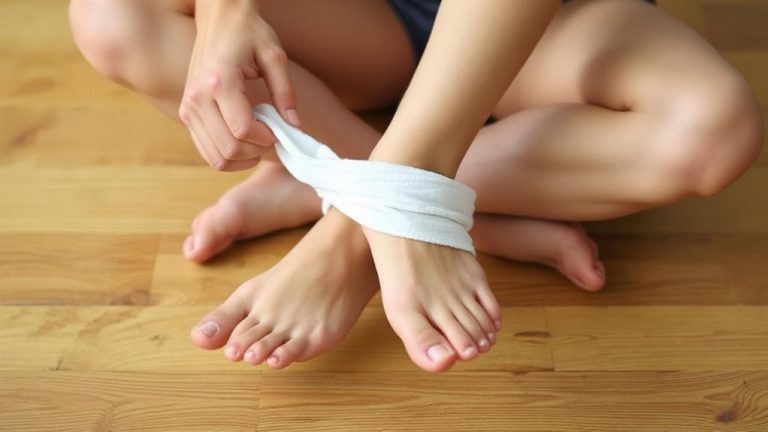
You can boost ankle mobility with a towel-assisted plantarflexion stretch by sitting and extending your leg, looping a towel around the ball of your foot, and gently pulling to create tension. This targets the gastrocnemius, soleus, and Achilles tendon while promoting smooth joint glide. Use steady pressure and proper alignment to avoid imbalances or slipping. It’s most effective when muscles are warm, like in the morning or post-workout. For best results, consistency matters more than timing-stick with it, and you’ll see improvements in movement efficiency over time.
Notable Insights
- Perform towel-assisted plantarflexion stretches seated with a straight leg to improve ankle range of motion.
- Wrap the towel around the ball of the foot and pull gently to create controlled tension.
- Maintain aligned foot and knee positioning to prevent compensatory movements and ensure effectiveness.
- Use a secure, non-slip towel to sustain consistent tension and enhance feedback during the stretch.
- Practice daily, especially post-workout or in the morning, to gradually increase tissue elasticity and joint mobility.
Do a Towel Ankle Stretch for Plantarflexion
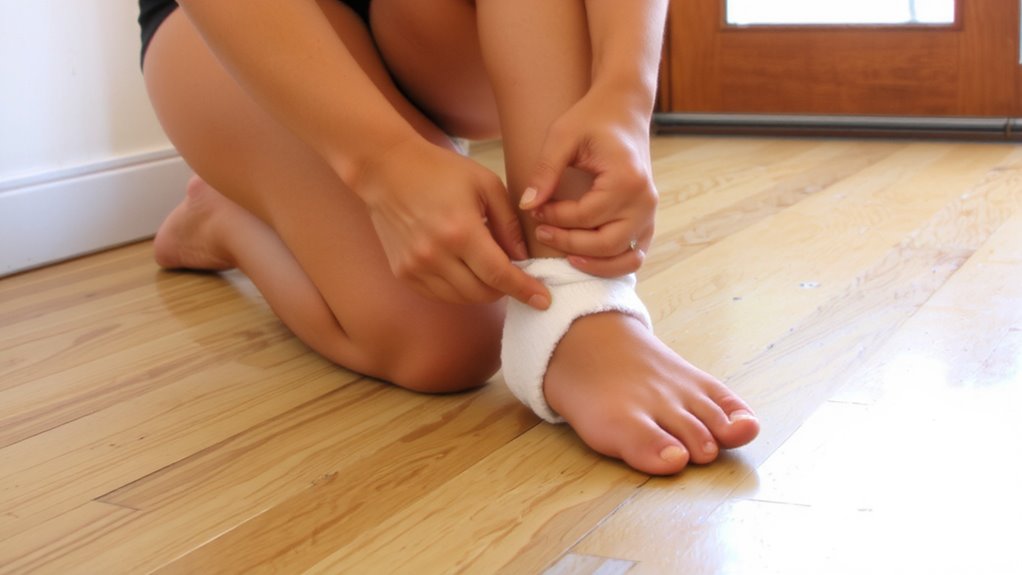
A towel ankle stretch is one of the simplest yet effective ways to improve plantarflexion, especially when tightness in the calf or Achilles tendon limits your range of motion. You sit with your leg extended, wrap a towel around the ball of your foot, and gently pull to create towel tension. This action encourages a smooth ankle glide, guiding the joint into a deeper plantarflexed position without strain. The controlled resistance helps modulate intensity, making it ideal for early-stage rehab or daily mobility maintenance. A microfiber or cotton towel works best-long enough to allow grip, yet sturdy enough to handle consistent tension. You don’t need expensive fitness gear; this drill proves effectiveness isn’t tied to cost. Over time, you’ll notice improved control and range, thanks to the combination of tension and glide. It’s a practical, accessible staple in any recovery routine, especially when mobility tools aren’t available.
Why Towel Stretches Improve Ankle Mobility
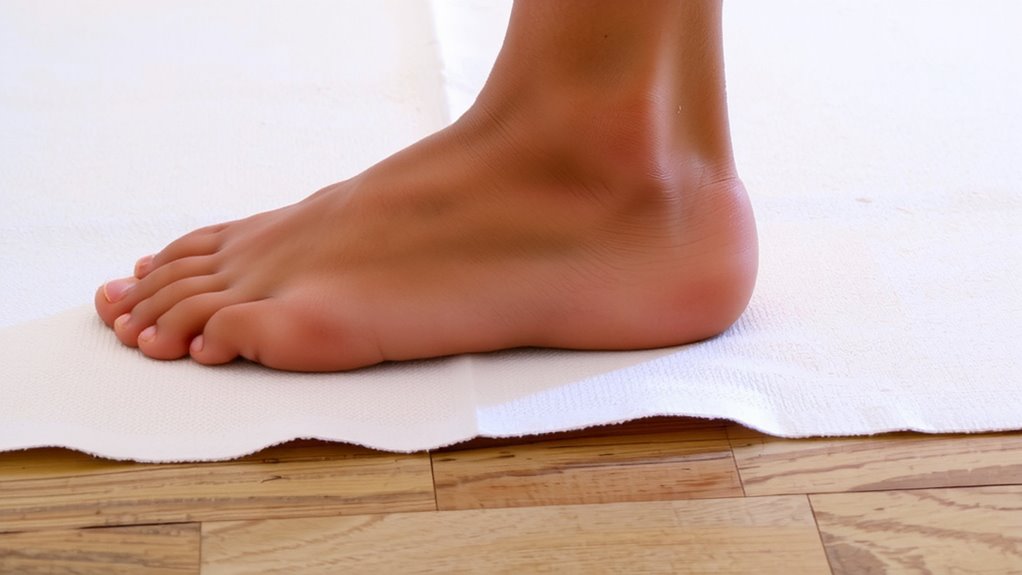
Because they combine gentle resistance with precise joint alignment, towel stretches effectively target the soft tissues around the ankle, especially the gastrocnemius, soleus, and Achilles tendon, which often restrict plantarflexion when tight. You’re able to control tension by adjusting how hard you pull, making it easier to gradually improve tissue elasticity without overstraining. The towel acts as a feedback tool, helping you maintain proper form so the joint glide happens smoothly through its intended range. This guided motion prevents compensatory movements that reduce stretch effectiveness. Unlike rigid devices, a simple towel adapts to your anatomy, offering consistent yet flexible resistance. You’ll notice better movement quality after just a few sessions, especially when warming up or recovering post-activity. Towel stretches aren’t flashy, but their functional design supports measurable gains in ankle mobility-no special gear needed, just smart mechanics working in your favor.
Avoid These Towel Stretch Mistakes
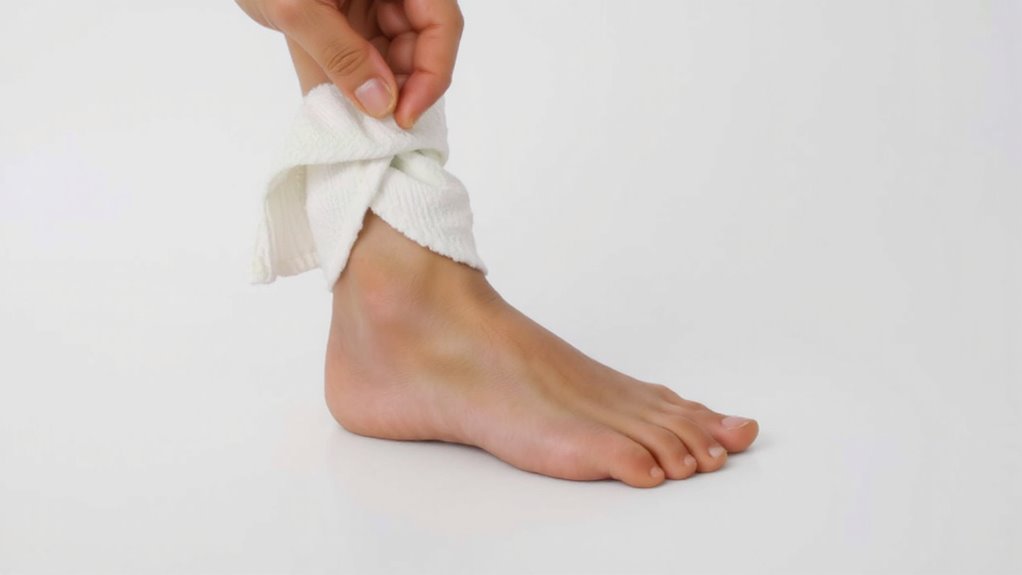
You’ve just seen how towel stretches can effectively boost ankle mobility by targeting tight calf muscles and the Achilles tendon with adjustable tension and guided alignment. But mistakes can reduce their benefits or cause strain. An improper grip-like holding the towel too loosely or with slippery hands-compromises control and reduces tension consistency, undermining muscle engagement. You need a firm, stable hold to maintain steady force through the stretch. Also, watch for uneven pressure. Pulling harder on one side of the towel leads to imbalanced stretching, which may favor one calf over the other and potentially worsen asymmetries. Guarantee both ends of the towel are pulled evenly, aligning your foot directly in front of your knee. Using a durable, non-slip towel also helps maintain grip and tension. Avoid these issues, and your form stays effective, safe, and targeted.
Best Times to Do Ankle Mobility Work
When should you prioritize ankle mobility work-before your workout, after, or at some other point in your day? Incorporating mobility drills into your morning routine jump-starts joint lubrication and improves movement precision early. Doing them upon waking primes the neuromuscular system, especially if you sit for long periods. You’ll notice better squat depth and stair climbing ease throughout the day. Alternatively, using towel-assisted plantarflexion during your post workout cooldown helps reset tissue tension and supports recovery. Warm muscles respond better to stretching, making this an efficient time to enhance flexibility gains. While pre-workout mobility isn’t bad, it shouldn’t replace dynamic warm-ups. For most, combining morning maintenance with cooldown integration offers ideal results. Consistency trumps timing-choose when you’re most likely to stick with it. Towel drills are low-risk, space-efficient, and effective across both scenarios.
How Stiff Ankles Limit Daily Movement
How often do stiff ankles disrupt your stride without you even realizing it? You might not notice, but restricted range in dorsiflexion affects how your foot lands, altering your gait and placing stress on knees and hips. Simple tasks like walking uphill or squatting become harder, forcing your body to compensate. Over time, this leads to reduced stability, increasing your risk of trips or ankle rolls during daily movement. Even stairs or uneven sidewalks challenge stiff joints more than they should. Without adequate mobility, your body loses efficiency and balance, especially during dynamic motions. Towel-assisted drills help counteract these issues by gently improving flexibility and proprioception. Consistent practice enhances joint function, supporting smoother, safer movement. You don’t need advanced gear-just time and technique. Ankle health is foundational, not optional, and addressing stiffness now prevents bigger problems later.
On a final note
You’ll find towel-assisted plantarflexion drills effective for boosting ankle mobility, especially when done consistently. They’re low-risk, require minimal gear, and target tightness that limits squat depth and walking efficiency. Paired with proper form and timing-like post-workout or during morning routines-they support long-term joint health. While not a cure-all, they’re a practical addition to recovery, particularly when recovery tools are limited.