Virtual Reality Cycling Tours to Sustain Motivation During Extended Bed Rest
You stay motivated during bed rest by riding scenic virtual routes that engage your senses and mimic real-world cycling. VR tours use immersive visuals and responsive trainers to simulate climbs, terrain, and movement, keeping your workouts psychologically rewarding. Apps like Zwift and Rouvy offer realistic environments that boost adherence through emotional engagement. Dopamine release from virtual progress reinforces effort. Proper headset fit and safe setup guarantee comfort and stability-key for lasting results. Discover how tailored VR routines enhance recovery further.
Notable Insights
- VR cycling tours boost motivation during bed rest by transforming recovery into engaging, emotionally stimulating experiences.
- Immersive 360-degree environments and spatial audio reduce feelings of confinement and enhance psychological well-being.
- Realistic simulations of alpine trails and coastal roads provide therapeutic sensory stimulation despite physical inactivity.
- Dopamine release from virtual achievements and scenic exploration reinforces exercise adherence and sustained effort.
- Apps like Zwift, Rouvy, and Tour de Force offer scenic, interactive rides that maintain motivation over long recovery periods.
Why VR Cycling Boosts Motivation During Bed Rest
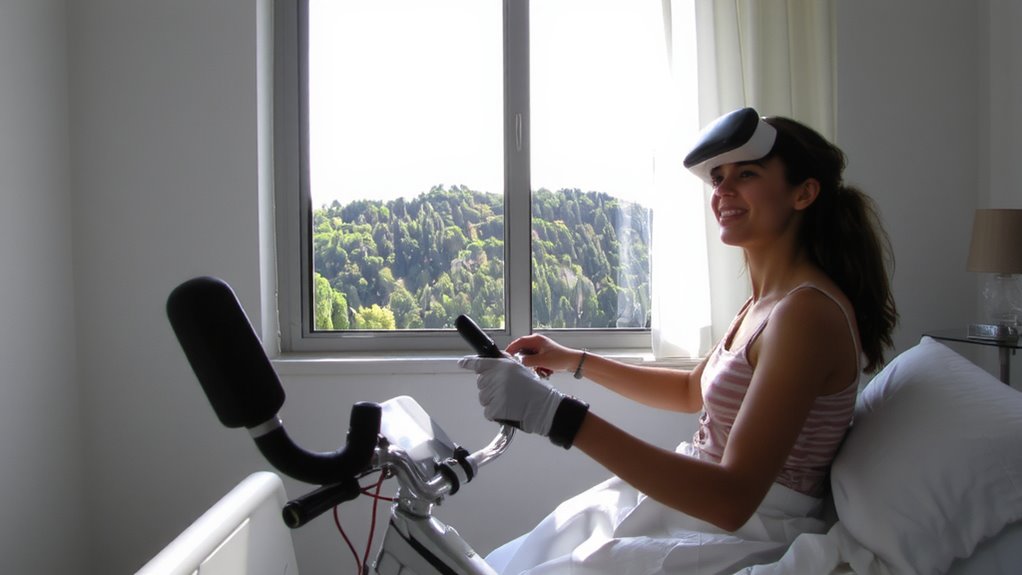
Why stay stuck when you can ride? Virtual reality cycling transforms bed rest from passive waiting into active recovery, leveraging emotional engagement and sensory immersion to reignite motivation. You’re not just lying there-you’re biking through alpine trails or coastal roads, your senses pulled into vivid environments that feel real. This isn’t escapism; it’s therapeutic stimulation. Studies show VR workouts increase adherence by making exercise psychologically rewarding, even when physical mobility is limited. The emotional engagement you experience-anticipation, accomplishment, joy-triggers dopamine release, reinforcing effort. Meanwhile, sensory immersion, achieved through 360-degree visuals and spatial audio, tricks your brain into perceiving movement, reducing feelings of confinement. Unlike passive entertainment, VR cycling demands focus and rhythm, mimicking real exertion without strain. For patients in extended recovery, this blend of mental and perceptual activation sustains motivation far better than traditional bed rest routines. It’s not a substitute for mobility, but a bridge toward it.
How VR Cycling Simulates Real-World Rides
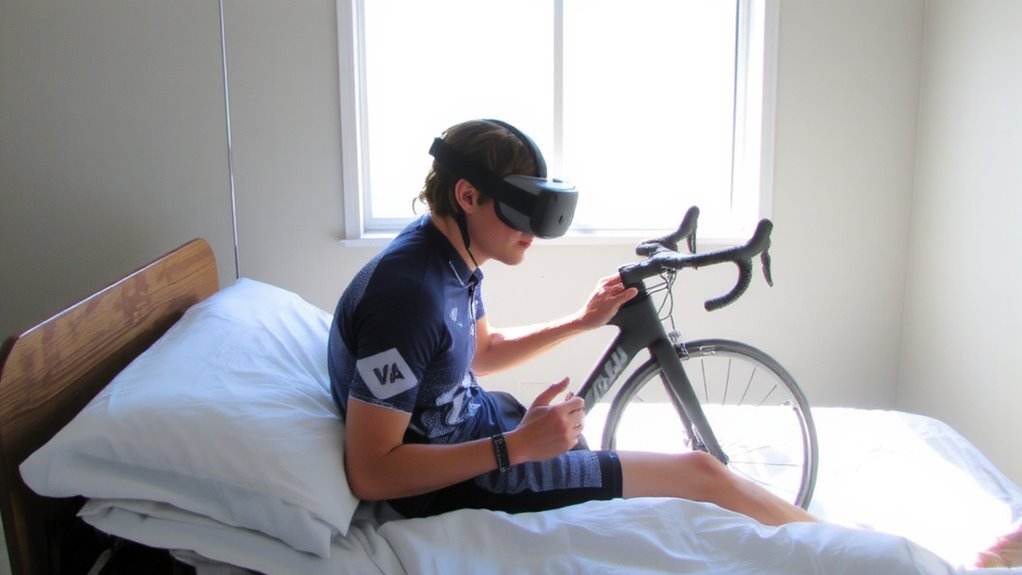
While you remain stationary, VR cycling systems recreate the physical and perceptual demands of outdoor riding through synchronized hardware and immersive software. These setups rely on immersion simulation to visually and cognitively place you within dynamic environments, whether you’re climbing a mountain trail or cruising along a coastal path. Real-time sensory feedback-like resistance changes that mimic inclines or vibrations simulating rough terrain-deepens the realism. Your movements trigger immediate responses in the virtual world, maintaining alignment between effort and visual cues. High-resolution headsets reduce latency, minimizing motion sickness while enhancing presence. Though not a full substitute for outdoor cycling, the integration of responsive trainers and 3D spatial audio improves perceived exertion and engagement. Fitness recovery benefits from this structured yet stimulating interaction, as consistent use supports cardiovascular conditioning. Over time, the combination of immersion simulation and precise sensory feedback helps sustain motivation, making rehabilitation both functional and mentally stimulating.
Best VR Cycling Apps for Scenic and Engaging Routes
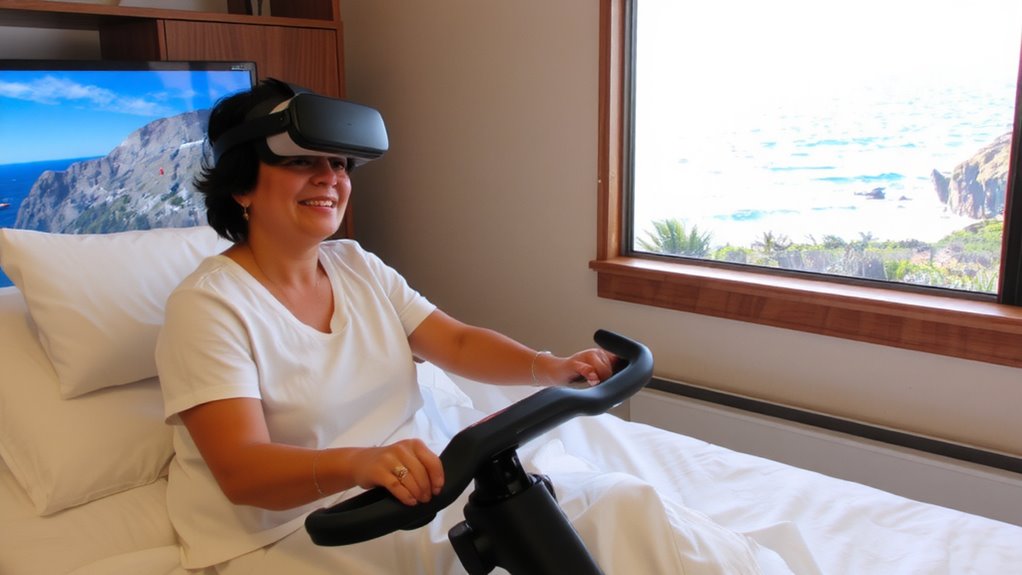
You’ve seen how VR cycling mimics the physical demands of real-world rides through responsive trainers and sensory feedback, but now it’s time to explore the software that brings those rides to life. The best apps deliver both scenic variety and route realism, keeping your motivation high during bed rest. They use real-world GPS data and 360-degree footage to simulate authentic terrain and environments, making each ride visually engaging and physically accurate.
| App | Key Strength |
|---|---|
| Zwift | Social interaction |
| Kinomap | Real video routes |
| Rouvy | Route realism |
| Tour de Force | Scenic variety |
| BKOOL | Weather simulation |
These platforms turn static workouts into dynamic mental escapes, blending fitness recovery with immersive design. You stay committed not just by effort, but by anticipation-of cresting that mountain pass or cruising through an alpine valley from your room.
Pick the Right VR Headset for Long Sessions
If comfort and endurance matter most during extended VR cycling sessions, then the choice of headset becomes just as critical as the bike trainer itself. You’ll want one with strong ergonomic comfort-think padded face seals, balanced weight distribution, and adjustable straps-to avoid pressure points during long use. Headsets like the Meta Quest 3 or Valve Index excel here, combining lightweight designs with customizable fits. Battery life is another key factor; tethered headsets offer unlimited session time, while standalone models average 2–3 hours. If you plan hour-long daily rides, consider an external power pack to extend runtime without disrupting immersion. Overheating and strap stiffness can break focus, so look for breathable materials and easy adjustments. A poorly fitting headset won’t just distract-it’ll discourage consistent use, which defeats the purpose of VR cycling as a recovery tool. Prioritize endurance-ready gear to support both physical and motivational recovery.
Set Up Your VR Cycling Station Safely
Since immersive VR cycling demands both physical stability and digital precision, setting up your station with safety in mind isn’t just smart-it’s essential for effective recovery. You’ll want to secure your VR headset base stations or sensors clear of obstructions, ensuring a wide, unbroken tracking field. Anchor your stationary bike firmly so that equipment stability isn’t compromised during longer sessions. Even subtle shifts can disrupt immersion or cause fatigue. Routinely check bolt tightness and surface grip, especially on smooth flooring. Cable management is equally critical: use clips, ties, or overhead suspension systems to keep cords from tangling or snagging. Loose cables pose both tripping and device hazards. Position your PC or console nearby but out of the way, with ports easily accessible. A clean, organized setup improves both performance and focus, letting you prioritize rehabilitation without avoidable setbacks. Always test the configuration before starting a session.
Top Benefits for Mental and Physical Health
Recovery isn’t just about physical healing-it’s a mental balancing act, and VR cycling tours offer a rare synergy between both. You maintain muscle engagement and cardiovascular conditioning with low-impact resistance, vital during bed rest. The immersive environments provide cognitive stimulation by challenging your spatial awareness and attention, helping slow mental decline linked to inactivity. Simultaneously, realistic outdoor simulations deliver mood enhancement-exposure to virtual sunlight and nature reduces reported feelings of confinement and depression. Studies show users experience lower cortisol levels and improved sleep cycles after regular VR sessions. Unlike passive entertainment, this active immersion keeps your brain and body connected, reinforcing neuroplasticity and motor function. The gear-when calibrated properly-ensures consistent performance, minimizing strain. You’re not just passing time; you’re rebuilding resilience, with measurable improvements in focus, affect, and physical stamina-all from your bed.
How to Build a Daily VR Cycling Habit
Consistency is the quiet engine of recovery, and building a daily VR cycling habit starts with designing a routine that fits seamlessly into your day. Set a specific time-morning or early afternoon-when energy levels are stable, and pair it with a trigger like post-breakfast cleanup. Goal setting is essential: begin with manageable targets, like 10 minutes at low resistance, then gradually increase duration and intensity. Use built-in VR metrics or companion apps for progress tracking, noting distance, heart rate, and session completion. This data not only reveals physical gains but also reinforces motivation. Pair your VR headset with a stationary bike that offers smooth pedal resistance and minimal noise for ideal comfort. Over time, regularity improves cardiovascular function and muscle engagement, even during bed rest. Evaluations show users who stick to structured routines report higher adherence and measurable improvements, making daily VR cycling a practical, trackable component of fitness recovery.
On a final note
You’ll stay motivated and mentally sharp with VR cycling during bed rest. It mimics real terrain through responsive software, syncing resistance with on-screen hills. Headsets like Quest 3 offer clarity and comfort for long sessions. Paired with apps like Zwift, they deliver immersive, scenic rides that support cardiovascular health and mood. Proper setup guarantees safety and ergonomics. Over time, consistent use aids recovery by maintaining fitness routines. It’s practical, tech-driven rehab-effective, engaging, and increasingly accessible.