Mindfulness Techniques to Improve Recovery Quality in Post-Competition Phases
You’re not fully recovering if you’re ignoring mindfulness after competition. Diaphragmatic breathing lowers cortisol and resets your nervous system, while body scans help you release lingering tension in shoulders or jaw. Mindful walking and journaling improve emotional regulation and mental clarity, supporting long-term resilience. Combined with recovery gear like foam rollers, these practices enhance physiological and psychological restoration-making your downtime more effective. The next step shows how to integrate them seamlessly into your routine.
Notable Insights
- Practice diaphragmatic breathing to activate the parasympathetic nervous system and accelerate post-competition recovery.
- Use body scanning to detect and release residual muscle tension in the shoulders, jaw, or back.
- Engage in mindful walking to enhance sensory awareness and support nervous system regulation after events.
- Apply mindful journaling each morning to process emotions and reduce psychological stress related to performance.
- Combine mindfulness with physical recovery methods to improve emotional regulation and overall recovery quality.
How Mindfulness Lowers Stress and Speeds Recovery
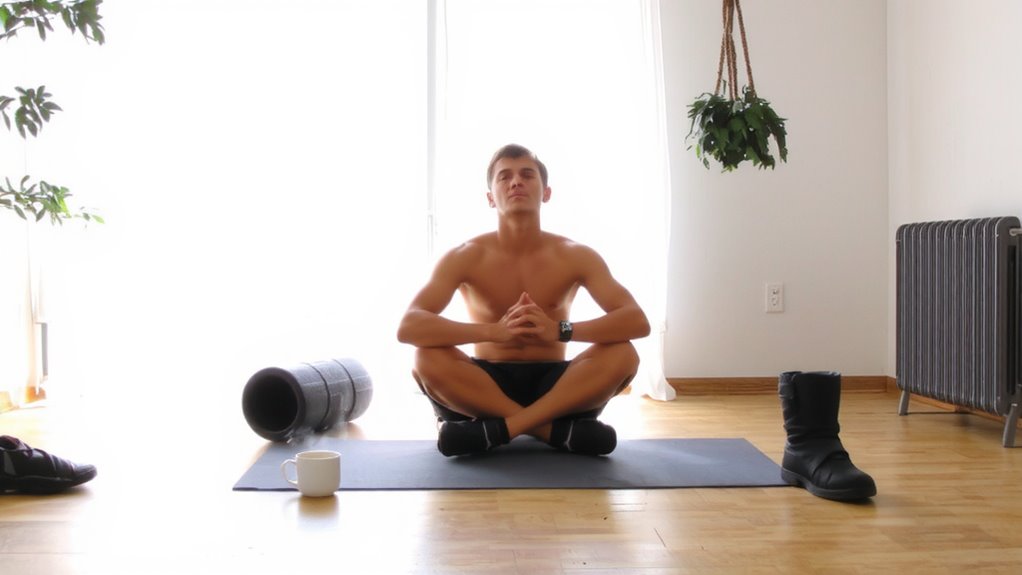
While your body handles the physical toll of competition, your nervous system often remains in high gear, making recovery harder than it needs to be - but mindfulness can shift that. You’re not just calming your mind; you’re activating the parasympathetic system, which directly reduces cortisol and accelerates physiological recovery. Regular mindfulness practice improves emotional regulation, helping you respond rather than react to post-event stress. This isn’t just about feeling better mentally-studies show enhanced mental clarity in athletes who meditate, leading to sharper decision-making during rest phases. Unlike recovery gear that targets muscles or joints, mindfulness works beneath the surface, fine-tuning your internal state. It complements compression wear or cryotherapy by addressing neural fatigue often overlooked in traditional recovery protocols. When combined with smart training habits, mindfulness proves efficient, low-cost, and scalable-making it an essential, evidence-backed tool any serious athlete should integrate, not dismiss as optional.
Breathe to Reset Your Nervous System After Competition
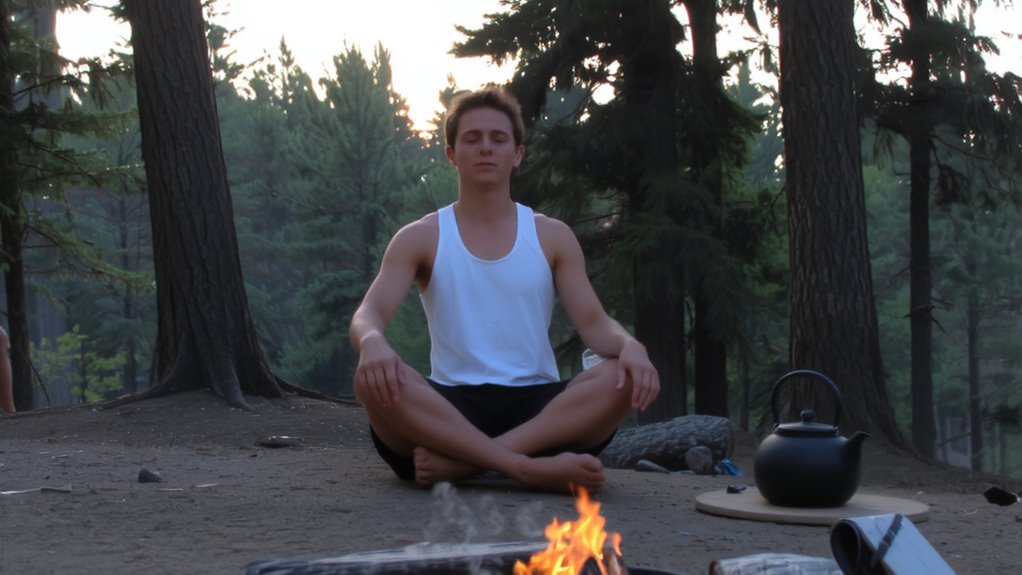
Because your nervous system stays activated after intense competition, simply sitting quietly won’t always suffice-targeted breathing, however, can. Try diaphragmatic breathing: inhale deeply through your nose, letting your belly rise, then exhale slowly through pursed lips. This technique activates the parasympathetic nervous system, helping reduce cortisol and improve heart rate variability-a key marker of recovery capacity. Studies show athletes who practice regular diaphragmatic breathing post-event report faster return to baseline arousal levels. Unlike passive rest, this method provides measurable physiological shifts, enhancing autonomic balance. Wearable fitness gear can now track your heart rate variability in real time, offering feedback on how well your nervous system is resetting. While not a substitute for sleep or nutrition, deliberate breathwork is a low-effort, high-impact recovery tool. For best results, dedicate 5–10 minutes post-competition. It’s practical, science-backed, and accessible-no special equipment required.
Scan Your Body to Release Post-Event Tension
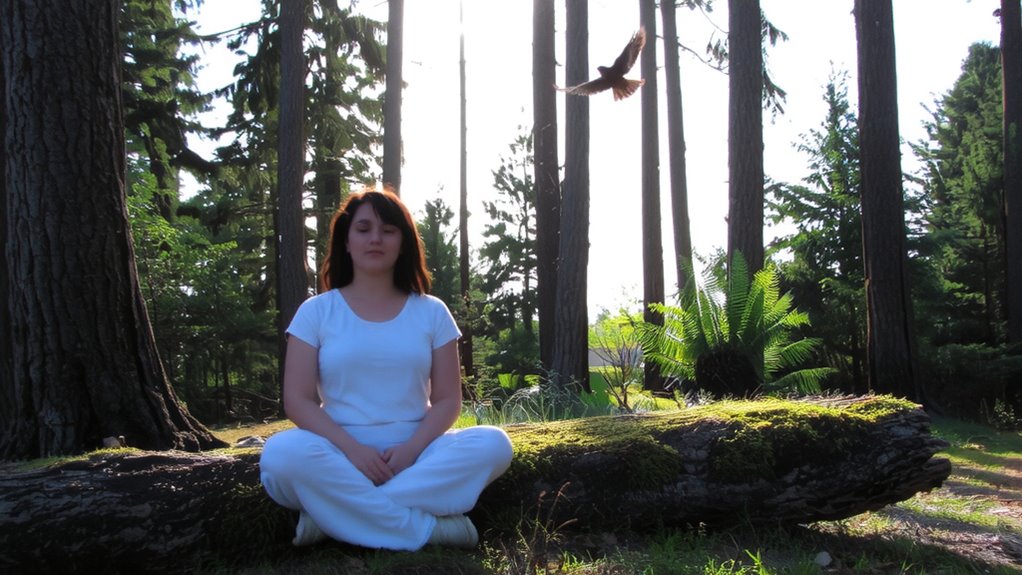
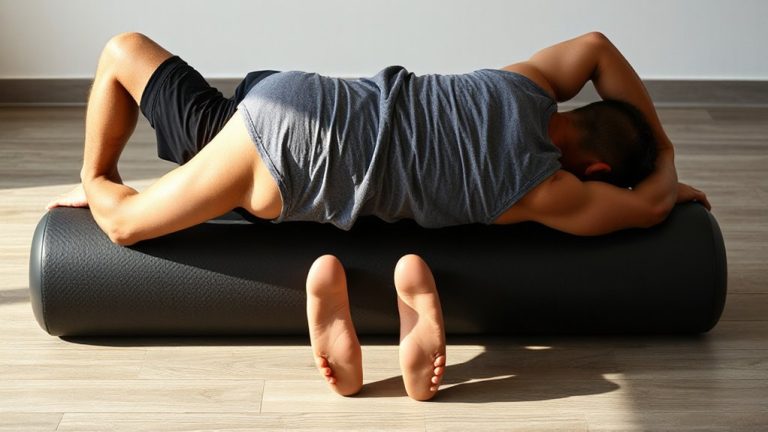
How often do you step off the field or finish a race only to realize your shoulders are still hunched near your ears, or your jaw is clenched tight? That’s your body holding onto post-event tension, and if you don’t address it, recovery slows down. Muscle scanning helps you systematically check in with each body part, from toes to scalp, noticing where strain lingers. It’s not just awareness-this is tension mapping, pinpointing tight zones so you can intentionally release them. Think of it like a diagnostic tool: you detect areas where stress accumulates, such as the neck or lower back, then apply targeted breathing or gentle movement. Unlike recovery gear that only treats symptoms, muscle scanning tackles the root cause-residual tension. It requires no equipment, just focus, and takes under ten minutes. Used consistently, it improves recovery quality by enhancing body awareness and promoting neuromuscular relaxation, making it a practical, evidence-backed method athletes can rely on. For deeper tissue release after scanning, consider using a high-density foam roller to address identified tight spots effectively.
Stay Present to Enhance Daily Recovery
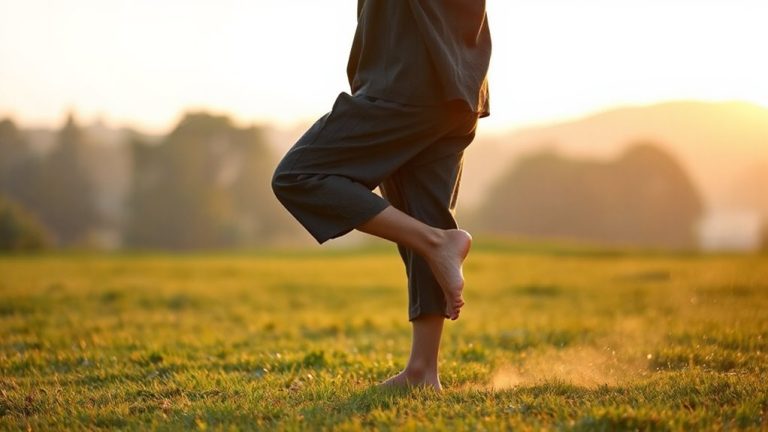
Why do so many athletes overlook the mental side of recovery when their body’s already been pushed to the limit? You can’t optimize recovery if your mind’s still racing with the past performance or future expectations. Staying present helps regulate your nervous system, which directly supports physical healing. Try mindful walking-focus on each step, the contact with the ground, your breath syncing with movement. It’s low-effort but high-impact, especially when you’re sedentary post-event. Combine it with sensory awareness: notice the air on your skin, sounds around you, subtle shifts in muscle tension. These practices ground you in real-time experience, reducing mental clutter. Unlike fitness gear that tracks output, mindfulness measures internal state-something no wearable can fully capture. You’re not just resting; you’re actively recalibrating. When done consistently, staying present becomes a recovery tool as essential as hydration or sleep.
Build a Mindful Routine to Prevent Burnout
You’ve just taken the first step by staying present in the hours and days after competition, letting your nervous system reset and your body begin to repair. Now, building a consistent mindful routine helps prevent burnout by anchoring recovery in intention, not habit. Start each morning with five minutes of mindful journaling-track physical sensations, emotional states, and training reflections to catch early signs of fatigue. Follow with gratitude reflection: name three non-performance-related things you value, like a supportive conversation or a restful night. This mental shift reduces over-identification with results, a common burnout trigger. Unlike passive recovery tools or compression gear, which support physiology, mindfulness targets psychological load-the often-overlooked driver of long-term fatigue. Used daily, these practices build resilience, improve self-awareness, and sustain motivation without overreliance on external aids.
Boost Sleep Quality With Mindful Recovery Practices
What if the most effective recovery tool wasn’t something you could buy, but something you cultivated each night before sleep? You can dramatically improve sleep quality by integrating mindful recovery practices into your routine. Prioritizing sleep hygiene-like keeping a consistent bedtime, minimizing screen exposure, and creating a calm environment-sets the stage for deeper rest. Pair this with mindfulness-based relaxation techniques such as diaphragmatic breathing, body scans, or gentle yoga nidra to quiet a post-competition mind. These methods reduce cortisol levels and shift your nervous system into restorative mode. Unlike fitness gear that promises quick results, mindful recovery doesn’t rely on gadgets but on consistency and awareness. Over time, these practices enhance sleep architecture, increasing slow-wave and REM cycles critical for physical and mental recovery. You’re not just resting-you’re actively rebuilding.
On a final note
You recover better when your nervous system is regulated, and mindfulness gives you the tools to do that. Techniques like breathwork and body scanning reduce cortisol, improve sleep quality, and accelerate physical recovery. Used consistently, they complement recovery gear-like compression units or massage rollers-by addressing mental stress, not just muscle soreness. This dual approach enhances adaptation, lowers injury risk, and sustains long-term performance far more effectively than equipment alone.