Sport-Specific Functional Progression for Basketball Players After Ankle Reconstruction
You can start rehab only after your surgeon clears you, typically once swelling’s down and the incision’s healed. Focus first on regaining balance with single-leg drills on foam or wobble boards, then build strength using double-leg box jumps with soft landings. Progress to lateral bounds and defensive slides as stability improves, always in supportive court shoes. Use compression gear to manage fatigue and integrate reaction drills before full-court play. True readiness isn’t timed-it’s earned through structured, functional milestones. Moving forward, you’ll see how each phase directly feeds into the next.
Notable Insights
- Begin sport-specific rehab only after medical clearance, with pain-free range of motion and no post-activity swelling.
- Progress from double-leg to single-leg plyometrics, emphasizing soft, controlled landings to restore explosive power safely.
- Incorporate lateral bounds and defensive slides to rebuild ankle stability during basketball-specific cutting and shuffling.
- Enhance proprioception with balance drills on unstable surfaces, advancing to eyes-closed and dynamic movements.
- Integrate reactive agility drills with visual cues and sport-mimicking intervals to restore game-speed coordination and endurance.
Know When You Can Start Rehab After Surgery
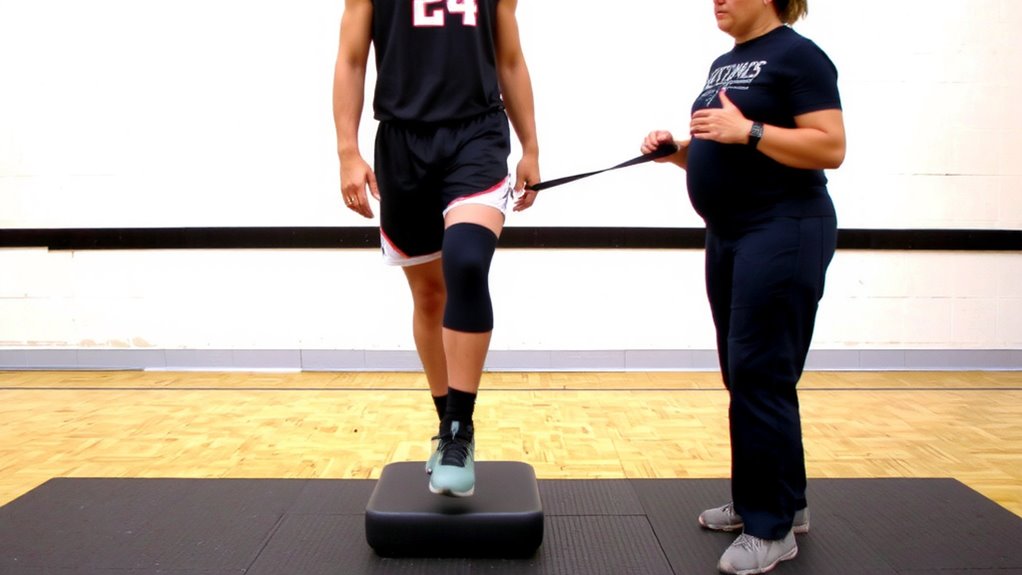
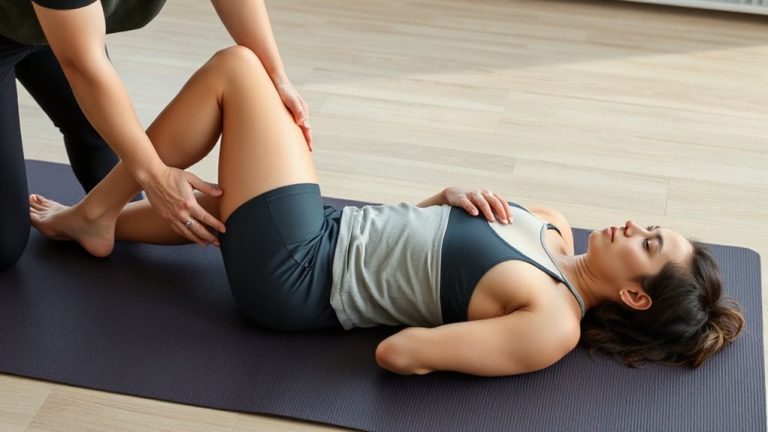
When can you actually begin rehab after surgery, or are you rushing back too soon? You shouldn’t start aggressive rehab until post op swelling decreases markedly and surgical site healing is visibly progressing. Pushing too early risks re-injury and delays your return. Most surgeons recommend waiting 10–14 days post-op before initiating gentle mobility work, assuming no complications. During this window, controlled elevation, compression garments, and cold therapy help manage inflammation. Signs of proper healing-closed incision, minimal redness, and reduced tenderness-are essential checkpoints. Rehab gear like adjustable braces and pneumatic compression devices support recovery, but only when used at the right time. Starting too soon undermines tissue repair; waiting too long leads to stiffness. You need balance: trust the process, follow clinical guidance, and prioritize healing over enthusiasm. Your return to function depends on smart, staged progression-not shortcuts.
Build Single-Leg Balance for Ankle Stability
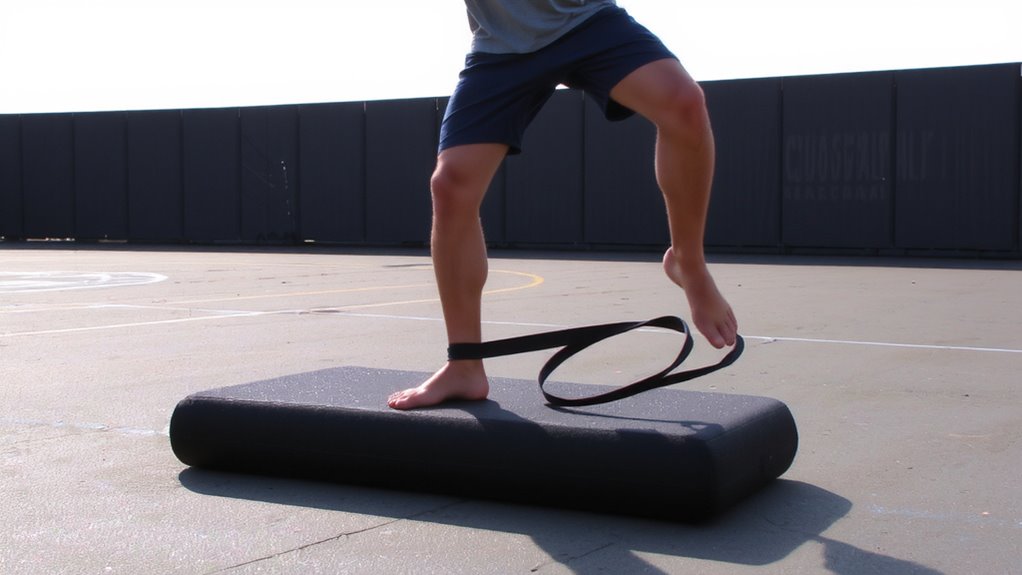
A solid foundation in single-leg balance isn’t just helpful-it’s essential for protecting your ankle as you return to basketball after surgery. You’ll rely on proprioception training to sharpen your body’s awareness of joint position, especially on unstable surfaces like foam pads or wobble boards. This type of exercise directly enhances neuromuscular control, helping your muscles react faster during sudden cuts or landings. Start with simple single-leg stands, then progress to eyes-closed variations or dynamic arm movements to increase challenge. Consistency matters-perform these drills daily to retrain motor patterns. Wear supportive, low-top athletic shoes early on to allow natural motion while still offering protection. As stability improves, reduce external support gradually to fully stress the ankle’s inherent control mechanisms. These exercises aren’t flashy, but they’re proven to reduce re-injury risk by reinforcing the communication between your nervous system and musculature.
Develop Explosive Strength for Court Movements
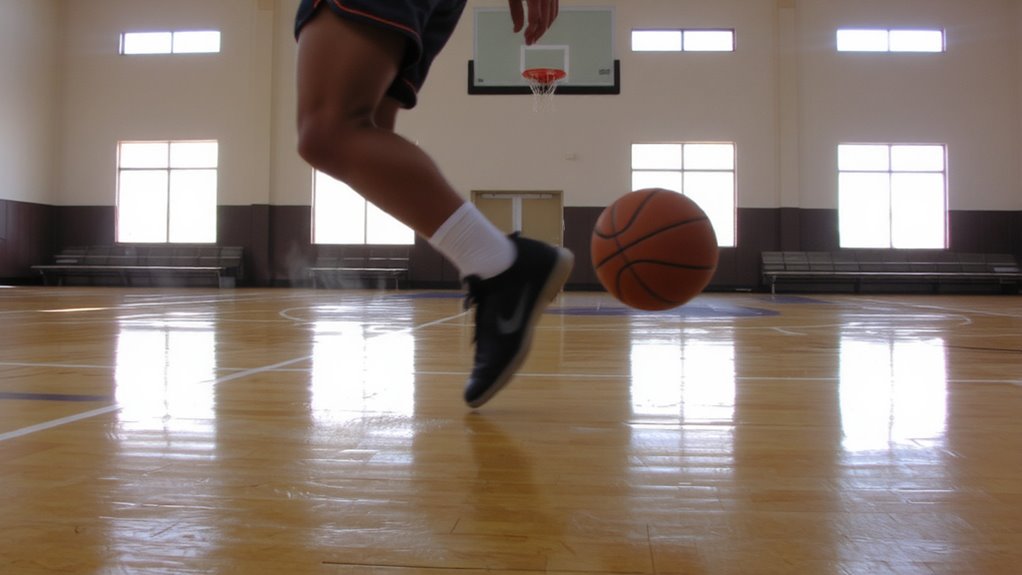
You’re ready to shift focus toward building explosive strength, a vital component for the sharp cuts, quick first steps, and vertical leaps that define elite court movement. Developing ankle power is essential-your reconstructed joint must absorb and release force rapidly without compromising stability. Begin with double-leg plyometrics like box jumps, emphasizing soft landings to reinforce proper jump mechanics. Progress to single-leg bounds and depth jumps as strength and control improve, ensuring each rep prioritizes form over height or distance. These drills train neuromuscular efficiency and enhance tendon stiffness, vital for propulsion. Use performance mats to reduce joint impact while maintaining surface consistency. Quality basketball shoes with responsive cushioning support ankle power transmission and protect healing tissues. Monitor fatigue closely-poor technique increases re-injury risk. When performed correctly, these exercises rebuild explosive capacity safely, laying the foundation for sport-specific speed and resilience on the hardwood.
Add Lateral Agility for Quick Cuts and Defense
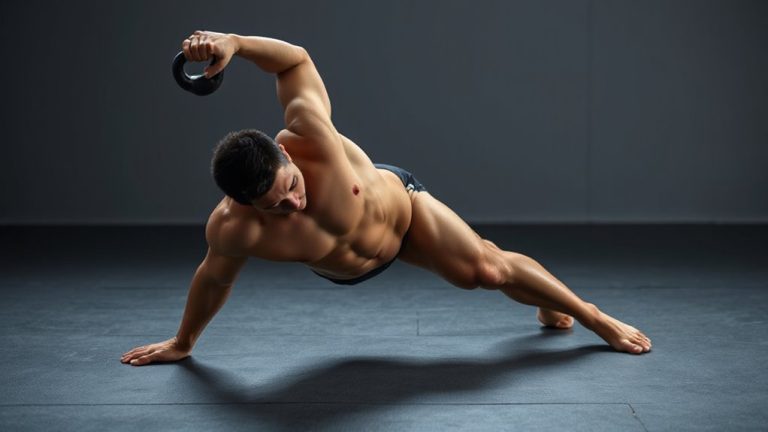
Though linear speed matters, your ability to change direction quickly on the court often makes the difference in both offensive cuts and defensive positioning, so developing lateral agility is a non-negotiable part of your return-to-play progression. You’ll start with controlled lateral bounds to build strength and stability through the ankle and hip complex. These reps train your neuromuscular system to fire efficiently during sharp directional shifts, mimicking game-like cutting patterns. Progress by increasing distance and reducing ground contact time, ensuring each jump is explosive yet precise. Equally important are defensive slides, which reinforce proper posture, footwork, and smooth shifts without crossing your feet. Do them along the baseline or free-throw lane, focusing on low hips and quick, short steps. Combining lateral bounds and defensive slides bridges rehab and performance, rebuilding your confidence and control. This phase prepares you for dynamic movements while minimizing re-injury risk, ensuring your agility matches your conditioning.
Begin Basketball Plyometrics Safely
Building on your improved lateral control and foot preparedness, you’re now ready to introduce plyometric exercises that mirror the explosive demands of basketball. Start with low-intensity jumps-like double-leg hops and mini tuck jumps-focusing on crisp landings and proper jump landing mechanics to protect your reconstructed ankle. Emphasize soft, balanced landings with knees aligned over toes, reducing strain while building neuromuscular confidence. Plyo timing is essential: allow full ground contact between reps to guarantee control before progressing to quicker, reactive efforts. Begin with two sets of 8–10 reps, gradually increasing volume as movement efficiency improves. Avoid rushing into high-impact drills; premature loading risks re-injury and delays recovery. Use supportive court shoes with adequate cushioning and ankle stability to enhance safety. Monitor soreness and joint feedback closely-your body’s response guides proper progression. Incorporating a sturdy Top Plyo Boxes ensures consistent box height and surface reliability during jump training.
Train Game-Speed Cuts and Reaction Drills
How often do your cuts on the court truly mimic the chaos of a live game? If they’re predictable or slow, your reaction time and cutting mechanics aren’t game-ready. Now’s the time to train cuts at full speed, simulating real defensive slides or fast-break shifts. Use visual cues-like a coach’s hand signal or light indicator-to trigger sudden directional changes. This sharpens reaction time while reinforcing proper cutting mechanics: low center of gravity, inside arm drive, and explosive push-off from the outside foot. Perform ladder drills with random callouts or cone drills requiring 90- to 135-degree cuts under pressure. Focus on clean, controlled movements that challenge your rebuilt ankle without compromising form. These drills bridge rehab and reality, ensuring your footwork isn’t just fast, but functional. Consistent execution builds neuromuscular confidence critical for staying sharp and injury-free when play intensifies.
Return to Full-Court Play With Confidence
You’ve sharpened your cuts and reactions under pressure, now it’s time to apply that precision across the full court. Returning to full-court play demands more than physical readiness-it requires mental preparation and trust in your reconstructed ankle. You’ll face rapid shifts, defensive slides, and explosive drives, so confidence isn’t optional. Incorporate structured scrimmages that simulate game intensity, gradually increasing duration and contact. Focus on injury prevention through consistent neuromuscular control, proper warm-ups, and supportive gear like compression sleeves or bracing if needed. These tools enhance proprioception and reduce re-injury risk without limiting mobility. Assess your movement quality daily-fatigue compromises form and judgment. Mental rehearsal-visualizing plays and defensive rotations-reinforces neural pathways and eases performance anxiety. Full integration isn’t just about physical capacity; it’s about aligning mindset, mechanics, and readiness. When your body and mind respond in sync, you’ll play freely, decisively, and with renewed control. Top-performing athletes often rely on Best Arm Compression Sleeves to support circulation and muscle stability during intense play.
On a final note
You’ve progressed from basic stability to dynamic court movements, and that matters-this structured rehab sharpens control, strength, and agility safely. Basketball-specific demands mean lateral cuts, jumps, and reactions must be trained deliberately. Wearing supportive, well-cushioned footwear enhances protection during drills. This progression isn’t just about healing; it’s about rebuilding resilience. You’re not just returning-you’re returning smarter, smoother, and with greater confidence in your mechanics and gear.