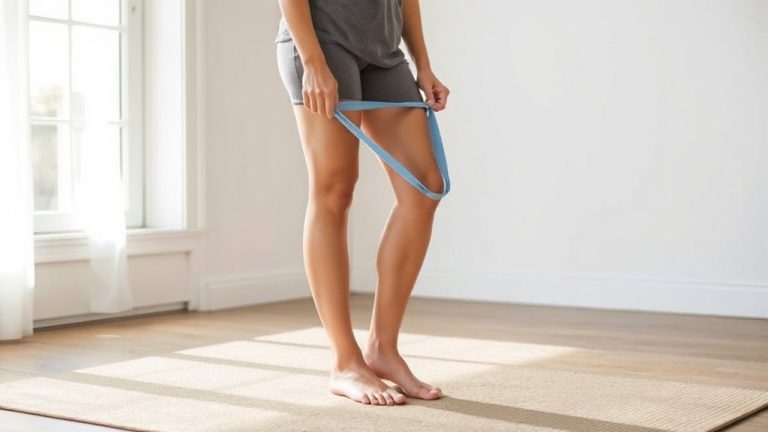
Cervical Mobility Drills With Gentle Resistance Band Flexion
You can improve neck mobility and correct forward head posture with gentle resistance band flexion. Anchoring a medium-thickness band at eye level provides ideal feedback, training deep cervical flexors more effectively than bodyweight alone. These drills enhance joint glide, reduce compressive forces, and re-educate muscle firing patterns. Performed consistently-morning or night-they support long-term spinal health and neuromuscular control. Small, precise movements beat force every time, and there’s more to mastering form than meets the eye.
Notable Insights
- Use a medium-thickness resistance band anchored at eye level for safe, effective cervical flexion drills.
- Perform slow chin tucks against band resistance to activate deep cervical flexors and improve neck alignment.
- Incorporate isometric holds at peak contraction to enhance motor control and neuromuscular re-education.
- Pair drills with morning or bedtime routines to reduce stiffness and release daily neck tension.
- Prioritize controlled, quality movements over force to build joint resilience and prevent forward head posture.
Why Neck Mobility Prevents Pain and Fixes Posture
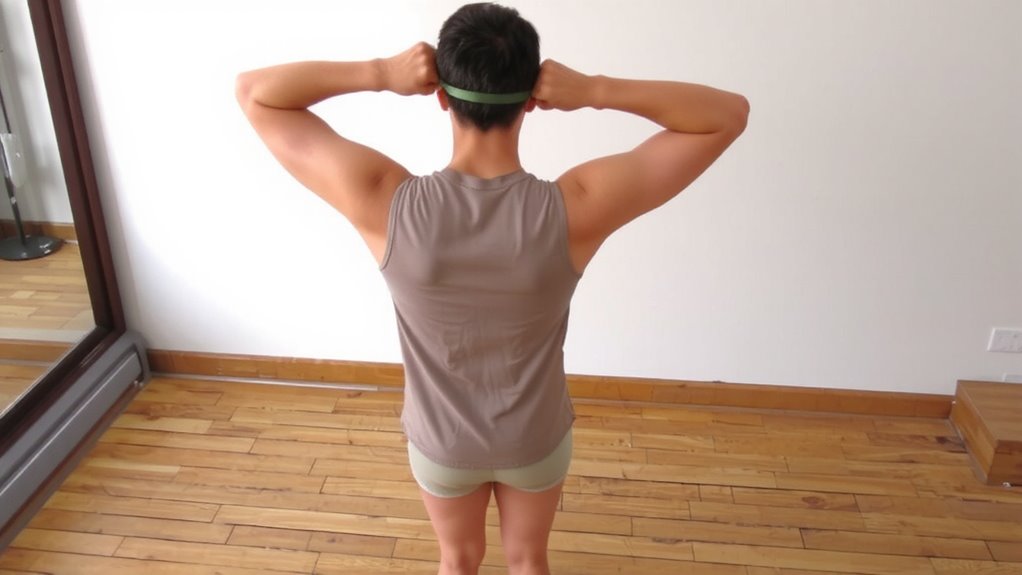
One in three adults experiences neck discomfort by age 30, and the culprit often isn’t injury-it’s poor mobility. You sit at a desk, tilt your head forward, and strain your neck daily, throwing off anatomical alignment. Without proper motion, muscles tighten and weaken unevenly, disrupting muscular balance. This imbalance pulls the cervical spine out of position, leading to chronic tension and postural decline. Think of your neck like a suspension system-when one side overworks, the structure falters. Restoring mobility isn’t just relief; it’s prevention. Controlled movement re-educates your musculature, aligning joints and reducing compressive forces. Devices like ergonomic pillows or posture braces offer temporary support, but they don’t replace active mobility work. True recovery comes from daily drills that enhance joint glide and neuromuscular coordination. You’re not just stretching-you’re recalibrating your body’s framework. Proper neck mobility sustains posture, lowers injury risk, and supports long-term spinal health without relying on passive gear. For side sleepers, selecting the right support, such as a pillow with proper cervical alignment, can complement mobility efforts by maintaining spinal neutrality during rest.
How Resistance Bands Boost Neck Flexion Safely

You’ve likely felt how stiff neck muscles pull your head forward, disrupting alignment and feeding into shoulder tension. Resistance bands offer a smart fix by applying gentle dynamic tension during flexion drills, prompting muscles to engage without strain. Unlike heavy weights or abrupt motions, the band’s elastic feedback encourages a controlled stretch, improving range of motion over time. You maintain full command of movement speed and resistance level, reducing risk of overextension. The consistent pull of the band activates deep cervical flexors more effectively than air exercises alone, promoting muscular balance. This method supports joint lubrication and neuromuscular re-education, both essential for long-term neck health. When used properly, bands enhance mobility without compromising safety. Their lightweight design and portability make them reliable tools in fitness recovery, especially for those retraining posture. Dynamic tension paired with mindful execution delivers measurable gains-making resistance bands a worthwhile, low-risk addition to daily cervical care.
Best Resistance Band Setup for Neck Exercises
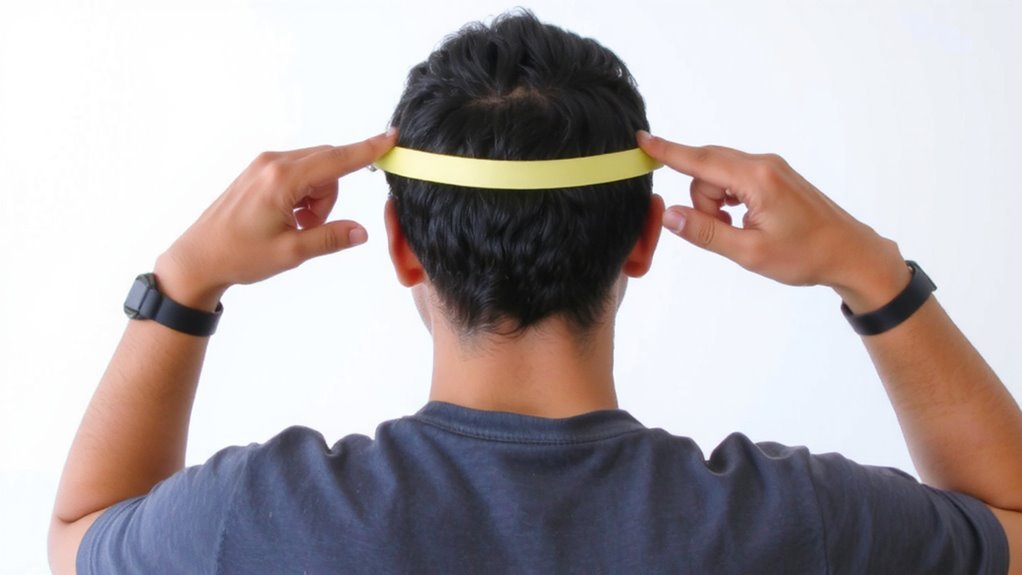
A properly anchored resistance band makes all the difference when performing neck exercises, turning a simple piece of elastic into a precise training tool. You’ll want to secure the band at a suitable anchor height-eye level or slightly above-to maintain proper neck alignment during flexion. If the anchor’s too low, you risk excessive forward head posture, which defeats the purpose of controlled mobility. Band thickness matters, too; a medium-thickness band (around ½ inch) offers enough resistance without overwhelming cervical muscles. Thicker bands can generate too much tension, increasing strain risk, while overly thin ones may not provide sufficient feedback. Look for durable, latex-free bands with secure door anchors or wall mounts. A stable setup guarantees smooth tension delivery, letting you focus on form and muscle engagement. Check the band regularly for wear, especially at connection points, to maintain safety.
3 Essential Cervical Mobility Drills With Bands
With your resistance band securely anchored at eye level and set to a moderate tension, you’re ready to begin the actual movements that build controlled cervical mobility. Start with slow, deliberate neck flexion-gently tucking your chin as the band resists, reinforcing proper anatomical alignment. This isn’t just movement; it’s neuromuscular activation in action, training your neck muscles to fire efficiently and maintain stability. Perform isometric holds at peak contraction to enhance motor control, then release with control. Next, integrate lateral glides-resisting side-to-side head tilts-to balance paraspinal and scalene engagement. These drills demand focus, not force, ensuring muscle coordination over momentum. Quality repetition builds resilience, especially when recovery focuses on precision. The band’s consistent resistance makes it superior to bodyweight-only drills, offering scalable challenge. Over time, these movements improve joint awareness and support long-term neck health, especially post-inactivity or strain.
Avoid These Neck Band Form Mistakes
While the benefits of resistance band training for cervical mobility are well supported, improper form can quickly turn a rehabilitative exercise into a source of strain. You’re risking neck strain if you allow jerky, uncontrolled motions or overextend during flexion-smooth, deliberate movement is key. Band slippage often happens when the anchor point isn’t secure or the band lacks proper tension, disrupting alignment and diminishing effectiveness. Guarantee the band stays fixed behind your head, not slipping forward over the forehead, which alters resistance direction and increases joint stress. Avoid cranking your chin forward; instead, maintain a slight double chin tuck to engage deep neck flexors correctly. Using a band that’s too thick or too thin compromises control, so choose moderate resistance. Consistent form prevents injury and guarantees targeted gains in mobility and stability, which is the whole point of incorporating fitness recovery tools like bands. For those seeking additional relief, integrating a neck decompression device can complement band exercises by gently alleviating spinal pressure.
Best Times to Do Cervical Mobility Drills
You’ve got the form down-smooth movements, proper band placement, and controlled tension-so now it’s time to contemplate when these cervical mobility drills will deliver the most benefit. Incorporating them into your morning routine jumpstarts spinal fluid circulation and primes neck musculature for daily movement, reducing stiffness before it sets in. The gentle resistance wakes up deep stabilizers without strain, making it ideal for pre-activity activation. Alternatively, using the bands during bedtime recovery helps dismantle tension accumulated over hours of sitting or screen use. The low-load input encourages parasympathetic engagement, promoting relaxation. While both times are effective, morning use slightly edges out for its proactive role in posture and joint prep. However, if stress or tightness plagues your evenings, bedtime recovery sessions offer measurable decompression. Consistency matters more than timing, but pairing drills with existing habits-like brushing your teeth or unwinding before sleep-boosts adherence and long-term cervical health.
On a final note
You’ve seen how cervical mobility drills with resistance bands support posture and reduce strain. When done correctly, these exercises enhance joint range and muscle control. The right band tension and form are key-too much resistance risks injury. Used wisely, bands are effective recovery tools, integrating well into warm-ups or cooldowns. They’re affordable, portable, and durable, but require consistent, mindful practice to deliver lasting benefits for neck health and overall fitness recovery.