Lever Arm Adjustment on Rowers to Accommodate Limited Shoulder External Rotation
Shorten your levers to reduce shoulder torque and decrease strain during the catch. Adjust your inboard to bring the handle closer, minimizing external rotation demands on tight or injured shoulders. Narrow your span and spread to improve alignment and avoid overreaching. These tweaks maintain power transfer through stronger leg drive and better timing. A well-balanced rig reduces joint stress while keeping stroke efficiency high-small changes often lead to surprisingly better performance and comfort. You’ll discover even more ways to optimize your setup with a few targeted adjustments.
Notable Insights
- Shorten the lever arm to reduce shoulder torque and minimize joint strain during the rowing stroke.
- Increase inboard length to bring the catch closer, decreasing demand for shoulder external rotation.
- Narrow the span or spread to limit excessive shoulder reach and improve catch position comfort.
- Adjust foot placement and seat height to maintain proper hip and torso alignment, preventing overextension.
- Maintain power output by focusing on leg drive and optimizing rig settings despite reduced stroke length.
Shorten Levers to Ease Shoulder Strain
Should nexus pain during rowing often traces back to excessive lever length amplifying strain on your joints with every stroke. You can greatly reduce this stress by shortening the effective lever, which decreases torque on your shoulder without sacrificing power transfer. Proper lever positioning guarantees your arms and back work efficiently, limiting overextension. If the handle travels too far or too high, it forces your shoulders into vulnerable positions-especially at the finish. Adjusting handle height helps maintain a neutral shoulder angle, minimizing imping transient risk. Many rowers overlook these variables, but fine-tuning them improves biomechanics and supports long-term fitness recovery. Rowing machines with adjustable rigging let you customize these settings, enhancing joint safety. Thoughtful use of lever arm adjustments doesn’t just prevent injury-it optimizes stroke quality. When lever length, handle height, and body mechanics align, your training becomes more sustainable.
Reduce External Rotation Demand With Inboard Adjustments
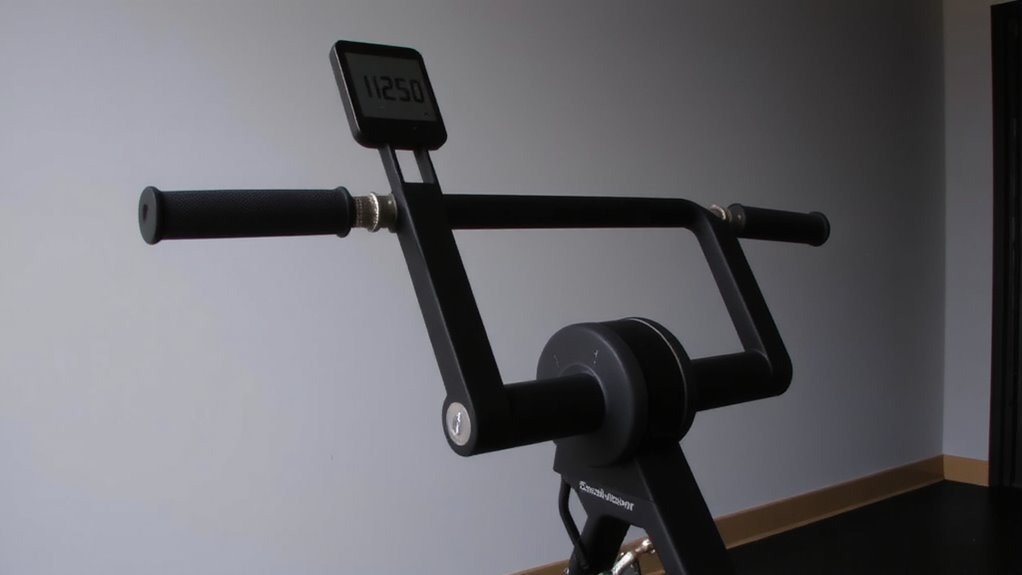
You’ve already seen how shortening the lever arm can ease strain on your shoulders by improving stroke mechanics and reducing joint load. Now, consider adjusting the inboard length to further reduce external rotation demand. By increasing the inboard, you bring the catch closer to your body, which promotes better joint alignment and decreases the need for excessive shoulder rotation. This subtle change lessens stress on tight or injured shoulders without sacrificing stroke efficiency. You’ll likely notice improved comfort, especially at the limit of the catch. Adjusting your grip width can amplify these benefits-wider grips may increase strain, while a slightly narrower setup supports natural arm movement and reduces rotational force. In practice, rowers with limited external rotation often report smoother entries and less impingement when combining shorter levers with longer inboards. These small tweaks in setup fine-tune your stroke while protecting shoulder health over time.
Adjust Span and Spread for Easier Catch Position
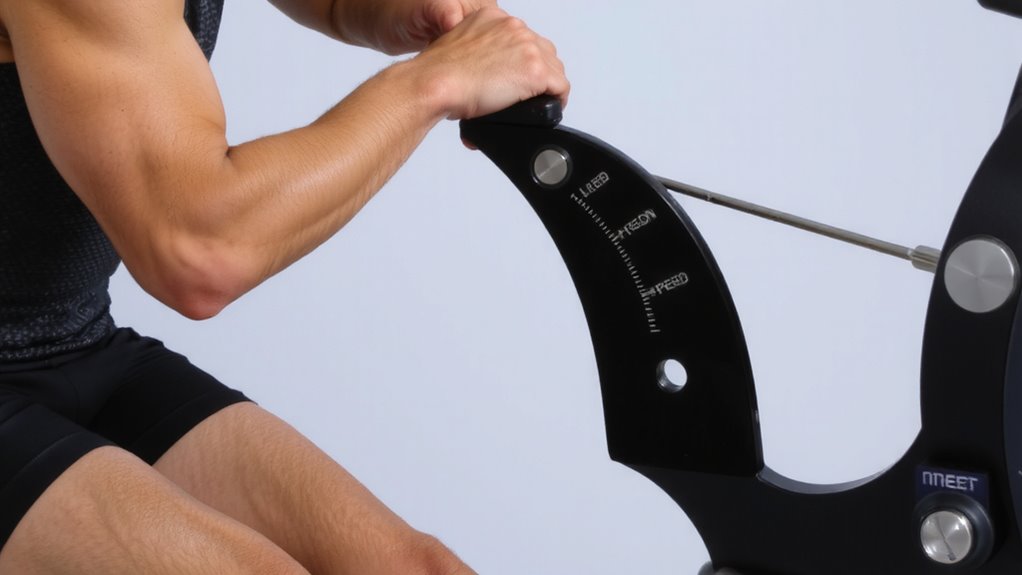
While stroke mechanics often focus on the finish, refining your catch position through span and spread adjustments can make a meaningful difference in reducing joint strain and improving overall efficiency. By narrowing the span-distance between pins-you shorten the lever arm, decreasing the shoulder’s reach at the catch. This is especially helpful if you’ve got limited external rotation. Adjusting the spread, or the angle of the oarlock, also shifts how your arms and torso align early in the stroke. Proper foot placement guarantees your legs initiate the drive without overreaching, while ideal seat height positions your hips to clear the thighs, promoting a smoother catch. Together, these tweaks support a biomechanically sound position, minimizing stress. You’re not sacrificing form-you’re adapting it. These adjustments, combined with attention to rigging details, enhance comfort and technique without compromising stroke integrity.
Maintain Power Despite Limited Shoulder Rotation
Power in the rowing stroke doesn’t hinge solely on how far you can reach-it’s about how effectively you apply force from where you are. Even with limited shoulder external rotation, you can maintain power by optimizing leverage and timing. A reduced stroke length doesn’t have to mean weaker drive; focus on strong leg engagement and a crisp catch to minimize energy loss. While reduced reach may increase resistance early in the stroke, proper rigging offsets inefficiencies. Consider these adjustments:
| Adjustment | Benefit |
|---|---|
| Shortened catch | Accommodates reduced stroke length |
| Wider span | Enhances leverage, counters power loss |
| Higher damper setting | Increases resistance for stronger finish |
Fine-tuned gear settings let you preserve output without overstraining joints.
Test Your Rig for Comfort and Efficiency
After fine-tuning your rig to accommodate movement limitations and maintain drive power, the next step is making sure those adjustments actually work in practice. Take a few steady strokes and assess both rig comfort and lever efficiency. You should feel stable through the drive phase, without strain in the shoulders or wrists. If your catch feels awkward or power delivery seems uneven, small tweaks to the oarlock height or span might help. A well-balanced lever system reduces joint stress and boosts stroke effectiveness, especially when shoulder external rotation is limited. Test different damper settings and rowing paces to see how your body responds across conditions. Pay attention to hand path and handle speed-they’ll tell you if your lever arm setup supports smooth mechanics. Good rig comfort doesn’t just prevent fatigue; it enhances performance by aligning your body with the machine’s biomechanics.
Fine-Tune for Pain-Free Rowing
Why does a seemingly minor adjustment make such a difference in how you feel after rowing? Because small tweaks directly impact joint stress and muscle engagement. If your seat height is too high or low, it alters shoulder and spine alignment, increasing strain during the drive phase. A proper seat height keeps your shoulders level with or slightly below the handles at the catch, reducing compression on tight joints. Meanwhile, uneven foot pressure can create imbalances, forcing your upper body to compensate. You’ll notice this in shoulder discomfort or lower back fatigue over time. By adjusting foot straps and monitor pressure distribution, you maintain symmetry and efficiency. These lever arm modifications aren’t just about performance-they’re essential for pain-free rowing. When calibrated correctly, they support joint health, enhance stroke consistency, and promote long-term training sustainability, especially with limited shoulder external rotation.
On a final note
You’ve adjusted your rig to suit limited shoulder external rotation, and it shows. Shortened levers and inboard changes reduce strain without sacrificing power transfer. Proper span and spread refine your catch mechanics, letting you row efficiently within your mobility limits. These tweaks aren’t compromises-they’re smart adaptations. When tested and fine-tuned, they support sustainable training, lowering injury risk. Good ergonomics enhance recovery, too, by minimizing repetitive stress. Your gear, properly dialed, becomes a tool for long-term fitness.