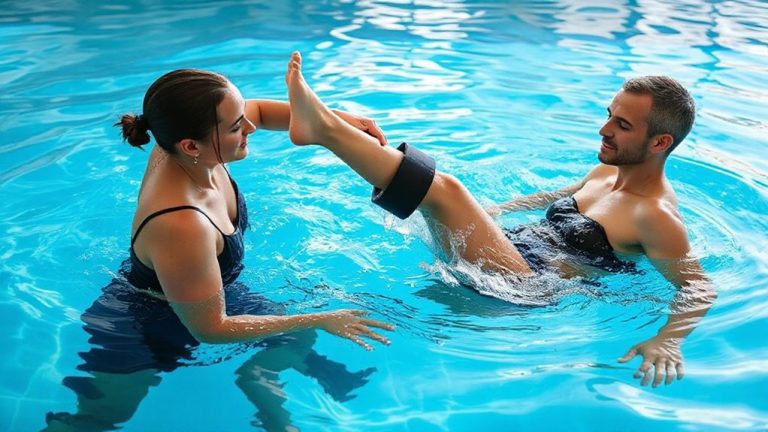
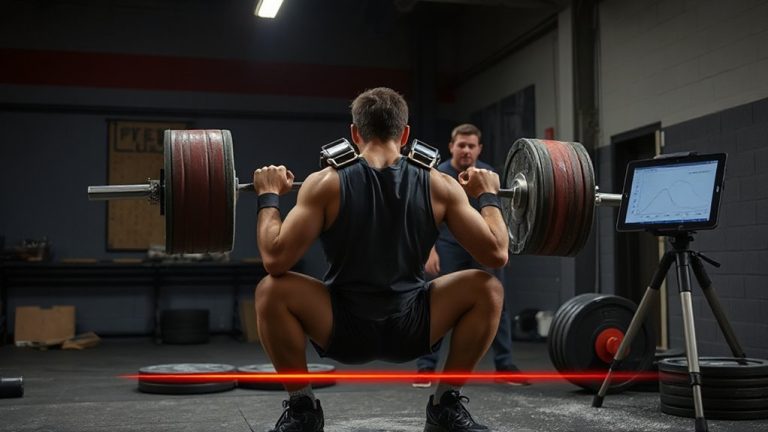
Sculling Drill Progressions to Increase Rotator Cuff Resilience Gradually
You start by mastering sculling with slightly bent elbows and hands just below the surface, building shoulder safety through proper form. Activate your rotator cuff before each pull to stabilize the joint and prevent strain. Add light resistance with a banded drill anchored at waist height, then progress to unilateral sculling for greater neuromuscular control. High-rep sets build endurance, and consistent weekly practice enhances resilience-there’s a smarter way to train deeper into joint health you’ll want to explore.
Notable Insights
- Begin with bilateral sculling using slight elbow bend to promote rotator cuff activation and joint stability.
- Integrate banded resistance with proper anchor height to enhance muscle engagement without compromising form.
- Progress to unilateral sculling to challenge rotator cuff stabilization under increased neuromuscular demand.
- Use controlled figure-eight patterns to improve proprioception and scapular-shoulder coordination during movement.
- Perform high-rep sets 2–3 times weekly with buoyant paddles to build endurance and joint-friendly resilience.
Master The Sculling Position For Shoulder Safety
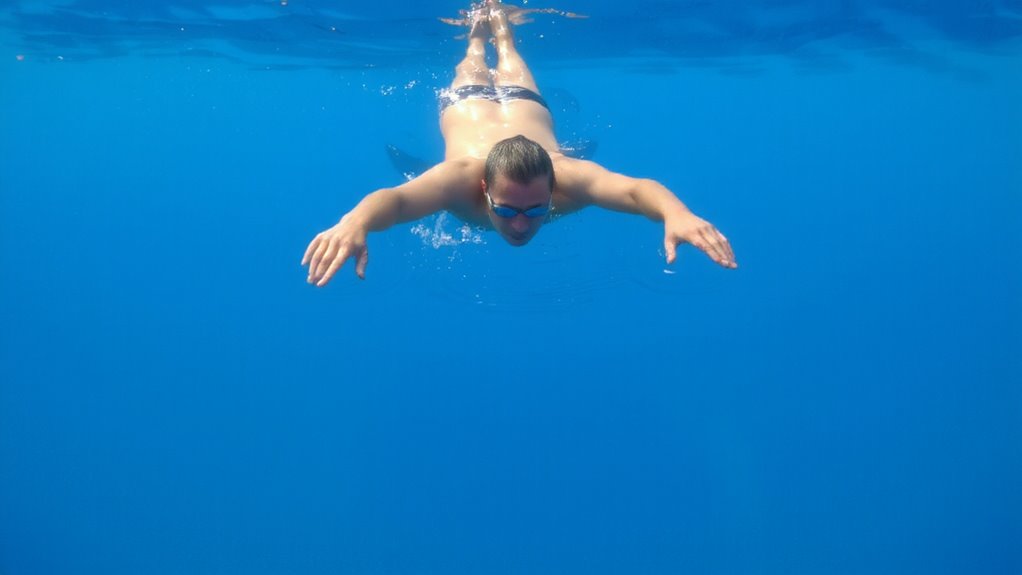
Shoulder health hinges on precision, and mastering the sculling position is non-negotiable if you want to protect your rotator cuff during swim training. Proper sculling posture keeps your elbows slightly bent and hands just below the surface, reducing strain while maximizing resistance. Your hand positioning must stay wide enough to generate lift but not so wide that you lose control-fingers should point down, palms press outward, and wrists remain firm but flexible. Poor alignment here increases shear forces on the joint, raising injury risk. Think of your forearms as paddles; subtle angle shifts change everything. Maintaining this form demands awareness and consistency, especially when fatigue sets in. Over time, correct sculling posture strengthens stabilizing muscles without overloading tendons. It’s not just about movement efficiency-it’s joint preservation. You’re building resilience with every lap, but only if technique stays sharp. Cut corners, and even the best recovery gear won’t save you.
Activate Your Rotator Cuff Before You Pull
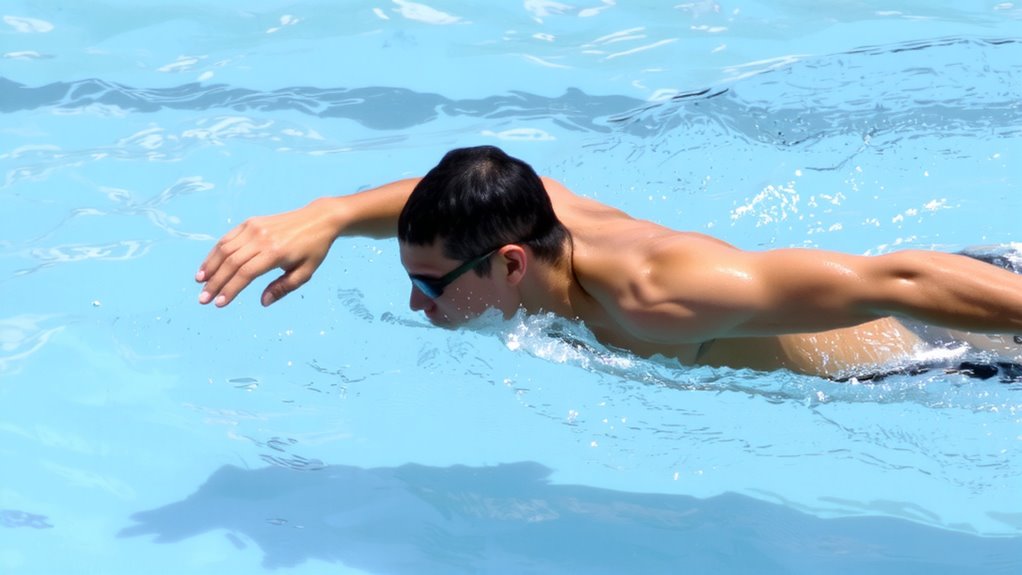
Why do some swimmers pull through the water with power and ease, while others grind through each stroke, feeling joint strain by the third lap? The difference often lies in rotator activation. You’ve got to engage those small stabilizing muscles before the pull begins. Without pre pull engagement, your shoulder relies too much on bigger, overcompensating muscles, increasing injury risk. Proper rotator cuff activation isn’t just about strength-it’s timing. Before you initiate any stroke, consciously fire the muscles around the humeral head to stabilize the joint. Doing so builds resilience over time and protects against repetitive stress. Think of it as setting a secure foundation before lifting a load. This subtle but critical step enhances propulsion while reducing wear on tendons. Pre pull engagement turns sculling from a floatation drill into a functional warm-up that prepares your shoulders for real work, making each session safer and more effective.
Add Resistance With Banded Sculling Drills
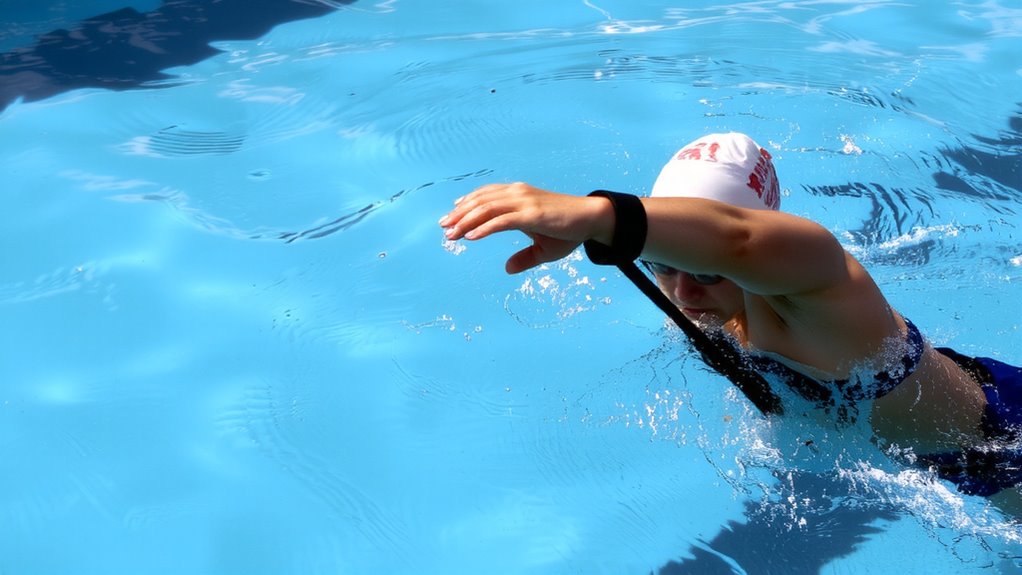
How do you turn a standard sculling drill into a strength-building engine for shoulder resilience? You add resistance with a fitness band. By incorporating band tension, you amplify the load on the rotator cuff muscles without compromising form. Anchor positioning is essential-secure the band at waist height, directly in front of you, to maintain consistent pull during the sculling motion. Too high or too low alters the vector and can strain joint mechanics. Use light to moderate band tension first; this guarantees muscle activation without sacrificing control. These bands are affordable, portable, and durable, making them smart additions to recovery-focused routines. Unlike heavy weights, they offer variable resistance that’s joint-friendly. Over time, this progressive load builds tendon and muscle endurance. Properly applied, banded sculling drills bridge mobility work and strength, making them efficient tools for long-term shoulder health.
Progress To Single-Arm Sculling With Stability
Once you’ve built consistent activation with banded sculling drills, the next step is to challenge your neuromuscular control through unilateral movement. Performing single-arm sculling requires greater unilateral control, demanding that your rotator cuff stabilizes the humeral head while the scapular muscles maintain proper positioning. You’ll notice how even small deviations in hand path create instability-this feedback helps refine motor precision. Ipsilateral coordination becomes essential, as your nervous system must integrate shoulder girdle movement with core engagement to prevent torso rotation. Use a light band anchored at waist height and focus on smooth, controlled figure-eight patterns. Keep your elbow slightly bent and movement isolated to the glenohumeral joint. This drill isn’t about power; it’s about accuracy and joint integrity. Proper technique guarantees targeted adaptation without compensatory strain, making it a smart progression in resilient shoulder development.
Build Endurance With High-Rep Sculling Work
A few hundred reps may sound excessive, but high-rep sculling work is essential for building the muscular endurance rotator cuff needs to withstand prolonged shoulder activity. You’re not just moving water-you’re training your shoulders to maintain proper shoulder alignment under constant water resistance. That sustained demand strengthens stabilizing muscles gradually, reducing injury risk during longer swims or overhead movements. Keeping your elbows slightly bent and hands active guarantees continuous tension, mimicking the endurance rotator cuff demands in real swimming conditions. The beauty of water resistance is its smooth, variable feedback-it adapts to your effort, helping you refine control without joint strain. Do these sets consistently, and you’ll notice improved shoulder stamina and joint confidence. It’s not about brute force; precision and form keep the work effective. High-rep sculling isn’t flashy, but its impact on shoulder resilience is both measurable and practical for long-term fitness recovery and joint health.
Program Sculling Drills Into Your Routine
Where should sculling drills fit in your training week-before strength work, after cardio, or on their own? Ideally, you’ll program them before upper-body strength sessions, when your rotator cuff is fresh but primed for activation. This timing boosts neuromuscular engagement without fatiguing stabilizers prematurely. Training frequency matters: aim for 2–3 sessions weekly to build resilience without overloading tissues. Too little, and adaptations stall; too much, and recovery lags. For equipment selection, start with buoyant sculling paddles-they amplify water resistance and enhance proprioceptive feedback, improving motor control. Some models, like foam-handled paddles, reduce grip strain while maintaining resistance integrity. Avoid overly rigid gear that limits natural wrist articulation. These tools aren’t just accessories-they’re essential for progressive overload in joint-safe ranges. Integrated consistently, sculling drills support long-term shoulder health, especially when aligned with recovery-focused protocols like post-session mobility work.
On a final note
You’ve built rotator cuff resilience the smart way-starting with proper sculling form, then layering in activation, resistance, and stability work. These progressions aren’t just preventive; they’re performance-enhancing. Paired with well-maintained gear like sturdy resistance bands and a reliable training surface, the drills integrate seamlessly into recovery or warm-up routines. It’s practical, sustainable strengthening-no gimmicks, just function.