Functional Strength Progression for Trail Runners Navigating Uneven Terrain
You build real trail strength by training on unstable, uneven surfaces that mimic rugged terrain. Ditch flat gym machines-try single-leg hops on rocks or rotational lunges to boost balance, joint stability, and explosive power. These movements sharpen proprioception and reduce ground contact time. Eccentric step-downs and low-drop shoes condition your body’s natural shock absorption. For resilient, agile running over roots and ridges, your routine must challenge control as much as strength-what comes next reveals how to layer these skills progressively.
Notable Insights
- Develop explosive power with plyometric jumps on uneven surfaces to mimic trail-specific push-off demands.
- Enhance dynamic stability using rotational drills like weighted lunges with torso rotations.
- Improve joint awareness and balance through single-leg exercises on unstable, natural terrain.
- Build adaptive movement skills with lateral agility and quick foot turnover drills.
- Strengthen connective tissues via eccentric loading and low-drop footwear to support joint resilience.
Ditch the Gym: Train Trail-Ready Strength
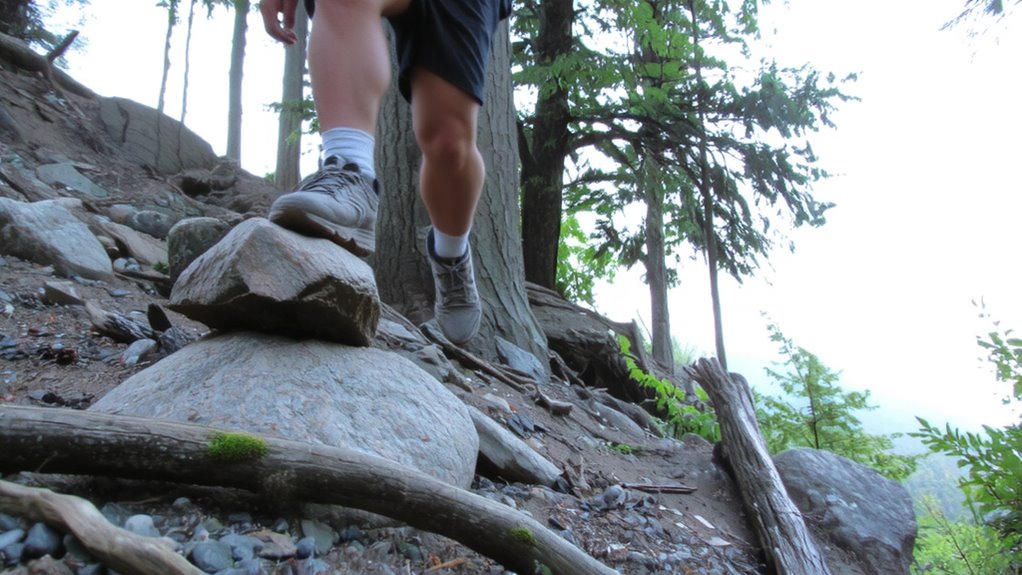
While hitting the weights in a traditional gym might seem like the go-to for building strength, trail runners often find those gains don’t translate well to rugged terrain. You need movements that mimic real trail demands-think plyometric jumps to boost explosive power over roots and rocks. These jumps train fast-twitch muscles and improve coordination, especially when done on varied surfaces. Rotational stability is just as essential; trails twist, turn, and dip, forcing constant adjustments. Traditional lifts rarely prepare you for that. Instead, try functional drills like weighted lunges with torso rotations or single-leg hops with directional changes. You’ll build joint resilience and neuromuscular control. Minimalist gear like resistance bands or portable suspension trainers supports this training anywhere. They’re durable, easy to maintain, and effective. Skip the rigid machines-your trail-ready strength comes from dynamic, terrain-specific work that bridges fitness and function.
Stand Strong on Wobbly Ground First
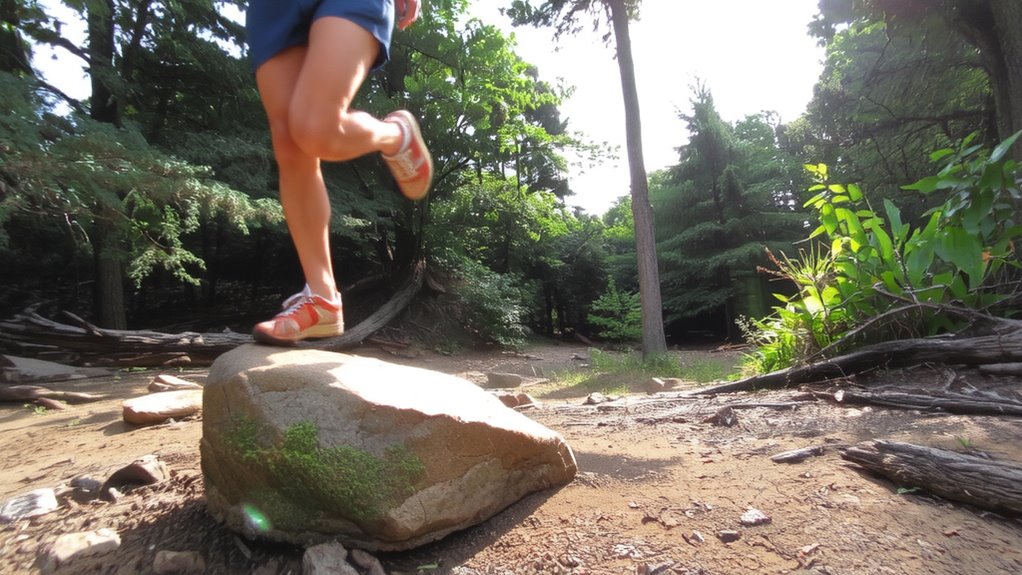
You’ve trained explosive power and rotational control, but none of it matters if you can’t hold your base when the ground shifts beneath you. That’s where balance drills and stability training come in-they’re the foundation of trail-specific strength. Standing on uneven, unstable surfaces trains your proprioception and forces smaller stabilizing muscles to engage. Simple moves like single-leg stands on a rock or foam pad improve joint awareness and correct imbalances before they lead to injury. Stability training shouldn’t be sporadic; consistency builds neuromuscular efficiency, helping your body react instinctively mid-stride. While fitness gear like wobble boards or balance cushions can add variety, they’re not essential-nature provides infinite irregular surfaces. The real test isn’t equipment-dependent: it’s whether you can maintain control when the trail doesn’t. Prioritize balance drills early; your confidence on technical terrain depends on it.
Move Like the Trail Demands
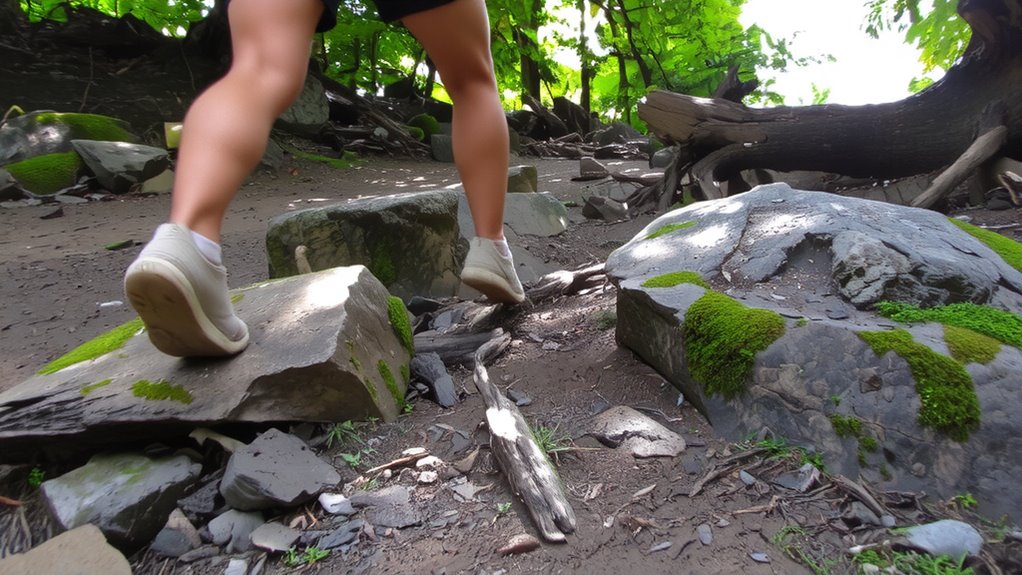
Because the trail constantly changes beneath your feet, your movement must be just as dynamic-fluid, adaptive, and efficient. You need dynamic balance to shift seamlessly between motions, and terrain adaptability to handle rocks, roots, and sloped ground without losing stride. Your body isn’t just moving forward-it’s reacting, adjusting, and stabilizing with every step.
| Movement Quality | Trail Benefit |
|---|---|
| Lateral agility | Navigates side slopes with less strain |
| Quick foot turnover | Clears obstacles efficiently |
| Controlled deceleration | Prevents overstriding on descents |
| Elastic recoil | Conserves energy on variable terrain |
These qualities aren’t just helpful-they’re essential. When you train with intention, your neuromuscular system learns to fire faster, smoother, and with greater precision. That means fewer missteps and more confident, fluid runs. Build movement literacy now, and the trail becomes less of a challenge and more of a conversation.
Shield Joints for Rough Trails
When you’re pounding uneven terrain with constant elevation shifts, your joints bear the brunt of every landing, twist, and correction-making joint protection not just beneficial, but non-negotiable for long-term trail running success. You need gear and strength strategies that enhance joint stability and boost impact absorption. Compression sleeves and stability-focused shoes help, but they’re only effective if paired with strong supporting musculature. Eccentric loading exercises, like slow step-downs, train connective tissues to handle variable forces. Footwear with moderate cushioning and a low drop improves proprioception without sacrificing shock dispersion. Don’t rely solely on external supports-your body’s natural shock dampeners, like the arches and knees, respond better when conditioned. Real joint shielding comes from integrating strength work that reinforces alignment under load. Consistent, targeted training does more than any brace ever could. For runners seeking additional support during high-load phases, consider knee sleeves designed for dynamic stability, such as those reviewed in the best knee sleeves for powerlifting.
Power Through With Explosive Single-Leg Moves
What if your next trail race demanded more than endurance-what if it required raw, responsive power on every ascent and uneven footfall? That’s where explosive single-leg moves come in. Incorporating plyometric jumps and unilateral bounds trains your muscles to generate force quickly, mimicking the unpredictable push-off demands of rocky climbs and sudden drops. These exercises build neuromuscular efficiency, sharpening coordination and reducing ground contact time. Think of them as simulated bursts-each rep conditioning your body to stabilize and explode with control. Unilateral bounds, in particular, correct imbalances by isolating each leg, while plyometric jumps enhance tendon elasticity and rate of force development. Used consistently, they boost agility and reduce fatigue on technical descents. Pair them with recovery-focused gear-compression sleeves, foam rollers-to manage inflammation and maintain tissue quality. Power isn’t just strength; it’s timing, resilience, and balance-all honed through purposeful, single-leg explosiveness.
On a final note
You’ve built stability, mimicked trail demands, and fortified joints-now explosive single-leg strength seals your resilience. Recovery isn’t passive; it’s supported by compression gear that enhances circulation and reduces soreness. Quality foam rollers and targeted mobility tools maintain muscle function. Investing in performance-driven recovery and durable, ergonomic gear isn’t optional-it’s essential for consistent trail progression and long-term joint health when terrain turns unforgiving.