Building a Personalized Menu of Passive Recovery Tools Including Float Tanks, Massage Chairs, and Guided Body Scans
You can build a personalized recovery menu by combining float tanks, massage chairs, and guided body scans. Float tanks reduce sensory input, helping your nervous system shift into deep rest. A well-chosen massage chair eases muscle tension with targeted pressure and heat. Body scans boost body awareness and calm mental chatter. Use them at key times-morning, midday, or night-for best results. Pairing these tools creates a balanced, sustainable system. You’ll soon discover how each one fits your body’s unique needs.
Notable Insights
- Choose recovery tools based on your schedule, stress levels, and physical needs for optimal integration.
- Use float tanks for deep sensory reset, especially after high-stress periods or intense workouts.
- Select a massage chair with L-track rollers and heat therapy to target key muscle groups affordably.
- Practice guided body scans nightly to enhance body awareness and support nervous system regulation.
- Build consistency by pairing tools with daily routines, like morning scans and evening float sessions.
Use Float Tanks for Sensory Reset
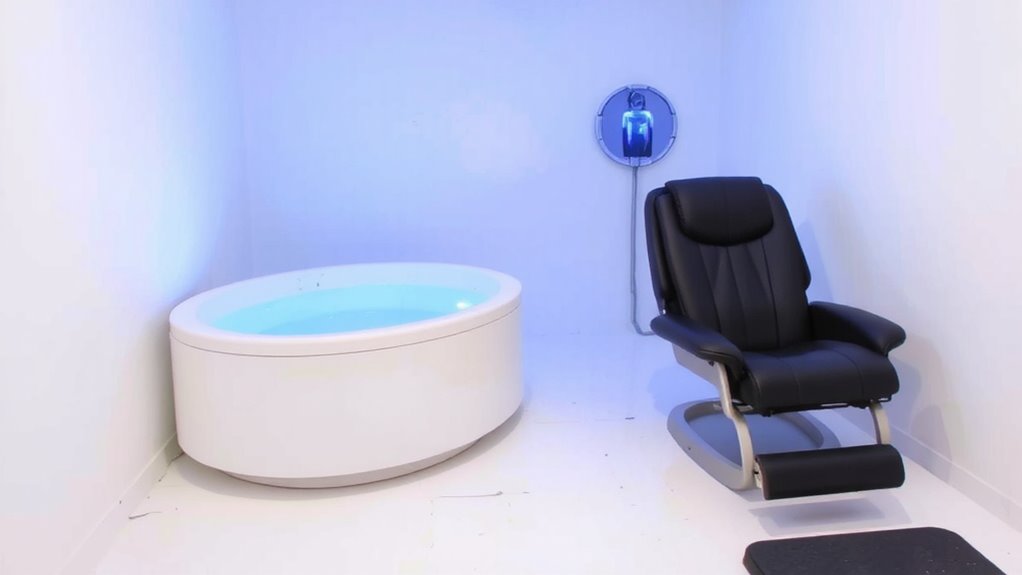
Why not give your nervous system a true break? Float tanks offer deep relaxation by removing external stimuli-no light, no sound, no gravity’s pull. Inside, you’re suspended in Epsom-salt-saturated water, skin temperature regulated to match your body. This sensory reset dulls the nervous system’s activity, shifting it from fight-or-flight to rest-and-digest. Users consistently report heightened mental clarity afterward, likely due to reduced cortisol and theta wave dominance in the brain. The environment isn’t just novel-it’s engineered for neurological recalibration. Sessions typically last 60 to 90 minutes, and though initial discomfort may occur, most adapt quickly. Maintenance matters: proper filtration, water chemistry balance, and hygiene protocols guarantee safety. While not a daily necessity, float tanks are a high-efficacy recovery modality for stress reduction and cognitive reset-ideal when integrated intentionally into a recovery routine.
Pick a Massage Chair for Pain and Budget
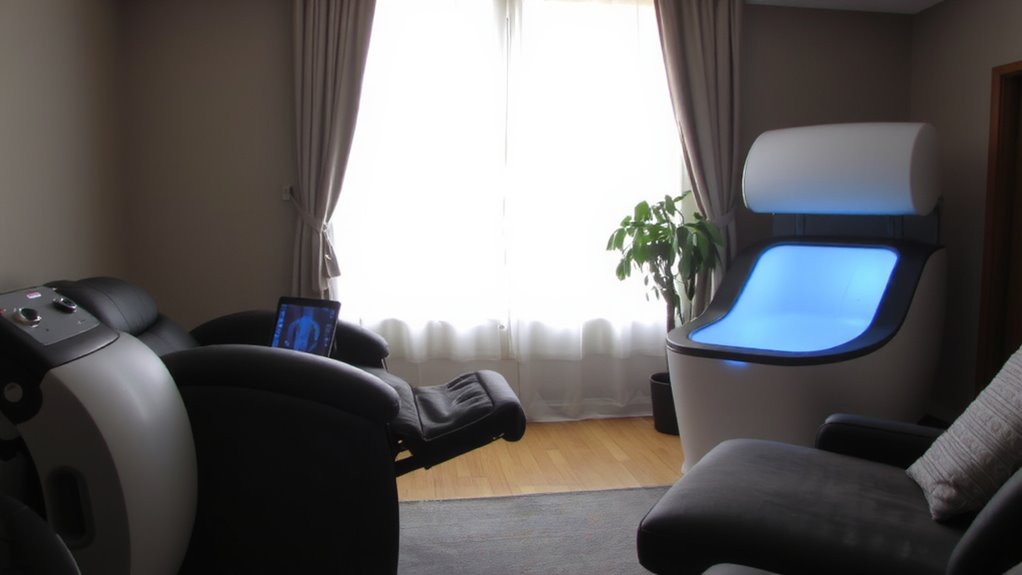
Where do you turn when chronic muscle tension clashes with a tight budget? You consider a massage chair that balances cost, comfort, and therapeutic support. Look for models with solid ergonomic design-they contour to your spine and support natural posture, reducing strain during extended sessions. Built-in heat therapy helps loosen stiff muscles, especially in the lower back and shoulders, enhancing circulation where you need it most. Don’t assume price equals performance; mid-range chairs often deliver targeted relief without luxury markups. Check for adjustable intensity, customizable programs, and space-saving features if room is limited. While high-end models offer full-body rollers, many affordable options still provide effective lumbar relief and shoulder kneading. Prioritize durability and warranty coverage-long-term value matters more than flashy extras. A well-chosen chair becomes a cost-effective recovery ally, especially when used daily to manage pain and stiffness. Top models feature L-track massage technology for extended spinal coverage from neck to glutes.
Try Body Scans to Calm Your Nervous System
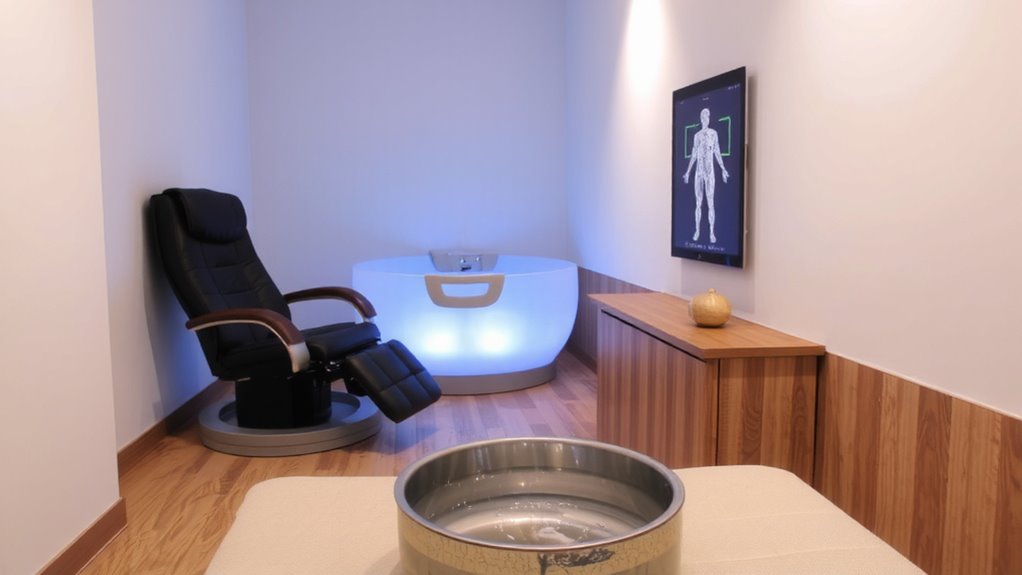
How often does your body hold onto stress without you even realizing it? Guided body scans help you reclaim control by sharpening body awareness and promoting deep relaxation. These sessions, often delivered via audio or apps, guide you to mentally check in with each part of your body, releasing tension you might not have noticed. They’re especially useful if you’re dealing with chronic stress or recovering from intense physical activity. Regular use can lead to better sleep, improved mental clarity, and a calmer nervous system. Unlike more equipment-heavy recovery tools, body scans require only headphones and a quiet space, making them highly accessible. While they don’t provide physical manipulation like a massage chair, their focus on mindfulness complements other recovery methods. For long-term wellness, integrating body scans builds a foundation of self-awareness that enhances both mental and physical recovery outcomes.
Match Tools to Your Daily Routine
While your fitness goals and daily schedule shape your recovery needs, not every tool fits seamlessly into your routine, so choosing wisely matters. For morning integration, lighter recovery options like short guided body scans or a 10-minute massage chair session can wake your nervous system without strain. These tools prep your body for physical demands, especially if you train early. In contrast, evening alignment calls for deeper, restorative methods-float tanks or extended body scans help shift your physiology into parasympathetic dominance, supporting sleep onset and tissue repair. Consider how each device fits within your existing habits: a massage chair near your workspace allows for midday resets, while a quiet corner for body scans supports nightly wind-downs. Durability, space, and ease of use matter-consistent access beats occasional peak performance. Match each tool’s strengths to your natural rhythm, and recovery becomes less of a chore and more of a sustained practice. A high-quality full-body massage chair can enhance recovery by targeting multiple muscle groups simultaneously.
Build Your Passive Recovery Plan in 3 Steps
Once you’ve identified the tools that align with your daily rhythm, building an effective passive recovery plan comes down to structure, consistency, and smart prioritization. Start by scheduling sessions around peak stress periods-morning or post-workout-when your nervous system responds best to meditation techniques and breathwork practices. Pair float tanks with guided body scans for deep sensory reset, or use a massage chair after intense training to support muscle recovery. Consistency matters more than duration; even 10–15 minutes daily yields measurable improvements in resilience and recovery quality.
| Tool | Best Used When | Complements |
|---|---|---|
| Float Tank | Post-training | Meditation techniques |
| Massage Chair | Evening unwind | Breathwork practices |
| Guided Body Scans | Morning or pre-sleep | Mindfulness routines |
On a final note
You’ll find these tools work best when matched to your needs-float tanks ease sensory overload, massage chairs help manage chronic tension, and guided body scans regulate your nervous system. Each offers measurable recovery benefits, though effectiveness depends on consistent use and personal response. Together, they form a practical, low-effort system. With smart selection and integration into your routine, you’re not just recovering-you’re optimizing long-term resilience and performance through deliberate, passive recovery habits.