Using Isometric Holds in Lunge Positions to Improve Knee Alignment
You’re building knee stability with isometric lunge holds by strengthening hips, glutes, and quads under controlled tension. These static positions reduce joint stress while improving alignment and neuromuscular control. Avoid leaning forward or letting your knee cave in-stay upright, brace your core, and track the knee over your second toe. Using a nonslip mat or knee sleeve boosts proprioception and joint safety. There’s more to optimizing form and integration that can elevate your results.
Notable Insights
- Isometric lunge holds enhance knee alignment by promoting controlled strength with reduced joint stress.
- Maintaining proper knee tracking during holds ensures even force distribution and minimizes injury risk.
- Static activation strengthens quads, glutes, and hip stabilizers, supporting optimal knee positioning.
- Correct form includes an upright torso, braced core, and front knee aligned with the second toe.
- Integrating 20–30 second lunge holds 2–3 times weekly improves neuromuscular control and knee stability.
3 Isometric Lunge Variations for Knee Stability
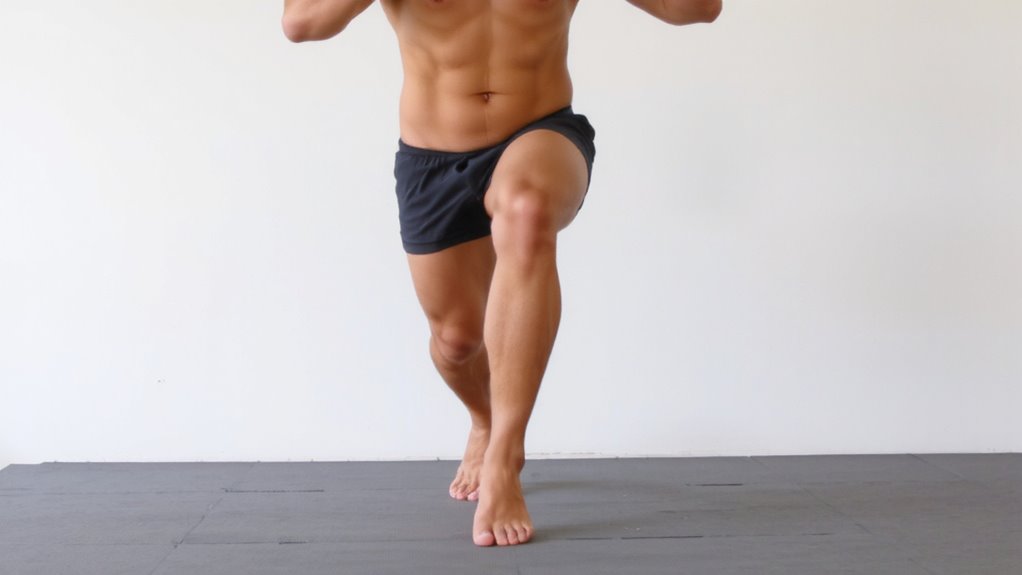
While most people think of dynamic movement when training for knee stability, isometric lunge variations actually offer a more controlled way to build strength without putting excessive stress on the joint. You can fine-tune lunge depth to match your mobility, allowing ideal alignment and reducing shear forces on the knee. Holding the position increases time under tension, boosting muscle activation in the quadriceps, hamstrings, and stabilizers-key for joint control. Unlike dynamic reps, these static holds let you focus on form without momentum masking weaknesses. You’ll notice better feedback on imbalances between legs, making corrections easier. When paired with supportive fitness gear like knee sleeves or alignment-focused mats, the exercise becomes even more effective. These tools enhance proprioception and joint tracking, improving performance over time. Isometric lunges aren’t flashy, but their precision in targeting stability makes them a smart addition to any knee-focused regimen. For powerlifters, combining isometric holds with best knee sleeves for powerlifting can further protect and stabilize the joint during intense training.
How These Holds Strengthen Hips, Glutes, and Quads
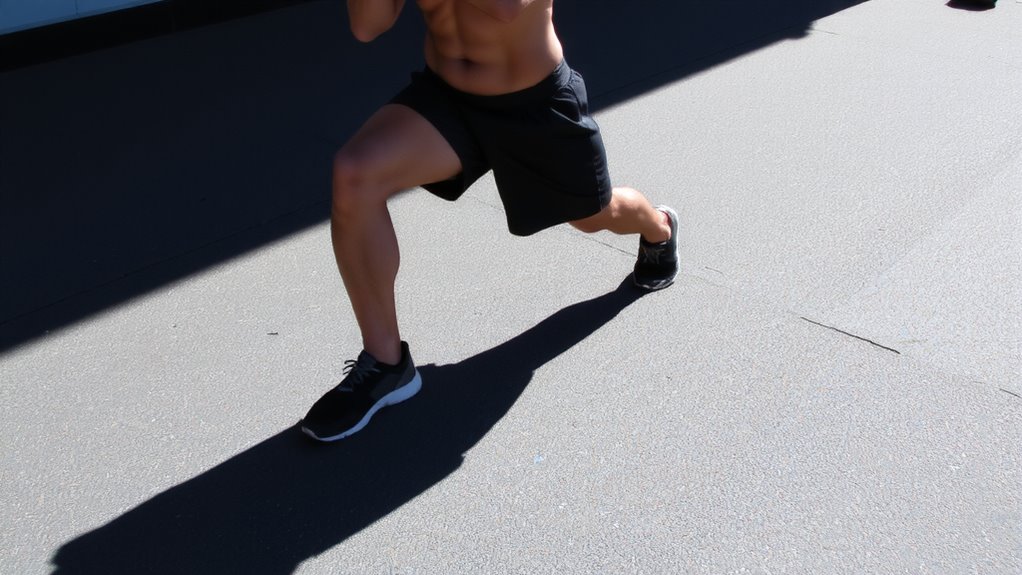
Because isometric holds require sustained muscle engagement without movement, they’re highly effective at targeting the hips, glutes, and quads in a way that builds both strength and neuromuscular control. You’re not just holding a position-you’re forcing these muscles to activate continuously, which boosts muscle endurance over time. The static lunge stance demands prolonged contraction, especially in the gluteus medius and quadriceps, directly supporting hip stability. This stability is essential for proper knee alignment during dynamic movements. Over time, you’ll notice improved joint control and reduced compensatory patterns. Since there’s no momentum, the focus stays on form and activation, making these holds efficient for building foundational strength. Equipment like foam pads or stability discs can enhance the challenge, amplifying proprioceptive feedback. While simple in design, the effectiveness lies in consistency and load management. These factors make isometric holds a practical tool for long-term lower-body development.
Common Form Mistakes to Avoid in Isometric Lunges
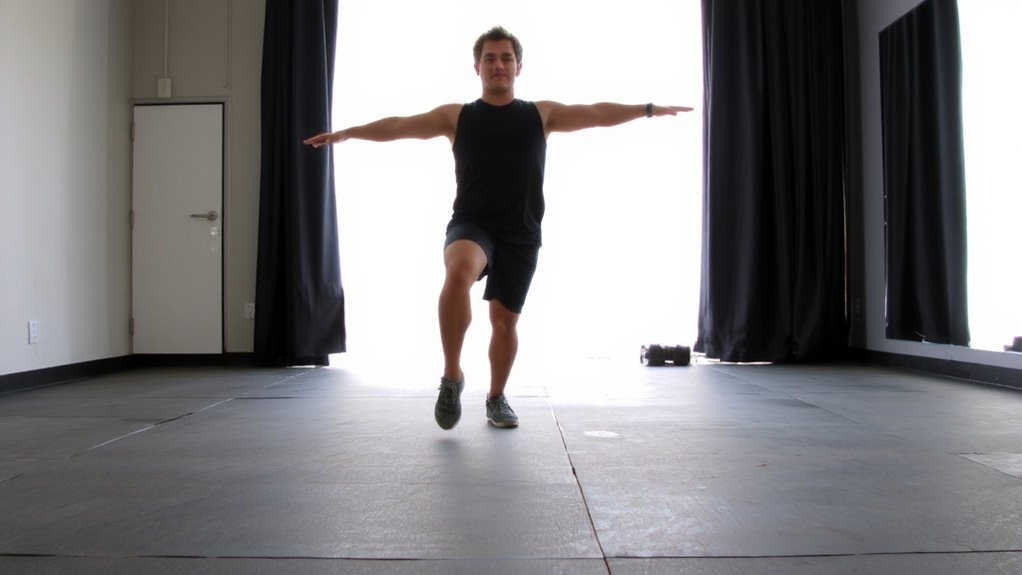
How often do you find yourself leaning too far forward during isometric lunges, turning what should be a controlled stability drill into a test of balance and lower back endurance? That forward lean usually leads to back arching, which shifts stress from your glutes and quads to your spine, increasing injury risk. You’re also likely to see knee collapse-your front knee caving inward-especially when fatigued. This misalignment strains the joint and defeats the purpose of the hold. Keep your torso upright, core braced, and weight centered over your midfoot. Focus on driving your front knee outward, aligning it with your second toe. Avoid locking out the back leg or letting your hips sag. These subtle corrections maintain tension in the right muscles and reinforce ideal mechanics. Consistent attention to form guarantees you build strength safely and effectively.
Why Knee Alignment Matters During Lunge Holds
When you hold a lunge position, the way your knee tracks over your foot directly influences joint safety and muscle activation. Proper joint tracking guarantees forces are distributed evenly across the knee, reducing strain on ligaments and tendons. If your knee caves inward or extends past your toes, you compromise knee protection and increase injury risk over time. Correct alignment engages the glutes, quads, and hamstrings efficiently, making each hold more effective. Isometric lunge holds build strength endurance while reinforcing neuromuscular patterns that support healthy movement. You’re not just building muscle-you’re training your body to move safely under load. Without attention to alignment, even well-intentioned exercises can lead to overuse injuries. Consistent joint tracking during holds translates to better performance in dynamic activities, enhancing overall knee protection. This focus on form is non-negotiable for long-term joint health and functional strength.
How to Add Isometric Lunges to Your Weekly Routine
While building strength and stability through isometric lunges, integrating them effectively into your weekly routine enhances both joint resilience and movement efficiency. Start with two to three sessions per week, holding each lunge for 20–30 seconds per leg. Focus on breathing control-inhale deeply through the nose, exhale slowly to maintain tension and form. This practice boosts time efficiency, as just 5–10 minutes can supplement larger workouts or serve as active recovery. Pair holds with mobility drills or post-run cooldowns to reinforce knee alignment without taxing your system. Use nonslip mats for joint safety and wear supportive footwear to maintain proper positioning. These minimal-equipment demands make isometric lunges a practical addition, especially with fitness gear designed for stability. Over time, you’ll notice improved muscle endurance and sharper movement patterns, proving their value in both rehab and performance contexts.
On a final note
You’ll build better knee alignment and joint stability by incorporating isometric lunge holds into your routine. These exercises strengthen key muscles like the glutes, quads, and hip stabilizers, promoting balanced movement patterns. When performed correctly, they reduce injury risk and improve functional strength. Pair them with recovery-focused gear-like quality foam rollers and supportive footwear-to enhance performance and maintain long-term joint health. Consistency and proper form deliver the best results.