How to Use Eccentric Calf Raises on a Step for Chronic Ankle Instability
Stand on a step with heels hanging off, rise on both toes, then slowly lower your injured heel below the step’s edge using only one leg. Control the descent over 3–4 seconds to boost tendon strength and ankle stability. Do 3 sets of 15 every other day, barefoot for better feedback. Avoid rushing or shortening the motion-proper form rebuilds resilience. Progress by adding weight or slowing the drop, and you’ll soon discover even more effective ways to optimize recovery.
Notable Insights
- Perform eccentric calf raises on a step to increase range of motion and target tendon remodeling for chronic ankle instability.
- Rise using both legs, then slowly lower the injured heel below the step level over 3–4 seconds to maximize eccentric loading.
- Train every other day with 3 sets of 15 reps to allow recovery while promoting consistent tendon adaptation.
- Maintain neutral ankle alignment and use a handrail for balance without pushing off to ensure proper form.
- Progress by adding weight, slowing the descent, or using unstable surfaces to gradually improve strength and stability.
Why Eccentric Calf Raises Stabilize Weak Ankles
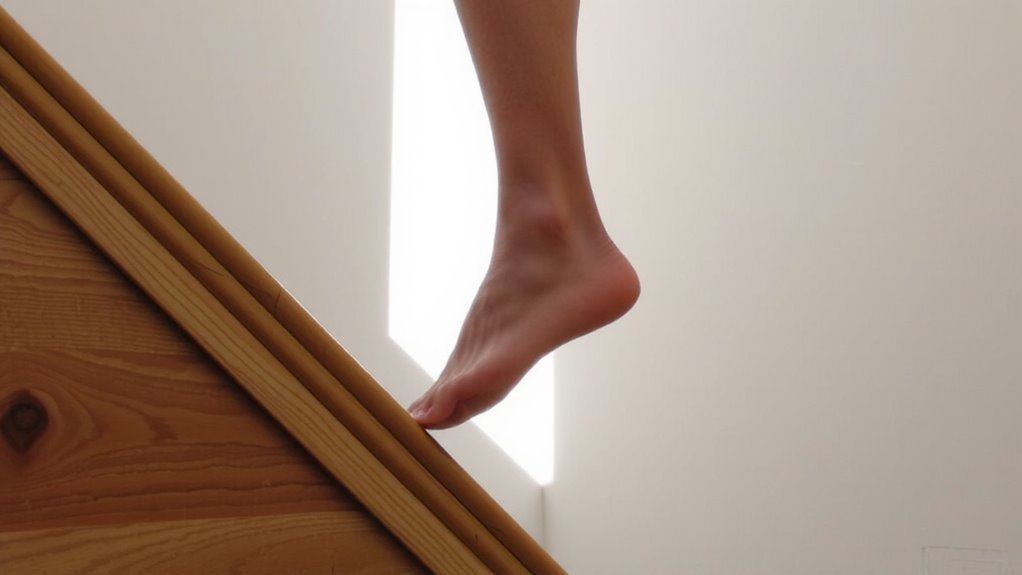
While your ankle might feel loose or unsteady after repeated sprains, eccentric calf raises can actually retrain the muscles and tendons to handle load more effectively, especially during the essential lowering phase of movement. You’re not just building strength-you’re improving muscle lengthening control, which is key for absorbing impact and preventing excessive strain. This type of training enhances proprioception and supports better joint alignment, reducing wobble during daily activities or sports. Unlike standard calf raises, eccentric movements target tendon remodeling, vital when dealing with chronic instability. The slow, controlled descent forces your soleus and gastrocnemius to adapt under tension, promoting more resilient tissue. Equipment like a sturdy step or reliable footwear isn’t flashy, but it guarantees consistent, safe execution. Over time, these gains translate to more confident movement.
How to Do Eccentric Calf Raises on a Step
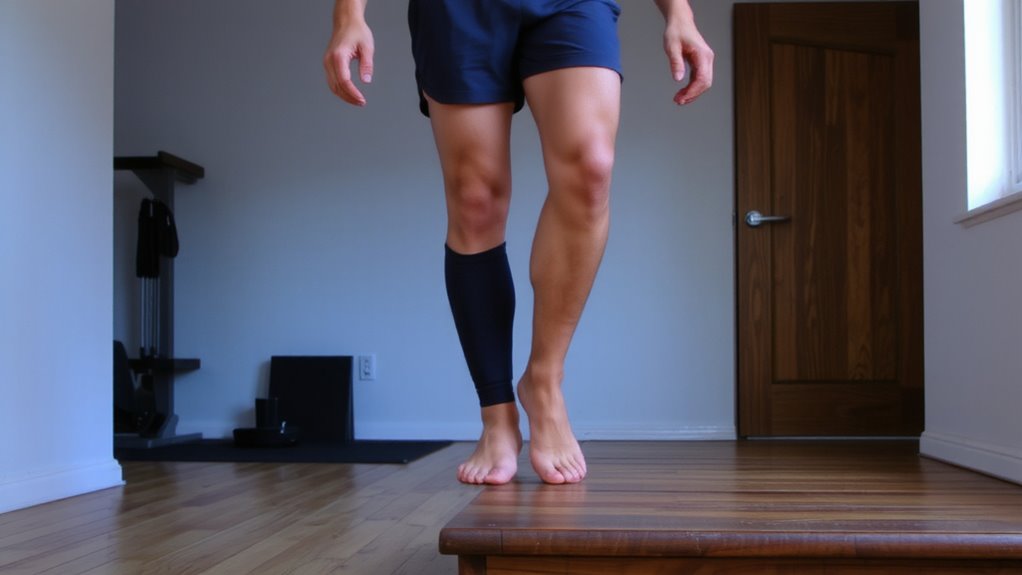
You’ve likely felt that frustrating wobble in your ankle after repeated sprains, and now you’re ready to take control with a method proven to rebuild strength and stability. Start by standing on a step with your heels hanging off the edge-your step height should allow a full range of motion without your heel hitting the ground. Keep your ankle alignment neutral throughout; avoid rolling inward or outward. Rise onto both toes, then slowly lower your heel below step level using just the injured leg-this eccentric phase is where healing happens. Control matters more than speed. Use a handrail or wall for balance if needed, but don’t push off. Perform barefoot or in minimalist shoes to enhance proprioception. The right step height-typically 4 to 6 inches-ensures ideal stretch and muscle engagement.
Best Reps and Frequency for Ankle Stability
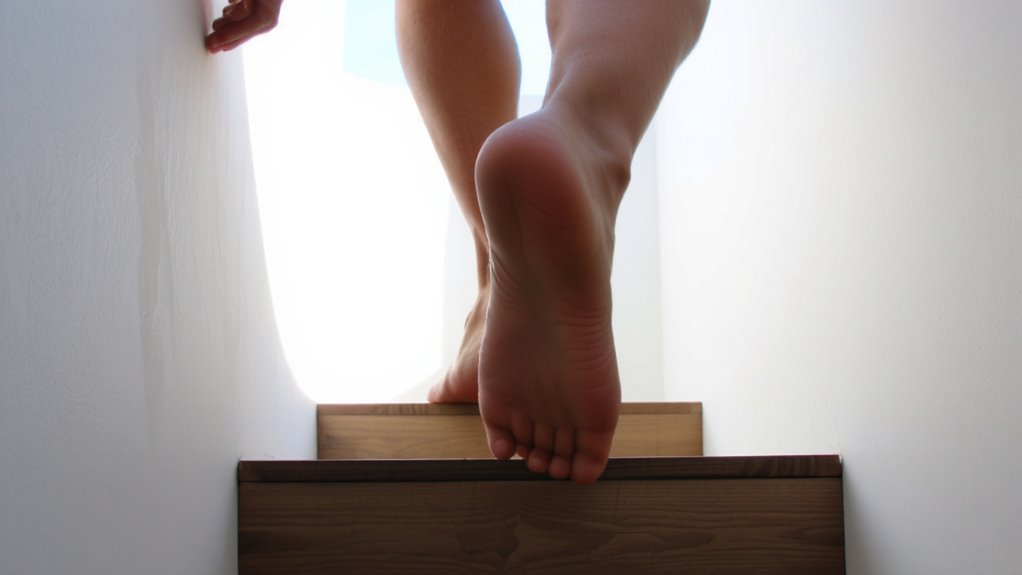
Typically, you’ll get the best results by performing three sets of 15 eccentric calf raises per day, every other day, to allow for adequate muscle recovery. This frequency balances stimulus and rest, promoting stronger tendons without overloading healing tissue. You’ll notice improvements in ankle mobility as consistent loading enhances joint range and neuromuscular control. Doing these reps on a step increases the stretch at the bottom, making the movement more effective for Achilles and calf adaptation. Focus on slow, controlled descents-about three to four seconds-to maximize muscle endurance and connective tissue strength. Over time, this builds resilient ankles better equipped to handle daily demands. Don’t rush; quality beats quantity. Training every other day also prevents fatigue buildup, supporting sustainable progress. With proper form and timing, you’re not just exercising-you’re retraining stability.
How to Progress for Stronger Ankles
Once you’ve built a foundation with consistent daily sets and mastered slow, controlled eccentric motions, it’s time to start increasing the demand on your calves and ankles to keep making gains. You can progress by adding resistance-try holding a dumbbell or wearing a weighted vest-to gradually overload the muscles without sacrificing form. Perform the movement on an unstable surface, like a foam pad, to challenge proprioception and improve ankle mobility. Switch between single-leg and double-leg raises to assess and correct strength balance between sides. Increasing time under tension with a 4- to 5-second lowering phase further boosts tendon adaptation. Track improvements by monitoring reduced wobble and smoother shifts. This progression model supports long-term joint resilience, especially when paired with proper footwear that allows natural foot motion while offering subtle support.
Most People Do These 3 Calf Raise Mistakes
Why do so many people struggle to see real improvements in ankle stability despite doing calf raises regularly? First, you’re probably not going slow enough during the lowering phase-eccentric control is where healing happens, and rushing it increases your risk of calf strain. Second, partial range of motion won’t cut it; if you’re not dipping your heel below the step, you’re skipping the muscle lengthening vital for preventing another ankle sprain. Third, doing reps without consistency or progression leads nowhere. You need progressive overload-more sets, slower tempos, or added weight-to see real adaptation. Using a sturdy step with a secure handrail helps maintain form. Remember, recovery isn’t just exercise-it’s smart exercise. Done right, eccentric calf raises rebuild strength and resilience; done wrong, they waste time or worsen injury.
On a final note
You’re on the right track using eccentric calf raises on a step-they boost ankle stability by strengthening the Achilles and calf under controlled load. Paired with quality recovery gear like compression sleeves and supportive footwear, progress is measurable. Most see improvement in 6–8 weeks with consistent, proper technique. Avoid common errors like rushing reps or neglecting range of motion. It works, but only if done right.