Sustainable Training Approaches for Masters and Aging Athletes
You need fewer intense workouts and more recovery as you age, since muscle repair slows and injury risk rises. Prioritize mind-muscle connection and zone 2 cardio for lasting gains. Daily mobility, foam rolling, and compression gear aren’t extras-they’re essential. Consistency beats max effort; cross-train with low-impact options to stay balanced. Listen to your body, not your ego. Smart training now keeps you strong for years-there’s more to optimizing your routine just ahead.
Notable Insights
- Prioritize recovery as much as training, since gains occur during rest and recovery time increases with age.
- Incorporate daily mobility work to maintain joint health and prevent age-related stiffness and imbalances.
- Focus on consistent, efficient workouts over intensity spikes to reduce injury risk and support long-term adaptation.
- Use low-impact cross-training like swimming or cycling to maintain fitness while minimizing joint stress.
- Invest in durable, versatile equipment and recovery tools to support sustainable training and long-term adherence.
Train Smarter After 40
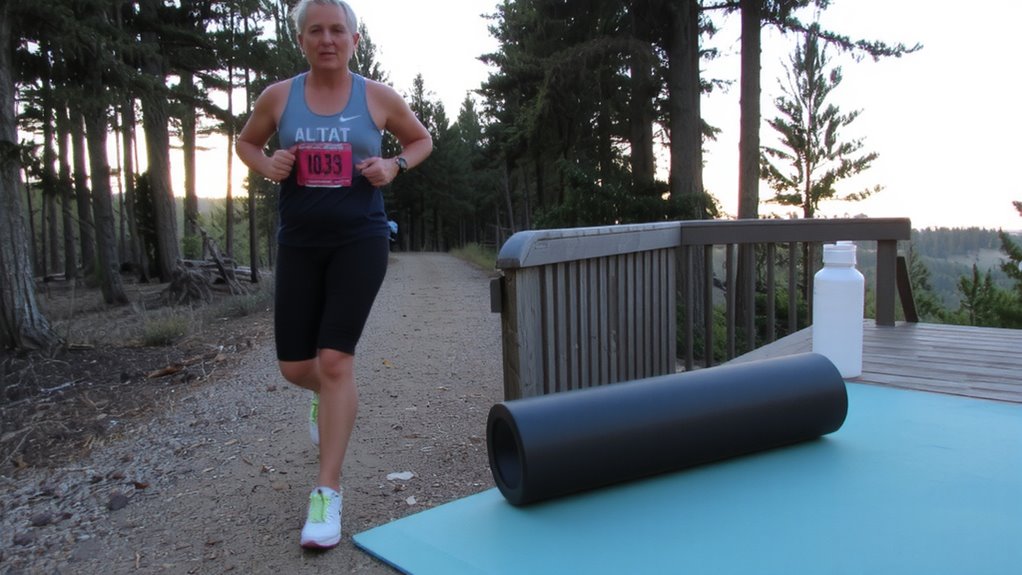
Why do some athletes over 40 thrive while others plateau or burn out? You’ve got to train smarter now, not just harder. Your body recovers slower, so maximizing each session matters more than ever. That’s where the mind muscle connection comes in-focusing on form and intent sharpens neuromuscular efficiency, helping you get more from lighter loads and fewer reps. It’s not just theory; studies show enhanced activation in trained muscles when attention is directed inward. Pair that with improved aerobic efficiency, and you’re building endurance without smashing your system. Steady-state cardio and zone 2 training boost mitochondrial density and fat oxidation, preserving muscle mass. You don’t need marathon sessions-just consistency and precision. Equipment choices support this: heart rate monitors and power meters help track aerobic progress objectively. Smart gear, combined with mindful effort, keeps your training effective, sustainable, and aligned with your evolving physiology.
Recover Like Training Depends on It
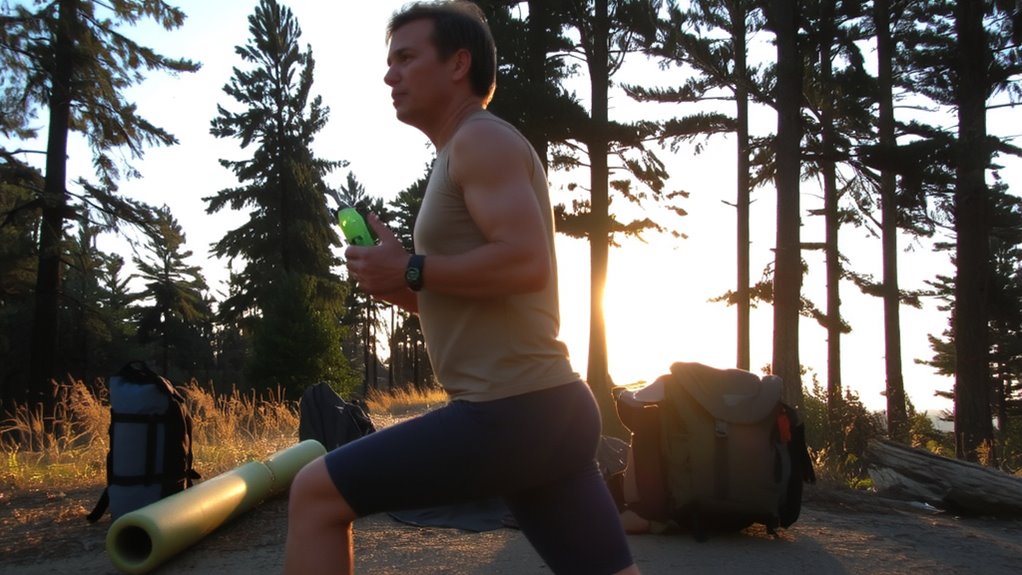
You’ve tuned your workouts to match your changing physiology, turning every rep and cardio session into targeted, efficient effort. Now, recovery must receive equal attention-because gains are made not just in motion, but in rest. Prioritize a regeneration focus to support long-term performance. Active recovery isn’t passive; it’s low-intensity movement that boosts circulation and clears metabolic byproducts. Pair this with smart gear choices that enhance recovery quality. Best compression boots can further optimize recovery by delivering consistent, targeted pressure to improve blood flow and reduce muscle fatigue.
| Strategy | Purpose |
|---|---|
| Foam rolling | Reduces muscle stiffness |
| Compression wear | Improves circulation |
| Cool-down walks | Supports active recovery |
Recovery tools vary in effectiveness, but consistency matters most. Compression boots or sleeves offer measurable benefits in reducing soreness, especially post-intense session. Foam rolling aids flexibility when done daily. Cool-down walks elevate blood flow without strain. Treat recovery like a workout-structured, intentional, and non-negotiable.
Make Mobility a Daily Habit
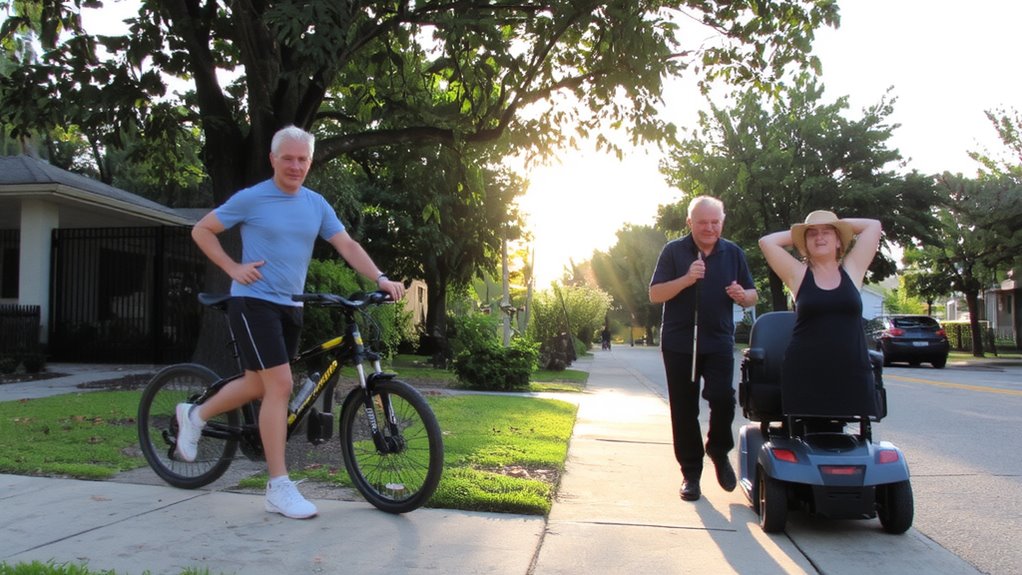
Often, mobility gets pushed aside once the main workout ends, but treating it as an afterthought undermines long-term athletic resilience. You need daily mobility work to maintain joint health and prevent imbalances that lead to injury. Consistent stretching, foam rolling, and dynamic movements improve muscle symmetry, ensuring opposing muscle groups pull evenly across joints. This balance reduces wear and tear on connective tissues and enhances movement efficiency. Tools like mobility bands and foam rollers aren’t gimmicks-they offer targeted support, helping release tight fascia and restore range of motion. Ten minutes a day is enough, especially when focused on hips, shoulders, and spine-areas prone to stiffness with age. Think of mobility as maintenance, like oil for an aging engine. When done daily, it preserves function, supports recovery, and keeps you training sustainably. Ignoring it risks asymmetry, pain, and lost performance. Make it non-negotiable. For those new to self-myofascial release, choosing the right best foam rollers can enhance effectiveness and comfort during daily routines.
Choose Consistency Over Intensity
While chasing peak performance can be tempting, especially when progress feels slow, you’ll get further by showing up regularly with moderate effort than by sporadically pushing to your limits. Consistency supports long-term adaptations, reduces injury risk, and sustains joint health-key for aging athletes. High intensity might feel productive, but without recovery, it often leads to burnout or setbacks. Instead, prioritize steady sessions you can maintain week after week. Use progress tracking to spot trends in energy, performance, and recovery, adjusting only slightly when needed. Effective goal setting keeps you focused on process-oriented targets-like completing workouts or improving form-rather than just outcomes. This approach aligns with how masters athletes adapt: gradually and cumulatively. Equipment choices matter less than routine use; even basic gear supports gains when applied consistently. Let data guide intensity, not emotion. Over time, regular effort yields better fitness returns than intermittent extremes ever could.
Cross-Train for Balance and Resilience
Though focusing solely on your primary sport might seem like the fastest path to improvement, neglecting cross-training can undermine long-term resilience, especially as recovery times lengthen with age. Engaging in low impact variety builds endurance without excessive strain, while developing functional strength enhances joint stability and movement efficiency. Activities like swimming, cycling, and yoga offer balanced adaptations that complement high-intensity efforts. A reliable at-home fitness machine can further support consistent training with minimal joint stress. Below is a quick reference for effective cross-training options:
| Activity | Low Impact Variety | Functional Strength Contribution |
|---|---|---|
| Swimming | High | Moderate |
| Cycling | High | Moderate |
| Pilates | Moderate | High |
| Elliptical | High | Low |
| Resistance Bands | Moderate | High |
Integrating these choices supports structural balance and reduces overuse risk. You’ll move better, recover faster, and stay consistent-critical as your body adapts to the demands of sustained training over years.
Listen to Your Body: Not Your Ego
Why push through that sharp knee pain when your body’s clearly signaling a problem? Ignoring discomfort for the sake of performance often leads to setbacks, especially as recovery slows with age. Mindful pacing isn’t about lowering standards-it’s about training smarter, honoring your body’s feedback to sustain long-term progress. Your ego might urge you to match past PRs or keep up with younger peers, but true strength lies in ego management. It means scaling intensity when needed, swapping runs for swims, or taking an extra rest day without guilt. Sustainable performance isn’t built on heroics; it’s built on consistency and awareness. Listening closely helps you distinguish between beneficial fatigue and harmful strain, guiding better real-time decisions. When you prioritize physiological signals over pride, you protect joint health, improve adaptation, and extend your athletic lifespan. Fitness isn’t just movement-it’s intelligent, informed movement calibrated to your evolving needs.
Design Training Around an Aging Lifestyle
You’ve learned to listen to your body instead of pushing through pain for the sake of pride, but that awareness only goes so far if your training doesn’t align with the realities of your daily life. As responsibilities grow and recovery takes longer, smart time management becomes essential-scheduling workouts like appointments guarantees consistency without burnout. You’re not training to prove anything anymore; goal setting now focuses on longevity, function, and health metrics rather than PRs. Prioritize sessions that deliver the most return: strength training two to three times a week, moderate cardio, and mobility work. Integrate recovery tools like foam rollers and compression gear, not as luxuries but as necessities for maintaining training rhythm. Your gear should support ease of use and durability-think adjustable dumbbells, supportive footwear, and recovery devices with proven efficacy. Aligning training with lifestyle isn’t compromise-it’s strategic adaptation.
On a final note
You’ve learned that recovery isn’t passive-it’s strategic. Smart gear like compression units and foam rollers support circulation and tissue health, but only if used consistently. Your body repairs best with deliberate rest, quality sleep, and mobility work. High-tech gadgets help track readiness, yet nothing replaces listening to your signals. Prioritizing recovery means training stays sustainable, injuries stay low, and performance stays strong-because now, how you recover matters more than how hard you push.