Contrast Therapy Techniques: Alternating Between Hot and Cold to Enhance Recovery Speed After Intense Workouts
You alternate between hot and cold exposure to boost recovery after intense workouts. Heat relaxes tissues and increases blood flow, while cold reduces inflammation by constricting blood vessels. This vascular pumping action flushes out metabolic waste and delivers oxygen-rich blood for faster repair. Try 3 minutes warm (98–104°F) followed by 1 minute cold (50–59°F), repeating 3–5 cycles. Simple bucket setups or showers work well at home. Consistency matters more than gear. It’s effective for reducing soreness and improving mobility-just avoid it with heart conditions or open wounds. You’ll soon discover how timing and routine refine your results.
Notable Insights
- Alternating hot and cold exposure boosts blood flow and reduces inflammation to speed up muscle recovery after intense exercise.
- Use water temperatures of 98–104°F (warm) and 50–59°F (cold) for optimal physiological response during contrast therapy.
- Perform 3–5 cycles of 3 minutes warm followed by 1 minute cold, switching rapidly between phases.
- Contrast showers or DIY bucket setups make effective, accessible options for home recovery routines.
- Avoid contrast therapy with cardiovascular conditions, open wounds, or Raynaud’s phenomenon due to potential health risks.
What Is Contrast Therapy and How Does It Work?
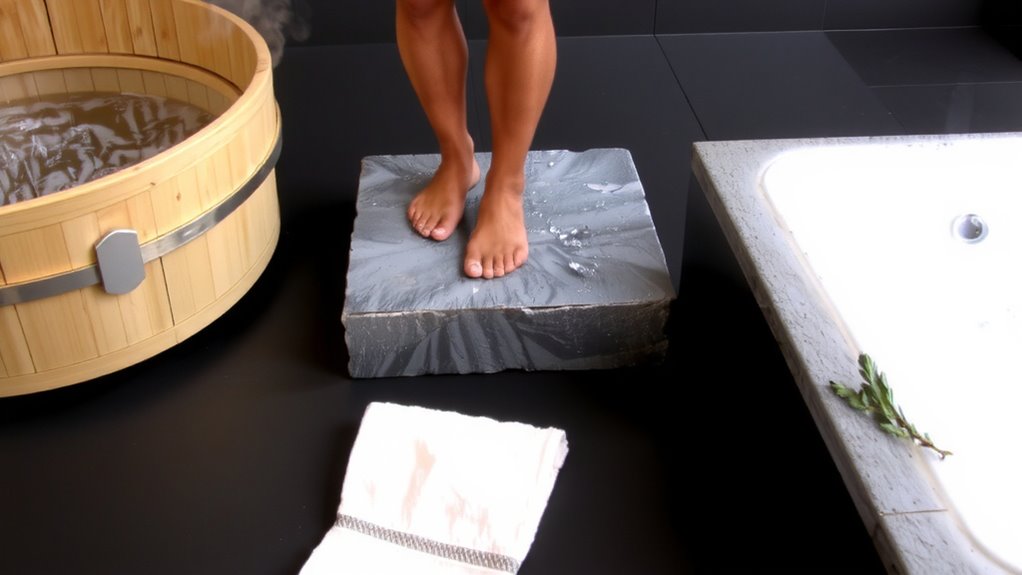
Recovery isn’t just about rest-it’s about strategy. Contrast therapy uses alternating hot and cold exposure to trigger beneficial physiological mechanisms that support muscle repair. You alternate between heat, which relaxes tissue and boosts blood flow, and cold, which constricts vessels and reduces inflammation. This shift improves blood flow dynamics, effectively flushing metabolic waste while delivering oxygen and nutrients. It’s not just tradition-studies suggest the vascular pumping action enhances recovery more than passive rest. While recovery gear like immersion tubs or wraps vary in design, quality systems let you control temperature and timing, maximizing effectiveness. You don’t need a clinic; many home units now offer durable, easy-to-maintain options. Though individual responses differ, consistent use shows measurable improvements in soreness and readiness. It’s a practical, science-backed method-worth considering if you push your limits regularly.
How Contrast Therapy Speeds Muscle Recovery
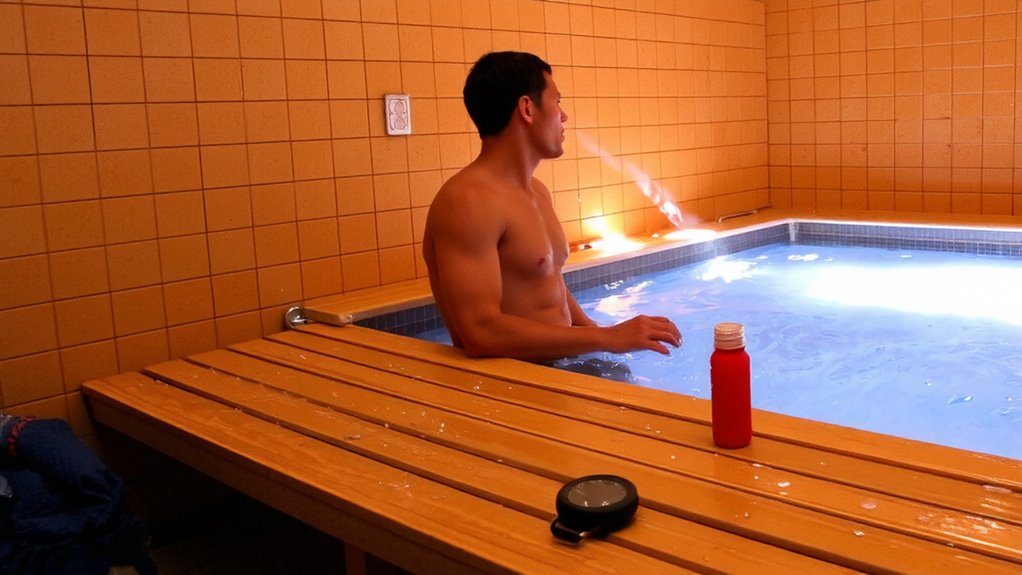
You’re already familiar with how contrast therapy alternates heat and cold to activate circulation and manage inflammation, but its real advantage lies in how this rhythm accelerates muscle recovery. The alternating stimuli markedly boost blood flow, flushing out metabolic waste like lactic acid while delivering oxygen and nutrients essential for repair. When heat is applied, vessels dilate, enhancing circulation and promoting muscle relaxation; cold exposure then constricts them, reducing swelling and soothing soreness. This pump-like effect minimizes stiffness and speeds healing. You’ll notice improved mobility and reduced delayed onset muscle soreness (DOMS) within hours. Unlike passive recovery, contrast therapy actively engages your body’s repair systems. Though recovery gear like compression units or cryo chambers offer similar benefits, contrast therapy remains cost-effective and accessible. It’s a practical, science-backed method especially useful after intense resistance or endurance workouts, making it a sound choice for athletes seeking efficient, natural recovery.
How to Do Contrast Therapy at Home
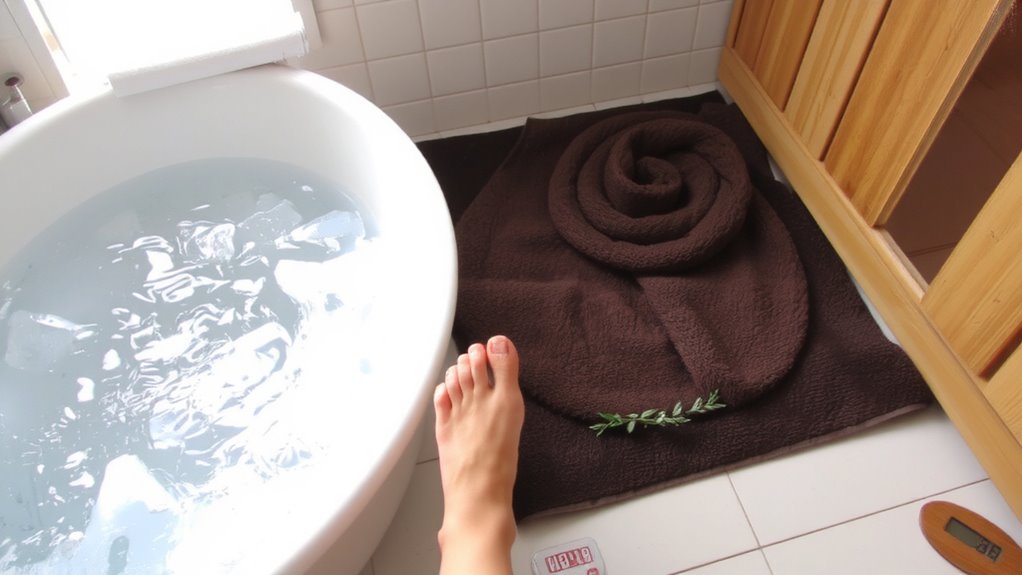
How can you harness the benefits of contrast therapy without stepping into a clinic? You can create effective DIY setups right at home using simple household alternatives. Fill one bucket with ice water and another with warm water-around knee or elbow depth-then alternate immersion for 3–4 minutes hot, 1 minute cold. Use towels to manage spills and maintain consistent temperatures. A shower and bathtub also work: alternate warm showers (3–4 minutes) with 30–60 second cold bursts. While specialized recovery gear like cryotherapy tubs perform more precisely, most people find household alternatives sufficiently effective and far more affordable. Consistency matters more than equipment quality. These DIY setups mimic clinical protocols closely enough to promote circulation and reduce soreness. With minimal investment and basic discipline, you’ll support muscle recovery efficiently-no high-end tools required.
Ideal Temperatures and Timing for Contrast Therapy
While there’s no universal standard for contrast therapy temperatures, most research and recovery experts agree on ranges that balance effectiveness with safety. You’ll want to stay within proven temperature thresholds to avoid tissue damage while still stimulating circulation. Ideal durations typically follow a 3:1 ratio-three minutes warm, one minute cold-for about three to five cycles. This rhythm maximizes blood flow oscillation without overloading your system.
| Phase | Temperature Range (°F) | Ideal Duration |
|---|---|---|
| Warm | 98–104°F | 3 minutes |
| Cold | 50–59°F | 1 minute |
| Switch | Immediate | <30 seconds |
| Total Cycles | 3–5 | 16–24 minutes |
| Rest After | Room temperature | 10–15 minutes |
Sticking close to these guidelines guarantees you benefit from contrast therapy’s recovery potential without risking strain or discomfort.
Tools and Setups for Home Contrast Therapy
Now that you’ve got a clear idea of the ideal temperatures and timing, setting up an effective contrast therapy routine at home comes down to having the right tools. You can choose from pre-made setups like portable hot tubs and cold immersion tanks, or go the DIY equipment route-think repurposed bathtubs with ice buckets and space heaters. While store-bought systems offer convenience and consistent temperature control, they often come with a steep price tag. Doing a cost comparison shows that DIY options save money upfront but require more effort to maintain safety and effectiveness. Quality insulation, accurate thermometers, and efficient drainage are key for any setup. Though commercial units perform better over time, a well-designed homemade system can deliver solid results if you’re diligent. Ultimately, your choice depends on budget, space, and how often you plan to use it.
When to Avoid Contrast Therapy and Safety Tips
If you’re managing certain health conditions, skipping contrast therapy altogether might be the safer choice, since abrupt temperature shifts can strain cardiovascular function. Contraindications include uncontrolled hypertension, heart disease, and peripheral neuropathy, where sensation loss increases injury risk. Precautions are essential even for healthy users-limit session duration and monitor skin response. Always exit if dizziness or discomfort occurs.
| Condition | Recommendation |
|---|---|
| Cardiovascular issues | Avoid therapy-high strain risk |
| Open wounds or infections | Skip until healed-contamination risk |
| Raynaud’s phenomenon | Contraindicated-vasospasm trigger |
Start with shorter cycles and mild temperatures to gauge tolerance. Use clean, well-maintained gear to prevent bacterial exposure. Contrast therapy can accelerate recovery when applied wisely, but safety trumps speed-respect your body’s limits to avoid setbacks.
On a final note
You’ll find contrast therapy effective for speeding post-workout recovery by boosting circulation and reducing inflammation. Alternating hot and cold stimuli triggers a pump-like effect in blood vessels, helping flush metabolic waste. When done correctly, with proper timing and temperatures, it supports muscle repair. Home setups-like baths, showers, or recovery pods-offer convenience, though consistent maintenance guarantees hygiene and performance. While not ideal for everyone, especially those with circulatory issues, it’s a practical, science-backed tool in modern fitness recovery.