How to Create a Progressive Relaxation Practice for Post-Workout Recovery
You should start your post-workout recovery with a 10–15 minute progressive relaxation session right after cooling down. Focus on slowly tensing and releasing muscles from your feet up, especially tight areas like shoulders or quads, while using slow diaphragmatic breathing to deepen relaxation. This practice reduces soreness, enhances blood flow, and shifts your nervous system into repair mode more effectively than stretching alone-especially when tailored to your workout type. You’ll soon discover how small adjustments can substantially boost recovery quality and long-term performance.
Notable Insights
- Perform a body scan starting at the feet, progressively releasing tension in each muscle group up to the head.
- Pair slow diaphragmatic breathing with muscle relaxation to enhance parasympath游戏副本tic activation and recovery.
- Practice immediately after your cool-down while your body is transitioning into rest mode.
- Spend 10–15 minutes daily to optimize physiological benefits and support long-term recovery adaptation.
- Tailor the relaxation focus based on workout type-emphasizing deep scans for HIIT, isolated release for strength training.
Why You Should Cool Down With Progressive Relaxation
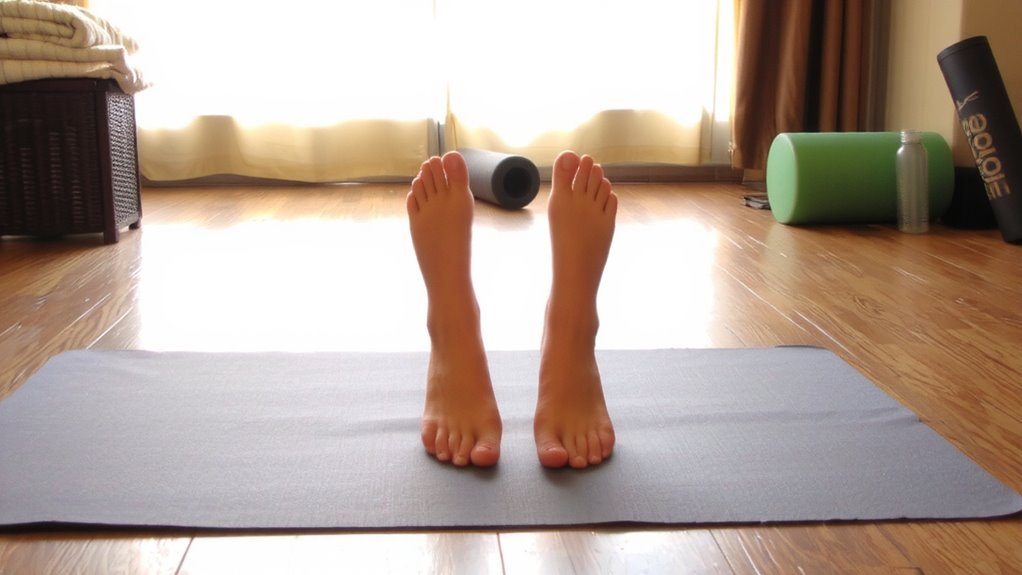
Ever wonder why your post-workout routine feels incomplete without a proper cooldown? Because cooling down isn’t just about slowing your heart rate-it’s about kickstarting muscle recovery. Progressive relaxation helps release residual tension in overworked muscle groups, reducing stiffness and soreness. When you systematically relax each body part, blood flow improves, delivering oxygen and nutrients essential for repair. That means you’re not just resting-you’re actively rebuilding. Plus, it sharpens mental clarity. After intense training, your nervous system stays revved up; progressive relaxation signals it to shift into recovery mode. You regain focus, reduce mental fatigue, and create space to assess your performance. Unlike basic stretching, this method addresses both physical and cognitive recovery, making it a smarter cooldown choice. It doesn’t require fitness gear-just time and consistency. For long-term gains, this practice isn’t optional; it’s foundational.
Do a Progressive Relaxation Body Scan
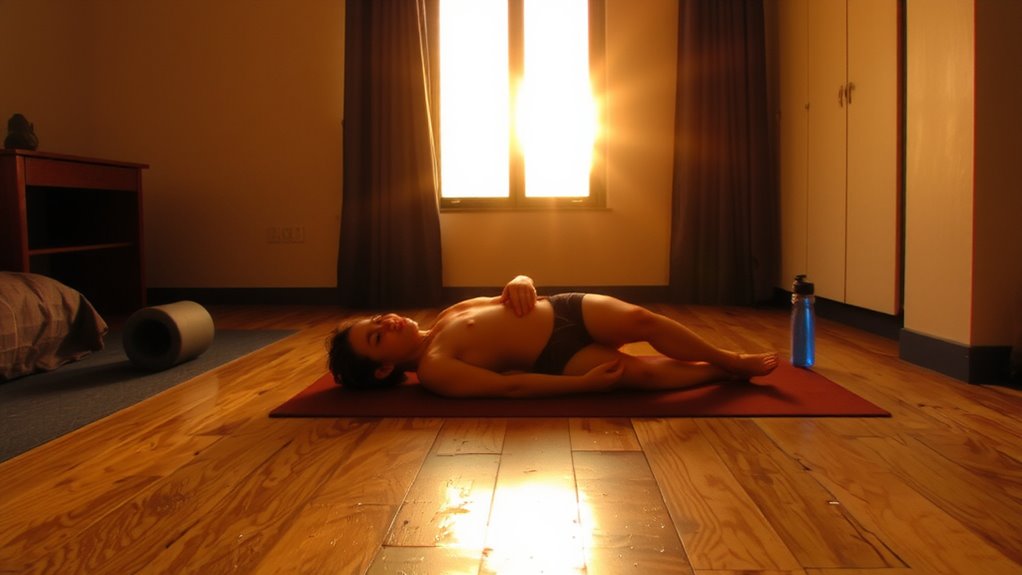
Mindfulness isn’t just for meditation-it’s a tool for recovery, and a progressive relaxation body scan puts it to work. You start at your feet, noticing any lingering muscle tension, then gradually move upward, consciously releasing tightness in each body region. This practice sharpens your mental focus, directing attention to physical sensations without judgment. As you scan, you identify areas where fatigue has settled-perhaps in the shoulders or lower back-allowing targeted release. Unlike passive rest, this method engages your nervous system deliberately, supporting parasympathetic activation. It’s especially effective post-workout, when residual tension can impair recovery. No gear is needed, just consistency and awareness. Over time, the body scan enhances mind-muscle connection, improving your ability to recognize stress signals early. While wearable recovery tools like massage guns offer physical relief, they can’t replace the internal awareness this technique builds. Used regularly, the body scan becomes a reliable, equipment-free strategy for deeper, more effective recovery.
Add Breathing to Progressive Relaxation
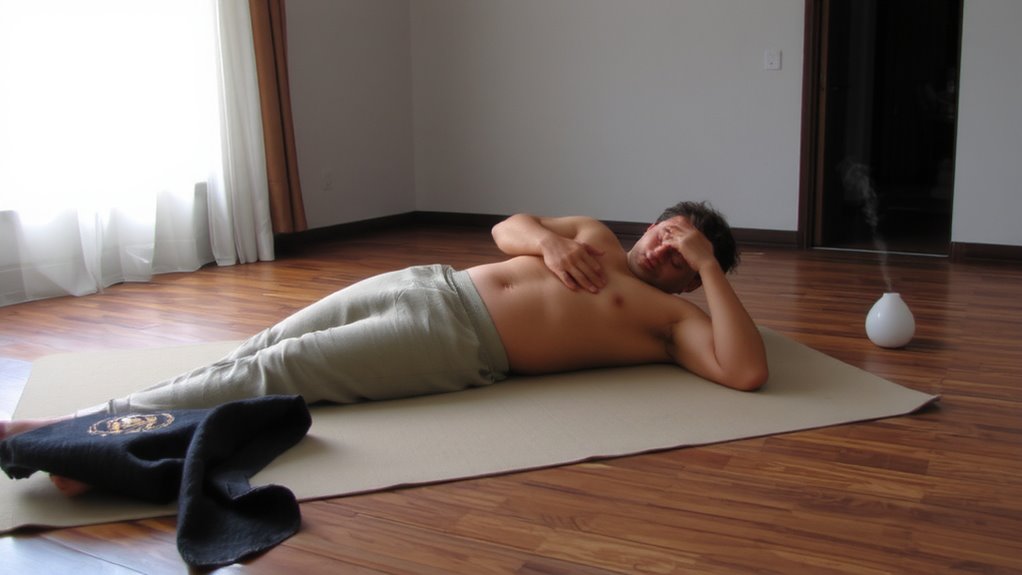
You can deepen the effects of progressive relaxation by pairing it with intentional breathing, building on the body scan’s focus but taking recovery further. Diaphragmatic breathing activates the parasympathetic nervous system, slowing your heart rate and signaling muscles to release residual tension. As you contract and release each muscle group, sync the movements with a slow, mindful inhalation through the nose, followed by a longer exhalation. This isn’t just breath awareness-it’s a functional technique that enhances oxygen delivery while reducing post-workout cortisol levels. Unlike passive recovery, this method actively supports nervous system regulation. Wearable fitness gear with heart rate variability tracking often shows improved autonomic balance when diaphragmatic breathing is consistently applied. The combination of targeted muscle release and breath control creates a more effective recovery protocol than either technique alone. Practical, measurable, and easily integrated, it’s a smart upgrade to standard cooldown routines.
When to Do Post-Workout Relaxation
When should you prioritize post-workout relaxation for best recovery? The best time is immediately after your cool-down, while your body is still physiologically active but shifting to rest. This window enhances parasympathetic activation, promoting faster muscle repair and mental calm. The ideal duration is 10–15 minutes-long enough to elicit real benefits, short enough to fit into most routines.
| Feeling Before | Feeling After |
|---|---|
| Tense muscles | Deep release |
| Mental fatigue | Clear focus |
| Racing thoughts | Calm presence |
| Soreness onset | Reduced discomfort |
| Emotional drain | Renewed energy |
Delaying relaxation can reduce its effectiveness, so treat it as a non-negotiable part of your session. Consistency in timing and duration improves adaptation over time, supporting long-term fitness recovery. Progressive relaxation isn’t just mental-it’s a physiological tool that complements your training and gear by optimizing internal conditions for repair and growth.
Tailor Relaxation to Your Workout
While your workout type shapes your physical effort, it should also guide how you unwind-because not all recovery demands are the same. If you’ve just crushed a high-intensity interval session, your nervous system needs longer, slower breathing cycles and deeper muscle scans to match the custom intensity of your exertion. A steady-state run calls for relaxation that mirrors its rhythmic, endurance-based workout rhythm-gentle visualization and gradual release work best. For strength training, focus on isolated contractions in overworked areas like shoulders or quads, syncing your relaxation pace with the tension you built. Light yoga or mobility drills can complement this by maintaining flow without strain. Tailoring your approach guarantees you’re not just recovering, but doing it efficiently. Match your relaxation style to your session’s physical and neurological load-it boosts parasympathetic activation and improves long-term adaptation.
Fix These Common Post-Workout Relaxation Mistakes
Many athletes push hard during training but undo their progress by skipping deliberate recovery, assuming rest alone is enough. Skipping cooldown routines is a major mistake-it leaves your heart rate elevated and muscles tight, increasing soreness. You might feel pressed for time, but even five minutes of structured breathing or light stretching signals your nervous system to shift into recovery mode. Ignoring tension, especially in high-use areas like shoulders or hips, compounds imbalances and can lead to overuse injuries. Progressive relaxation helps you identify these trouble spots before they become chronic. Unlike passive rest, active recovery with focused attention improves circulation and muscle reset. Tools like foam rollers or massage guns can support this process, but only if used mindfully. Relying on gear without addressing technique or bodily feedback offers limited benefits. Real recovery demands awareness, not just equipment. A high-quality best massage guns can enhance muscle recovery when integrated properly into a mindful relaxation routine.
Build a Post-Workout Relaxation Habit
How much more effective could your recovery be if it weren’t left to chance? Building a post-workout relaxation habit starts with a mindset shift-seeing recovery as non-negotiable, not optional. Just like tracking reps or heart rate, consistency tracking reinforces discipline. Use a simple journal or app to log each session, noting duration, technique, and perceived muscle relief. This data reveals patterns, helping you refine timing and method. Over time, the routine becomes automatic, improving sleep quality and reducing soreness. Pair this habit with proper fitness gear-like a supportive mat or foam roller-to enhance physical comfort during relaxation. High-quality tools don’t replace effort but amplify results when used consistently. Think of them as enablers, not shortcuts. With deliberate practice and measurable follow-through, your recovery evolves from haphazard to strategic. That’s when real progress begins. Choosing the right best foam rollers can significantly improve myofascial release and support long-term recovery goals.
On a final note
You’ve earned this recovery-progressive relaxation isn’t just calming; it’s a proven method to lower cortisol and speed up muscle repair. When paired with quality fitness gear like moisture-wicking loungewear or supportive mats, the routine becomes more effective. Done consistently post-workout, it enhances autonomic balance, reduces soreness, and improves sleep. This isn’t luxury-it’s smart physiology. Skip it, and you’re leaving gains on the table.