Gentle Morning Tai Chi Routine to Rebalance Muscles After Intense Leg Day
You can recover smarter after a tough leg day with a gentle Tai Chi routine that boosts circulation and clears metabolic waste without strain. Start in a quiet, clutter-free space, feet shoulder-width apart, spine lifted, breathing deep. Warm up joints with slow circles and rolls, then flow through Parting Horse’s Mane, Brush Knee, Step Back to Deflect, Cloud Hands, and Golden Rooster to restore alignment and ease tension. Pair each move with controlled breath-inhale for four, exhale for six-to activate repair and calm the nervous system. This isn’t just movement; it’s functional recovery that recalibrates your body’s balance and prepares you for what comes next.
Notable Insights
- Begin with a quiet, clutter-free space and wear breathable clothing for unrestricted, mindful movement.
- Warm up joints for 3 minutes using slow ankle, knee, and shoulder circles to stimulate circulation.
- Practice Parting Horse’s Mane and Brush Knee to restore energy flow and release leg muscle tension.
- Use deep nasal inhales (4 counts) and extended mouth exhales (6 counts) to activate recovery and reduce soreness.
- Finish with Cloud Hands and Golden Rooster to improve joint mobility and recalibrate neuromuscular coordination.
Why Tai Chi Speeds Up Leg Day Recovery
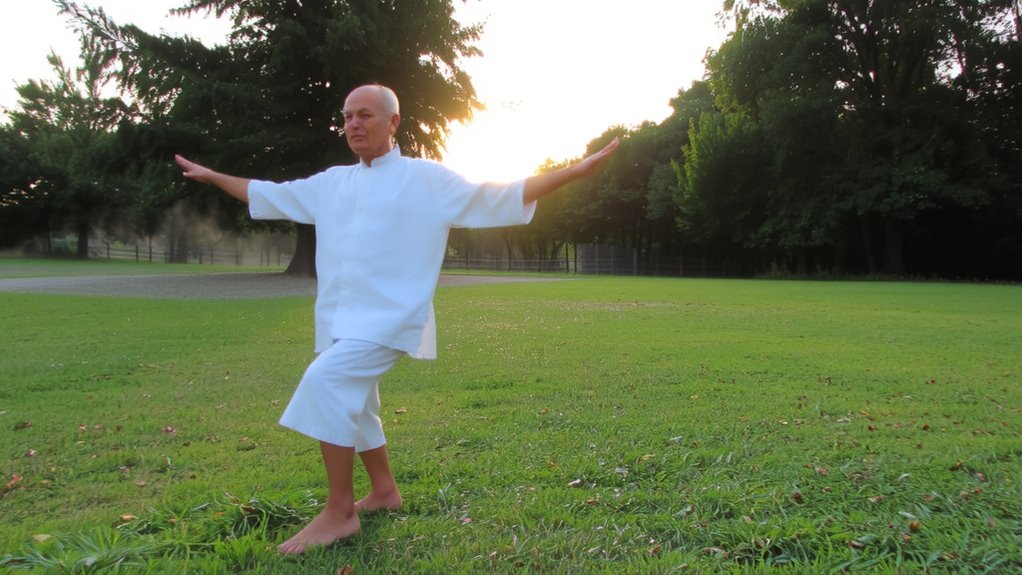
Ease into movement, and you’ll find Tai Chi isn’t just slow-motion choreography-it’s a recovery tool. After leg day, your muscles need more than rest; they respond to intentional, low-impact motion that enhances circulation without strain. Tai Chi promotes meridian flow, helping release stagnation in overworked tissues and speeding up metabolic waste removal. Its gentle forms stimulate joint mobility and improve energy alignment, which can recenter your post-workout imbalance. Unlike high-tech recovery gear, Tai Chi requires no charging or setup-just consistent, mindful practice. You’re not just cooling down; you’re recalibrating your body’s internal communication. Studies show improved recovery markers when Tai Chi follows resistance training, particularly in reducing delayed onset muscle soreness. While compression boots or massage guns offer localized relief, Tai Chi works holistically, integrating breath, posture, and awareness. It’s not a quick fix, but over time, it builds resilience. You’ll notice better range of motion, less stiffness, and a smoother shift back to peak performance.
Set Up Your Space and Posture
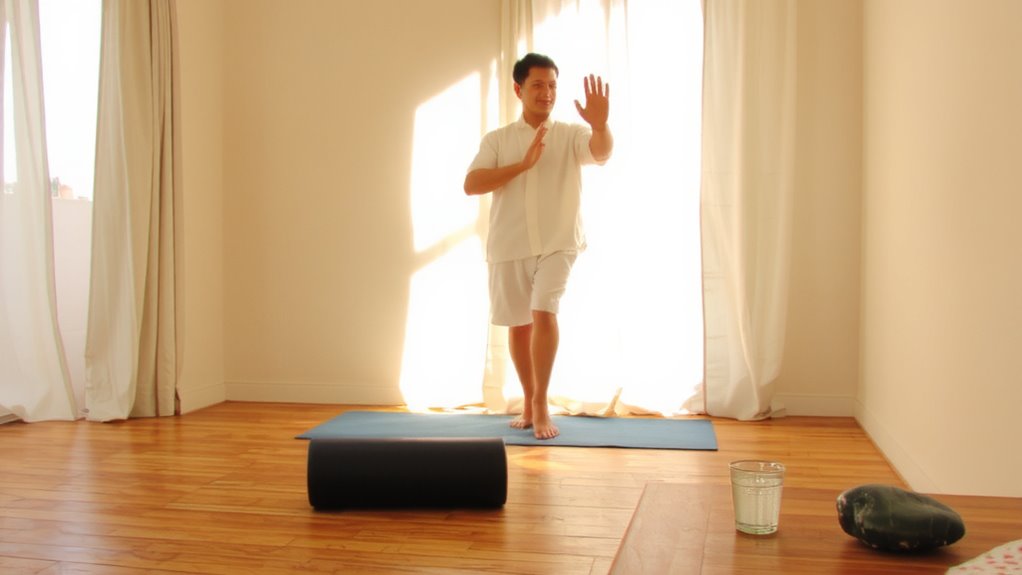
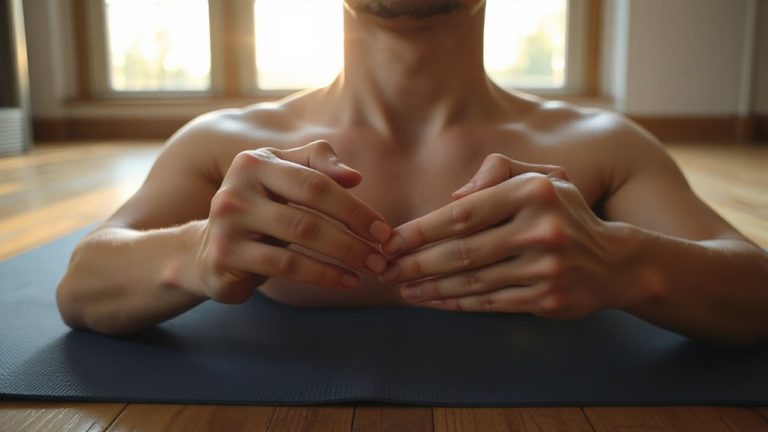
Before stepping into your morning Tai Chi practice, take a moment to assess your environment and stance-your space should support fluid movement, not hinder it. Choose a quiet corner with enough room to move freely, free from clutter or distractions; a peaceful environment enhances focus and promotes mental calm, essential for recovery. Wear breathable, flexible clothing that doesn’t restrict motion-quality fitness gear supports sustained posture without discomfort. Stand with feet shoulder-width apart, knees slightly bent, spine upright. This stance guarantees proper alignment, reducing strain on joints and encouraging peak energy flow. Your head should feel light, as if suspended from above, shoulders relaxed, arms loose. Grounding through the feet while maintaining lift through the spine balances stability and ease. Even subtle misalignments can diminish Tai Chi’s restorative benefits, so take a second to adjust. The right setup turns practice into effective recovery.
Warm Up Joints for Tai Chi Recovery (3 Minutes)

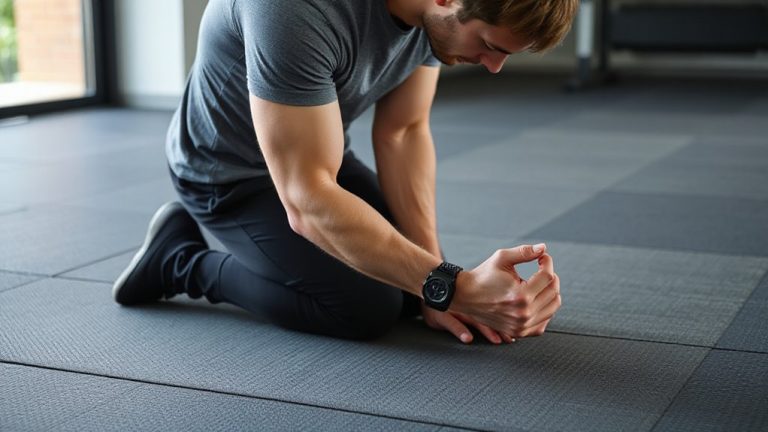
A proper joint warm-up sets the foundation for a Tai Chi session that supports recovery and enhances mobility, especially when performed in sync with the breath and intentionality the practice demands. You’ll start with gentle circles at the wrists, ankles, and neck to stimulate joint mobility, preparing connective tissues for mindful movement. Shoulder rolls-forward and back-encourage synovial fluid circulation, reducing stiffness from inactivity. Knee rotations, done while standing or seated, promote lubrication without impact, essential after strenuous leg workouts. Each motion should be slow and purposeful, emphasizing dynamic activation over range alone. This isn’t just about loosening up; it’s about signaling the nervous system to shift into a regenerative state. Proper footwear and supportive mats can enhance stability and comfort during these movements, though bare feet on a non-slip surface remain ideal. This brief, focused routine primes your body for deeper recovery work. Using a stretching strap can further aid flexibility and alignment during post-workout recovery.
Practice 5 Tai Chi Moves for Sore Legs
You’ve primed your joints and tuned into your breath, creating the ideal internal environment to address muscle soreness with precision. Now ease into five foundational Tai Chi moves-Parting Horse’s Mane, Brush Knee, Step Back to Deflect, Cloud Hands, and Golden Rooster-each designed to restore flow alignment and encourage energy balance. These slow, deliberate motions redistribute tension away from overworked quadriceps and hamstrings, replacing rigidity with controlled mobility. Unlike aggressive stretching, Tai Chi emphasizes continuity, letting each shift gently engage and release muscle layers without strain. Practiced on a supportive mat with proper footwear, the movements enhance circulation and proprioception, accelerating recovery. You’ll notice improved joint tracking and reduced stiffness within minutes. Over time, consistent practice reinforces neuromuscular coordination, making it a superior recovery tool compared to passive modalities. This sequence isn’t just movement-it’s functional recalibration, merging physical specification with biomechanical intelligence to maintain long-term leg resilience.
Breathe Deeply to Release Muscle Tension
While movement primes the body, it’s your breath that fine-tunes the recovery process, turning passive rest into active restoration. You’re not just cooling down-you’re signaling your nervous system to shift into repair mode. Mindful breathing, done properly, enhances muscle relaxation by increasing oxygen flow and reducing cortisol levels. Inhale deeply through your nose for four counts, letting your diaphragm expand fully; exhale slowly through your mouth for six. This rhythm activates the parasympathetic response, easing tight quadriceps and fatigued hamstrings more effectively than passive stretching alone. Compared to recovery tools like foam rollers-which address surface tension-mindful breathing targets the neurological root of muscle tightness. It doesn’t require gear, yet its impact on recovery efficiency is significant. When combined with Tai Chi’s fluid motions, deep breathing becomes a functional component of post-workout restoration, not an afterthought. You’re investing in long-term mobility, not just momentary relief.
Return to Your Day With Clarity
After you’ve reset your breath and eased the deeper layers of tension, your body’s ready not just to move, but to think clearly. This moment marks a shift where mental clarity emerges naturally from your practice. By aligning breath with slow, intentional movements, you optimize energy flow, reducing mental fog and sharpening focus. Tai chi’s gentle sequences stimulate circulation and nervous system regulation, creating conditions ideal for sustained cognitive performance. Unlike high-intensity recovery tools that rely on compression or vibration, this routine requires no fitness gear-just space and consistency. The absence of equipment reduces barriers to entry while promoting mindfulness. Over time, practitioners report improved concentration and reduced stress markers, suggesting long-term neurological benefits. Returning to your day after this reset means carrying a calm alertness, supported by balanced physiology and enhanced energy flow-critical for productivity and overall well-being.
On a final note
You’ve just used tai chi to support muscle recovery after intense leg work, and it shows: your circulation improves, tension drops. These slow, controlled movements complement recovery-focused gear like compression wear. Unlike passive rest, tai chi actively resets your neuromuscular system. With consistent use, this routine enhances joint mobility and body awareness. It’s not just soothing-it’s strategic. For anyone serious about fitness recovery, integrating mindful motion with effective tools isn’t optional. It’s essential.