Box Breathing Countdown Strategy to Transition From Workout Mode to Parasympathetic State
You can speed up recovery by using a 4-4-4-4 box breathing countdown right after your workout. Inhale for 4 seconds, hold for 4, exhale for 4, then pause for 4. This rhythm activates your parasympathetic system, lowering heart rate and cortisol faster than passive rest. It works best when paired with heart rate monitors to track coherence. Avoid distractions like phones-stillness boosts results. There’s more to optimizing this practice for long-term gains.
Notable Insights
- Initiate box breathing within 5 minutes post-workout to leverage elevated heart rate for faster parasympathetic activation.
- Use a 4-4-4-4 pattern: inhale, hold, exhale, and pause for 4 seconds each to regulate nervous system response.
- Focus on diaphragmatic breathing to enhance oxygen exchange and stimulate vagal tone for deeper recovery.
- Avoid distractions like phones or equipment adjustments to maintain mental stillness and prevent stress reactivation.
- Practice consistently in a quiet space to condition the body to transition efficiently from exertion to recovery mode.
Why Post-Workout Recovery Requires Breath Control
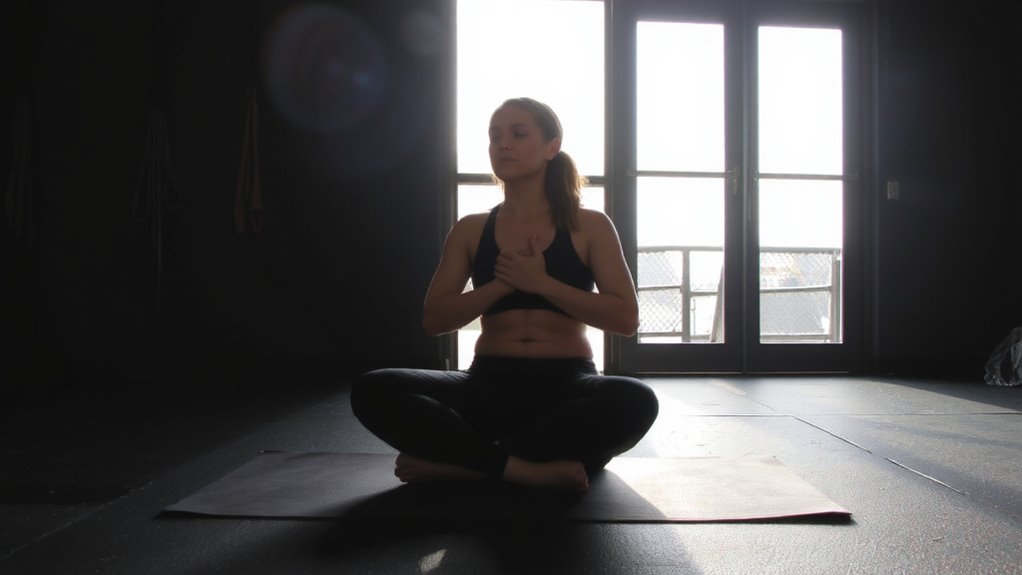
While your workout may end when you put down the weights, your body’s recovery process is just beginning-and how you breathe during this phase can greatly influence your results. Proper breath awareness helps regulate heart rate and oxygen flow, signaling your system to shift from exertion to restoration. Without it, you’re more likely to stay in a heightened state, delaying recovery. Intentional breathing supports a nervous reset, which is essential for reducing cortisol and preventing overtraining. Fitness gear like heart rate monitors can track this shift, but they’re only tools-you still need mindful control to activate real change. Recovery isn’t passive; it’s a trained response. By focusing on slow, deliberate breaths post-exercise, you enhance vagal tone and prime your body for repair. Breath control isn’t just complementary-it’s a core recovery metric, as crucial as sleep or nutrition, and far too often overlooked in training regimens.
How Box Breathing Calms Your Nervous System After Exercise
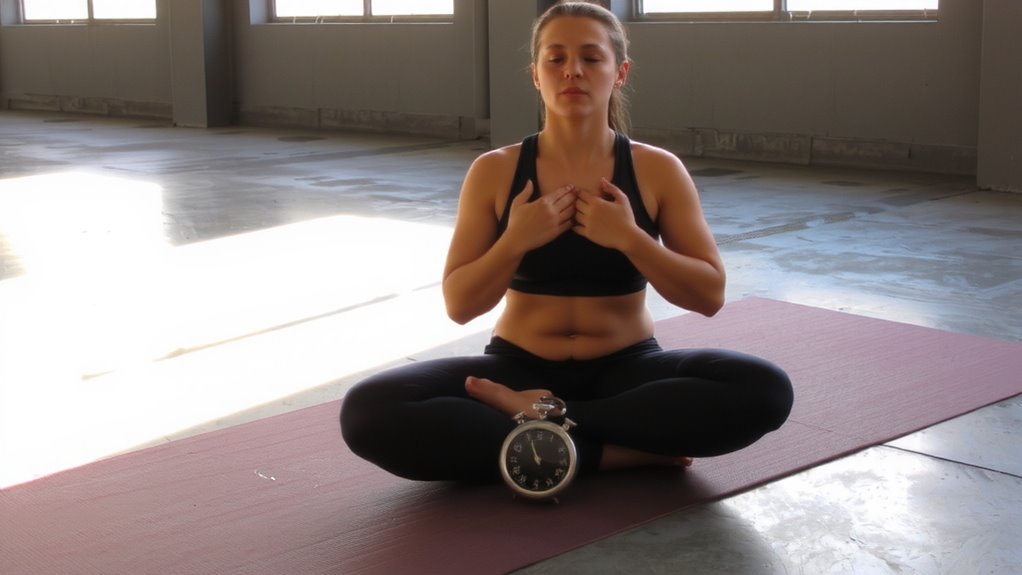
A simple yet powerful technique, box breathing works by syncing your breath to a steady four-part rhythm that actively shifts your nervous system from stress to recovery. This deliberate pattern triggers a neurological reset, dampening fight-or-flight signals and promoting parasympathetic dominance. The result? Faster recovery, mental clarity, and genuine stress reduction. Unlike passive rest, box breathing is an active cooldown that enhances resilience, especially when used with recovery-focused fitness gear like heart rate monitors or compression wear.
| Body State Before | After Box Breathing |
|---|---|
| Racing thoughts | Calm focus |
| Elevated heart rate | Steady rhythm |
| Muscle tension | Deep relaxation |
| Mental fatigue | Renewed awareness |
You’re not just resting-you’re recalibrating. This method isn’t flashy, but its physiological impact is measurable and reliable, making it essential in smart recovery routines.
How to Do the 4-4-4-4 Breath Post-Workout
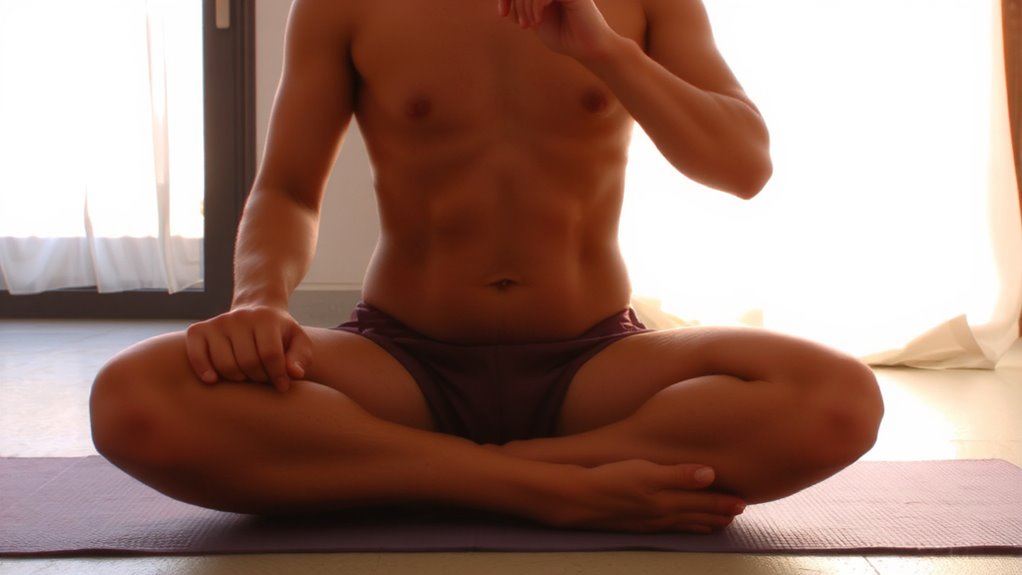
You’ve just finished a tough workout, and your body’s still buzzing with residual energy-heart pounding, muscles twitching, mind racing. The 4-4-4-4 breath is your anchor: inhale for four seconds, hold for four, exhale for four, then pause for four. This pattern supports strong diaphragmatic engagement, ensuring deep lung expansion and maximum oxygen exchange. Maintaining a steady respiratory rhythm signals your nervous system to shift from fight-or-flight to rest-and-recover. Focus on smooth, controlled shifts-no straining. Your diaphragm should move consciously, not your chest. Practiced consistently, this method boosts post-exercise recovery more effectively than passive rest. It’s simple, requires no fitness gear, and fits seamlessly into cooldown routines. While performance wear might track biometrics, the real recovery tool is your breath. Done right, the 4-4-4-4 technique isn’t just calming-it’s physiologically strategic, helping restore balance faster and more completely.
When to Practice Box Breathing After Training
One of the most effective times to practice box breathing is within the first five minutes after training, when your nervous system is still elevated and your body begins shifting from exertion to recovery. This window offers ideal timing cues-your heart rate is high, but you’re no longer moving, making it easier to tune into your breath environment. Training spaces can be loud or cluttered, so finding a quiet corner or using noise-reducing gear like padded headphones helps maintain focus. The breath environment matters because distractions disrupt rhythm, reducing the technique’s effectiveness. You don’t need special equipment, but a consistent post-workout spot-like a mat or bench-conditions your mind to recognize when it’s time to switch modes. Using box breathing right after your final rep leverages physiological momentum, guiding your system toward calm faster than passive rest. It’s simple, equipment-free, and fits seamlessly into recovery protocols.
Adjusting Your Breath for Faster Recovery
Breathing just a bit deeper or holding your exhale longer than usual after a workout isn’t just a minor tweak-it’s a direct signal to your nervous system that recovery has begun. You can speed this shift by fine-tuning elements like diaphragmatic engagement and nasal resistance. Controlled inhalations through the nose create subtle resistance, amplifying vagal tone, while full belly expansion guarantees deep diaphragmatic engagement-key for parasympathetic activation. Below is how adjusting each phase impacts recovery:
| Breath Phase | Adjustment Benefit |
|---|---|
| Inhalation | Nasal resistance slows airflow, calms the mind |
| Hold (top) | Builds CO₂ tolerance, aids O₂ release |
| Exhalation | Promotes diaphragmatic engagement, deepens relaxation |
| Hold (bottom) | Extends parasympathetic dominance |
These micro-adjustments aren’t subtle tricks-they’re physiological levers. When used intentionally, they turn basic breathing into an active recovery tool, more effective than passive rest or untuned patterns.
Mistakes That Prevent Post-Workout Calm
While it might seem natural to collapse into a chair or check your phone right after a workout, doing so can actually interfere with the body’s shift into recovery mode. You’re still flooded with adrenaline, and immediate equipment distractions-like tweaking settings or grabbing weights-keep your nervous system engaged. Even checking messages spikes mental activation, delaying parasympathetic return. Another common misstep is ignoring overhydration risks; gulping liters post-exercise dilutes electrolytes and stresses the kidneys, counteracting recovery. Instead of rushing, use a structured cooldown: dim the lights, stow your gear, and focus on presence. Fitness gear shouldn’t extend workout intensity into recovery. Your mat, timer, or smartwatch can support calm if used mindfully-like cueing a breathing session, not logging data. Prioritize stillness over stimulation. That small window post-exercise sets the tone for recovery quality, so avoid overloading it with unnecessary input or fluids.
On a final note
You’ve pushed hard, and now your body needs to shift from fight-or-flight to recovery. Box breathing-four seconds in, four hold, four out, four hold-gives your nervous system clear signals to reset. It’s simple, effective, and doesn’t rely on gear. Consistent practice improves heart rate variability and speeds recovery. Skip the gadgets; master your breath instead.