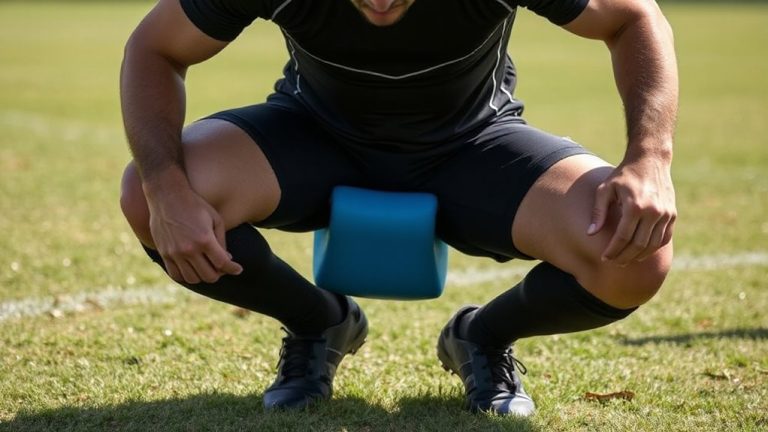
Optimizing Hamstring Strength in Soccer Players to Prevent Non-Contact Injuries
You’re at higher risk for non-contact hamstring injuries during sprinting, especially if eccentric strength is lacking. Focus on exercises like Nordic curls and Romanian deadlifts to build resilience in the lengthening phase, where most injuries occur. Train twice weekly with 48 hours of recovery, prioritizing controlled form and progressive overload. Track symmetry and strength changes with monthly field tests. You’ll find smarter programming leads to more durable performance on the pitch.
Notable Insights
- Perform eccentric hamstring exercises like Nordic curls twice weekly to build injury-resistant muscle strength.
- Prioritize high-speed running mechanics and proper warm-ups to reduce non-contact strain during sprinting.
- Use progressive overload in glute-ham raises and Romanian deadlifts for balanced posterior chain development.
- Monitor hamstring symmetry monthly using field tests or isokinetic screening to identify injury risks.
- Support recovery with protein and carbs post-training and ensure 48 hours between sessions for tissue repair.
Strengthen Hamstrings to Prevent Soccer Injuries
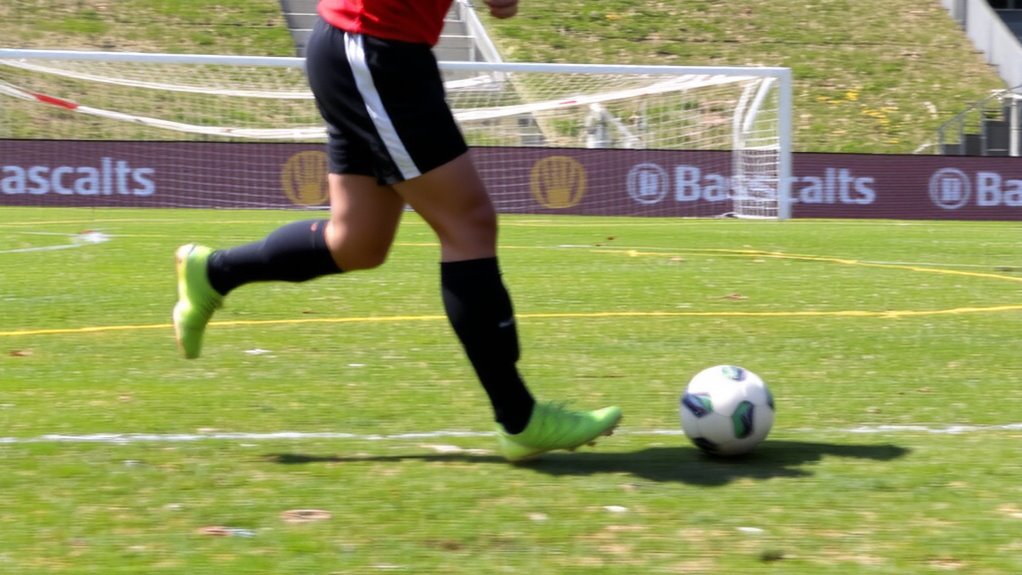
Why do so many soccer players suffer from hamstring strains, yet so few take the right steps to prevent them? You rely on explosive sprints and quick changes in direction, which place immense stress on your hamstrings. Poor hamstring flexibility and faulty injury biomechanics are key contributors to strain risk. Static stretches alone won’t cut it-dynamic warm-ups and eccentric strengthening deliver better results. You need exercises like Nordic curls that mimic actual movement patterns, enhancing both strength and length under load. Recovery tools such as compression gear and foam rollers support tissue health, but only if paired with consistent training. Top-tier fitness recovery gear can reduce soreness, yet it’s no substitute for well-developed muscle resilience. Prioritize targeted hamstring work in your routine, because without it, even the best recovery tech won’t protect you when fatigue sets in during the final minutes.
Stop Non-Contact Injuries Caused by Weak Hamstrings
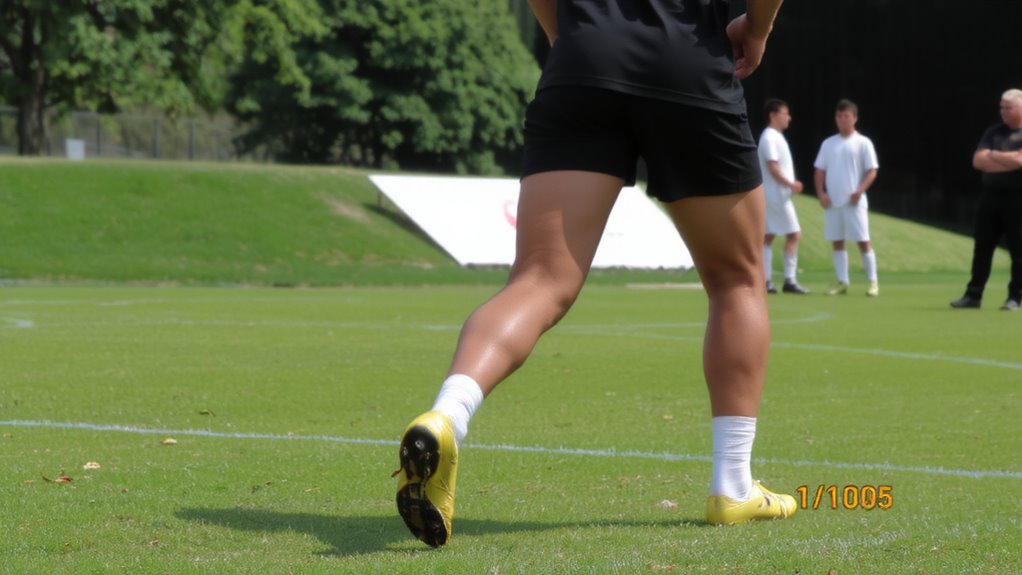
How often do you see a player crumple to the ground during a routine sprint, no contact, just a sharp grab at the back of the thigh? That moment highlights poor hamstring anatomy awareness and faulty injury mechanics. You rely on these posterior chain muscles for explosive starts and controlled deceleration, yet many overlook their complex structure-three muscles working across two joints. When strength imbalances exist, especially between agonist and antagonist groups, the risk skyrockets. Non-contact injuries aren’t random; they follow predictable patterns tied to fatigue, inadequate warm-ups, and weak eccentric control. You can’t afford to ignore the biomechanical truth: high-speed running places extreme strain on the long head of the biceps femoris, the most commonly injured portion. Understanding injury mechanics means recognizing that prevention starts long before the match. Build resilience by respecting how the hamstrings function, not just how they feel.
Use Eccentric Training to Protect Your Hamstrings

While sprinting or changing direction, your hamstrings are working hardest when they’re lengthening under tension-exactly the moment eccentric training proves invaluable. Eccentric loading targets this phase by emphasizing controlled lengthening against resistance, which directly strengthens your hamstrings where they’re most vulnerable. Research shows it induces favorable changes in muscle architecture, increasing fascicle length and boosting injury resilience. You’ll adapt faster and reduce strain risk, especially during high-speed efforts. Unlike concentric work, eccentric training delivers more mechanical tension with less metabolic fatigue, making it efficient and effective. Devices like Nordic hamstring curl trainers or eccentric-focused flywheels can help, but consistency matters more than gear. You don’t need advanced fitness recovery tools initially-just proper form and progression. Over time, this type of training reshapes how your muscles respond under load. It’s not a quick fix, but it’s among the most proven strategies for protecting your hamstrings in soccer.
Do These 3 Hamstring Exercises Soccer Players Need
You’ve already seen how eccentric training builds resilience by targeting the hamstrings during lengthening under load, which pays off when sprinting or cutting on the pitch. Now, let’s talk about three exercises you actually need. The Nordic hamstring curl is non-negotiable-research shows it slashes injury risk by boosting eccentric strength and improving hamstring flexibility. Pair it with the glute-ham raise to enhance muscle symmetry between your posterior chain muscles, reducing imbalances that lead to strain. Finally, include Romanian deadlifts with proper form to integrate core stability and promote balanced loading. These moves aren’t flashy, but they deliver measurable gains in tissue tolerance and joint coordination. Skip the gimmicks-focus on controlled execution, progressive overload, and consistency. Each exercise supports functional strength specific to soccer’s demands, helping you maintain performance while lowering re-injury odds.
Build a Weekly Hamstring Training Plan
Because hamstring injuries are both common and disruptive in soccer, building a weekly training plan around proven exercises isn’t just smart-it’s essential for long-term performance and injury resilience. You should train hamstrings twice weekly, focusing on eccentric movements like Nordic curls, Romanian deadlifts, and glute-ham raises. Schedule these sessions 48 hours apart to allow tissue recovery. Include dynamic warm-ups to boost hamstring flexibility and reduce strain risk before workouts. Post-training, prioritize recovery nutrition-consume protein and carbs within 30 minutes to support muscle repair. Avoid overloading volume; too much too soon increases injury likelihood. Pair strength work with low-impact mobility drills on off-days to maintain elasticity and joint support. Compression gear may help with muscle stabilization and perceived soreness, though evidence remains mixed. Consistency beats intensity here-stick to the plan, and let recovery and flexibility progress naturally over weeks.
How to Track Hamstring Strength Progress?
You’re already building strength with a solid weekly hamstring routine, but knowing whether that work is paying off means going beyond how your legs feel after Nordics or deadlift在玩家中. To track real progress, you need objective data. Hamstring symmetry-measuring strength balance between legs-is essential; asymmetries above 10–15% increase injury risk. Isokinetic testing is the gold standard here, providing precise eccentric and concentric strength measurements at controlled speeds. While not every team has access, periodic assessments can guide program adjustments. Field-based alternatives like prone hold tests or Nordic lowers offer practical insights when calibrated consistently. Track performance monthly, noting changes in load tolerance and movement quality. Pair this with injury history and sprint performance for a full picture. Reliability matters-use the same protocol each time. Combining isokinetic data with functional tests gives you a smarter, safer path to building resilient hamstrings.
On a final note
You’ve seen how essential strong hamstrings are in preventing non-contact injuries, especially in soccer. Eccentric training proves effective, with exercises like Nordic curls, Romanian deadlifts, and glute-ham raises delivering measurable strength gains. A consistent weekly plan enhances muscle resilience, while regular strength tracking guarantees progress. Pairing smart training with proper recovery gear-like compression wear and foam rollers-supports adaptation. Ultimately, investing in hamstring strength and recovery isn’t just preventive-it’s performance-enhancing.